
Drone boats have had a busy year. Ukraine’s have driven explosives into the sides of Russian warships, and in September the Ukrainian Navy put out footage of one running down another drone boat and sinking it with a .50-caliber machine gun. As far as I can tell, just about every drone boat making headlines right now was built around something that shoots or explodes.
So a British company has gone the other way and built one that just looks.
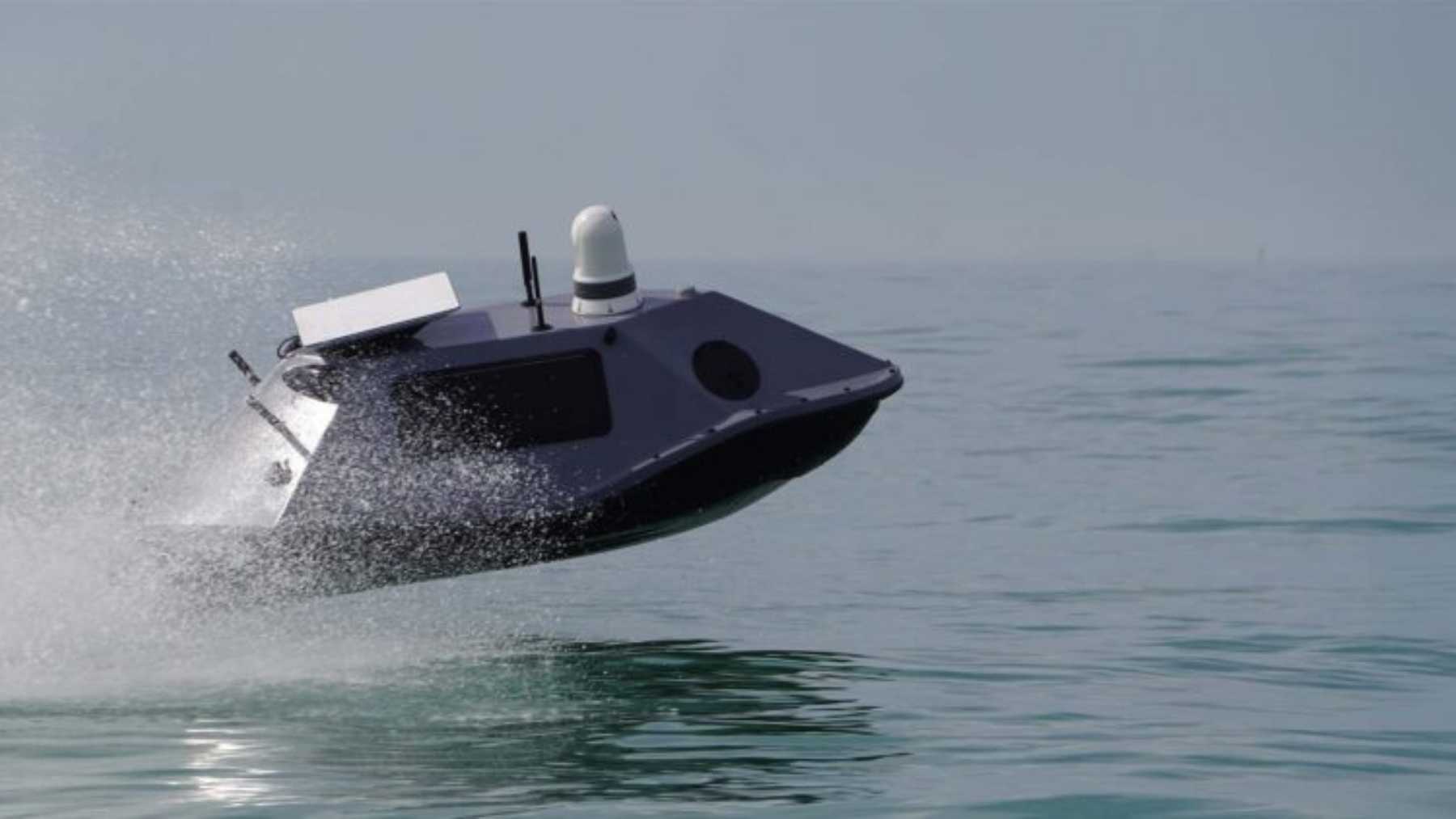
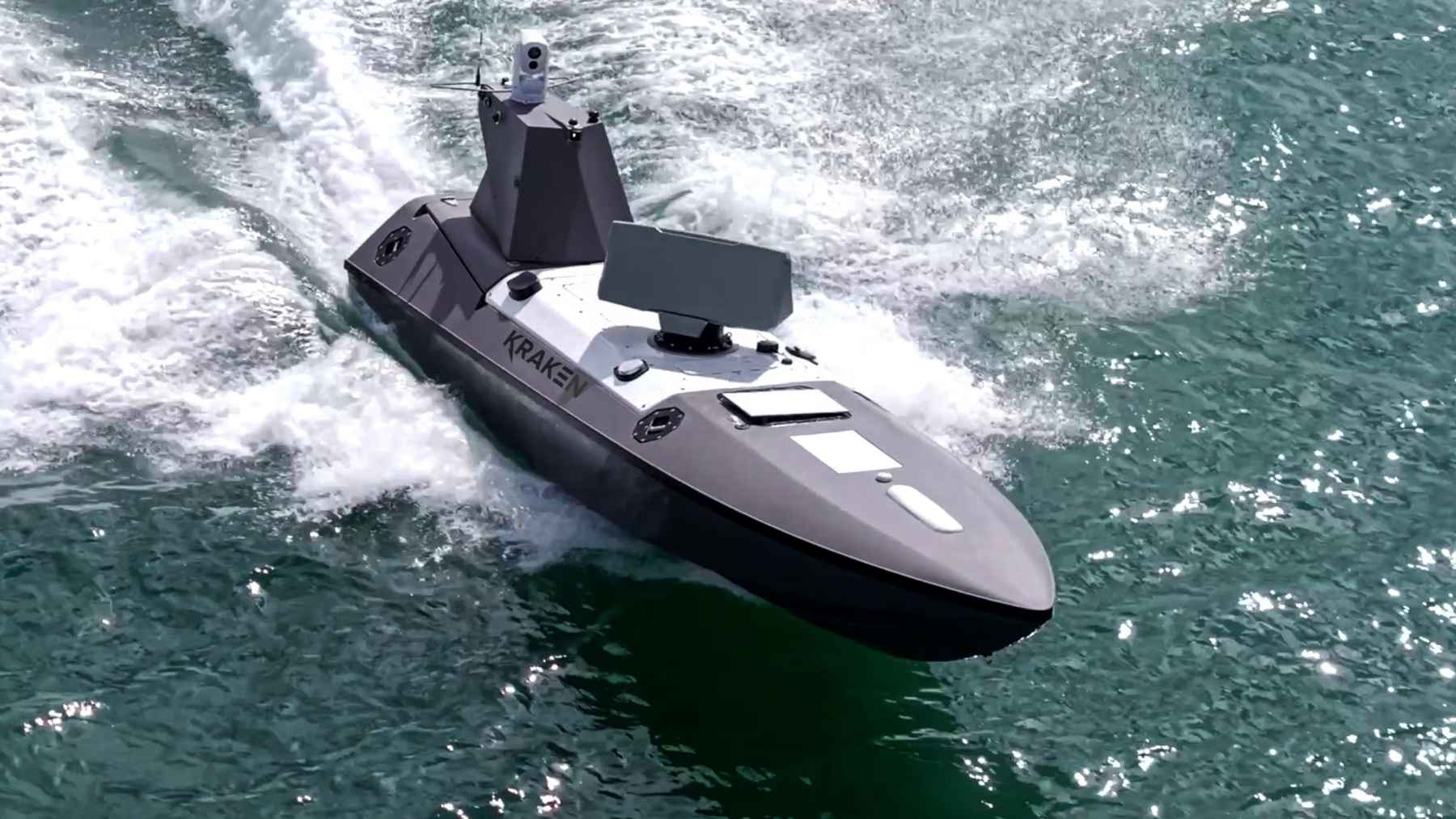
Kraken Technology Group and Saab UK, both based in Fareham on England’s south coast, took Kraken’s K3 Scout, a 28-foot autonomous boat, and dropped a Saab Giraffe 1X air-surveillance radar into its payload bay. The two companies call the result a “drone seeker,” and the job description is pretty simple: sit out on the water and find small drones before they get close to whatever you’re protecting. According to Kraken’s announcement on October 5, the prototype went from a concept to a working boat in under seven months and has already been through a round of sea trials.
Neither company has said where or when those trials happened, and I’d have liked a date, since “we tested it at sea” covers everything from a week in the English Channel to an afternoon off the end of the pier. There’s no customer named either, and Marine Log describes the whole thing as “currently in the experimental stages,” which is trade-press for “we built it, it works, now somebody please buy one.”
So what’s a Giraffe 1X?
If you’ve never heard of it, the Giraffe 1X is a small 3D radar that Saab normally sells for mounting on light vehicles, masts and tripods, and “3D” is the word that matters here. A regular marine radar tells you something’s out there and roughly which way to look. A 3D radar also tells you how high it is, which matters a great deal when the thing you’re looking for is a quadcopter skimming 50 feet over the waves instead of a fishing boat.
Saab’s own spec sheet puts the whole system at under 330 pounds, with about 220 of those up top in the antenna. It sweeps its entire search volume once a second, and Saab claims it can pick up a drone “lighter than a milk carton” from about 2.5 miles away. That’s the number I’d pay attention to. The 47-mile range you’ll see quoted for the land version (62 miles for the naval one, according to a Defense Post guide from February) is the instrumented range, which is basically how far out the radar is set to look, not how far it can see a small drone. A hobby-store quadcopter doesn’t reflect much radar energy.
The US, Sweden, Latvia and the UK have all bought the Giraffe 1X, per the same guide, and Saab sells a version for warships called the Sea Giraffe 1X. Putting one on a 28-foot boat with nobody aboard is new, at least as far as I can find.
The boat has already been thrown out of an airplane
The K3 Scout is a good deal smaller than the 36-foot K5 that Anduril is going to build in the US, and it’s the Kraken boat with a track record. Kraken’s spec sheet puts it at 27.6 feet, so call it 28. It tops out at 55 knots, which is a little over 63 mph, runs 650 nautical miles at a 25-knot cruise (roughly 750 regular miles), stays out for up to 30 days, and carries 1,323 pounds of payload on an inboard diesel with a stern drive. The hull’s composite, and fully loaded the whole boat displaces about 5,500 pounds.
I ran the numbers on the payload. The radar eats roughly a quarter of it, which leaves something like 990 pounds for whatever else you’d want to bolt on. Kraken hasn’t said whether anything else went along for the sea trials.
In July, Kraken and an American company called Capewell dropped a K3 Scout out of an A400M transport plane by parachute at 1,300 feet over the North Sea, four times in six days, in a trial the Royal Navy supported. The Navy’s write-up has the boat operating in seas up to Sea State 4, which means waves as high as 8 feet. So when Mal Crease, Kraken’s CEO, says in the release that the boat was built to “operate in austere maritime environments,” there’s some evidence behind the brochure language.
So why put the radar on a boat at all?
Radar can’t see over the curve of the Earth. A drone flying low over the water stays hidden below a ship’s radar horizon until it’s fairly close, and the closer it gets before anyone sees it, the less time anyone has to do something about it. Park a radar on a small boat, say, 20 miles out, and you’ve moved your horizon 20 miles out with it.
That’s the whole pitch. Kraken and Saab are selling this as an early-warning picket for shipping, ports, offshore energy platforms and the kind of infrastructure governments get nervous about, and they frame it as part of a “hybrid navy,” which basically means a few crewed ships surrounded by a lot of uncrewed ones doing the dull, dangerous or repetitive jobs. The boat doesn’t shoot anything. It finds the drone and tells somebody else.
Is that less exciting than a drone boat with a gun on it? Frankly, yes. It’s also arguably the more useful half of the problem. Ukraine’s Magura MV11 turned up at a parade in August with 18 interceptor drones standing in boxes on its deck, and every one of those interceptors still needs something to point it at a target. A boat that can see a milk-carton-sized drone 2.5 miles out is that something, or at least a piece of it.
No, this isn’t the first drone boat built to hunt drones
I’d be careful with anyone who tells you it is. The Magura above has been carrying anti-drone interceptors since August, and plenty of smaller drone boats carry a radar on a mast for navigation and surface search. What’s different here is the radar itself. The Giraffe 1X is an air-defense sensor, the kind of thing you’d normally find watching the sky over an army unit or a port, not a boat’s collision-avoidance set. Putting that on an autonomous hull that does 55 knots and stays out for a month is what’s new.
Both companies build their halves of this in Fareham. Kraken raised $175 million in July at a $1 billion valuation and says it’s setting up a 35,000-square-foot plant to turn out 1,000 boats a year. That’s a frankly ambitious target for a company founded in 2020. Its bigger boats, the K5 and K7, are headed for American production: Anduril signed on in April to build and support them in the US for the Navy. The K3 Scout isn’t in that deal, at least not publicly.
Kraken and Saab UK announced the prototype from Fareham on October 5, 2026, and Andy Fraser, Saab UK’s managing director, put the build time at under seven months. The Royal Navy’s own account of the K3 Scout’s North Sea airdrops is dated July 8.