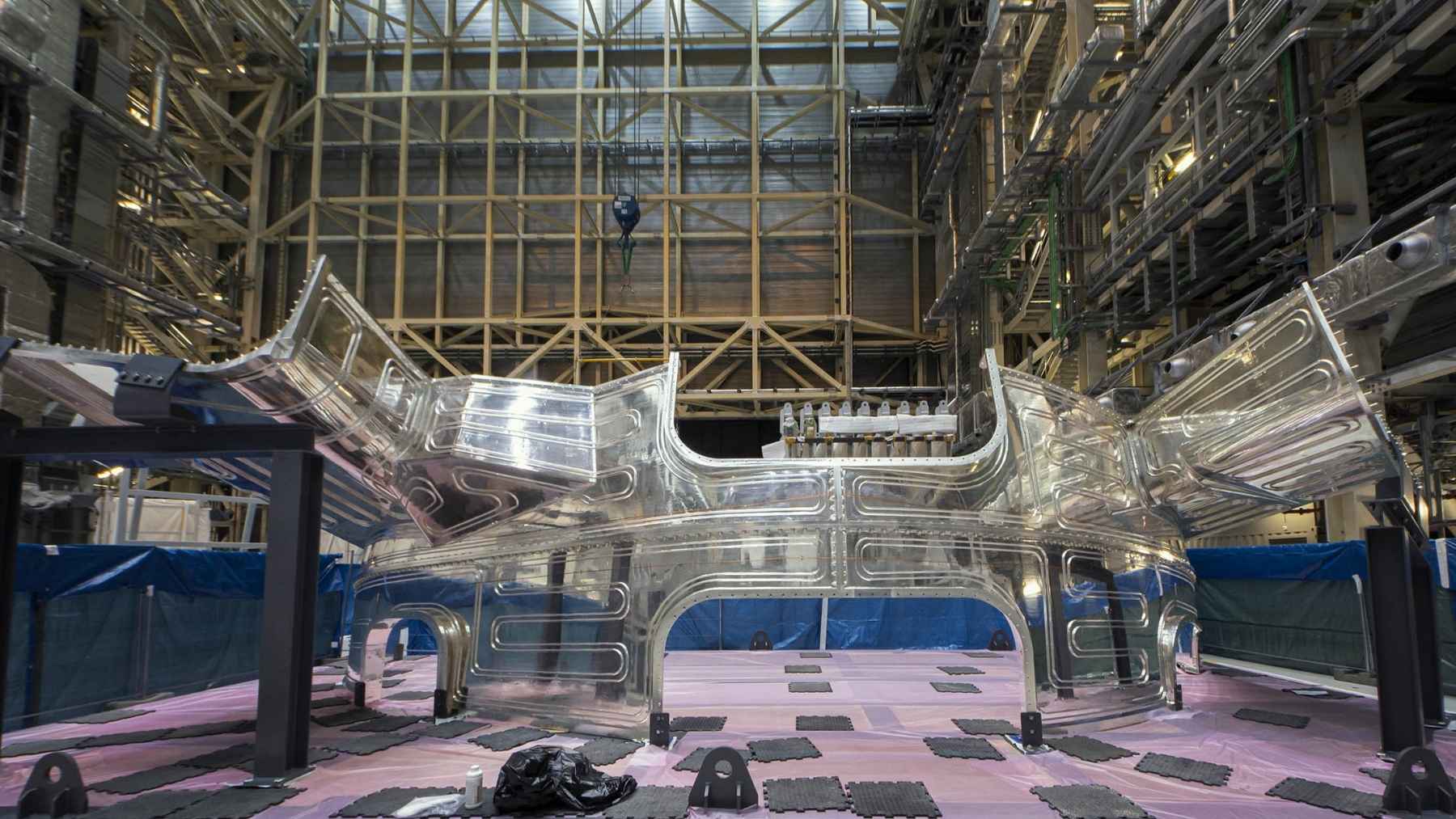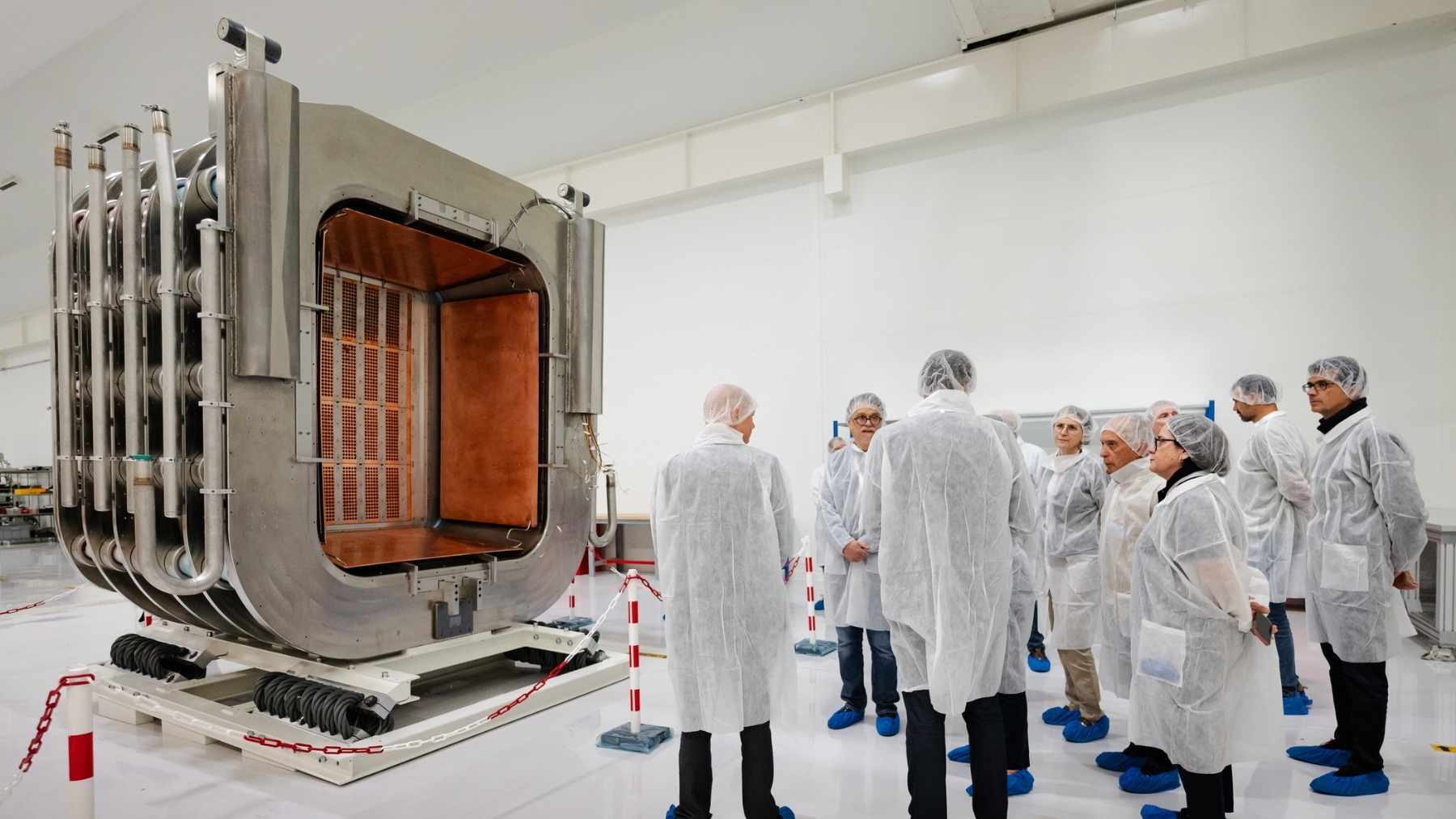

Quaise Energy’s spent the last few years building a reputation as the company that drills without a drill bit. Its signature tool is a gyrotron, basically an industrial-strength microwave emitter borrowed from fusion research, and it melts rock into vapor instead of grinding through it. We covered it a few months ago, including the roughly 330-foot hole the beam melted into Texas granite.
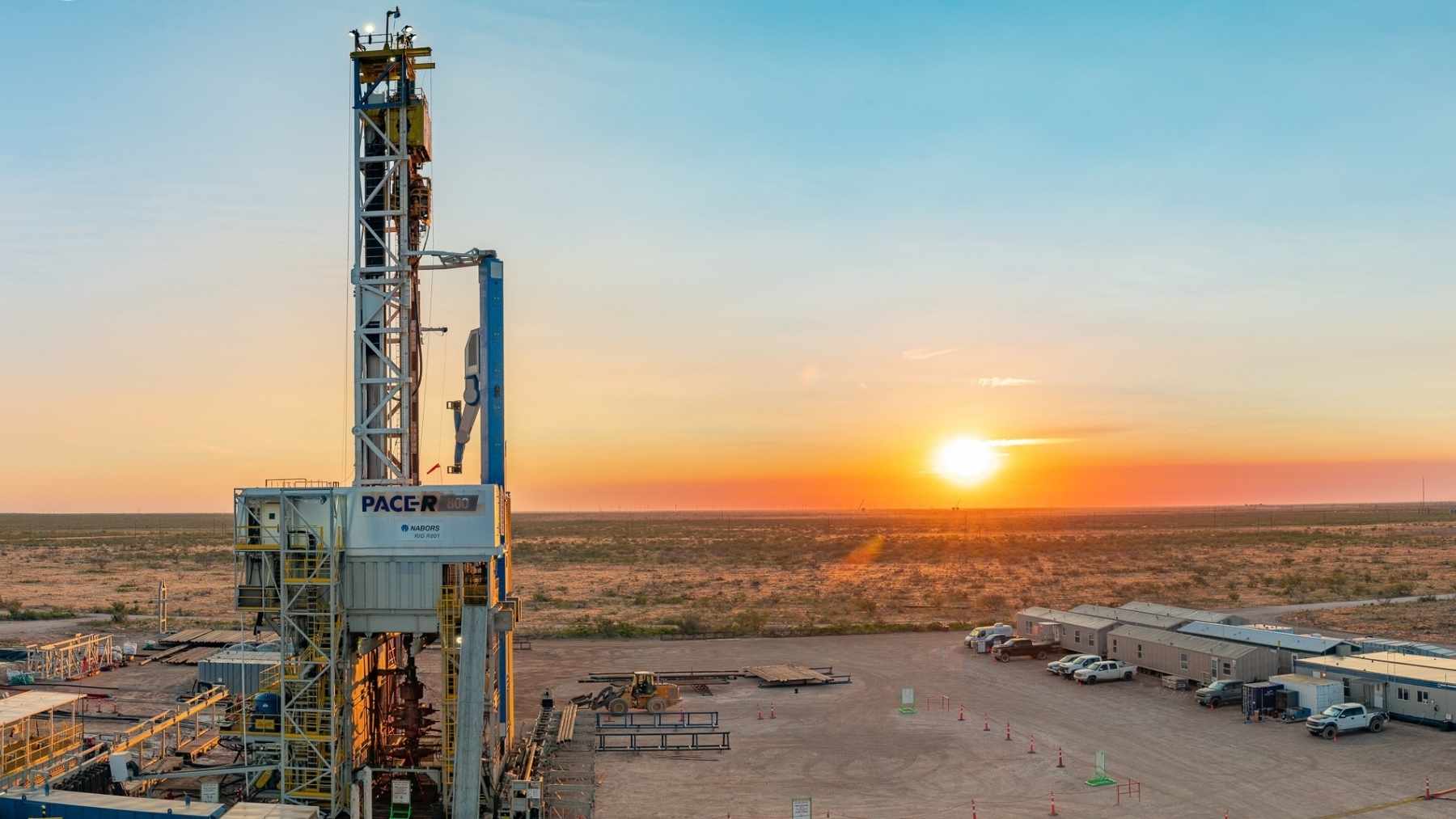
So it’s a little funny that the first well at the company’s Oregon power plant site is going down the old-fashioned way. We’re talking spinning steel pipe, cutters made of synthetic diamond, and a 147-foot rig from the same family that drills oil wells in North Dakota.
And it’s been at it for a while. The Bulletin in Bend visited the site, on U.S. Forest Service land just south of Newberry National Volcanic Monument, and reported on September 22 that drilling had been underway for more than 30 days. The target is a confirmation well about 15,000 feet deep. That’s a little under three miles.
Ryan Dean, Quaise’s senior director of communications and public affairs, told the paper the well is “really about capturing that heat that we expect to encounter.” He also said the bit is still a long way from the depth needed to confirm the resource. Quaise hasn’t published a depth update since, and I couldn’t find one anywhere else either.
So why isn’t the beam doing the drilling?
Because it was never the plan. The Bulletin reports the first wells at the site, which Quaise calls Project Obsidian, are going in conventionally, with millimeter-wave drilling saved for later phases. Meanwhile, the beam’s still being tested at a granite quarry in Marble Falls, Texas.
Frankly, that’s the sensible order of operations. If you’re building what you bill as the world’s first commercial superhot geothermal power plant, you’d probably want your first hole to answer one question at a time. This well’s job is to tell Quaise what the rock down there is actually like. Testing brand-new drilling hardware in the same hole would just muddy the answer.
If you’re wondering what a confirmation well is, it’s basically a very deep, very expensive thermometer. You drill it, measure the heat and the rock on the way down, and find out whether what you modeled from the surface is really there before you commit to production wells. Quaise has said it plans to keep this one afterward as a monitoring and test well wired with fiber-optic cable.
Harry Kelso, Quaise’s senior communications manager, gave The Bulletin a pretty good idea of why the company wants off drill bits eventually. At the Texas quarry, he said, drilling the rock conventionally took eight bits, while the beam rig kept running without replacing its downhole hardware. That’s a company claim from one quarry, so take it with a grain of salt. Still, it sums up why Quaise exists.
The rig is a pretty ordinary piece of oil-field equipment
The machine on Newberry is a Nabors PACE-B. Nabors, one of the world’s biggest land drilling contractors, said so in a release it filed with the SEC in August, the same one announcing it had put $35 million into Quaise and signed on as its exclusive driller. So the choice of rig isn’t exactly a mystery.
Nabors’ spec sheet for the PACE-B lists a mast rated for 800,000 pounds, which is basically how much weight the rig can hang from the top of that mast. It also lists three 1,600-horsepower mud pumps. Those push drilling fluid down the pipe to cool the bit and carry the rock chips back up. The Bulletin puts the Oregon rig at 147 feet tall, which matches the mast height E&P Magazine reported when Nabors introduced its B-series rigs.
Nabors doesn’t publish a weight for the complete rig, and I can’t confirm the one in Oregon is configured exactly like the brochure. It’s safe to assume it’s close, though. Nabors built the PACE-B for cold-weather work in places like the Bakken, which seems like a pretty good fit for a forest pad on the side of a volcano heading into an Oregon winter.
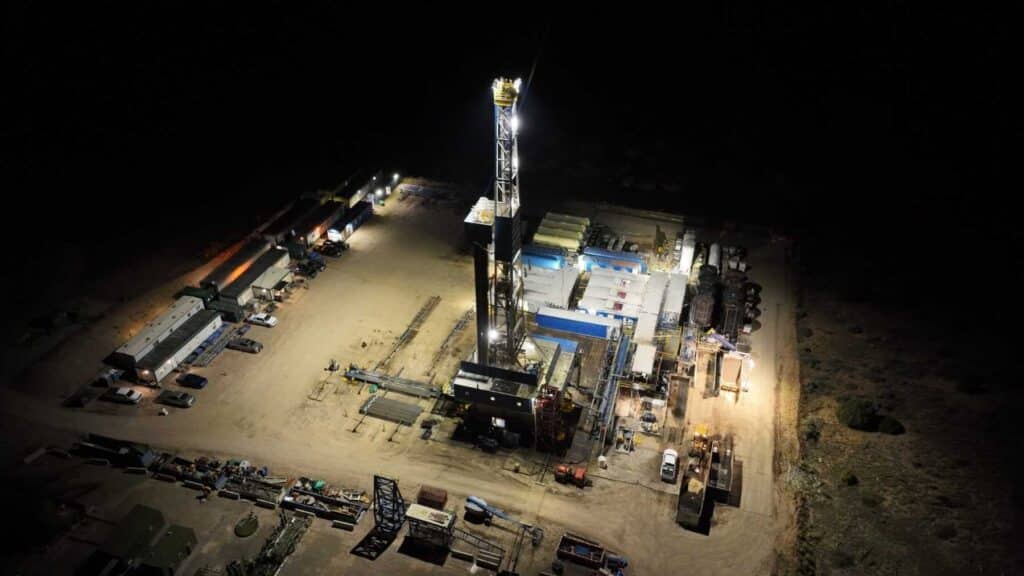
The bits are PDC bits, short for polycrystalline diamond compact. In plain English, the cutting edges are little discs of synthetic diamond, built to hold up in hard volcanic rock. From the looks of the photos The Bulletin’s Dean Guernsey shot on site, the rest of the setup is familiar too: a row of generators powering the rig and a pump bringing water over from a pond on site.
Rigs go through a lot of water. Quaise has a permitted water well on site, according to The Bulletin, and Oregon’s water regulators told the paper groundwater levels around the volcano aren’t dropping from current pumping.
It’s arguably the least futuristic part of the whole project, and I mean that as a compliment.
How hot is it down there?
Nobody knows for sure yet. That’s what this well is for.
In its September 22 announcement, Quaise said its first three wells are targeting average reservoir temperatures above 572 degrees Fahrenheit. The Department of Energy describes the same demonstration as running at bottom-of-hole temperatures between about 509 and 689 degrees. They’re both projections, built on a site Quaise calls one of the most studied geothermal resources in the country. This hole hasn’t measured either one yet.
So why chase the heat at all? Hotter rock sends hotter water back up the well, and hotter water carries more energy, so each well makes more power. Fewer wells for the same output is where geothermal’s economics start to look a lot better. Quaise says it eventually wants a well at Obsidian above 752 degrees, which it claims would be the hottest in the Western Hemisphere.
Getting the heat out takes some work, too. Project Obsidian is an enhanced geothermal system, which basically means the hot rock down there doesn’t come with its own plumbing, so engineers crack it open and make some. Cold water gets pumped down one well, soaks up heat in the fractured rock, and returns through another hot enough to drive a turbine.
Quaise isn’t alone on the volcano
If Newberry sounds familiar, it’s because Mazama Energy is drilling on another part of the same volcano. Its second well, Athena, reached 10,350 feet in 15 drilling days, and Mazama says it’s headed for about 15,500 feet and rock above 750 degrees. The Bulletin notes the two projects are separate.
I’d argue the neighbors are good news for both companies. Two outfits drilling the same volcanic rock with conventional bits make for a pretty useful head-to-head, and whoever finds the faster, cheaper way down probably sets the bar for the rest of the industry.
The federal money comes with homework
The DOE picked 21 geothermal projects for up to $99 million on September 21, and Quaise says its share is up to $25 million. According to the company, the money supports studying how the first two wells of its first three-well set drill, fracture, and flow, then using that to fine-tune the third. The set is designed to show more than 25 megawatts of gross capacity, with Pacific Northwest National Laboratory, Lawrence Berkeley National Laboratory, and Oregon State University on the team.
It’s not a check yet. The DOE still has to negotiate the award, and the department says it can pull a selection during that process. Data from the work is also supposed to land in the DOE’s public Geothermal Data Repository, which means competitors get to read it too. That’s a pretty fair trade for federal money, if you ask me.
The plant itself starts with a 50-megawatt first phase by 2030, which Quaise estimates is enough for roughly 50,000 homes. The company wants to grow it to 250 megawatts, and The Bulletin reports the site could reach 1 gigawatt if the rock cooperates. Who’s buying the power is still an open question. PacifiCorp, one of the big power suppliers in Central Oregon, told the paper it couldn’t discuss whether it’s negotiating with Quaise, and Meta and Apple both run data centers in the region, which is the kind of neighbor that’s always thirsty for electricity.
As of September 22, the Nabors rig had been turning on Newberry for more than 30 days, and Quaise expects Project Obsidian to send its first power to the Pacific Northwest grid in 2030.