
Every hole humans have ever drilled into the planet, for oil, for water, for heat, has been made the same basic way: a hard bit spinning against rock, grinding its way down. It works fine in soft ground. The trouble starts when you hit the hot, hard rock deep in the crust, the granite and basalt that dull a drill bit or snap it off entirely. That wall is a big part of why deep geothermal power, clean heat you could in theory tap almost anywhere, has stayed a someday technology for decades.
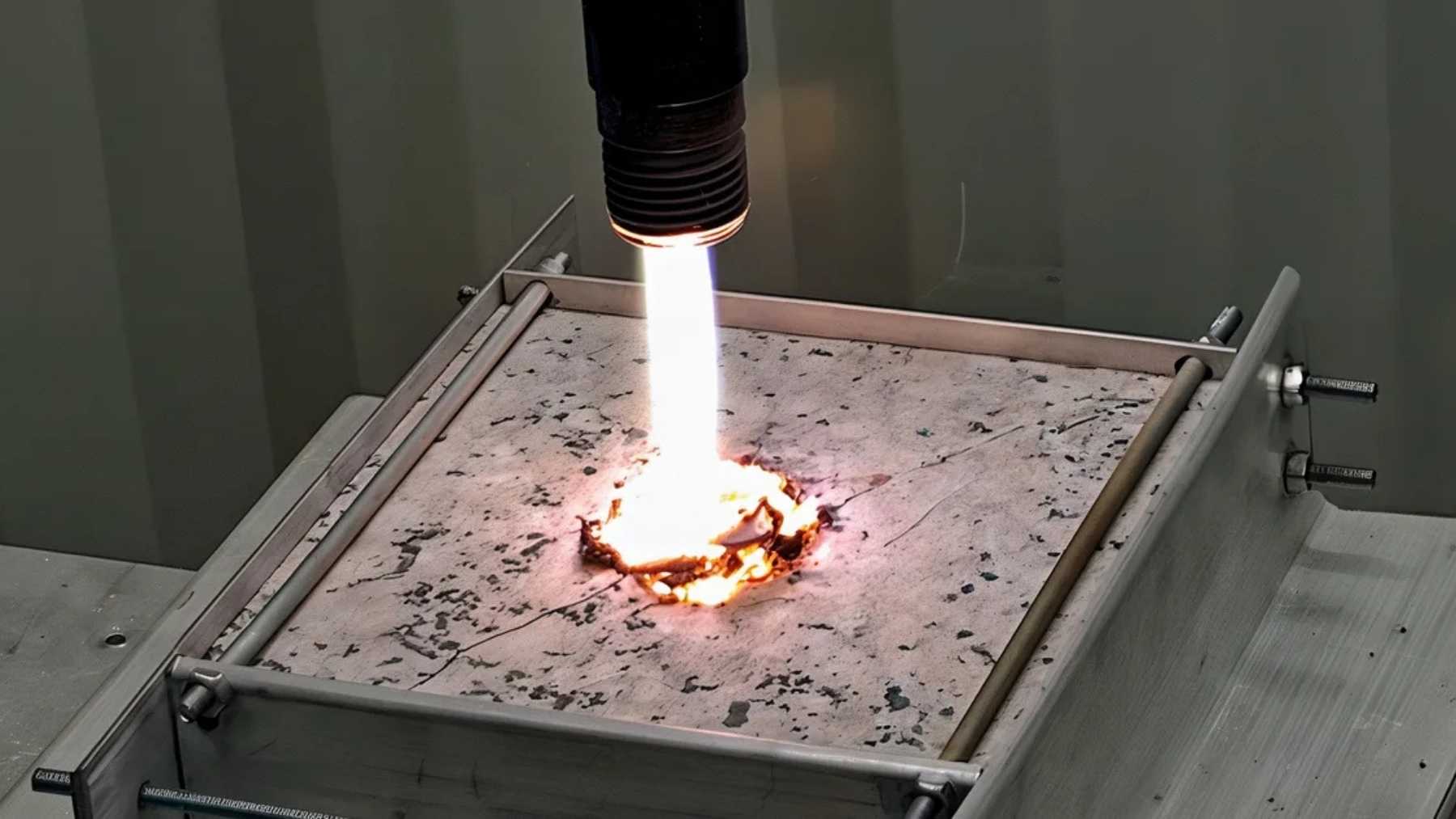
A company called Quaise Energy wants to get past that wall by not touching the rock at all. Instead of a drill bit, it points a beam of energy straight down a borehole and melts the rock into vapor, leaving the walls glazed into a ring of black glass. The machine doing the melting is a gyrotron, the same kind of device fusion labs use to superheat plasma, and it sits up on the surface. There is no drill bit down in the hole, because there is no drill bit. And after years of doing this in a lab and then in a Texas field, Quaise is now putting the idea to the test where it finally has to pay off: a power plant site in central Oregon.
The drill bit never touches the rock
A gyrotron is basically a microwave on steroids. It fires high-frequency millimeter waves, which sit on the electromagnetic spectrum between the microwaves in your kitchen and infrared light. Run that beam down a length of standard oil-and-gas tubing acting as a waveguide, aim it at rock, and the rock heats past its melting point and turns to vapor. A purge gas blows the vaporized material back up the hole, and the walls left behind cool into smooth, glassy obsidian. The whole trick is to deliver enough focused energy, far enough down, to keep melting rock instead of just warming it.
None of the hardware is exotic on its own. Gyrotrons have been around for decades, used by fusion researchers to heat plasma to temperatures in the tens of millions of degrees. The idea of pointing one at the ground instead goes back to 2008, when MIT researcher Paul Woskov suggested millimeter waves could bore through rock that defeats conventional bits. Quaise spun out of MIT’s Plasma Science and Fusion Center in 2018 to turn that lab curiosity into a drilling rig. The novelty was never the beam. It was the idea that you could use it to dig.
Fifty thousand volts, and the granite went soft
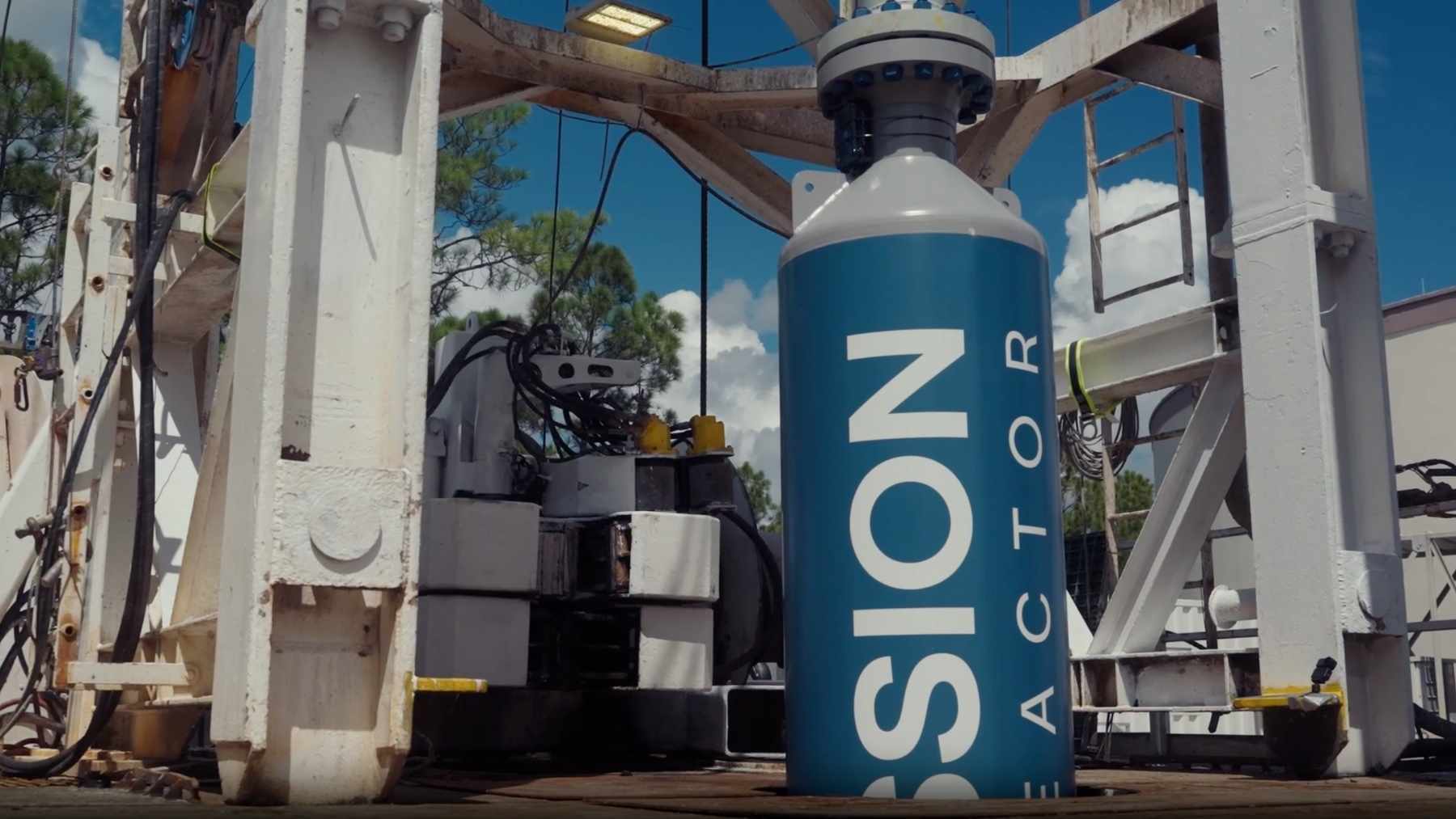
The clearest look at the thing working came from a full-scale demonstration near Houston, which a New Atlas reporter who attended the demo described in detail. Quaise fed 50,000 volts of direct current to a 100-kilowatt gyrotron, a new and roughly 60 percent efficient unit, bolted onto a full-scale Nabors drilling rig fitted with a custom top drive. Running at around 48 kilowatts, the beam melted its way into a granite-and-basalt mix at about 0.8 inches, or 2 centimeters, per minute. Slow, but it was eating through some of the hardest rock on the planet without anything mechanical ever touching it.
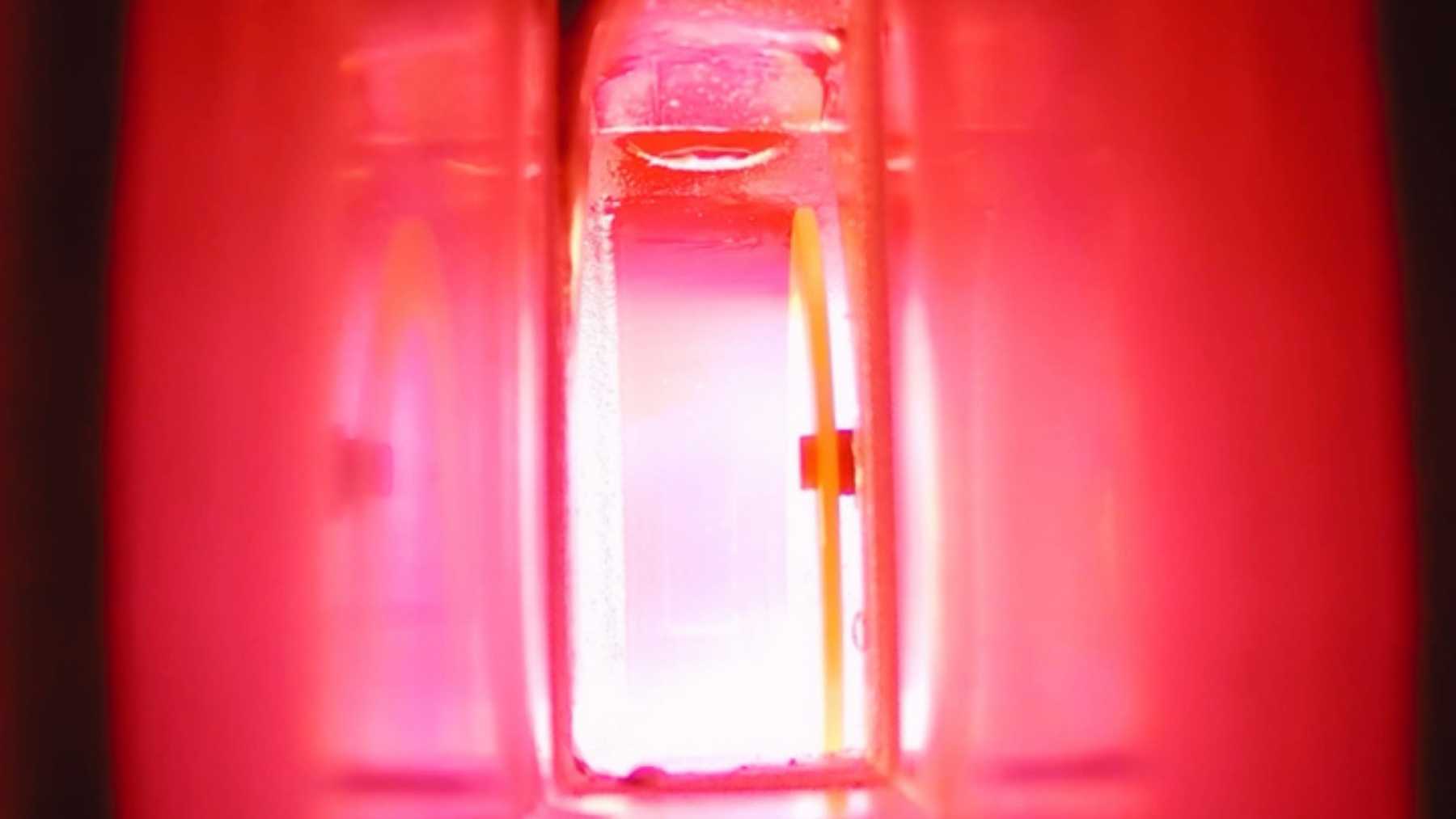
The bigger milestone came in central Texas. The company reported drilling a borehole roughly 100 meters, around 330 feet, straight into granite, which it calls a record for millimeter-wave drilling and the first time the technique had worked outside a laboratory. Before that, the best anyone had managed was a hole a couple of inches deep on a lab bench. Quaise then spent the back half of 2025 running public demonstrations at the Texas site, letting people peer down a camera at the glassy 100-meter hole the beam had carved.
The hole has to go a lot deeper than 330 feet
Here is the catch with that record: 330 feet is nothing. The heat worth chasing for a real power plant sits miles down, in superhot rock that Quaise puts at around 400 degrees Celsius, about 752 Fahrenheit. The company’s longer ambition is to drill as deep as roughly 12 miles, somewhere in the 19-to-20-kilometer range, where rock approaches 500 degrees Celsius. Get there reliably and you could tap firm, clean heat almost anywhere on Earth, not just in the handful of volcanic spots where geothermal works today. CEO and co-founder Carlos Araque has framed the scale bluntly: all the world’s fossil, nuclear and renewable energy combined doesn’t come close to the thermal store sitting a few miles under your feet.
Project Obsidian, on the side of an Oregon volcano
The reason any of this is back in the news is a patch of ground in central Oregon, near the Newberry Volcano, where Quaise broke ground last year on what it calls Project Obsidian. As Canary Media reported in March, the company is pitching it as the first commercial power plant built to run on superhot rock, starting at 50 megawatts and scaling toward 250 megawatts in a second phase, with Araque saying the longer goal is a gigawatt in the area. It has already signed a power-purchase deal for that first 50 megawatts and is working on agreements for another 200. The target to bring it online is as early as 2030.
The money is moving to match. Quaise has raised about $120 million so far, including from Mitsubishi and the oil-and-gas drilling contractor Nabors, and is now seeking roughly $200 million more for the Oregon plant: $100 million in Series B financing plus another $100 million in grants and debt. The first phase calls for wells reaching rock as hot as 365 and 415 degrees Celsius, and this year the team plans to drill a confirmation well to nearly 3,300 feet just to validate what the geology is actually doing down there.
The timing isn’t an accident. The grid can’t keep up with the demand for round-the-clock power, and the strain is most obvious with data centers, some of which are now building their own gas plants rather than wait years to interconnect. Geothermal’s pitch into that gap is clean heat that runs day and night regardless of weather, the same always-on appeal that drives the interest in molten-salt towers that store the sun’s heat for after dark. Geothermal has also stayed relatively unscathed by federal rollbacks of clean-energy support, and investors have poured fresh money into the sector this year.
The catch: it only drills straight down, for now
Here’s where the headline and the reality part ways a little. The rock-melting beam isn’t what’s drilling Oregon yet. The first phase of Project Obsidian uses ordinary rotary drilling and a fairly standard enhanced-geothermal approach, fracturing rock and pumping it full of water to create a reservoir, mostly to prove Quaise can build and operate a superhot plant at all. The millimeter-wave system is held in reserve for the deeper, hotter wells, the 365-degree rock and below, where conventional bits start to give up.
And the beam still has limits worth being honest about. As MIT Technology Review noted, the millimeter-wave drill can currently only go in one direction, straight down, which is a real constraint for production wells that often need to steer. The next machine, a one-megawatt gyrotron with ten times the power, is meant to cut bigger holes over eight inches across, though running it plus its cooling and air-compression gear actually draws a little over three megawatts overall, roughly what a normal oil-and-gas rig uses. Quaise has said it expected that larger unit this year. None of it is commercial yet, and the plant is a 2030 target, not a finished thing.
So the beam that melts granite into glass is the part that earns the headlines, and it should, because nothing else drills like it. But the first Oregon plant is going to be dug mostly the old-fashioned way, with the gyrotron held back for the deep, hot rock where ordinary bits quit. That’s the whole bet: prove a superhot plant can run at all in Oregon, then let the rock-melting beam be the thing that makes the next one work somewhere a drill bit never could. If it holds up, the device fusion physicists built to chase the heat of the sun ends up earning its keep by reaching for the heat under your feet.