
You already own several lithium-ion batteries, whether you think about them that way or not. One’s in your phone, one’s in your laptop, and there’s a good chance a much bigger one is sitting in your driveway. Lithium has also quietly become the grid’s favorite battery, with giant farms of it soaking up cheap solar at midday and firing it back around dinnertime, when everyone gets home and turns the oven on at once.
In California, that fleet recently covered nearly half the state’s entire power demand at the evening peak. Lithium is very good at that four-hour job.
What it’s bad at is pouring out steady power for days at a stretch without the cost and the fire risk stacking up fast. That’s the gap a Massachusetts company called Form Energy has spent years chasing with a battery that stores energy by doing the exact thing every engineer is normally paid to prevent.
It rusts iron on purpose, then un-rusts it. The first headline-grade test is a Google data center in the small Minnesota town of Pine Island, fed by what Xcel Energy calls the largest battery project by energy capacity ever announced anywhere in the world.
A battery that rusts on purpose
Form’s iron-air battery runs on three of the most boring materials on the planet: iron, water, and air. The company calls the trick “reversible rusting,” and the name does most of the work. When the battery discharges, it breathes in oxygen from the surrounding air and lets that oxygen turn metallic iron into rust, releasing electrons as it goes.
When you charge it back up, an electrical current reverses the reaction, pulling the oxygen back out, turning the rust into clean iron again, and burping the oxygen back into the air. Iron rusting is about the slowest, dumbest energy release there is. Form’s engineering is mostly the work of speeding it up, controlling it, and running it backward on command.
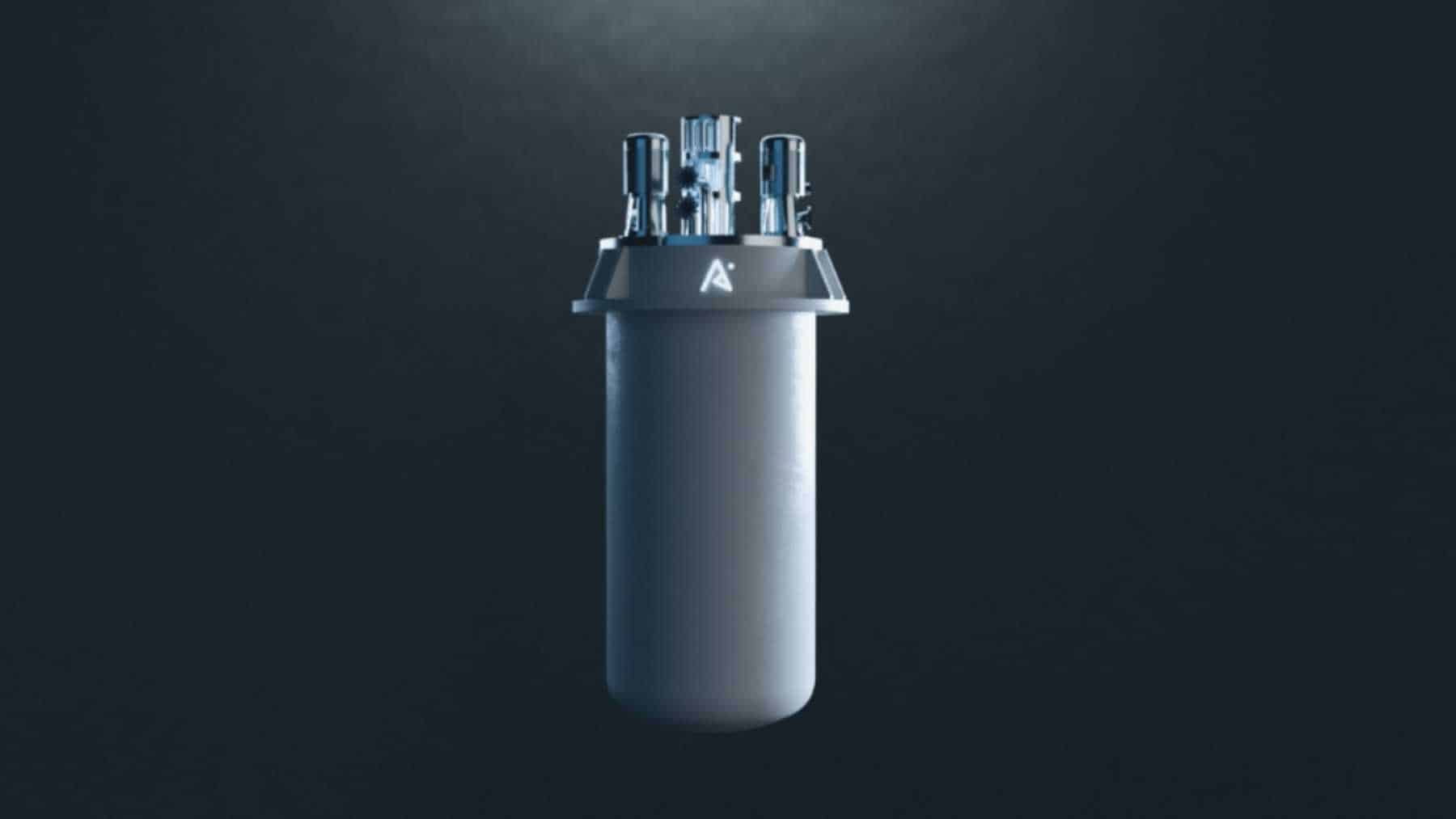
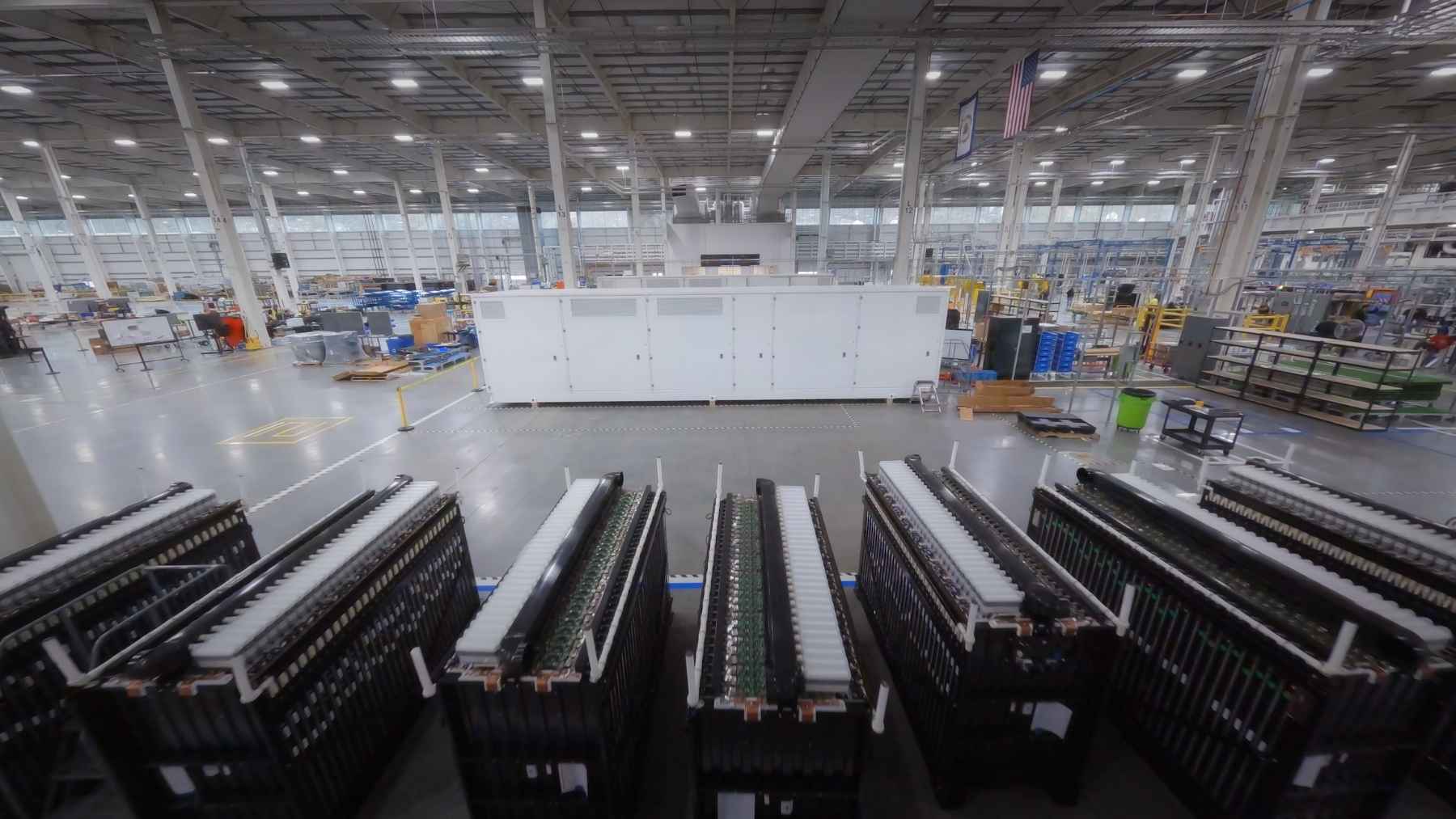
Each individual battery is roughly the size of a household washing machine, packed with stacks of meter-tall cells, powdered iron held in mesh, and a water-based electrolyte that doesn’t catch fire, close to the same chemistry as the stuff inside a AA battery. A standard lithium grid battery typically holds about four hours of power. Form’s iron-air cells are built to discharge for up to 100 hours, which works out to a little over four straight days. That’s the whole point: enough storage to ride out a long, still, gray stretch when the wind dies and the solar panels are basically lawn ornaments.
There are real catches, and Form doesn’t try to bury them. The round-trip efficiency, meaning the share of energy you actually get back out after putting it in, sits around 60%, well under the 90%-plus you get from lithium-ion. The batteries are also far less energy-dense, so they take up a lot more room for the same amount of storage. Nobody is putting iron-air in a car or a phone.
These things are designed to sit in a field next to a substation and feed the grid, not to move anything. For the EV-minded that still matters, because the power that charges your car overnight has to be banked somewhere when the sun’s down, and lithium isn’t the only way to bank it.
Google’s data center is what made the battery enormous
On February 24, Xcel Energy announced it would power a new Google data center in Pine Island, a town of fewer than 4,000 people about an hour south of the Twin Cities. The deal is bigger than one battery. Xcel and Google are adding 1,900 megawatts of new clean energy to the grid: 1,400 MW of wind, 200 MW of solar, and 300 MW of Form’s iron-air storage, plus another $50 million from Google for a separate program that scatters smaller batteries around Xcel’s system. Google is paying all the costs for its own power, so existing Xcel customers aren’t the ones footing the bill for the buildout.
The storage piece is the eye-catcher. At 300 MW and 30 gigawatt-hours, Xcel calls it the largest battery project by gigawatt-hour energy capacity announced anywhere on Earth. That qualifier is doing real work: there are batteries with more instantaneous power already running, but none announced that can hold and release this much total energy, because almost everything else on the grid is lithium doing four-hour shifts.
A 30 GWh iron-air bank, fully charged, could in theory run flat out for around 100 hours. It’s also Form’s first project built specifically to feed a data center, which is the customer category currently throwing money at anything that can keep the lights on for AI.
Google is paying for it through something it calls a Clean Energy Accelerator Charge, a cousin of the “clean transition tariff” it first used for geothermal deals with NV Energy in Nevada. The idea is that a giant customer with deep pockets pays a premium to bankroll newer, riskier technology a normal utility wouldn’t touch yet. Google isn’t the only one doing it.
Form has also signed a deal to supply the AI infrastructure company Crusoe with 12 GWh of iron-air batteries, and says its overall commercial pipeline now tops 750 MW and 75 GWh under agreement. Data centers, it turns out, are the patrons long-duration storage has been waiting on for a decade.
Built on the bones of a dead steel mill
The batteries for the Google project will be built at Form Factory 1 in Weirton, West Virginia, and the location is almost too on the nose. Weirton was a steel town. Ernest Weir put up the mill in 1909, it grew into the state’s largest employer, and for generations it forged the steel that built mid-century America. Then the steel industry walked out, the company went bankrupt and got passed around, and in 2019 they tore down what was left of the old plant. Form bought a 55-acre slice of that brownfield and stood up a battery factory on it.
There’s a tidy symmetry in an old iron-and-steel town reinventing itself to make batteries out of iron. Form put the total investment at around $760 million, including state incentives. The plant currently runs about 550,000 square feet and employs roughly 400 people, and the company plans to nearly double the floor space and pass 750 workers by 2028, with capacity to crank out at least 500 MW of batteries a year.
It’s backed by the kind of investors who can afford to wait, including Bill Gates’ Breakthrough Energy Ventures and the steel giant ArcelorMittal. Around 80% of the battery’s components are sourced inside the United States, which is a deliberate contrast with lithium, where the supply chain runs heavily through China.
Form’s co-founder and CEO, Mateo Jaramillo, ran Tesla’s battery business before he left to chase long-duration storage, so he’s not a tourist in this field. And because the chemistry is iron, water, and air instead of flammable lithium, the safety story is different in a way utilities care about. In independent testing, Form’s cells were overcharged for seven straight days and short-circuited on purpose without going into thermal runaway, which is the failure mode behind the lithium battery fires you’ve seen on the news.
The part that hasn’t been built yet
Here’s the honest version. The 30 GWh Google battery is announced, not running. The electric service agreement still has to clear the Minnesota Public Utilities Commission, and that’s not a rubber stamp. When Google ran a similar deal through regulators in Nevada, approval took close to a year.
There’s also the textbook first-of-a-kind risk: Form’s very first commercial demonstration, with Great River Energy in Minnesota, was originally meant to switch on back in 2023 and is only now finishing installation. Building something at this scale for the first time has a habit of running long and costing more than the slide deck promised.
Not everyone in Pine Island is thrilled, either. A local Facebook group set up to oppose the data center has pulled in hundreds of members trading worries about air quality and what a hyperscaler does to a town that size. Until now, Pine Island was better known for a world-record 6,000-pound cheese it once paraded around on a railroad flatcar, so a Google data center and the biggest announced battery on the planet is a notable change of pace.
Backers point to roughly $130 million in projected new tax revenue and a state law written to keep ratepayers off the hook, and the project looks likely to go through. It just isn’t a done deal yet.
Iron-air also isn’t trying to kill lithium, and that distinction matters. Lithium will keep doing the fast four-hour evening shift it’s already good at. Iron-air is aiming at the longer, uglier gap of multiple cloudy, windless days, and it’s one of several swings at that same problem from different angles.
There’s the billion-dollar flow battery Switzerland is sinking into a pit near the German border, and the British plant banking power as frozen air outside Manchester. Each one trades away efficiency or density or flexibility in exchange for storing energy far longer than a lithium pack ever could.
So the bet in Weirton is a specific one. It’s that a chemical reaction normally associated with neglected bicycles and rotted-out fenders, scaled up in a town that used to make the steel those things were built from, can do the one thing lithium can’t, and do it cheaply enough to matter. The first real proof will be a battery the size of a small power plant, made of rust, keeping a Google data center alive in a Minnesota town best known for a very large cheese. If it works, the Rust Belt earns its name back for an entirely different reason.