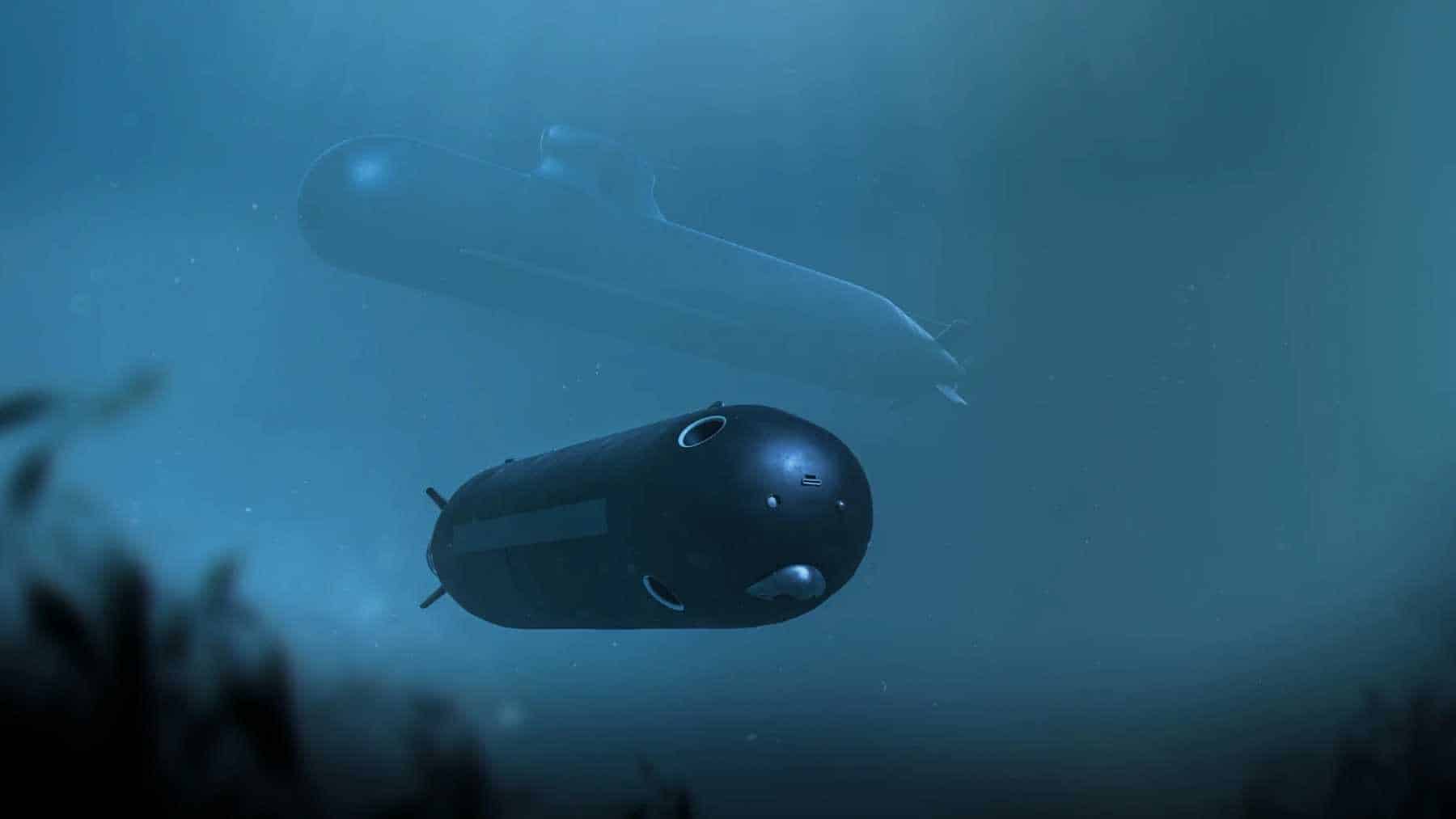

Anyone who has ever bought a couch knows the rule: measure the doorway before you buy the furniture. Saab followed it to the letter. The Swedish defense company has built a 6.5-ton underwater robot whose length and diameter were set by the size of a hatch in the nose of a submarine.
The catch is that the submarine will not be delivered until 2031.
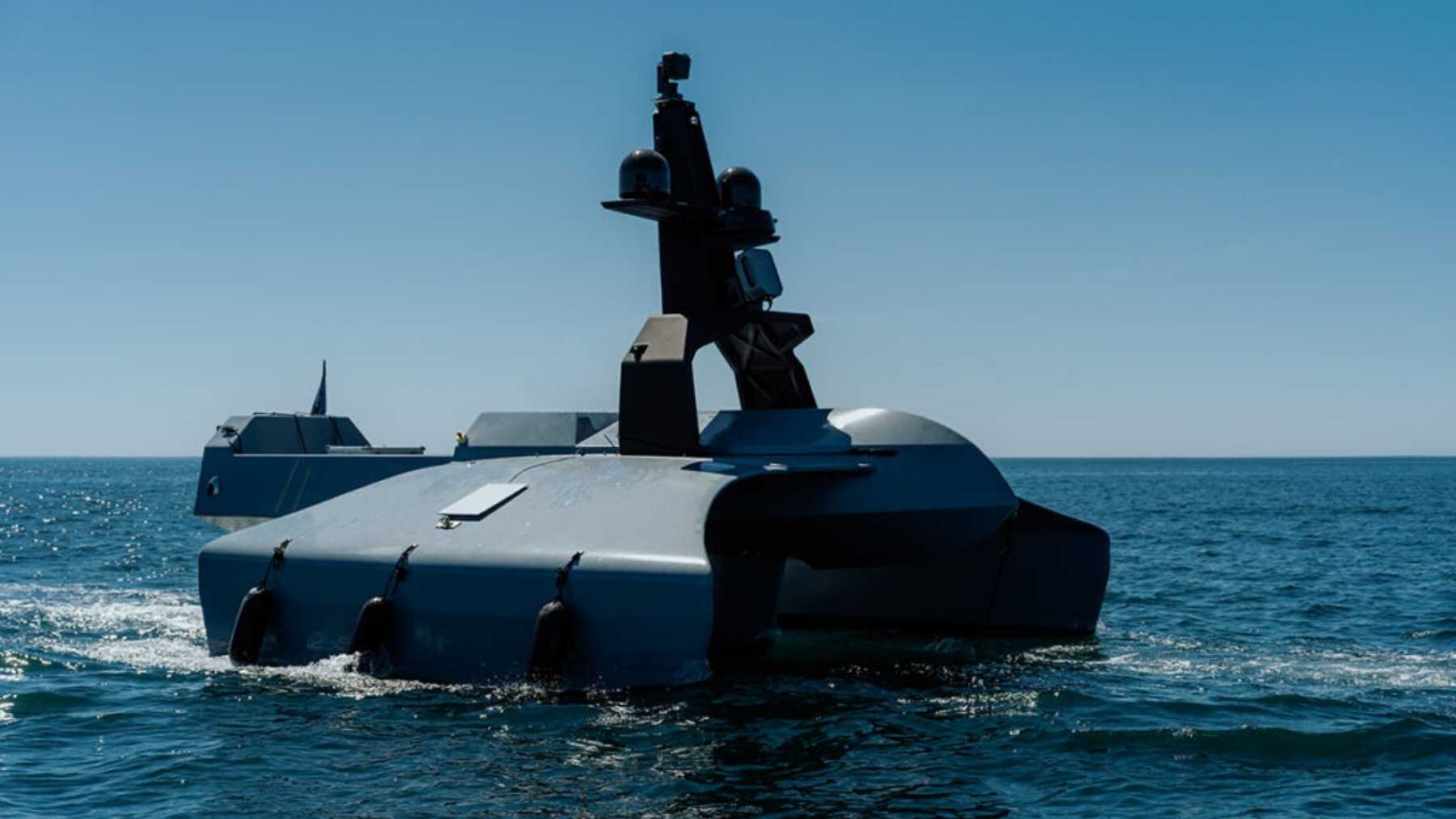
The robot is called the Autonomous Ocean Drone, and Sweden’s Defence Materiel Administration paid Saab SEK 60 million, roughly $6.9 million, to design, build and test exactly one of them. The contract was signed in August 2025. First sea trials were planned for summer 2026, and in March the company confirmed to Naval News that it was on track to get the thing wet by mid-year.
It is now August. Nobody has said publicly whether that happened.
The drone is a cylinder built around somebody else’s hatch
The published dimensions are 7 meters long, about 23 feet, and 1.4 meters across, about 4 feet 7 inches. It weighs 6.5 metric tons, runs on lithium-ion batteries and carries two tunnel thrusters at each end, which handle both maneuvering and setting payloads down gently on the seabed.
Those numbers are not a design choice in the usual sense. According to EDR Magazine, which got a briefing at a seabed defense conference in Gothenburg in February, the shape and size were worked out from the mission bay of the multi-mission portal on Saab’s A26 submarine.
That portal is the whole point of the A26. It is a hatch in the bow big enough to lock divers out and, in theory, to launch and recover underwater vehicles that would never fit down a torpedo tube.
Saab has not published the portal’s internal diameter, so you cannot work backward to the clearance. What is public is the result: a robot 1.4 meters wide, built to a measurement nobody outside the program has seen.
The sensor fit is heavy for a machine this size: a multi-aperture sidescan sonar, an intercept sonar, a forward-looking sonar, a passive flank array, a multibeam echo sounder and a Doppler velocity log paired to an inertial unit. Saab has picked its vendors and is not naming them.
There is also an empty room in the middle of it. Peter Karlström, Saab’s product manager for the drone, told Naval News the company has “reserved an empty space” in the hull, with spare capacity in the weight compensation system to account for whatever gets dropped out of it.
That space is meant for sensors and seabed payloads. Saab’s announcement of the contract says the vehicle will act as a decision-support tool for operators and will not be designed to carry weapons in the first phase. Karlström has said later phases could look different.
Sweden bought range and skipped the depth question
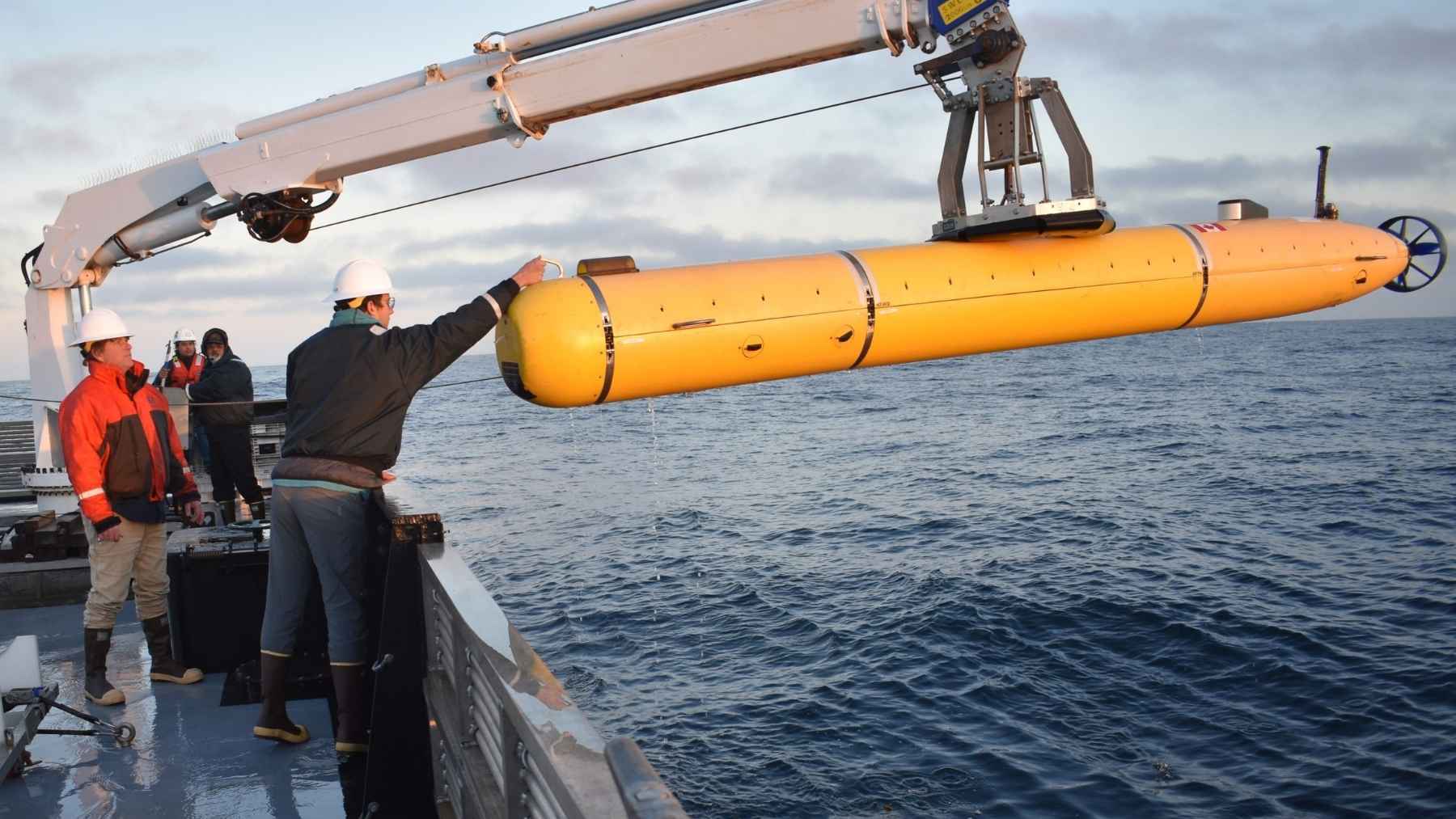
Saab already sells a well-known underwater robot, and the two machines are barely related. The single-hull Sabertooth, the machine that found Shackleton’s Endurance, is 3.8 meters long and weighs 700 kilograms, and its own spec sheet gives it roughly 40 kilometers of endurance at 2 knots on a 10 kWh battery.
The new drone claims more than 600 nautical miles. That is a different category of machine doing a different job, and the difference is entirely about staying out.
What Saab has not published is a depth rating. The Sabertooth is rated to 1,200 meters, and the double-hull version to 3,000. For the Autonomous Ocean Drone there is a range figure, a speed figure, a weight and no number for how deep it goes.
That looks less like an oversight than a statement of intent. This is a machine bought to cover distance in a shallow, crowded, heavily cabled sea, not to work an oil field two kilometers down.
The submarine it was shaped for is nine years late
The submarine side of this has gone badly for years. Sweden ordered two A26 submarines in 2015 for SEK 8.4 billion, with deliveries scheduled for 2022 and 2024. In 2021 the budget went to SEK 14 billion and delivery slid to 2027 and 2028.
Then in October 2025, Saab and the procurement agency renegotiated again. Naval News reported the new numbers: SEK 25 billion, around $2.6 billion, with the boats now arriving in 2031 and 2033.
Fifteen years will separate the 2015 signature from the first finished boat, against the seven originally promised, and the bill has more than doubled along the way. A good chunk of that traces back to the Karlskrona yard, which had not launched a new submarine since the Gotland class in the mid-1990s and had to relearn the job from scratch.
Against that, the drone is a rounding error.
Poland just bought three more of the same submarine
On June 29 in Gdynia, with both prime ministers standing there, Poland signed for three A26 boats worth about SEK 47 billion, or $4.8 billion, under its long-running Orka program. Deliveries run from 2031 to 2038.
Warsaw sold the deal partly on the drone question. Deputy Prime Minister and Defence Minister Władysław Kosiniak-Kamysz described submarines able to launch drone swarms controlled from aboard, according to Defense News, which is the multi-mission portal doing the talking.
So the hatch that dictated the robot’s diameter is no longer a feature of two submarines. It is a feature of five, across two navies, with the last one due in 2038. Whatever fits through it has a long commercial life ahead of it, assuming it works.
Sweden is not alone in wrestling with this. Germany’s TKMS has been building an 82-foot crewless boat stacked out of shipping containers, designed around the box rather than to fit inside anything, and Turkey has gone further still with a 17.8-ton drone sub specced to fire full-size torpedoes. Whether the robot fits the boat or the boat fits the robot is being answered three different ways in three different countries.
Sweden drops to three submarines this month
The timing is the uncomfortable part. As part of the Polish package, Sweden is leasing out HMS Södermanland, its one remaining Södermanland-class boat, so Polish crews can start training. Naval News reported on July 28 that training begins in August and that the Swedish submarine fleet will dip to just three boats, all of them Gotland class, all based at Karlskrona.
Three submarines, no replacements until 2031, and a sea where undersea cables have been cut with enough regularity that NATO stood up patrols over it. Defense News counted at least 11 damaged Baltic cables in the 15 months to January 2025, and the incidents did not stop there.
Swedish Defence Minister Pål Jonson has even floated diverting the second Swedish hull, HMS Skåne, to Poland to meet the schedule. Which would leave Sweden waiting on one boat instead of two.
An uncrewed sensor platform that can patrol for weeks is a reasonable answer to that arithmetic. It is also the only answer available before 2031.
Nobody has said whether it got in the water
The last public word on the drone is dated March 15. Rear Admiral Fredrik Lindén, director of naval systems at FMV, the Swedish procurement agency, told Naval News then that the project was “a demonstrator [supporting] two trials in one”: whether Sweden could build the thing fast, and what it would learn once it was floating.
Since then, quiet. Saab has issued ten press releases between June 24 and July 27, covering Gripens for Ukraine, combat systems for German frigates, GlobalEye for NATO and the Polish submarine order itself. None of them mentions the drone. The Q2 results published on July 17 did not raise it either.
None of that means the trials failed, or that they have not already happened. Defense demonstrators get tested quietly all the time, and the summer target technically has weeks left to run. A company is under no obligation to announce a wet boat.
What it does mean is that a public commitment made in March has not been publicly closed out in August, on a program whose entire justification was speed.
That was the actual question the SEK 60 million was meant to answer. Not whether Saab can build a good underwater robot, which is not seriously in doubt, but whether the organization that turned a seven-year submarine into a fifteen-year submarine can hit a date when the date is cheap and the machine is small. Right now the answer is a blank space where an update should be, and summer has about seven weeks left in it.