
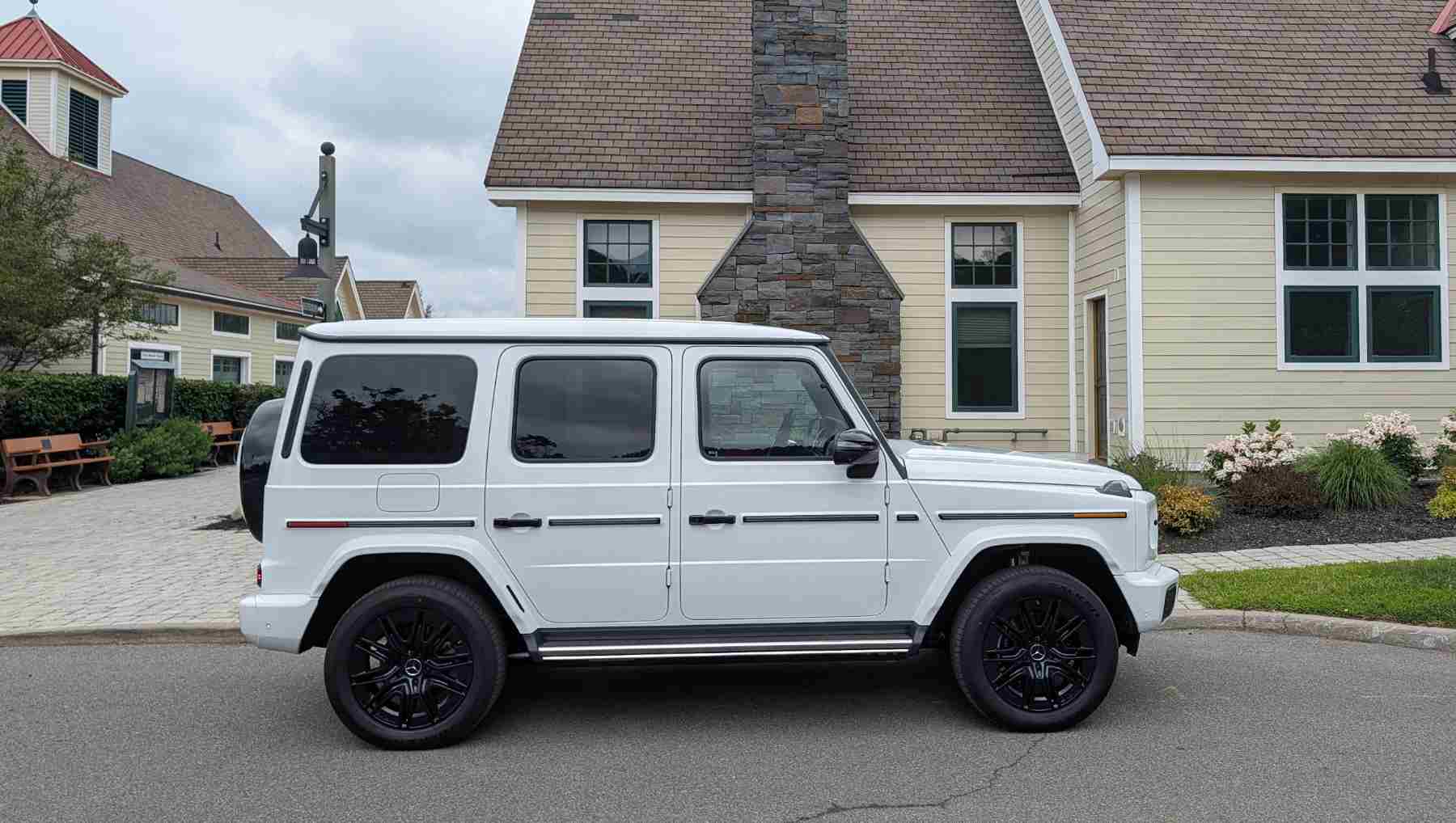
The G-Wagen is a bit of a cultural icon. Yes, it wasn’t the first boxy 4×4, SUV, but that hasn’t stopped it becoming a status symbol in its own right. As with a lot of other things, there’s even an electric version: the 2027 G580 with EQ Technology.
But is the electric version of this German icon any good? Or has Mercedes fallen into the same trap as Porsche? Well, there was only one way to find out. I snagged one on loan for a few days and put it through its paces. In that time, it fulfilled a lot of my expectations, made me rethink EVs a little, and had one setback that will be obvious to anyone who passed middle school physics.
This is the most ICE-like EV I’ve ever encountered
In an attempt to ease the transition into EVs, manufacturers have tried a number of things over the years. For example, Maserati sticks an overly complex speaker array in its Folgores to simulate the sound a V6 would have made. Then you have the Dodge Daytona, which goes over the top with an electric exhaust sound that sounds like something you’d hear from a large animatronic dinosaur at a theme park.
Mercedes doesn’t do that. It’s more subtle, but has somehow achieved more than any other electric vehicle I’ve encountered. If I didn’t know it was an EV, I could’ve been fooled into thinking it was a hybrid.
When the vehicle is running the dash subtly vibrates, as does the wheel. Pretty much exactly how it would vibrate if there was a four-liter V8 rattling away under the hood. Then there’s the noise, which is also subtle. The sort of low hum you get from an engine that’s either idling or happily running at 1500 RPM.
If you focus on it, the illusion shatters. But it’s just meant to exist in the background and create that sense of familiarity. It’s genuinely exceptional in this regard. There isn’t a general consensus on whether EVs should be trying to replicate ICE vehicles or instead run off to do their own things. But if you are going to make an electric-powered pseudo-ICE vehicle, then this is the way to do it.
As you may expect, the interior is lovely
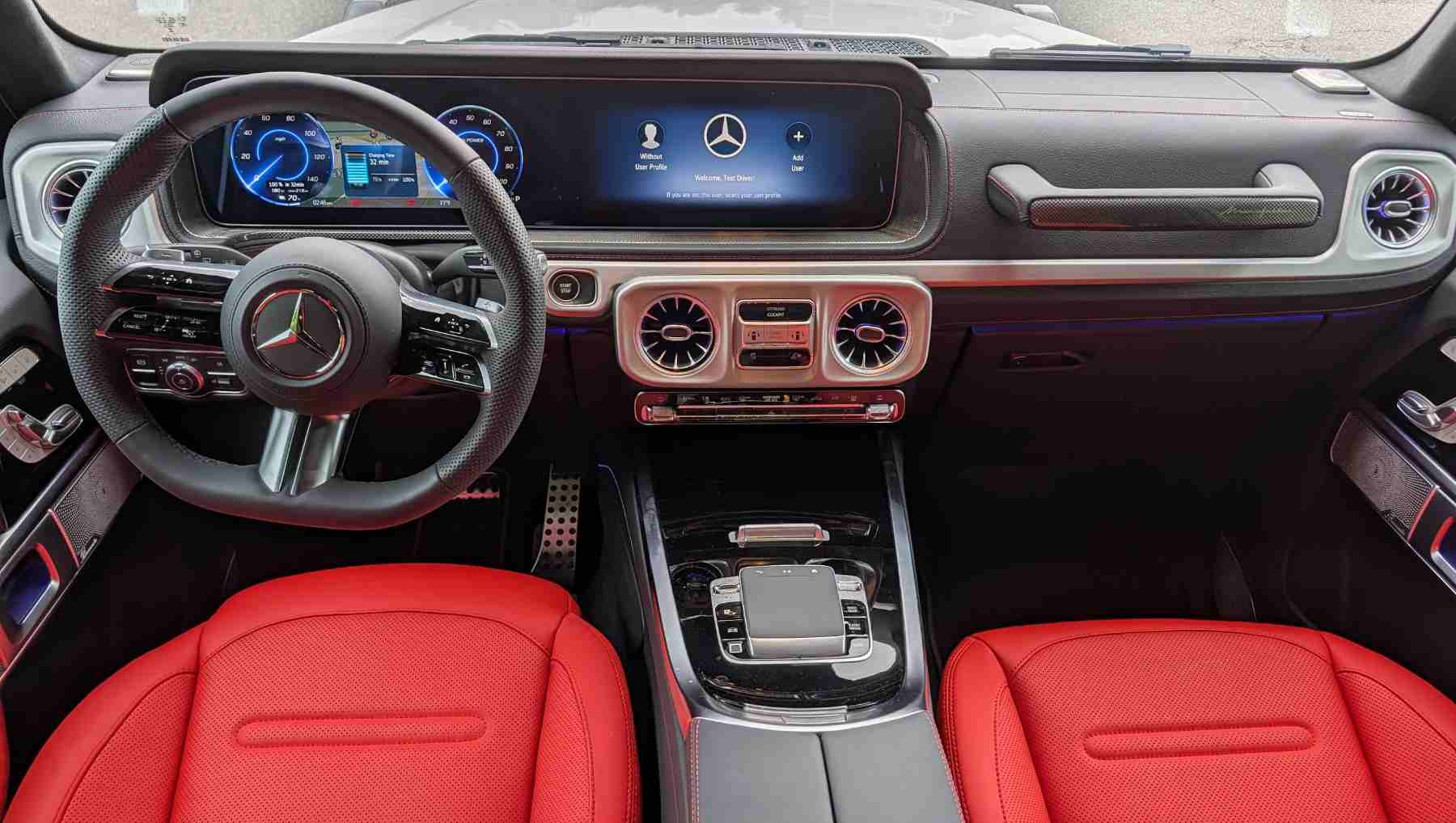
Despite its rugged appearance and off-road lilt, we’re still looking at a luxury German car here. The particular example I tested had a wonderful reddish-orange color. The leather itself is of high quality and the front seats are packing all of the comfort features you’d expect. They are vented, heated, and capable of giving you a somewhat decent massage.
As for the infotainment system, that’s controlled through a central 12.3-inch MBUX display which is pretty easy to navigate. The sound system is by Burmester, and genuinely one of the best car audio systems on the market these days. Unlike some competitors (looking at you, Bose) it doesn’t start sounding a bit tinny when you’re trying to give yourself permanent hearing damage.
One non-luxury element is the doors. All five of them. While a lot of luxury vehicles have automatic or soft close, features the G-Wagen is something different. It’s robust, like an AK47 designed by Prada. If you close the door like a normal human, you’re going to get a warning that the door isn’t shut properly. You need to close that thing like you mean it. The same goes for the trunk door. When I first got into the G-Wagen, I made it about 500 yards before a light flashed up and told me I hadn’t closed it properly. I stopped, opened it, then closed it with sufficient force as I didn’t want to risk losing my luggage on a trip up I-87. But all of this does add to the robust off-road vibe the vehicle has.
One omission is the lack of a 120-volt outlet. These are very handy when camping, using a laptop, or you’re just looking for a way to fast-charge your phone. The G-Class not having one is a bit of a letdown given its cost. Still, there are many people that have one in their vehicle and have never used it. There are plenty of USB-C ports dotted around though, and a wireless charger, so keeping a phone or other small device topped up isn’t an issue.
The electric G-Wagen is packed with off-roading features
I’m starting to feel like a bit of a fraud here. I regularly get vehicles primed for off-roading, but living in upstate New York there are near no places I can go to test them out properly. Still, the G-Wagen looks capable of some decent off-roading with its near 10-inches of ground clearance and quad-motor setup. While there are arguments against electric off-roading, four motors and torque vectoring totally eliminates the need for differentials and is arguably more effective with none of the downsides.
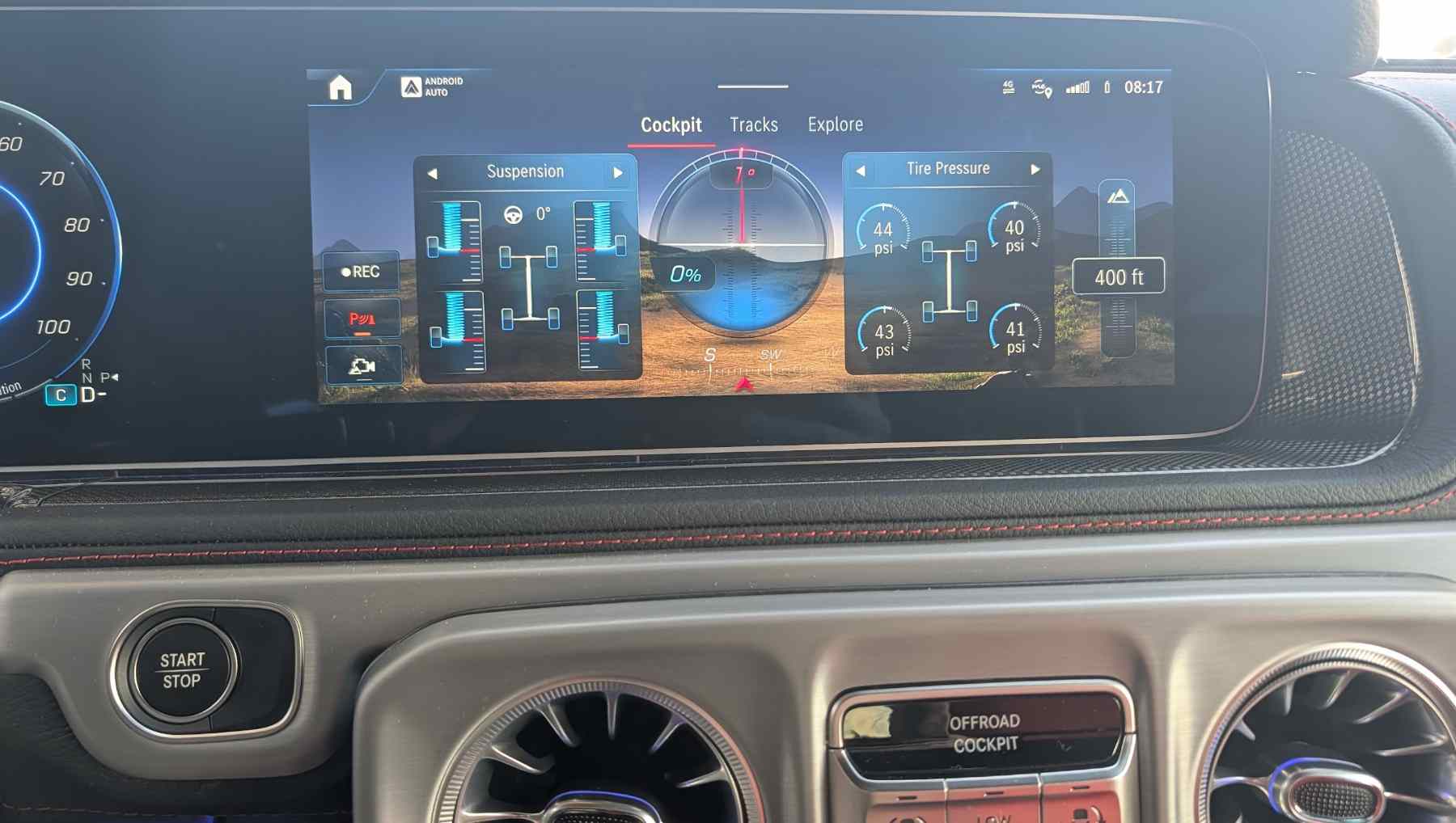
Right in the middle of the dash you have an “off-road cockpit” button that alters the display and unlocks all of your off-roading options. The new display gives a ton of useful off-roading information along with easy access to various off-road settings.
As for the cons, if I was somewhere like Red Rock or Moab battery range would be a major concern. As would the fact I’m putting a very heavy, $160,000, SUV over some pretty jagged rocks. There’s a difference between hearing a ding under a beat-up old Jeep that you bought specifically for this, and causing anything resembling damage to a $160,000 SUV. One’s par for the course, the other goes clean through your soul.
Most people will never off-road their G-Wagen, and the majority of those that do will spend an afternoon on a gravel track or maybe tackle something a little muddy. But it definitely seems capable of a lot more if you’re brave enough.
The lack of range is a bit of a downside
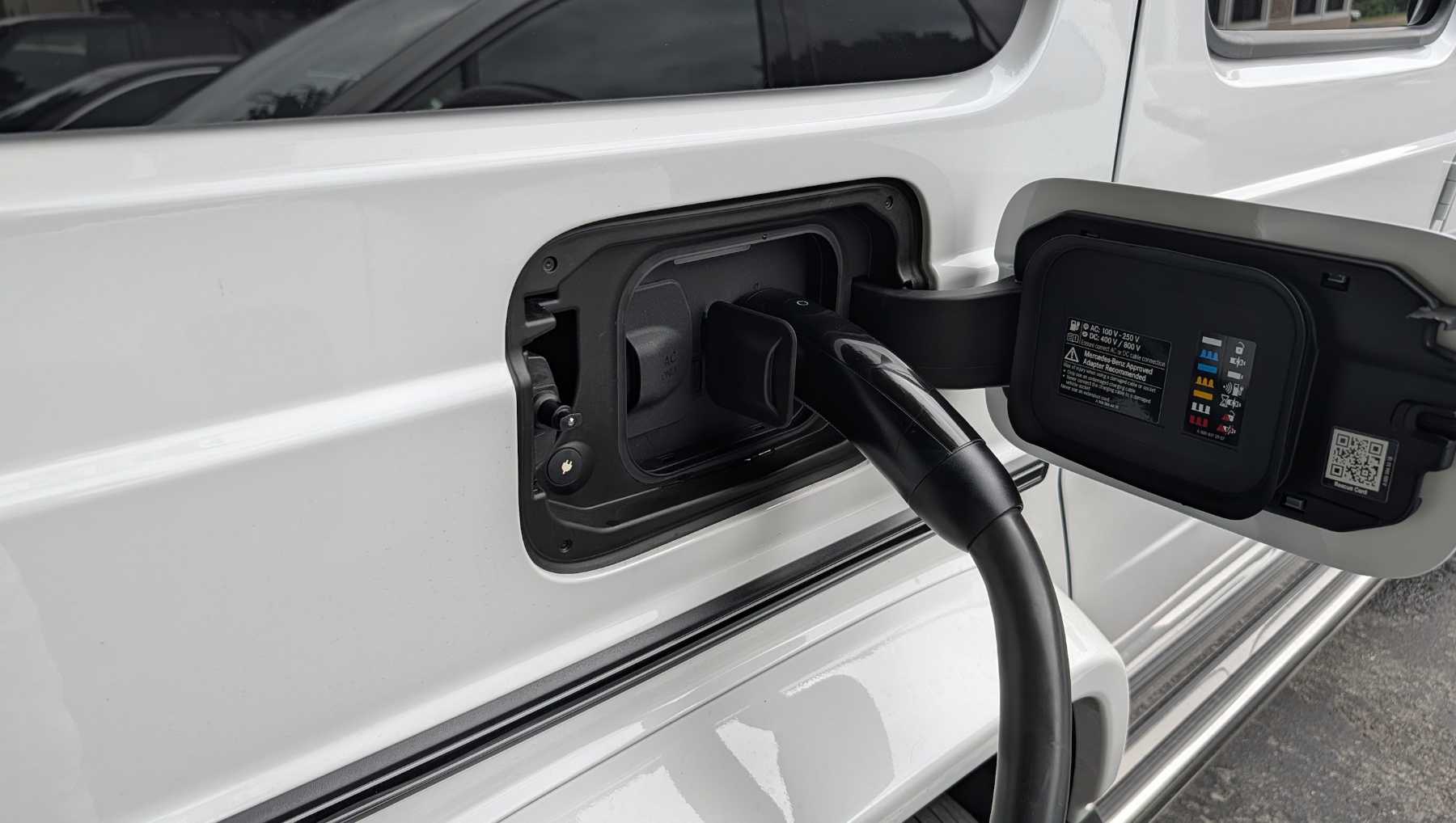
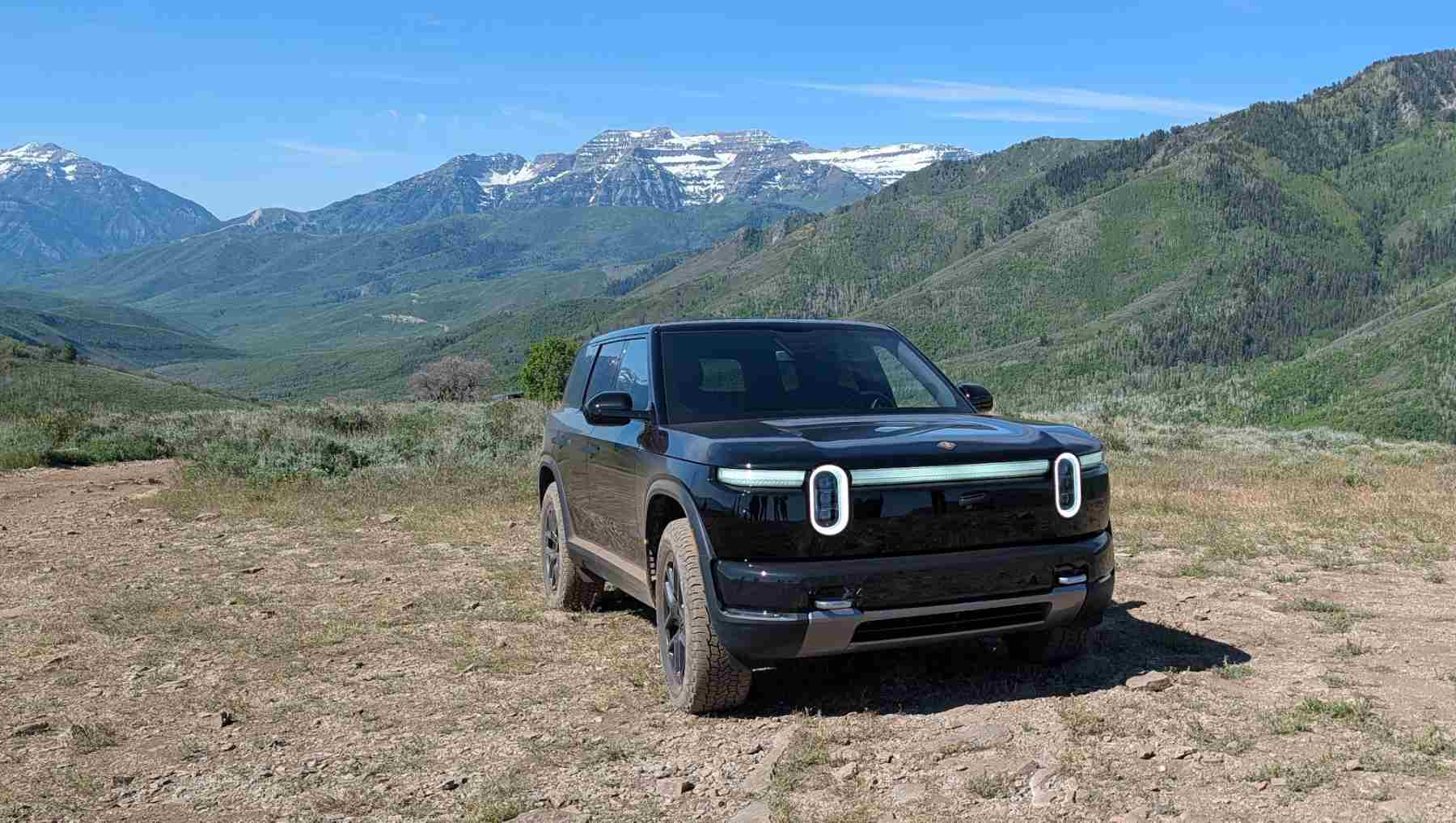
If there’s a downside to the electric G-Wagen, it’s the vehicle’s range. This isn’t down to the battery pack. While the Mercedes’ 121.97 kWh is smaller than the Camry-sized battery in the Escalade IQ, it is larger than both the Rivian R1S and the Tesla Model Y.
It’s more due to the fact G-Wagens are about as aerodynamic as a house brick with two other house bricks taped to it. Aerodynamics play a huge part in EV efficiency. If air is providing more resistance, you need more power to overcome it. That power comes right out of the battery, obviously.
But you can’t criticize the G-Wagen for that. It’s like criticizing a giraffe for having a weirdly long neck, or taking a pop at wasps for being fundamentally evil.
Mercedes could fix this, but that would involve altering the shape that makes the G-Wagen distinct. That would be a horrific mistake. If you want to know what happens when you prioritize aerodynamics over style I’ll refer you to the Ferrari Luce.
As with other EVs, range gets hit hard on the motorway with higher speeds causing greater air resistance and fewer regenerative braking opportunities robbing the battery of extra charge.
. To put it into perspective, I was swapping the vehicle out in New Jersey which is a 120 mile trip one way. To play it safe I charged until the vehicle estimated it had around 180 miles of range. Due to some awful weather, I was actually driving pretty slowly, sensibly, and economically. I got there with an estimated 15 miles or so of range remaining.
How does it actually drive?
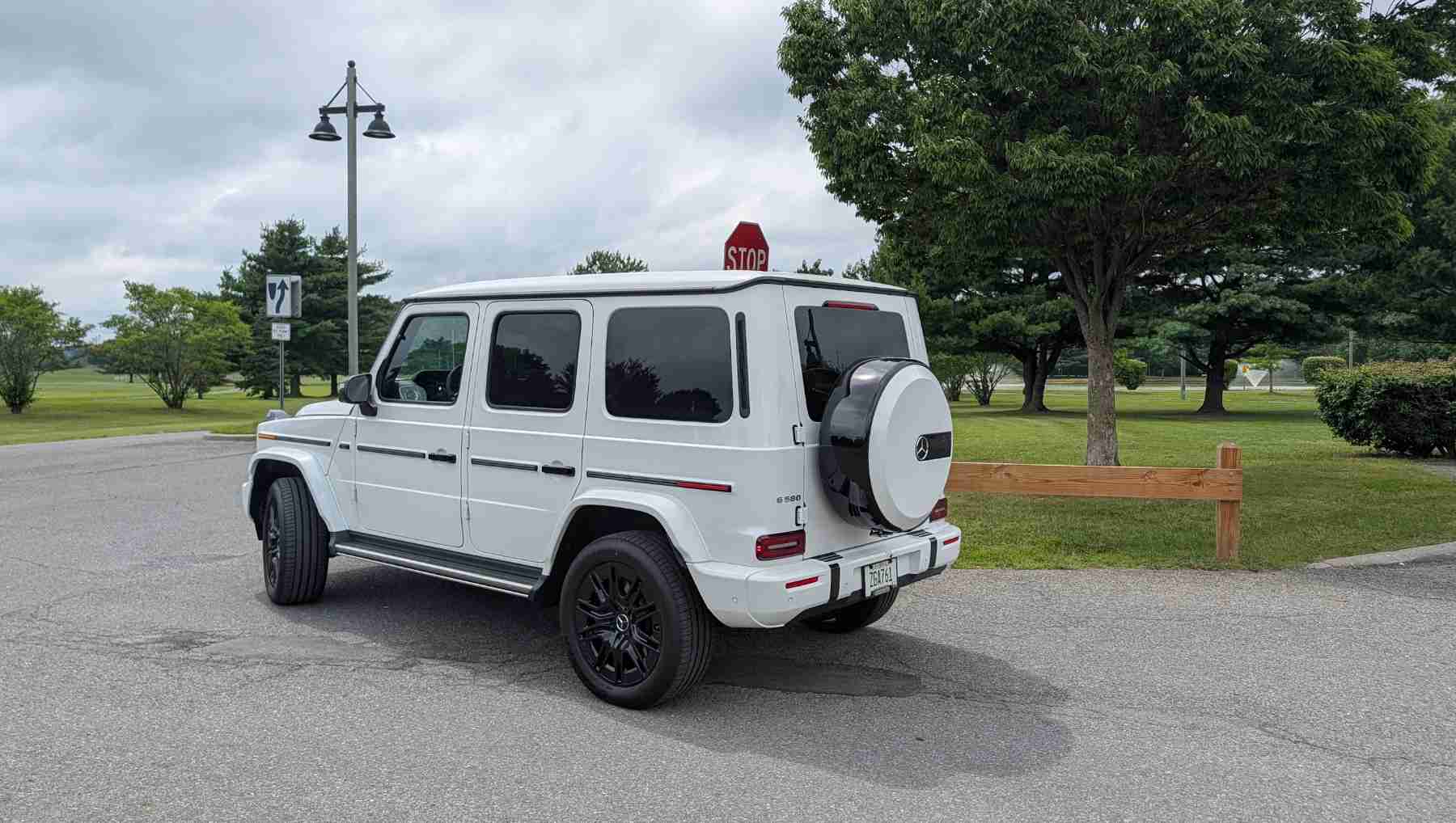
So we’ve talked about the styling, range, and practicality. But how does the electric G-Class actually drive? First, you have to take the size into account. Despite only having two rows, you are pretty high up and it’s a really wide vehicle. I’d stick it in the “feels a bit like a bus” category when it comes to road presence.
In terms of acceleration, it feels a little restrained in normal use, which is a positive. Constant harsh acceleration and braking just sends everyone reaching for the vomit bags. I feel like Mercedes has tried to replicate an ICE vehicle when it comes to daily driving here too. With that being said, it does have a sub five second 0-60 time. So it has plenty of punch if you do want to push the accelerator straight to the floor.
As for handling, I honestly expected more body roll from something this size, but the G-Class handled corners very well. Ride comfort is also pretty solid, especially on longer distance trips.
Mercedes has really impressed me lately, and the electric G-Class only adds to it

I’ve driven a few different things from Mercedes’ lineup in the last few months, and for the most part I’m pretty impressed. Despite the odd nitpicky fault and obvious the range issue the G-Wagen has, I found it pretty endearing. The range is less of an issue when it comes to driving around the city and daily commuting, plus it’s something that you couldn’t “fix” without transforming the vehicle into something that is not a G-Wagen.
This is a G-Wagen in every way, from the exceptional engine mimicry, to the quality of the interior, to the rugged quirks, to the obnoxiously powerful windshield washers. I’ve noticed a lot of pessimism when it comes to EVs in recent times, but if more manufacturers took a leaf out of Mercedes’ books things would likely be different.
Anyway, if you don’t buy it the military probably will.