
If you’ve always wanted a Polestar but didn’t want to pay for one, now may be the time.
In late June, Polestar announced it was leaving the United States market after the Commerce Department refused to give it a pass under the new Connected Vehicle Rule, which blocks cars with China-linked connected software starting with the 2027 model year. Polestar didn’t seem that concerned, noting that most of its sales were in Europe anyway. You know, where people buy EVs.
However, it didn’t leave without leaving Polestar 3 and Polestar 4 models sitting in dealership inventories. And now those models are getting serious discounts. Serious as in “luxury EV for Camry money” serious.
Polestar 3 and 4 deals in the United States
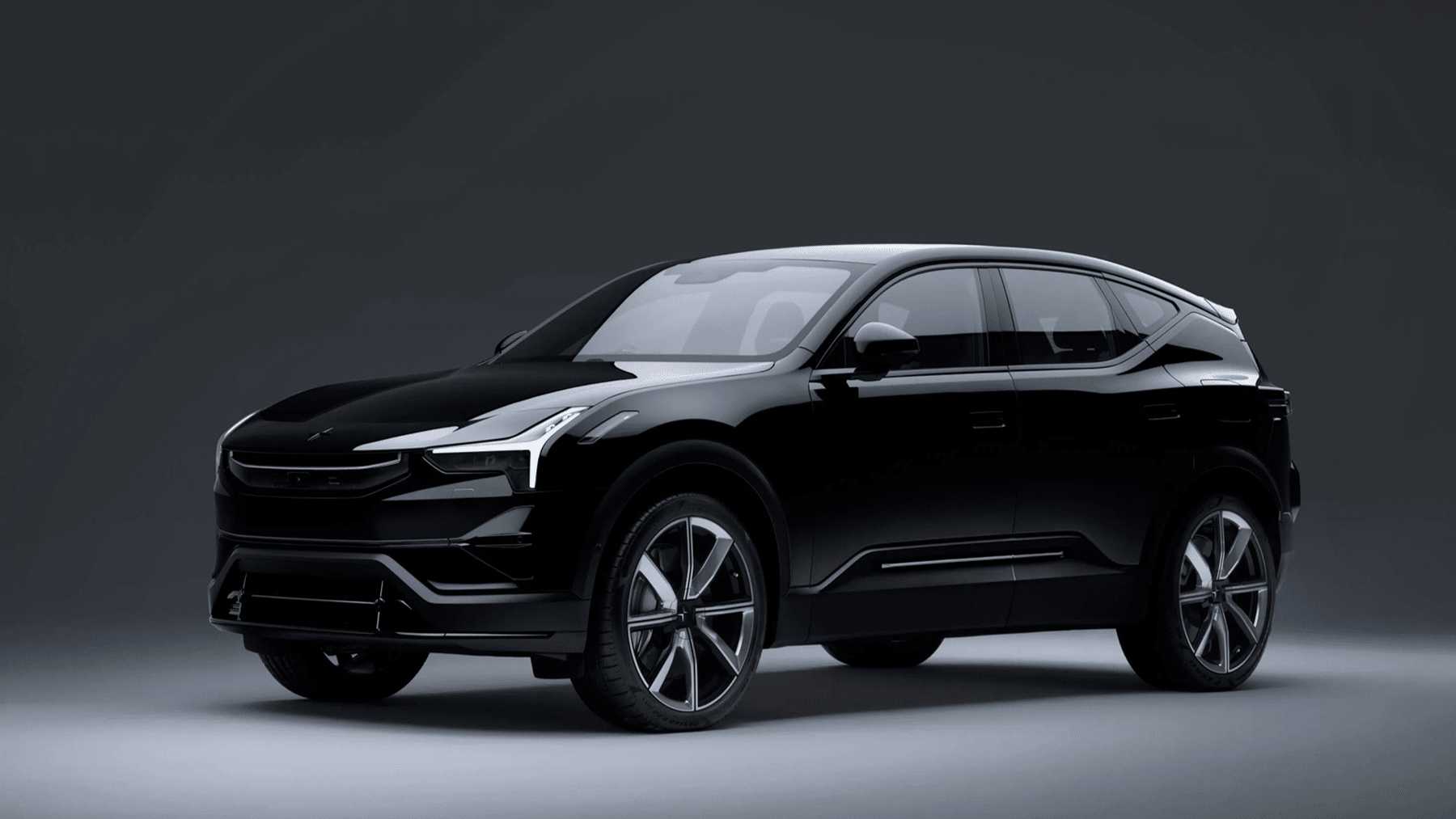
The Polestar 3 and Polestar 4 are not cheap, with stickers starting around $67,500 and $56,400-$57,800, respectively. They were part of the whole “EVs are too expensive, and new cars are exploding in price” thing that’s been discussed in the past few years.
But right now, cash buyers can get a $25,000 “Polestar Clean Vehicle Incentive” on the Polestar 4, and up to $23,000 off the Polestar 3. The offer runs from July 1 through July 31, and you have to take delivery before it expires. So no, you can’t sleep on this one until Labor Day.
The math, per Motor1: the rear-motor Polestar 4 drops to $32,800, and the configurator was even flashing $31,400 late last week. That’s a 272-hp, 310-mile luxury crossover with no rear window for the price of a mid-trim Camry. If you spend $39,300 (seen as low as $37,900), you get the dual-motor version with 544 hp.
The Polestar 3 now starts at $44,500 for the Long Range Single Motor, down from $67,500, with the Dual Motor at $50,400 from $73,400. All three configurations carry the $23,000 cut. Of course, that includes no options.
Don’t have $32,800 in cash lying around? Same. The Polestar 4 is also eligible for $19,000 in lease support, which puts the single-motor car at $399 per month for 39 months with $1,000 down, though you only get 7,500 miles a year. There’s also a zero percent financing offer over 60 months with an $18,000 discount.
And if you already own (or owned) a Polestar, there’s a loyalty bonus on top: up to $4,000 toward a Polestar 3 or $1,000 toward a Polestar 4, also through July 31.
Why this is happening, and why Volvo gets to stay
Here’s the part that makes this whole thing feel like a soap opera. The Connected Vehicle Rule targets vehicle software and connectivity linked to China or Russia. Polestar is a Swedish brand owned by China’s Geely. So is Volvo. Commerce gave Volvo the authorization to keep selling. Weeks later, it told Polestar no.
Same ultimate parent company. Same rule. Two different answers.
It gets better. The Polestar 3 is built at Volvo’s plant in Ridgeville, South Carolina. A Polestar 3 rolls off the same American assembly line as a fully approved Volvo EX90, and one of them is banned from sale starting with the 2027 model year. Make it make sense.
The writing had been on the wall for a while, honestly. Polestar pulled the 2 from its US configurator back in April 2025 when tariffs made the China-built sedan uneconomical, and US sales fell 42% in the first half of this year to just 1,895 units, per Motor Intelligence estimates. This clearance sale is the final chapter, not a plot twist.
So… should you actually do this?
I feel like it’s probably worth grabbing one if you already wanted one. It’s a good deal on a genuinely cool vehicle if you’re into electric anyway. Although I think my colleague would say you should just get a Lucid instead.
The service question actually has an answer now, and it’s better than I expected. Polestar says it will “continue to support customers, including providing access to its service network,” and a company spokesperson told Reuters that owners can get their cars serviced at its 32 US service locations, which live inside Volvo dealerships. Warranties stay intact too. So yes, the answer to “maybe through Volvo?” is literally: through Volvo.
This is not a Fisker situation, in other words. Fisker went bankrupt and evaporated, leaving owners to figure out repairs with independent shops and prayer. Polestar is a functioning company that will keep selling cars everywhere except here.
The real risk is resale value. You’d be buying a premium EV from a brand with no new US sales after the 2027 model year, and the used market tends to notice things like that. Also worth knowing: the federal EV tax credit died last September, so every dollar of these discounts is Polestar’s money, not Washington’s. Which, frankly, is why the discounts are this big.
It could be a bit of a gamble. But EVs feel outdated in a few years anyway, so by the time depreciation really stings, maybe you’d be onto the next thing regardless.
A 544-hp Swedish crossover for less than the average new car transaction price, from a brand the government just showed the door… is it a bargain, or is it a $39,300 reminder to read the geopolitical news before you buy a car? I genuinely can’t decide. But I know which one my group chat would pick.