
Sodium-cooled reactors are back in the American conversation. TerraPower started nuclear construction on one in Wyoming in April, Oklo has a smaller one going up at Idaho National Laboratory, and the pitch behind both runs the same way: drop the pressurized water, run hotter, build cheaper.
The other end of that machine’s life gets almost no airtime. One country has actually been through it, and it is still going.
France stopped generating power with Superphenix, a 1,240-megawatt sodium fast reactor on the Rhone, at the end of 1996. The government made the shutdown official in 1997. Twenty-nine years later, on July 22, EDF posted a note from the site under the headline “Nouveau jalon atteint a Creys-Malville: decoupe du Petit Bouchon Tournant.” New milestone reached: cutting of the small rotating plug.
EDF’s published figures put that plug at 212 metric tons, 3.3 meters tall and 7.1 meters across. That is roughly 234 US tons in a disc 11 feet high and 23 feet wide. It came out of the reactor in 2019.
The plug came out in 2019 and did not reach a saw until 2025
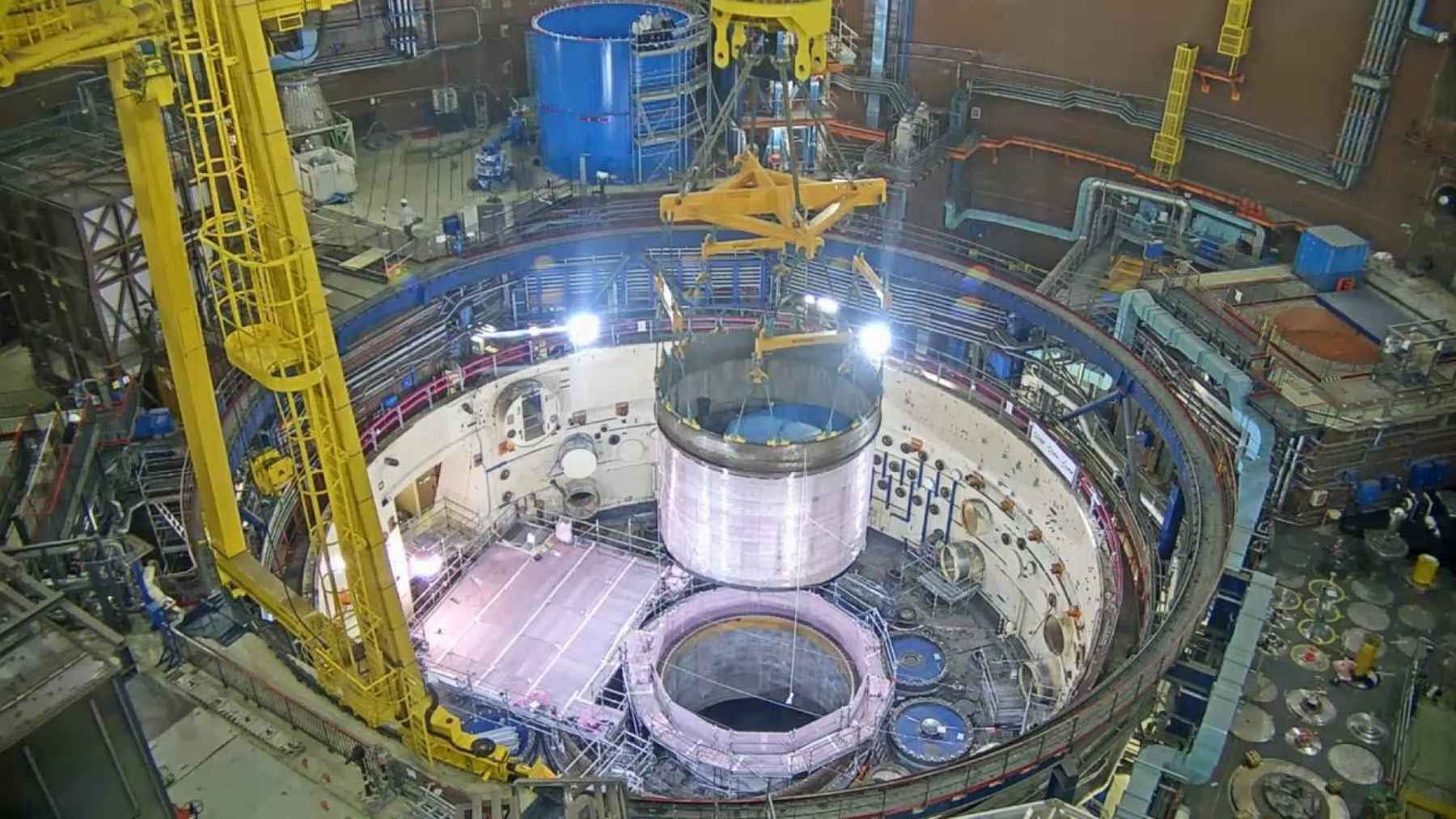
EDF lifted the small rotating plug off the reactor slab on September 4, 2019. The operation itself took three and a half hours, and an 11.5-ton steel ring sat on the platform underneath the whole time as biological shielding.
Then it waited. Superphenix has three plugs, and they had to be handled in sequence, with the largest one and a new confinement structure taking priority in 2021 and 2022.
EDF’s site letter for the first half of 2026 puts the plug’s move into a purpose-built cutting workshop in mid-January 2025, with crews from the contractor Nuvia doing the work. The same letter says the plug is coming apart into 15 blocks, headed first to the site’s transit building and then to a storage center run by ANDRA, the French radioactive waste agency, during 2026.
So the July note is the end of a job that has been running for more than a year on a component that has been out of the reactor for almost seven.
Three plugs closed that vessel, one nested inside the next
The plugs are the lid. They sat one inside another, and each one had to be extracted, moved, and cut up separately in its own shielded workshop.
The core cover plug is the one that shows what this work actually involves. It held the control rod drives, which put it among the most irradiated pieces in the building, so EDF sent in a robot called RODIN.
RODIN cut the plug from the bottom up, because the bottom end had been closest to the core and was the hottest. The plug was then lowered through the workshop in stages. Once readings dropped far enough, human operators took over and finished the job with a thermal lance.
Sodium is the reason every step here takes years
Fast reactors need a coolant that carries heat without slowing neutrons down. EDF’s own technical brief lists why sodium won: poor neutron moderation, excellent heat conduction, low viscosity, and a boiling point of 883 degrees Celsius (1,621 F) at ambient pressure, so the primary loop never has to be pressurized.
The catch is the part every engineer knows. Sodium ignites in air and reacts violently with water, which rules out most of the standard demolition toolkit.
EDF’s answer was to build a sodium treatment plant, known as TNA, inside the turbine hall after stripping out the turbines and alternators. The plant fed the drained sodium into an aqueous soda solution, producing sodium hydroxide, and that hydroxide was then used as mixing water for one-cubic-meter concrete blocks. Those blocks sit in a dedicated storage building on site to this day.
The tanks that had held the plant’s initial sodium charge were their own project. Three of them, each 17 meters tall (56 ft) and weighing 80 tons, and each one full of residue that could not be washed out conventionally.
Altrad Endel developed a jacking rig that cut the tanks from the bottom upward, which kept crews off high platforms and out from under suspended loads. EDF’s press fact sheet records the finish in July 2024, after 24 months of work, which the company puts at 35 percent ahead of schedule.
The reactor ran four and a half years and has been coming apart for twenty
Construction started in 1976. First grid connection came in January 1986. Over its whole life Superphenix produced 7.9 terawatt-hours, and EDF’s own accounting is blunt about how that happened: between first criticality in 1985 and the 1996 shutdown, the reactor accumulated four and a half years of operation.
Around 1,200 people worked at Creys-Malville while it was running. Today EDF lists 90 of its own staff plus more than 200 permanent contractor employees, with a separate engineering team of about 80 in Lyon.
The vessel they are working inside is the largest ever built for a reactor. EDF engineer Damien Bilbault has described the scale by pointing out that the vessels of all twenty of France’s 1,300-megawatt reactors would fit inside it by volume.
The numbers coming out are smaller than you might expect for a job this size. As of December 2024, EDF counted 506 tons of conventional waste and 286 tons of low or very low activity nuclear waste from the teardown. Collective dose across the site that year was 10.366 man-millisieverts, and the highest single dose anyone received was 0.730 millisieverts against a legal annual ceiling of 20.
Not everything has gone to plan. France’s nuclear regulator, the ASNR, notes in its 2025 assessment of the site that technical difficulties left EDF unable to ship the cut pieces of the reactor’s core support out to the Iceda conditioning facility at Bugey. The regulator still rated the overall safety and radiation protection of the dismantling satisfactory.
Wyoming is starting the machine France is finishing
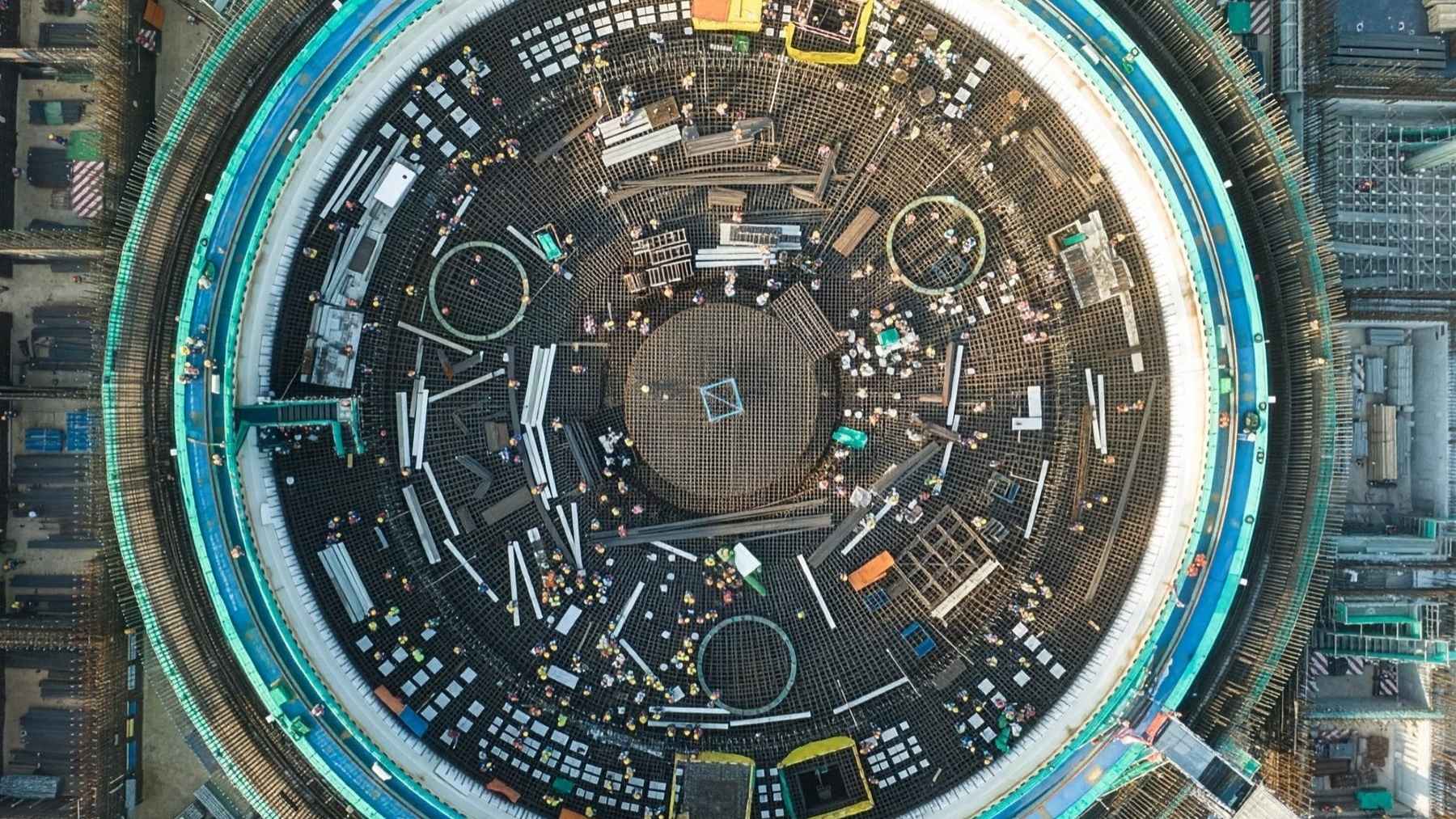
TerraPower’s Natrium plant at Kemmerer is a 345-megawatt sodium fast reactor bolted to a molten salt tank that lets output jump to 500 megawatts when the grid needs it. The Nuclear Regulatory Commission approved its construction permit on March 4, the first the agency has issued for a commercial non-light-water reactor in more than 40 years, and nuclear construction started on April 23 with Bechtel as the build partner. Fuel is targeted for 2030.
Sodium’s front end has plenty of precedent now. The Wyoming plant Bill Gates co-founded and Oklo’s compact Aurora in Idaho both have federal paperwork and steel on site.
The back end has exactly one full-scale data point, and it is in Isere. Germany’s Kalkar breeder was finished, filled with sodium and never fueled, so its site became an amusement park instead of a decommissioning case study. Japan gave up on Monju in 2016. Superphenix is the only large sodium reactor anyone has actually taken to pieces, which makes EDF’s schedule the closest thing the industry has to a real invoice.
Work at Creys-Malville is not close to done. A custom cutting machine called MADI, a mast carrying two robot arms where one holds a structure while the other cuts it, went in under the reactor’s rotating confinement shell on August 25, 2025, with roughly two years of cutting ahead of it. Framatome crews have been slicing up the vessel’s last internal support, a 150-ton piece 8.5 meters across, since February 2025, and that alone runs to 2027. The vessel itself comes after that, and the neighboring fuel storage pool is licensed to 2035.
Meanwhile the plant has become a tourist attraction. More than 1,700 people toured the site in 2025, and EDF is opening the reactor building again for European Heritage Days on September 19 and 20. Registration closes August 14, which is the fastest deadline anywhere in this story.
 mikeconley DRIVER2 months ago