
Governments warn each other’s ships to keep their distance all the time. It is routine diplomatic housekeeping, and it works because somewhere on the receiving end there is a captain who reads the message and decides what to do about it.
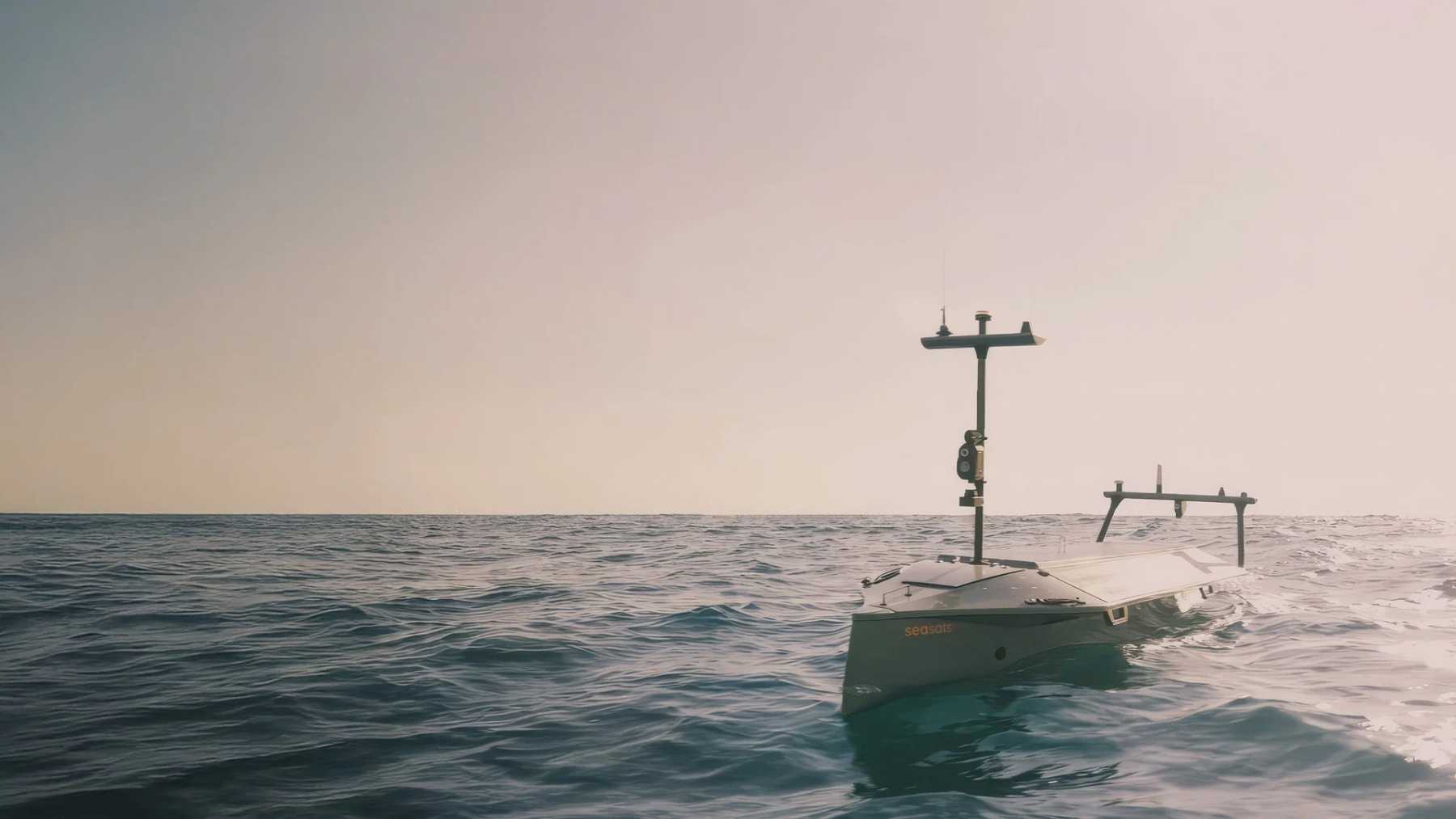
China’s foreign ministry issued that warning on July 30, after footage went public of one of its destroyers being filmed at close range in the South China Sea. The boat holding the camera had nobody on it.
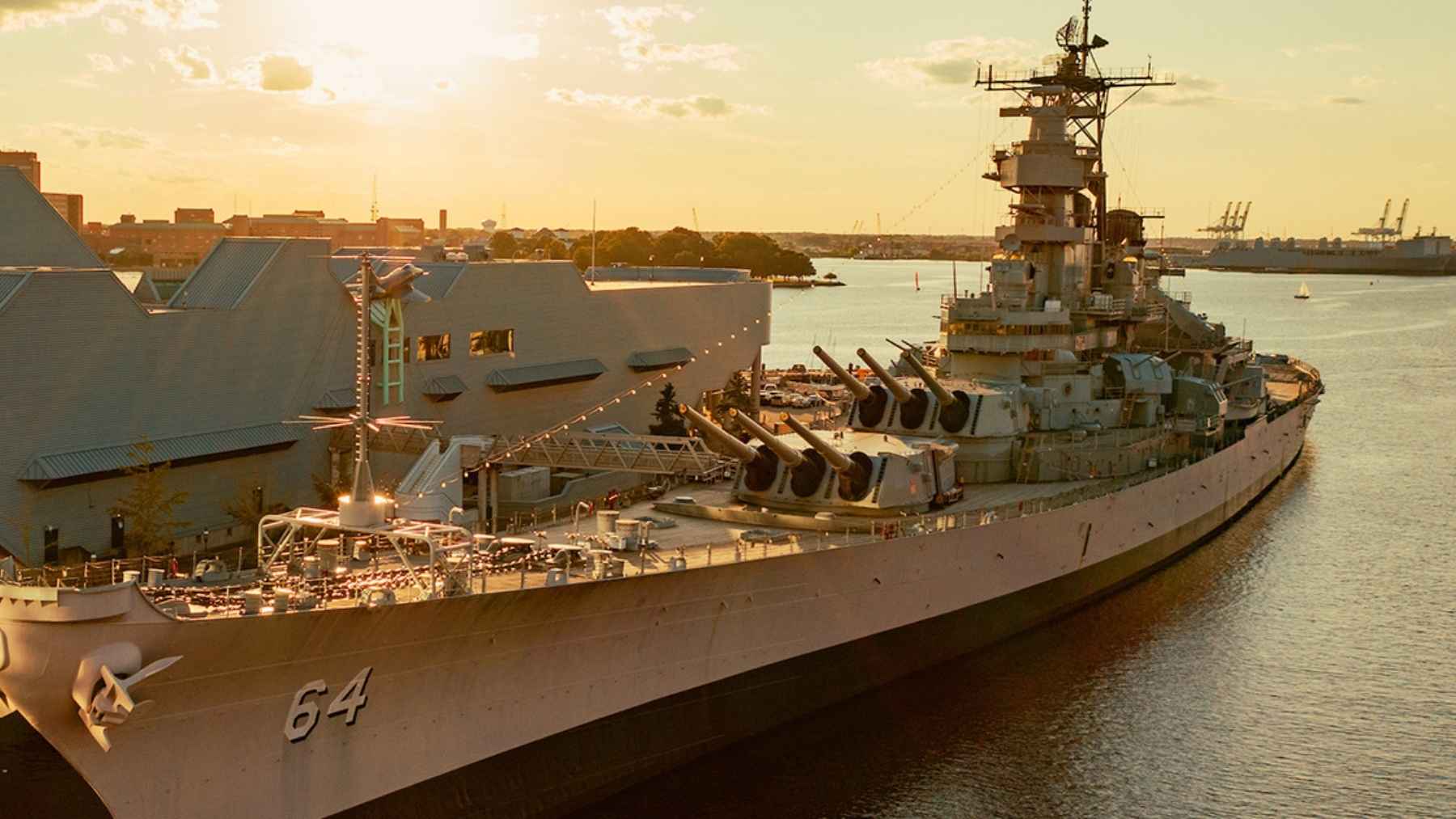
That boat belongs to Seasats, a six-year-old company in San Diego. Reuters reported the encounter first on July 29, verified the video independently, matched the warship’s deck layout, superstructure, crane and mast against archive imagery to identify it as a Type 052D guided-missile destroyer, and placed the recording about 105 km (65 miles) northwest of Luzon Island, inside the Philippines’ exclusive economic zone.
Reuters put the drone at roughly $240,000 and the destroyer at about a billion dollars. That gap is what most of the coverage grabbed. The stranger problem is that the international rulebook cannot agree on what the cheap one legally is.
The boat weighs 305 pounds and tops out at 5 knots
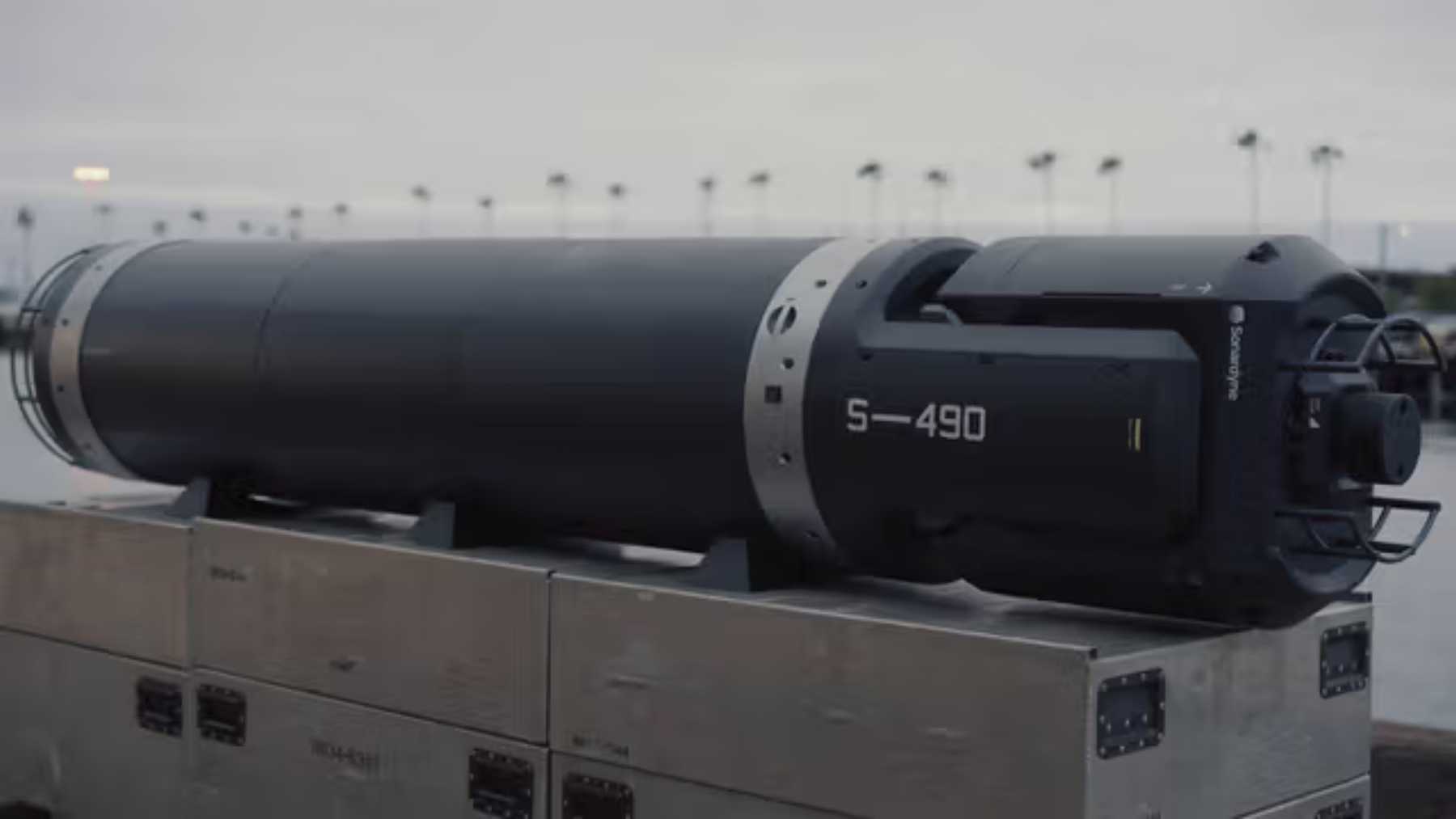
The Lightfish is the smallest thing Seasats sells and also its flagship. The company’s published specification lists 305 pounds (138 kg), 5 knots flat out, 8,000 nautical miles of range and up to six months of endurance on solar-electric power with a hybrid reserve. Two people can carry it to the water.
The base model ships with five HD cameras, AIS, Iridium and Starlink links, and onboard processing that classifies what it sees. It is rated for Sea State 6, which Reuters notes covers waves up to 20 feet.
Seasats CEO Mike Flanigan gave TWZ the tactical detail. The Lightfish picked the destroyer up on radar at about 10 nautical miles and closed to within several hundred meters, and the destroyer altered course and watched it back.
Two of those numbers come from the company and nowhere else. Radar is not on the Lightfish base spec sheet; Seasats lists it on the bigger Quickfish. The company also sells a library of more than 50 bolt-on payloads, so a radar fit is unremarkable, but the 10-mile track has not been independently confirmed.
The position does not fully line up either. Reuters reviewed Seasats’ navigation data and got 65 miles northwest of Luzon. Flanigan told TWZ roughly 73 miles. Both land in the Luzon Strait, the channel between Taiwan and the Philippines that connects the Pacific to the South China Sea.
The dates reconcile cleanly. Flanigan puts it on the evening of June 15, Pacific time. Reuters pulled June 16 from the original video file metadata. Cross the date line and those are the same moment.
The treaty says a warship has to be manned by a crew
The 1982 UN Convention on the Law of the Sea never actually defines the word “ship.” It does define “warship,” in Article 29, and that definition is specific: a vessel belonging to a state’s armed forces, bearing national markings, under the command of a commissioned officer whose name appears on the service list, and “manned by a crew which is under regular armed forces discipline.”
Read plainly, no crew means no warship. Articles 95 and 96 grant complete immunity on the high seas to warships and to government ships in non-commercial service. Anything that qualifies as neither gets neither.
Lawyers do not all read it plainly. Britain’s Ministry of Defence told a House of Lords inquiry in November 2021 that Article 29 exists to make states accountable for what their naval vessels do rather than to require warm bodies on deck, and that uncrewed vessels should be folded into the same regime. Naval-legal commentary splits both ways, and no international court has settled it.
The argument sails past this particular boat anyway. The Lightfish off Luzon was not a navy asset. It belongs to a private company and was, by Seasats’ account, in the middle of a long commercial transit.
Washington argued the other side of this in 2016
The last time China and an American uncrewed vehicle collided over legal status, the vehicle wore a Navy badge. On December 15, 2016, a Chinese salvage ship put a small boat in the water and lifted an ocean glider out of the sea about 50 nautical miles northwest of Subic Bay, while the survey ship USNS Bowditch was recovering it.
The Pentagon’s statement the next day ran to one line of law: “The UUV is a sovereign immune vessel of the United States.” China handed it back four days later.
That claim rested on the glider being government property in non-commercial service. Seasats’ boat is neither, which is why the 2016 precedent does not transfer cleanly however tempting the geography makes it. Two incidents, a couple hundred miles apart, resting on different articles.
There is also a footnote Americans tend to skip. The United States has never ratified UNCLOS. It treats the navigation provisions as customary international law and argues from them regardless.
The rules of the road never asked whether anyone was aboard
Collision avoidance is the one place the paperwork holds up. COLREGs, the international regulations for preventing collisions at sea, define a vessel in Rule 3(a) as every description of water craft “used or capable of being used as a means of transportation on water.” Crew is not mentioned.
So the same hull counts as a vessel for the purpose of not hitting anything, and, on the restrictive reading of Article 29, does not count as a warship for anything else.
Flanigan told TWZ that Seasats works to two principles: robots give way to human-piloted vessels, and uncrewed boats follow COLREGs wherever they can. He also said his boats meet commercial shipping “on a nearly daily basis,” and that most mariners either fail to notice or are simply curious.
An asymmetry sits underneath that. The Lightfish is far too small to be required to broadcast AIS and broadcasts it anyway. Warships are not required to at all, because SOLAS Chapter V, which carries the AIS rule, exempts warships and naval auxiliaries outright. When a Lightfish crossed the Taiwan Strait in May on the first autonomous transit of that waterway, Seasats said the Chinese warships it logged inside Taiwan’s exclusive economic zone were running with AIS off.
Denmark got a version of the same lesson this summer, when a Russian corvette ran dark past an uncrewed Danish surveillance boat near Bornholm and sent a quadcopter over to look at it.
The first global code for crewless ships took effect on July 1
The International Maritime Organization has been chewing on this since 2017. Interim guidelines for trials landed in 2019, a regulatory scoping exercise wrapped in 2021, and on May 22 the Maritime Safety Committee adopted the first International Code of Safety for Maritime Autonomous Surface Ships, by resolution MSC.595(111).
The MASS Code took effect on July 1, 2026. It is non-mandatory to start with. It sets goal-based standards for design, navigation, remote operations centers, connectivity, fire safety and search and rescue, and it defines four degrees of autonomy running from a crewed ship with decision support up to a fully autonomous one.
It also has an application clause. The Code covers cargo ships under SOLAS Chapter I, which in practice means ships above 500 gross tons on international voyages. The IMO recommends that member states apply it to smaller autonomous vessels as far as practicable, which is a suggestion rather than a scope.
A 305-pound survey drone is nowhere near that threshold. The framework for the experience-building phase gets written at MSC 112 in December. The mandatory version is targeted for adoption by July 2030, with entry into force through SOLAS amendments planned for January 2032.
Coast Guard officials say they cannot waive the crew minimum
The domestic picture is not further along. The Government Accountability Office told a House subcommittee in December that US statutes set minimum crew numbers per vessel, and that Coast Guard officials say they have no authority to waive them outside a narrow pilot program for recovering rockets at sea.
GAO’s summary of the wider problem is that American maritime law is written on the presumption that a crew will be aboard and in control of every ship. The Coast Guard has been briefing Congress on how to fix that since last winter.
Nobody has alleged that anyone broke a law
China’s foreign ministry said its naval activities follow international law and practice, and asked others to stay clear. Spokesperson Mao Ning’s line on July 30 was that relevant parties should “avoid approaching Chinese naval vessels at close range,” on the grounds that it risks accidents at sea or in the air. The Chinese embassy in Washington told Reuters it was not familiar with the situation. The Philippine embassy asked everyone not to escalate.
Seasats says it has run into Chinese warships repeatedly over the years, including Type 052 and Type 055 destroyers and Type 056 corvettes, and that it discussed the June encounter with the US military afterward without saying more. The company has raised more than $40 million and holds over $100 million in US government contracts. Its boats also pull weather duty; NOAA has Lightfish hulls parked across the Atlantic this hurricane season.
The boats at issue right now are slow, small, unarmed, and run by a company that publishes the footage afterward. That is the easy version of the question. Seasats already builds the harder one: the Quickfish does 35-plus knots, carries 450 pounds and has a payload bay built to release aerial drones, or, as Reuters described it, potentially weapons. Other yards are further down that road already. Deciding what a boat legally is gets a lot more urgent when it can catch you.