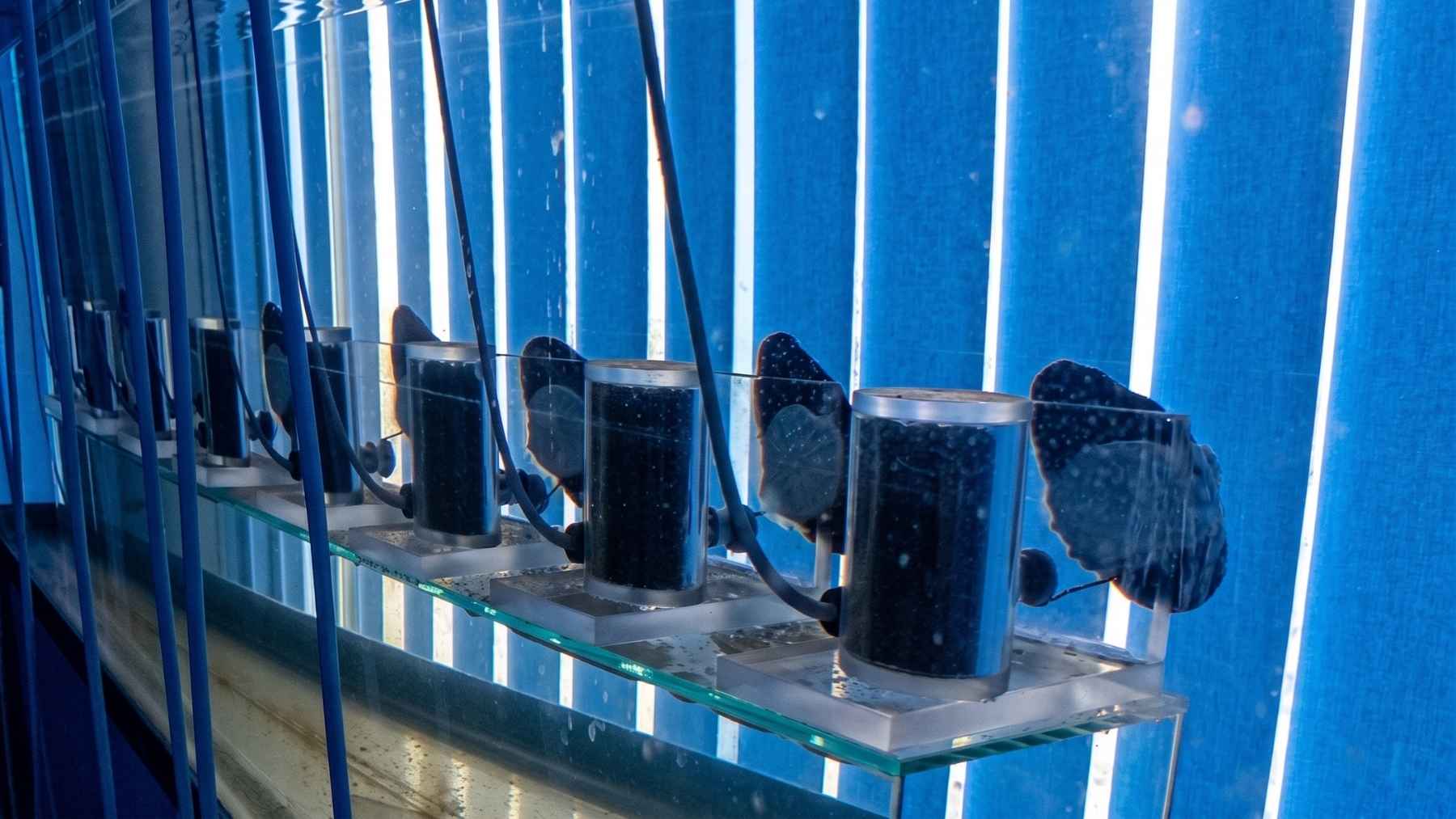

You have probably run into the post by now. Eight mussels sit in a tank in Warsaw with magnets glued to their shells, and the moment four of them clamp shut, the drinking water for the whole city switches off.
The mussels are real. The tank is real. The magnets are real.
The kill switch is not.
Both Polish utilities that actually run these systems publish how they work, and neither description involves a mollusk closing a valve. What they describe is a rolling average, a confirmation loop and a buzzer.
It is a stranger machine than the meme version, and a more useful one. There is also an American copy running right now on the Mississippi, which Minneapolis rebuilt from scratch for roughly $200,000 after the original quietly fell apart.
The magnet is the entire sensor
A freshwater mussel makes its living with its shell slightly open, pulling water through and stripping out anything organic. It is not a picky animal about what bothers it. Heavy metals, pesticides, industrial solvents, a fuel spill nobody reported upstream: the response to all of it is to shut the shell and stop breathing the problem.
That reflex is the signal, and the hardware built around it is almost insultingly simple. Piotr Domek of Adam Mickiewicz University in Poznań has spent about three decades on the technique.
Collect animals from a clean lake, glue a coil and a small magnet to the shell, and let a computer watch the magnetic field wobble as the shell opens and closes. Minneapolis uses a Hall sensor for the same job. Nothing penetrates the animal.
Freshwater mussels usually show up in infrastructure reporting as the villain. One intake gate on the Missouri River came out of the water 25,000 pounds heavier than it went in, all of it invasive zebra mussel. This is the opposite arrangement. Here the shellfish are on the payroll.
Warsaw Waterworks describes its own recruiting process in public. Animals are caught, then spend a minimum of two weeks in the lab being selected and acclimated.
Only then do technicians calibrate each one, establishing its natural resting gape so later readings mean something. Sensors go on last. The mussels then move into a purpose-built flow-through tank fed with Vistula water at the Gruba Kaśka intake, or with Zegrze Lake water at the utility’s northern plant in Wieliszew.
Shifts are short by design. Warsaw runs three months and then returns the animals to the Wielkopolska lakes they came from, and Poznań runs two. The species lives for decades, so this is a rounding error in a mussel career.
The deadline exists because an animal that gets used to the water stops being alarmed by it. Sensor drift, except the sensor is alive and the fix is a lift home.
The alarm is an average, not a headcount
Here is where the viral version falls over. Aquanet, the utility running the Poznań system, states the logic plainly on its own site.
Water is treated as safe as long as the average shell opening across all eight animals stays above the alarm level, which is set at 25 percent. An audible alarm fires only after the computer has re-analyzed the data several times and confirmed the average really has dropped.
Aquanet is explicit about why the math works that way. It exists to cancel out one mussel having a bad afternoon. Individual animals close at random, and a system that panicked every time would have been unplugged in 1995.
Warsaw’s parameters are tighter still. When Snopes put the claim to Warsaw Waterworks in 2025, the utility described an alarm that needs six of the eight animals shut for over four minutes, with the group’s average shell opening dropping below 25 percent.
Even then the output is an alert. Human specialists run further testing before anything happens to anybody’s tap.
And the number that settles it: since the system went in during 2009, the alarm has never once gone off. Seventeen years, zero events. A Warsaw Waterworks representative told local press the same thing back in 2019, so this is not recent PR tidying.
Which raises the obvious question of what the city is actually buying. The honest answer is the same thing a smoke detector sells you, and nobody argues that a detector which never fired was a waste of nine volts.
Gruba Kaśka is the real machine in this story
The mussels get the attention. The thing they are plugged into deserves more of it.
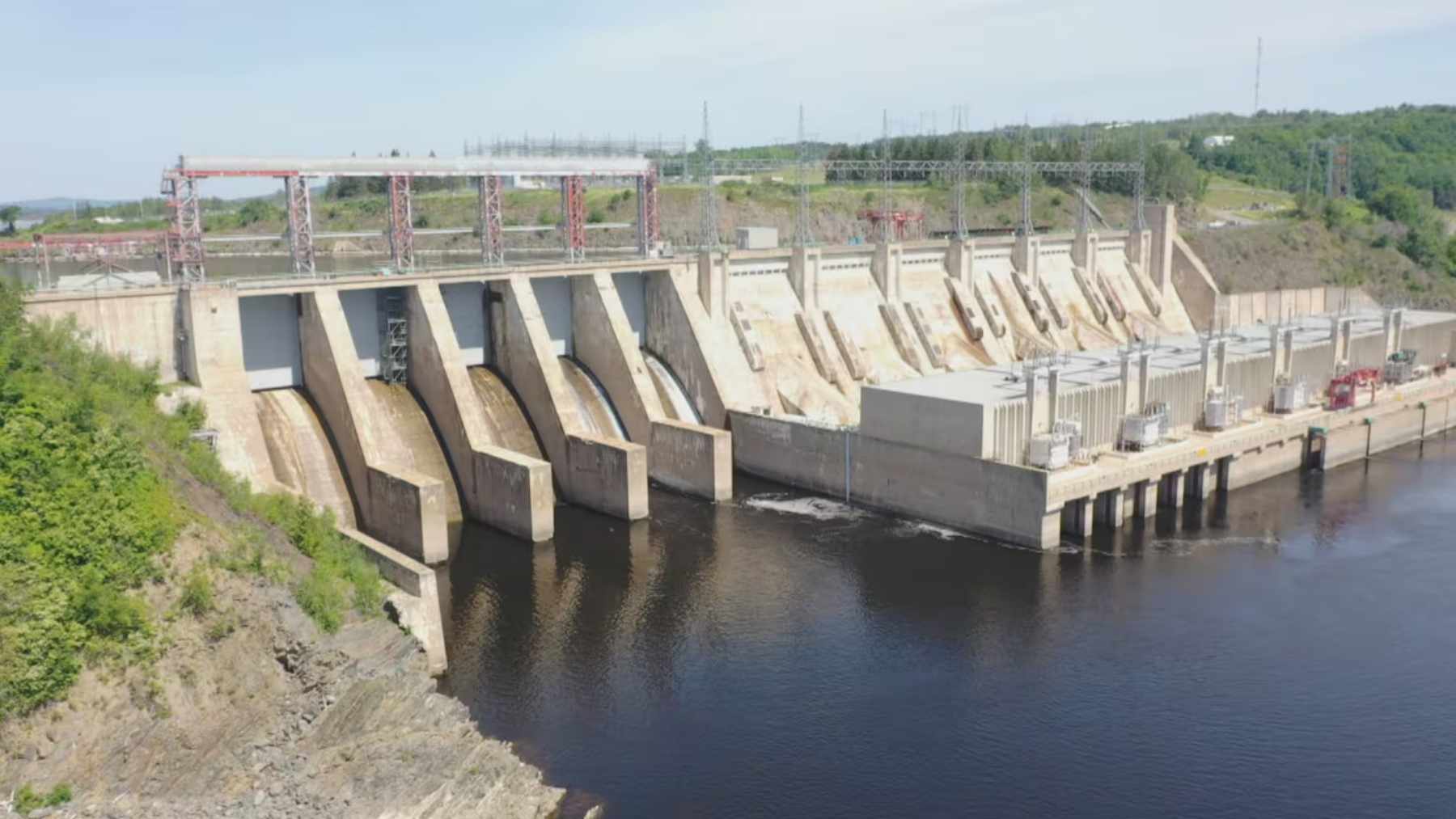
Gruba Kaśka, which translates roughly to Fat Kathy, is a cylindrical intake well standing in the current of the Vistula about 610 feet off the bank. Warsaw Waterworks puts it at more than 160 feet tall and close to 144 feet around, and calls it the largest infiltration well in Europe.
You do not reach it by boat. It connects to the Praga treatment plant through a 1,020-foot tunnel running under the river.
The engineering trick is that the riverbed does the first stage of treatment. Engineers Włodzimierz Skoraszewski and Stanisław Wojnarowicz sank the well roughly 102 feet below the bottom of the Vistula using caisson construction.
From there, 15 perforated steel drains run outward under the riverbed at a depth of about 23 feet. River water percolates down through sand and gravel before it ever enters a pipe, and the current keeps swapping that sand for fresh material. Construction started in 1953, and the first water reached Warsaw taps on September 22, 1964.
The Praga plant it feeds produces roughly 17.2 million gallons a day and covers about 30 percent of the city’s area. Across all three of its plants, Warsaw Waterworks treats around 92 million gallons a day for about 2.5 million people.
The name was chosen by public vote, and the public picked the name of an 18th-century well already standing downtown. Warsaw had one Fat Kathy and decided it wanted two.
Minneapolis rebuilt the American version for about $200,000
The United States has exactly one of these, and its recent history is a decent argument for why more utilities do not bother.
Minneapolis Water has run 24/7 mussel monitoring since 2007. The details come from George Kraynick, the city’s water quality manager, in an April 2025 presentation posted by the North Dakota Section of the American Water Works Association.
Twelve animals are monitored at a time, in a tank cleaned weekly and fed a constant 1 to 2 gallons per minute of raw river water.
Then it aged. The original mussels physically outgrew their sensors, and EPA scientist Joel Allen came out in 2014 to swap in new ones. By late 2020 only three animals were still reading. Allen was tied up on COVID research and never got clearance to come back, and by then the hardware and software were twelve years old.
So the city went looking for the man who wrote the original algorithm. John Carson was still in the industry, working for Neptune, and was able to retrieve Allen’s documentation.
Minneapolis signed a contract with Neptune in 2022 and started over. New PC, server and data logger, a new YSI sonde, an s::can spectrometer, new sensors, a new algorithm, new animals, and text and email alerts instead of somebody noticing a flat line on a screen.
The rebuilt setup moved to the PS5 raw water pump station, with a separate observation tank because the working one is impossible to show visitors. Kraynick’s slide puts the total at around $200,000 and calls it cheap for the capability.
Minneapolis Water is rated at 140 million gallons a day, averages 55, and pushed 19.8 billion gallons through 1,000 miles of mains in 2024, serving more than 400,000 customers including Minneapolis-Saint Paul airport. Two hundred grand against that is a rounding error.
The mussels do not work alone either. The tank sits alongside a YSI sonde reading temperature, pH, turbidity and conductivity, an s::can unit reading UV254 and organic carbon, and an algorithm weighing all of it together specifically to stop false alarms. Same design philosophy as Poznań, different continent.
The retired animals went to the Minnesota Zoo, which is a considerably better exit than decommissioned instrumentation usually gets.
A mussel does not have a list of 30 chemicals
The reason any of this survives next to a rack of spectrometers comes down to a structural weakness in lab chemistry. Analytical testing is contaminant-specific. You find what you went looking for.
The EPA is in the middle of demonstrating exactly that. On June 26 the agency proposed its Sixth Unregulated Contaminant Monitoring Rule, requiring public water systems to monitor 30 unregulated contaminants, certain PFAS among them.
Jessica Kramer, the EPA’s assistant administrator for water, said the resulting data will “inform the agency’s future decisions to protect drinking water for Americans nationwide.” Public webinars ran on August 11 and 12, and the comment window is still open under docket EPA-HQ-OW-2023-0469.
That is a solid process. It is also a list, refreshed once every five years by statute.
Kraynick’s threat slides show what a list has to cover on the upper Mississippi: a nuclear plant at Monticello about 40 miles upriver, running since 1971, plus every rail, pipeline and highway crossing between there and the intake.
A mussel has no list. It cannot name the compound, cannot give you a concentration and cannot tell you which crossing failed. What it does is register that something is wrong in seconds, and the human sleuthing starts from there.
Every utility involved says the same thing about it, which is that biomonitoring supplements the chemistry rather than replacing it.
It is worth noting where the money actually goes in water right now. Most of it chases new supply, whether that is laser-etched black metal that distills seawater on sunlight alone or a 22-ton wave-powered buoy waiting on a California permit. Watching the water you already have is a much smaller line item.
Kraynick’s deck closes with two future items. One is making the setup available to other utilities through Neptune. The other is a clam cam, so operators and the public can watch the animals close in real time rather than trusting a graph.
That is the honest state of the art here. One American city, twelve mussels, a $200,000 rebuild and a maintenance log that reads like an old truck. The version where four shellfish yank the plug on a European capital was always going to travel further. It just was never the version anybody wired to a water main.