
Volkswagen had quite the week. On Thursday, the company announced plans to slash its model lineup by up to half. On Friday, it explained why: sales fell 8.6% in the second quarter of 2026, dragged down by a China collapse of 36.6%.
Yes, you read that right. Volkswagen’s deliveries in its biggest market fell by more than a third, from 669,700 vehicles to 424,300, in three months.
The company has been attempting to course-correct for three years now. It calls that process a “fundamental realignment.” The next phase is the dramatic one.
China broke the spreadsheet
The group as a whole delivered about 2.08 million vehicles in the quarter, down from 2.27 million a year earlier, per Volkswagen’s official figures. For the first half, that’s 4.13 million, down 6.3%.
Zoom into the brands and it gets uglier. The core Volkswagen brand delivered slightly over 1 million vehicles in the quarter, a 14% drop, per AP. Audi fell 8%. Porsche fell 18%. Lamborghini, Skoda and the trucks division managed upticks, so at least someone in Wolfsburg had a decent Friday.
The regional split tells the real story. Sales grew 7.7% in North America, 9.4% in South America, and 1.8% in Western Europe. Every gain got swallowed by China, where VW couldn’t escape a total market decline of around 20%, per sales board member Marco Schubert.
As recently as December, Volkswagen was betting big on Chinese EVs. The locals had other plans.
The plan: half the models, a quarter of the options
After Thursday’s board meeting, Volkswagen laid out a “future plan” of 12 initiatives. The headline: the model lineup will be gradually streamlined by up to 50%, concentrated on the most attractive segments.
Which models get the axe? Volkswagen isn’t saying. Not yet.
The part nobody’s talking about enough is the options. Offering complexity, meaning the number of available equipment configurations, gets cut by up to 75%. Fewer trim mazes, fewer build combinations, faster production. Production capacity is being adjusted too, targeting 9 million vehicles a year.
CEO Oliver Blume’s pitch is speed through simplicity: fewer models, focused technologies, better alignment between regions. The stated goal is becoming “the most attractive automotive company in the world” by 2030. Reuters reports the overhaul could ultimately eliminate around 100,000 jobs through model cuts and capacity reductions, on top of the 50,000 German job cuts already announced in March.
The reception was mixed, to put it kindly. IG Metall union members rallied outside the Wolfsburg headquarters during Thursday’s board meeting. And research firm BernsteinSG noted that VW claiming extended technology leadership is “a claim that will likely raise eyebrows” given how fast its Chinese competitors move.
The tariff bill and the Porsche problem
The pressure didn’t start this quarter. In 2025, Volkswagen’s operating profit collapsed 53% to 8.9 billion euros, its worst showing since the Dieselgate era. US tariffs cost the company more than 2 billion euros, roughly $2.2 billion, over the year.
Then there’s Porsche, which fumbled its EV transition, slammed the brakes, and watched its operating profit shrink from 5.3 billion euros to basically nothing, 0.1 billion, in a single year.
The one bright spot in Porsche’s American lineup right now is telling: nearly every model is down, per Motor1, except the 911, up 39.4% in the quarter. The sports car company sells sports cars. Groundbreaking.
Meanwhile, America can’t get enough
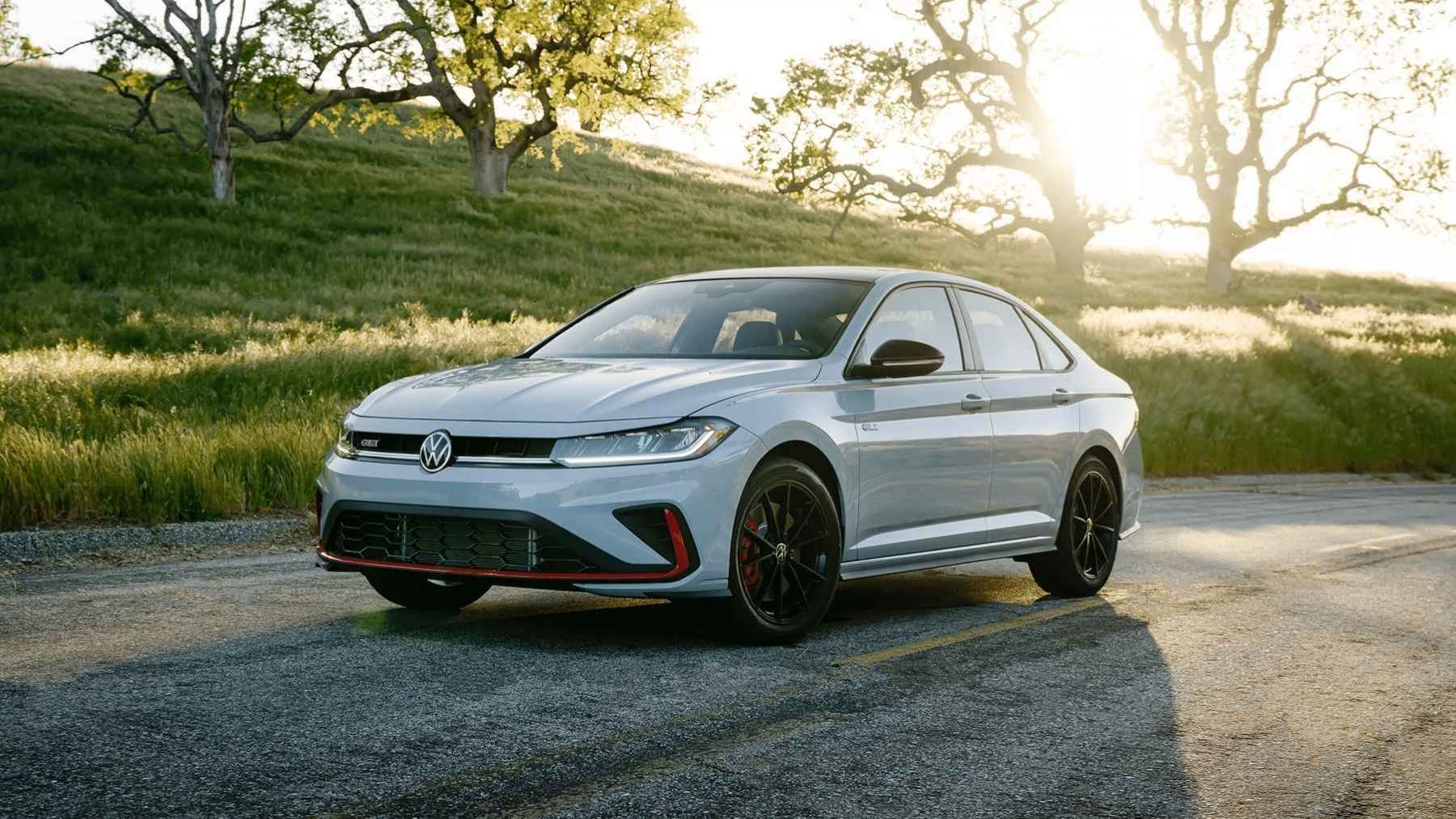
Here’s the plot twist for those of us on this side of the Atlantic: the VW brand is having a great year in the United States. Sales jumped 24.9% in the second quarter, nearly 90,000 cars, per Motor1.
The star is the Tiguan, up a ridiculous 152.5%. The Jetta, GTI and Golf R all grew too, and even the ID. Buzz more than doubled, from 564 to 1,249 units. Turns out America loves its SUVs, and VW finally has the right ones on the lot.
The EV picture splits the same way. Volkswagen is Europe’s BEV market leader, up 8.4% there in the first half, with electric order books up more than 50%. In the US and China, BEV sales cratered 69% and 48% respectively. Same company, three completely different realities.
The full damage report arrives July 24, when Volkswagen publishes its half-year financials. That’s when we find out what an 8.6% sales drop does to the bottom line.
Until then, the takeaway is simple: VW is betting that a smaller menu sells better than a bigger one. Considering the current menu just lost them a third of China, would you order differently?