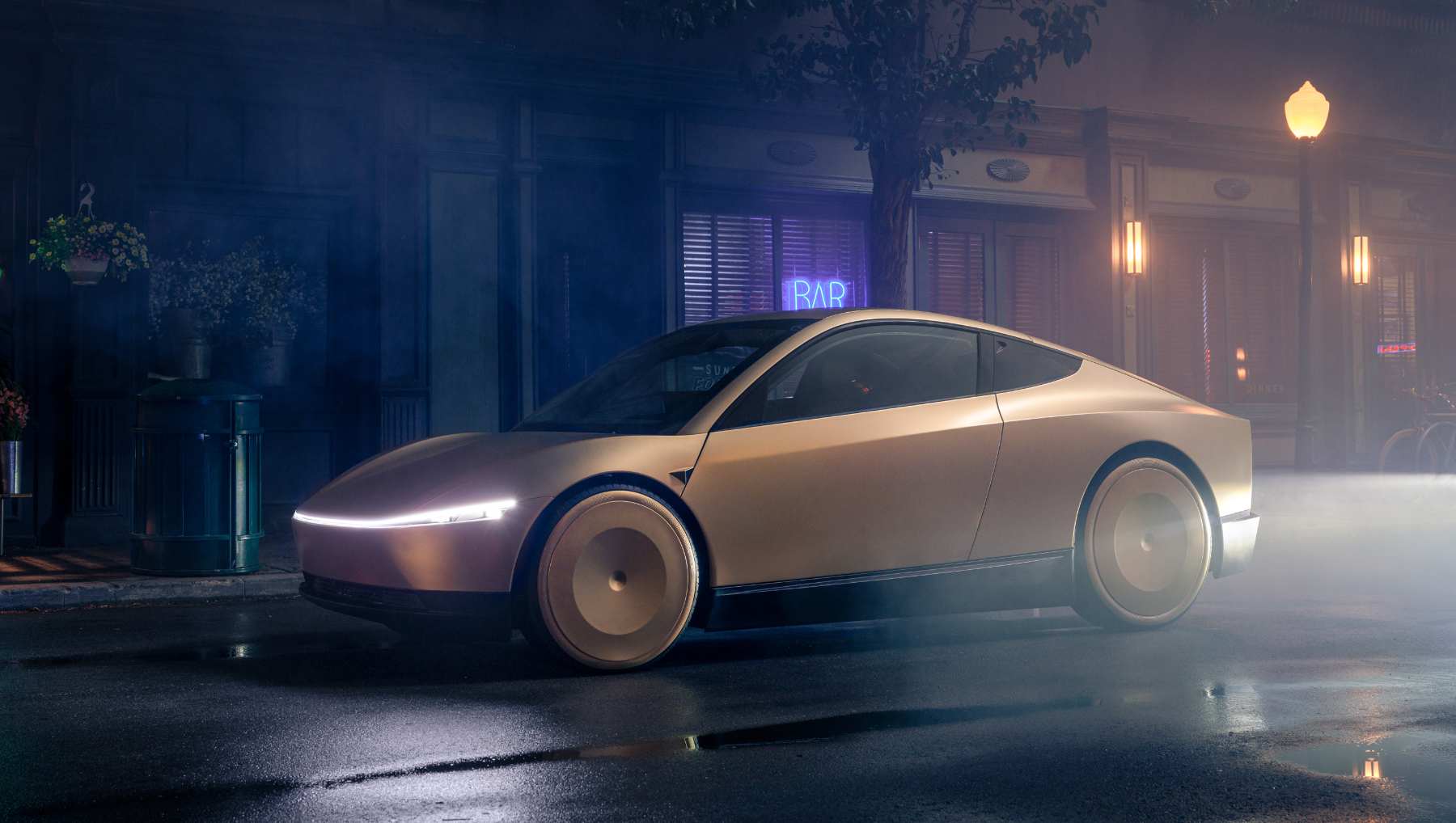
New Jersey may essentially ban Tesla’s Cybercab before the vehicle is even available. New Jersey has introduced legislation mandating three types of sensing technology in all robot taxis.
The bill, which lawmakers will vote on later this year, requires autonomous vehicles to use a combination of cameras and at least two other kinds of sensors on public roads. Most manufacturers already do this, with LiDAR and radar being the two most popular (and somewhat obvious) choices. Radar gives vehicles a long-range view of what’s happening around them, and can pick up hazards that are miles away. LiDAR paints an accurate picture over a shorter range.
Speaking to The Verge, the bill’s main sponsor Sen. Andrew Zwicker, said he doesn’t believe a combination of cameras and software alone could make the kinds of decisions humans regularly make while driving.
The bill also requires autonomous vehicles to undergo 50,000 miles of supervised testing before operating in the state. Though this is likely less of an issue for Tesla than the total redesign fitting new sensors would require.
Senator Zwicker insists his bill isn’t “anti-Tesla.” But Tesla’s rivals, like Waymo, already use vast sensor arrays that include radar and LiDAR systems. Which means that, if it passes, the legislation will obviously affect them far less.
Tesla’s problem may end up being bigger than New Jersey too. For the most part, self-driving vehicle legislation is being handled on a state-by-state basis. Which means other jurisdictions may follow New Jersey’s lead and introduce rules that limit or outright ban the Cybercab. States like California are already introducing robotaxi-specific legislation, including regulations governing how a robotaxi company is penalized when its vehicles break the law.
Why doesn’t Tesla have LiDAR?
Musk has spoken out against LiDAR on several occasions, including in an internal memo in which he overruled Tesla engineers and insisted on removing another sensor, radar, from the vehicles. The world’s richest man’s logic basically goes along the lines of “If humans can navigate with just their eyes, a vehicle should be able to as well.
The Tesla CEO has also highlighted how multiple inputs from various sensors can actually cause ambiguity and errors in some cases. The camera may see a clear road, while the LiDAR system could conclude heavy rain or thick exhaust smoke is a hazard. The vehicle is then forced to choose which input it should trust.
Then there are the downsides of LiDAR. The units aren’t cheap, and would likely add a thousand dollars or more to the production price of a vehicle. The complex parts include a lot of things that can go wrong, which ups the overall maintenance costs of the vehicle on average.
The active laser sensors are pretty bulky and flat too, which isn’t aerodynamic. Increased drag impacts performance and kills an EV’s overall range. LiDAR sensors also tend to be pretty demanding when it comes to power. This further saps the battery and hits EV range.
So, essentially, Tesla believes that LiDAR would make its vehicles more expensive, less reliable, and worse overall. While adding very little benefit, or even making them less safe if a false LiDAR reading is favored over an accurate camera view.
In reality, LiDAR provides a very clear picture of what’s happening close to the vehicle at a short distance. It works in all manner of weather and lighting conditions, where cameras can struggle. The range and economic arguments make far less sense in a taxi, especially when that taxi won’t have a human driver present to take over if everything goes wrong. In short, as much as it pains me to support the state of New Jersey, they may be right on this one.