
Self-driving cars have been almost ready for about fifteen years. The robotaxis that made it out of the lab are fenced into a few sunny cities with the roads mapped down to the curb, and they’ll still stop dead for a traffic cone.
Blasthole drills got there first. A rig tall enough to sink a 59-foot hole in a single pass has been working whole shifts in open-pit mines with an empty cab, and it’s been doing that for roughly ten years.
Epiroc, the Swedish company that builds them, added up the mileage last October. Ninety million meters drilled autonomously. That’s about 56,000 miles of hole, more than twice around the equator.
What makes this worth your time right now isn’t the milestone. It’s that Epiroc’s latest quarterly report says demand for autonomous surface drilling was especially high, while its own investor day in June showed its driverless fleet barely growing. And the first fully electric Pit Viper in America is due on Minnesota’s Iron Range this summer, at a mine that’s hiring about 350 people to work it.
The rig is huge and the cab is empty
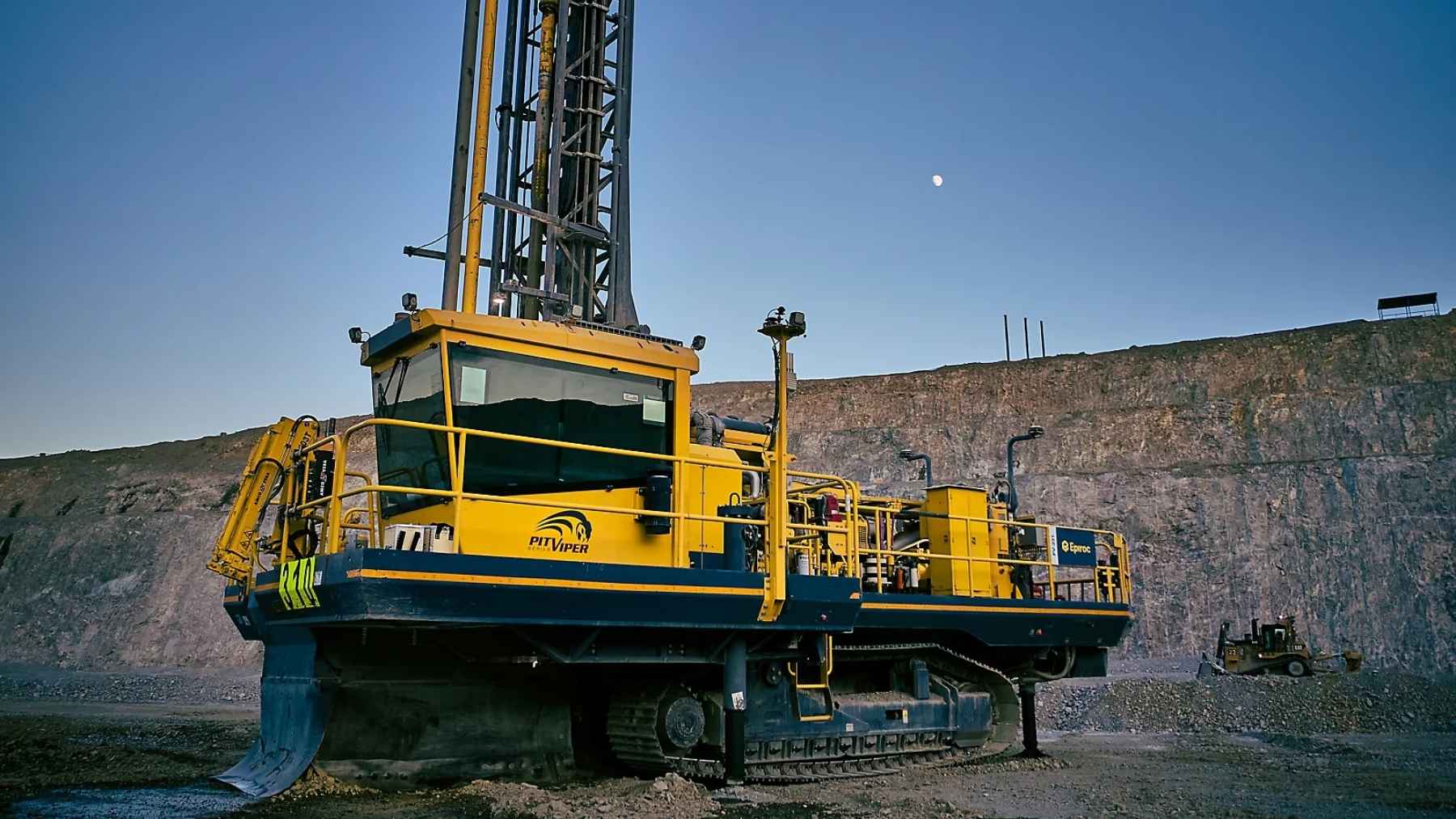
A Pit Viper is a rotary blasthole drill. It punches the grid of holes an open-pit mine loads with explosives before it takes down the next bench. Drill them straight and the rock breaks the way the plan says it will. Drill them crooked and you’re re-blasting, or feeding your crusher boulders it was never built to swallow.
Per Epiroc’s published specs, the Pit Viper 275 bores holes 171 to 270 millimeters across, up to 59 feet deep in one pass, with 75,000 pounds of bit load behind it. It’s a big machine doing a very repetitive job to a tolerance.
The autonomy didn’t arrive with a launch event. It arrived as a trial about a decade ago, when a mining company ran Epiroc’s system on two Pit Viper 271 rigs at an iron ore mine in the Pilbara, in Western Australia. Epiroc’s release doesn’t name the customer. From there it spread to dozens of open pits digging for copper, gold, platinum and phosphate.
Ten years of drilling itself, by the company’s own count
Epiroc published the decade’s numbers last October, on the Pit Viper’s 25th birthday.
Depth accuracy of the holes improved by an average of 85 percent, which the company credits with avoiding more than 8 million meters of overdrill. That’s hole you paid to make and didn’t need, close to 5,000 miles of it. Spatial accuracy, meaning whether the hole ends up where the plan put it, improved by an average of 60 percent.
The rigs also worked more. Utilization in autonomous mode ran 17 percent above manual mode. Epiroc doesn’t break out where that comes from, though a drill that keeps going through shift change is the obvious suspect.
Then the fuel: about 85 million liters saved, roughly 22.5 million gallons of diesel, and around 225,000 metric tons of CO2 avoided. Epiroc pegs that last one at the equivalent of pulling almost 50,000 cars off the road for a year.
All figures from Epiroc’s October 22, 2025 release covering ten years of autonomous Pit Viper operation. Company data, not independently audited.
Every one of those numbers is Epiroc’s. None has been audited outside the company, and the release doesn’t publish the baseline the percentages are measured against. Take them as a vendor’s arithmetic on its own product.
The drill changes its own bits now
Blasthole drills eat tricone bits, the three rolling cones studded with tungsten carbide that do the grinding. Swapping one is heavy work, done around a suspended drill string, by people.
Epiroc launched an Automatic Bit Changer in 2022 and says its rigs have swapped more than 7,000 tricone bits with it since, at the touch of a button. The company’s stated reason is safety, and specifically getting a person out from under the deck.
Those bits are also why Chinese scrap traders have been calling American yards offering five times market rate for worn-out carbide. A drill that changes its own bits still needs somebody to sell it the bits.
The operator can be 900 miles away
Epiroc says its autonomous rigs are typically run from an off-site control room, sometimes more than a thousand kilometers out. That’s 620 miles at the low end.
BHP runs a fleet of Pit Viper 271 rigs at its Western Australia iron ore operations, driverless, watched from an integrated remote operations center in Perth more than 1,100 kilometers away.
Fortescue went further. In April 2025 the iron ore producer signed the biggest equipment contract in Epiroc’s history, 350 million Australian dollars over five years, for more than 50 fully autonomous electric surface rigs. They’ll run from Fortescue’s Integrated Operations Centre in Perth, over 1,500 kilometers from the pits. That’s 930 miles, about Chicago to Denver. Fortescue says the electric fleet cuts roughly 35 million liters of diesel a year once it’s all running, or 9.2 million gallons.
The cable-electric Pit Viper 271 E in that order is built in Texas.
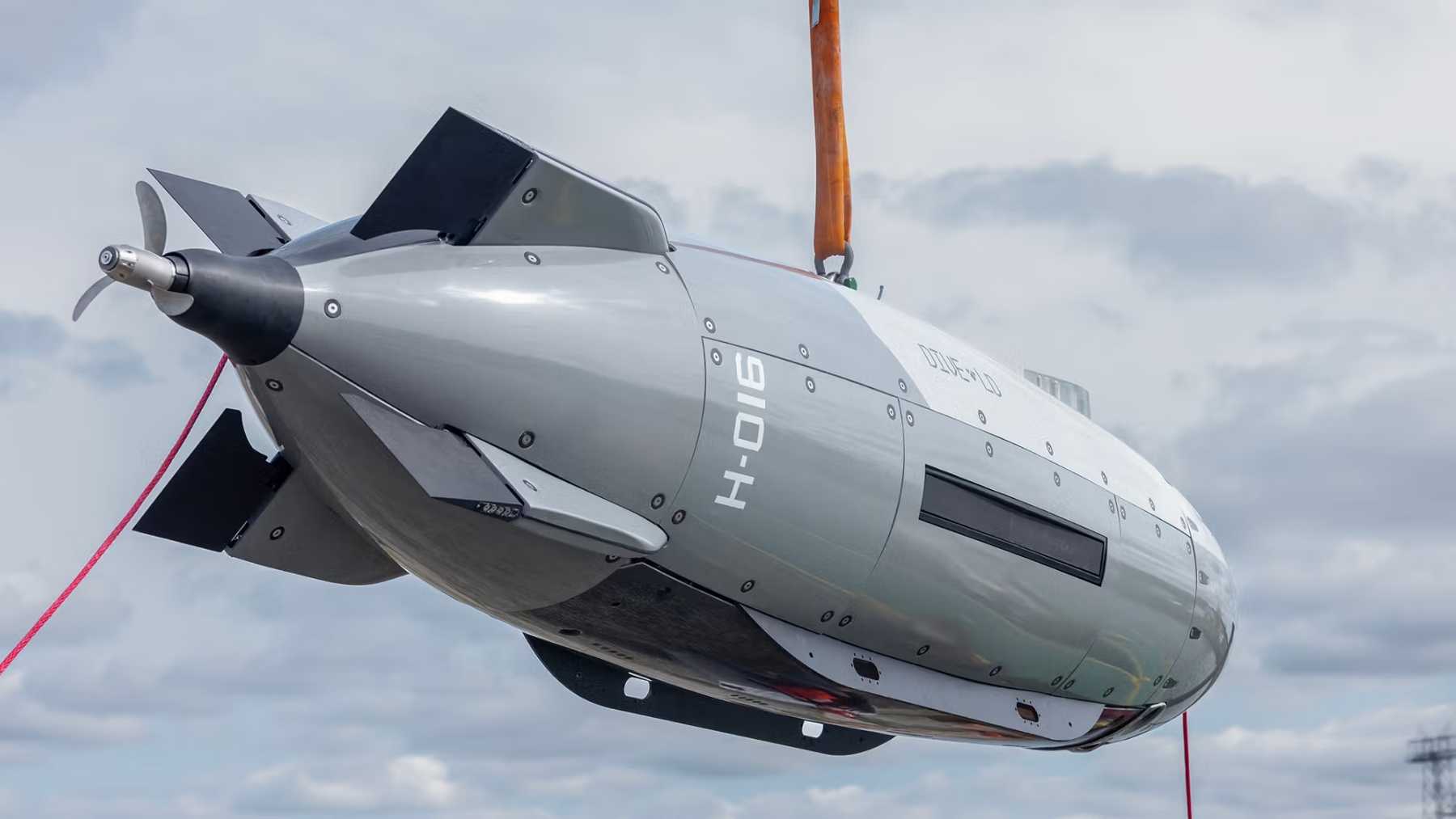
None of this is unique to mining. The Royal Navy drove a 19-ton drone submarine submerged in British water from a control room in Australia, 10,000 miles off. The Boring Company digs under Nashville with nobody in the tunnel during normal digging. Distance stopped being the hard part a while ago.
America’s first fully autonomous surface drill wasn’t a Pit Viper
It was a SmartROC D65 MKII, and it went to a quarry.
In September 2025 Epiroc and Luck Stone, the Virginia crushed-stone producer, put one to work running complete drill patterns with no operator in the cab, supervised remotely and compliant with the Global Mining Guidelines Group’s Level 4 standard for full autonomy. Epiroc called it the first fully autonomous surface drill delivered to the quarry market anywhere in the world.
“Luck Stone’s leadership and commitment demonstrate that autonomy in quarries isn’t future vision,” said Ron Hankins, Business Line Manager at Epiroc USA, before adding that it’s current reality.
The Pit Viper’s American moment is stranger, and it’s happening right now in Nashwauk, Minnesota.
Minnesota bought autonomy-ready drills, then went hiring
In February, Mesabi Metallics announced it had bought fully electric Pit Viper 351 E rigs through the Minnesota distributor Road Machinery & Supplies, with the first due on site this summer and more in early 2027. It’s the last piece of a drill fleet that’s now entirely Epiroc.
The mine behind it is the Iron Range’s biggest story in fifty years. Mesabi’s $2.5 billion taconite plant near Nashwauk is roughly 95 percent complete and targeting a third-quarter start, and it’ll be the first new taconite operation in Minnesota in about half a century. Around 1,500 contractors come through the gate on a busy day.
Read the fine print on the drills, though. Mesabi says they come with single-row autonomous capabilities that it plans to implement later, as part of a broader roadmap. Matthew Inge, VP and Business Line Manager for Drilling Solutions at Epiroc, described them as combining “electrification with technology that is ready for full autonomy.”
Ready for is not the same as running. Mesabi expects about 350 full-time employees once the plant is going, and it’s been recruiting hard across an Iron Range where laid-off Hibbing Taconite and Minorca Mine workers spent the winter running out of unemployment benefits. “We’re very close to launching a big recruiting effort,” Joe Broking, Mesabi’s president and CEO, said in May, ahead of billboards going up from Hibbing to Duluth.
Buying autonomy-ready equipment and hiring hundreds of operators isn’t a contradiction. It’s what the middle of a transition looks like.
Epiroc’s own investor day says the pace is slowing
On June 8, in Örebro, Sweden, CEO Helena Hedblom told investors the company now has 3,900 driverless machines in the field. At the 2024 event the figure was 3,100, and that number had climbed 29 percent in a single year. Going from 3,100 to 3,900 took two.
International Mining, which covered the day, read it as a broad pullback: mining houses are slowing their spending on next-generation equipment, and every major manufacturer is feeling it.
The electrification side looks similar. Epiroc’s active electric fleet sat at more than 600 units, unchanged from 2024. Electrification came to 3.8 percent of group revenues in 2025, down from 4.2 percent the year before.
The drilling business itself is fine, and the technology keeps proving out. At Hancock’s Roy Hill mine, Epiroc’s LinkOA system now runs 78 haul trucks it didn’t build, and more than 350 million tonnes of material have been moved there driverless. Epiroc booked record orders in the first quarter of 2026, up 23 percent organically, and told investors demand was especially high for autonomous surface drilling equipment. Second-quarter numbers land July 17.
Even the American manufacturing didn’t spare it. Epiroc builds a large share of these rigs in the United States, and tariffs still cost it roughly half a percentage point of group operating margin in the third quarter of 2025, by its own accounting.
The technology is finished. The fleet is proven. The machines have drilled twice around the planet with an empty cab, and they’ve done it while a 500-ton borer sinks a kilometer-deep shaft for iron ore on the other side of the world, also without anyone aboard.
The Pit Viper landing in Nashwauk this summer can run itself. It won’t, not yet, because Mesabi says autonomy comes later and what it needs right now is a plant making pellets. Until then, somebody from the Iron Range gets the cab.
That’s the part the brochures leave out. The hard engineering finished a decade ago. Whether a mine switches it on is a budget decision, and this year the budgets got careful.