
If you have ever assembled anything from IKEA, you know the one rule that actually matters: one step at a time, in order, no skipping ahead. Nuclear construction runs on the same logic. The parts just weigh as much as loaded jetliners, and the instruction manual takes years to get through.
China just skipped ahead anyway.
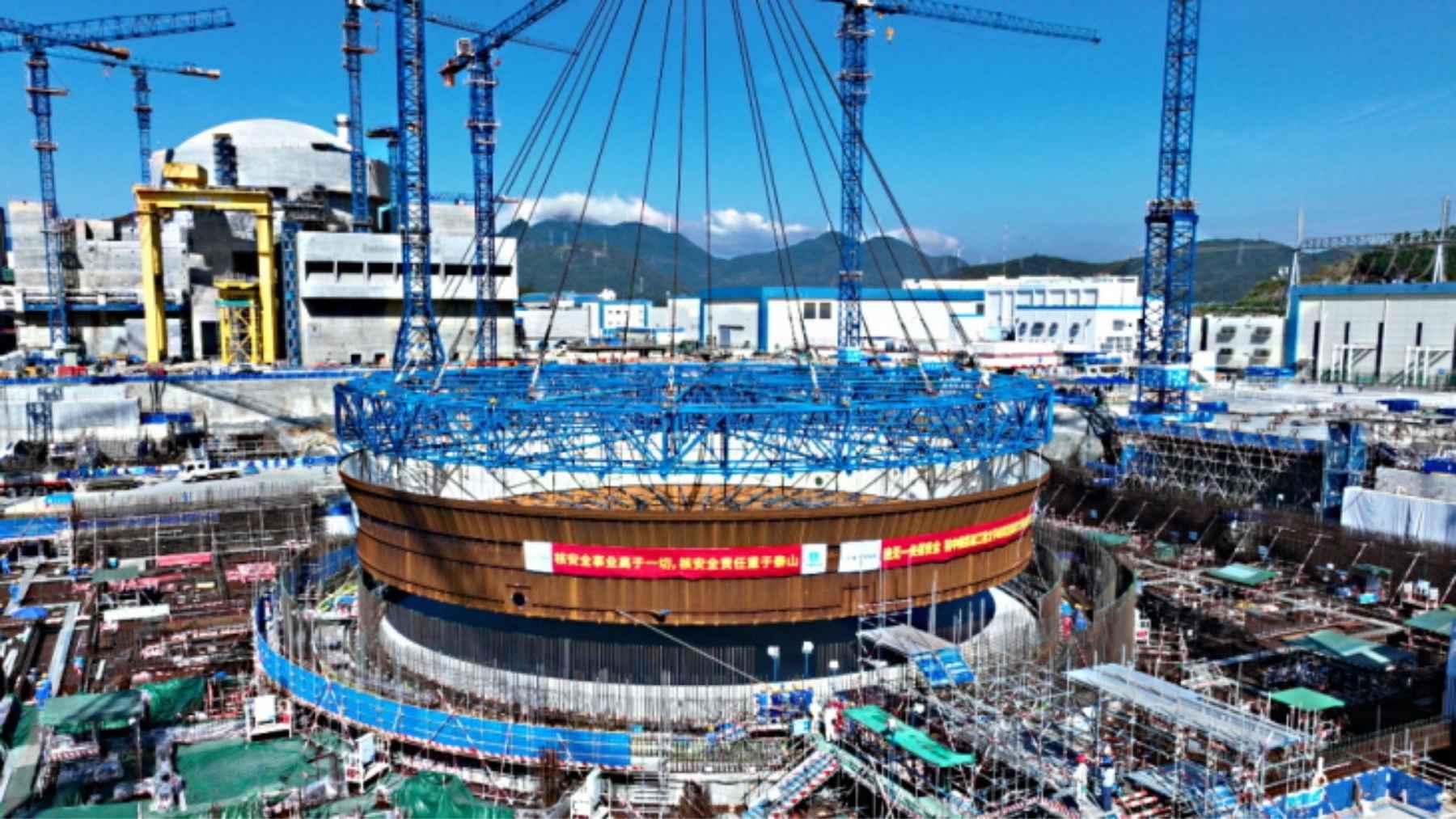
At the Taipingling nuclear plant in Guangdong province, crews building the site’s third reactor took two items from that checklist, a huge ring-shaped section of the steel containment shell and the ventilation ductwork that normally gets installed after it, and craned both into position as a single package weighing about 319 metric tons. That is roughly 703,000 pounds, or about 352 US tons, hanging off one hook. Call it 140 Ford F-150s moving through the air in a single pick.
According to the nuclear trade agency NucNet, citing China’s official nuclear power news network, China General Nuclear had never used the technique, which the industry there calls “combined installation,” on one of its Hualong One reactors before. It has now. And the reasoning behind it says a lot about why China builds these machines faster than anybody else.
One crane pick, two jobs done
The Hualong One, China’s flagship homegrown reactor design, wraps its core in two layers of protection. The outer layer is thick reinforced concrete. Inside that sits a steel liner that seals the building airtight, a component the official Chinese nuclear news service counts among the plant’s most important safety barriers.
Nobody builds a liner like that in one piece. It goes up as a stack of enormous prefabricated steel rings, welded and hoisted one on top of another until the cylinder is complete. The section that just went in at Taipingling-3 was the fourth ring in that stack.
Under the usual sequence, the ring gets lifted first. The ductwork for the containment cooling ventilation system, the plumbing that manages air and heat inside that sealed steel can, comes later as its own separate installation job. This time, both went up together in one lift.
One pick, 319 metric tons, two line items crossed off.
Every lift you delete is calendar you get back
Why bother? Because on a project like this, the crane schedule is one of the things that decides when the whole plant switches on. Every major lift needs rigging, planning, weather windows, and an exclusion zone where nothing else can happen. Merge two lifts into one and you hand that time back to the rest of the site.
CGN has not published a number for how many days this specific maneuver saved, so nobody should pretend to know. But the direction of travel is obvious, and it fits a pattern this reactor has followed since day one.
The very first liner section at Taipingling-3, the bowl-shaped bottom of the containment, arrived as 36 prefabricated sub-modules that were welded into a single piece on site, a structure about 43 meters across and heavier than 130 metric tons, then set in place by a 2,000-ton crawler crane, World Nuclear News reported back in July 2025. That was barely a month after the unit’s first concrete was poured.
Prefab is not a word most people associate with nuclear power, but that is essentially what this is: flat-pack containment, assembled in order, with the occasional step merged whenever the engineers decide the manual was too conservative.
Four reactors, four stages, one fence line
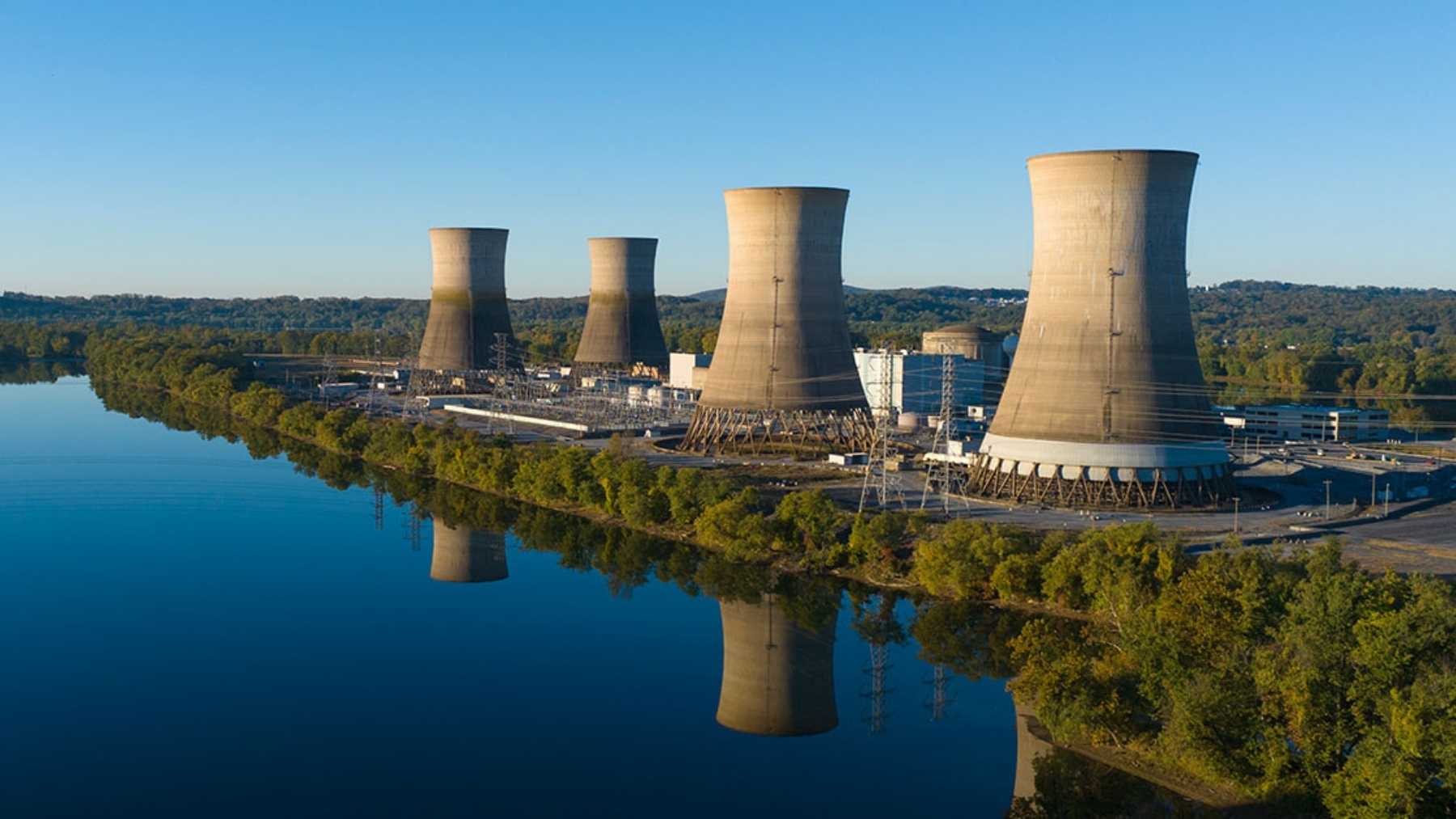
The lift is a nice piece of crane work on its own. The context around it is the actual story, because Taipingling, on the Guangdong coast near Huizhou, is running four reactors through four completely different phases of life at the same time.
Unit 1 entered commercial operation on April 19 after a 168-hour full-power trial run. It is a 1,116-megawatt machine loaded with 177 fuel assemblies, and CGN says it will generate more than 9 billion kilowatt-hours a year, enough for roughly a million residents of the Greater Bay Area.
Unit 2 reached first criticality at 22 minutes past midnight local time on June 25, one week ago. CGN said the milestone “lays a solid foundation for subsequent grid connection and commissioning.”
Unit 3 is the one that just got its 319-ton combined lift. And Unit 4 poured its first nuclear safety-related concrete on May 10, which is the moment a reactor officially becomes a reactor under construction.
All four milestones landed inside ten weeks, on one site, and there are two more units planned behind them. The full six-reactor complex carries a price tag above 120 billion yuan, about $17 billion, and CGN expects it to generate more than 55 billion kilowatt-hours a year once complete. For scale, that is a single power station producing more electricity annually than many mid-sized countries consume.
China is building 37 of these things at once
Zoom out from Guangdong and the numbers get stranger. The IAEA’s database lists China with 60 reactors in commercial operation and 35 under construction, and per NucNet the real construction count is 37, because the two newest starts had not been logged yet. Roughly half of that under-construction fleet are Hualong One units. Another nine are CAP1000s, China’s localized take on the Westinghouse AP1000.
The stated goal, per the China Nuclear Energy Association, is 200 gigawatts of nuclear capacity by 2035, up from around 57 today. You do not hit a number like that by treating every crane lift as a sacred, standalone event. You hit it by industrializing the process, and by occasionally strapping two components together because separate lifts were costing you a week here and a week there.
To be fair, the West is having its own big-crane moment. Turkey just finished its first reactor ever by lowering a 350-ton vessel through an open roof with the most powerful crawler crane on Earth. France is forging four 510-ton steam generators simultaneously for its next reactor and running the factory like an assembly line. And nearly every giant Western vessel still traces back to a single 14,000-ton press in a Japanese port town, which tells you how thin that supply chain really is.
The difference is cadence. Each of those Western milestones was a national event with its own news cycle. The Chinese announcement that included the Taipingling lift covered two separate construction milestones at two different plants, in one routine update.
The 319-ton lift was not even the headline
That last detail is the one worth sitting on for a second. In the original announcement, the Taipingling maneuver ran second, behind the completion of the outer containment dome at another reactor, Lianjiang-1, a few hundred kilometers away along the same coastline.
So the score for one press release: a finished containment dome at one plant, and a first-of-its-kind 319-ton double lift at another. In most of the nuclear world, either of those gets its own press conference. In Guangdong, they shared a progress report.
Unit 3 still has a long way to go. More liner rings, the dome, the reactor vessel, the steam generators, years of commissioning. But if the combined-lift approach sticks, expect the checklist to keep getting shorter. The manual, apparently, was just a suggestion.
 @fredchampion ROOKIE3 months ago