
Russia’s surface fleet has spent the last few years looking like a cautionary tale. The Black Sea Fleet’s flagship cruiser is on the bottom off Crimea, corvettes keep catching drone hits and tucking back into port, and the survivors spend a lot of time tied up where it’s safe. The submarine arm keeps quietly doing the opposite.
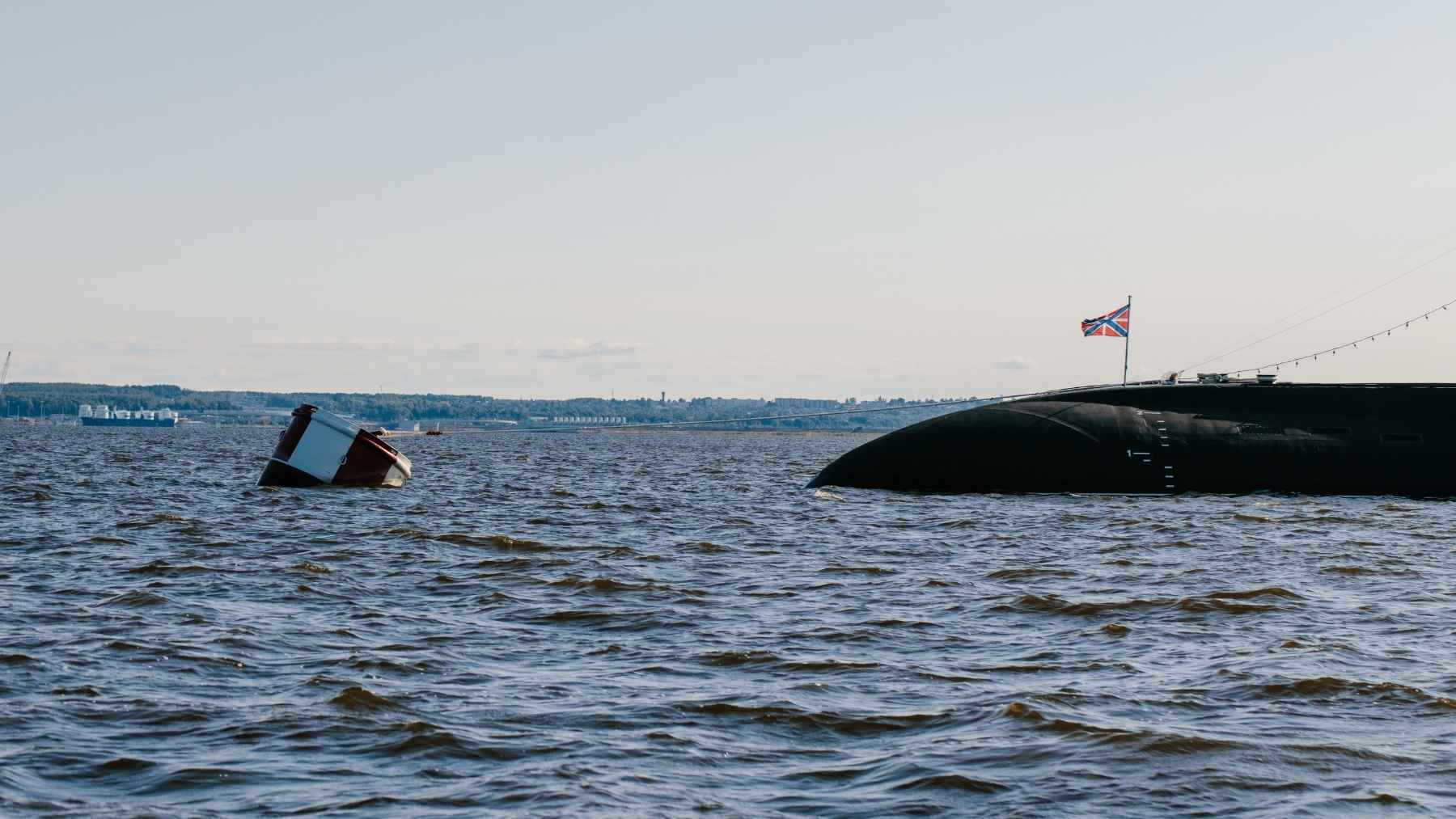
On June 17, at the Sevmash yard in Severodvinsk, Moscow lit the welding torches on its ninth Yasen-M nuclear attack boat, a 13,800-ton missile carrier called Murmansk built from the start to haul Zircon hypersonic cruise missiles into the North Atlantic.
This is the first new Yasen-M to enter construction in six years, and the timing isn’t subtle. Per the statement put out by Russia’s Defense Ministry, the keel went down at Severodvinsk on June 17, 2026, the first laid under a fresh contract since the previous pair started back in 2020. That says the Kremlin is still willing to bankroll decade-long capital projects even while its ammunition lines run flat out for Ukraine. The ceremony itself was a who’s-who of naval brass and shipbuilding chiefs, which is what you do when you want an announcement to carry.
Sevmash lit the torches on June 17, and the brass showed up
The boat got its name by direct order of Admiral of the Fleet Aleksandr Moiseyev, the Russian Navy’s Commander-in-Chief, who set the keel plate alongside United Shipbuilding Corporation chief Andrei Puchkov and Sevmash director Mikhail Budnichenko. Naval Today reports the ceremony formally started construction of the ninth boat in the modernized Yasen-M series, designed by the Malakhit bureau and assigned factory number 169.
The name is loaded on purpose. Murmansk honors the Hero City of the same name, and the previous bearer was a Soviet Project 949 cruise-missile boat, K-206, also built at Sevmash. Soviet symbolism plus a fresh Arctic hull is exactly the kind of messaging Moscow likes to push out of its northern yards.
Moiseyev also used the moment to set a pace, saying the program now calls for keel-layings like this one to be carried out “annually” to feed the Northern and Pacific Fleets. For context on how rare that boast is, only six countries build nuclear submarines at all, so the part about not everyone being able to do this happens to be true.
Where Murmansk fits in the pecking order
Headline math first. Counting the lead Project 885 boat Severodvinsk, Murmansk is the tenth hull in the wider Yasen family and the ninth of the modernized 885M variant. The Barents Observer puts five Yasen-class boats already in service, three with the Northern Fleet and two with the Pacific Fleet, with another five at various stages of construction at Sevmash and two more penciled in for 2027 and 2028.
The boat that actually matters for the Zircon story isn’t Murmansk, though. It’s Perm. Defence Blog reports Perm is in trials and expected in service by the end of this year, reportedly headed for the Pacific Fleet, and Vladimir Putin said at its March 2025 rollout that it will be the first Russian multipurpose sub to carry Zircon as standard kit.
The rest of the order book is Ulyanovsk under construction, plus Voronezh and Vladivostok, the pair laid down in July 2020 and due later this decade, assuming the timelines hold, which Russian shipbuilding timelines have a long history of not doing. So Murmansk is the headline, but the milestone everyone’s really watching is Perm hitting the water with hypersonic missiles bolted in from day one.
The 13,800-ton spec sheet
The hull numbers are public and line up across sources. The Yasen-M runs 426 feet (130 meters) stem to stern, about 13 meters in the beam, with a full submerged displacement of 13,800 tons. That makes it one of the largest attack boats in service anywhere, and a lot of that size is sonar. The forward section is built around the big spherical Irtysh-Amfora array, which is also why the torpedo room got shoved aft instead of sitting up in the nose like on older Soviet boats.
The endurance figures are spelled out too: a stated maximum diving depth of 600 meters, a working depth of 520 meters, and up to 100 days submerged before the boat has to come home. The crew count is the real tell. Sixty-four sailors run a 13,800-ton nuclear submarine, less than half the roughly 130 it takes to crew one of the U.S. Navy’s Virginia-class boats, which says a lot about how much automation the Russians packed in.
Zircon is the new variable, and it’s a real one
The main strike battery is eight SM-346 vertical launch modules, the same UKSK system the class has carried since Kazan. According to the Royal United Services Institute, each module holds either five Kalibr cruise missiles or four P-800 Oniks anti-ship rounds, which works out to as many as 40 Kalibrs or 32 Oniks across the boat, and the same cells take the Zircon. Add the ten 533mm torpedo tubes amidships and you have a platform that doubles as a hunter-killer and a long-range missile barge.
The 3M22 Zircon is what changes the math. Russia puts its top speed at around Mach 9 with a range near 1,000 kilometers (about 620 miles); Western analysts tend to land lower, somewhere in the Mach 6 to 8 band depending on the flight profile. Either way it’s built to skim low and arrive inside the window most current missile defenses need to work up a firing solution. And this isn’t a paper capability anymore.
The submarine Severodvinsk already test-fired Zircons back in October 2021, from both surfaced and submerged positions in northern waters, so the integration has been proven. It’s the same cheap-shot-at-sea logic two American startups are chasing with a hypersonic on an uncrewed boat, just bolted into a 13,800-ton nuclear hull instead.
Whether that turns into a working at-sea capability across the Yasen-M fleet in real numbers is a separate question. Perm has to finish trials and actually enter service, then the doctrine has to catch up. Murmansk itself won’t see water for years.
Zapadnaya Litsa puts this boat at NATO’s doorstep
The Yasen-M force is based at Zapadnaya Litsa, the Northern Fleet pen that sits closer to the Norwegian border than any other Russian submarine base on the Barents Sea coast. That geography is the whole Atlantic angle. RUSI’s read is the sharp part: because these boats can strike land targets from very long range, they may not need to run the GIUK gap at all to do their job, which quietly undercuts the barrier-defense strategy NATO has leaned on for decades. You can’t bottle up a submarine at a chokepoint it has no reason to swim through.
It’s also a boat Pentagon planners have been nervous about for a while. The National Interest notes that Pentagon officials told 60 Minutes the lead boat Severodvinsk slipped into the Atlantic in 2018 and went unfound for weeks, with one U.S. admiral calling it “very capable, and it’s very quiet.” Whether you take that straight or read some ASW-budget drum-banging into it, the Yasen-M is the boat NATO actually games out, and it lands in the middle of a wider scramble to solve the problem of finding quiet submarines before they get where they’re going.
Don’t expect Murmansk in the water any time soon
Here’s where the keel-laying photo op runs into industrial reality. Yasen-M construction is slow even when the money flows, and the realistic in-service window for Murmansk lands in the early 2030s based on how long the earlier boats took. The lead boat Severodvinsk was laid down in December 1993 and didn’t enter service until 2014. The first Yasen-M, Kazan, ran from July 2009 to May 2021. Even Perm, the program’s current success story, was rolled out in March 2025 and is still in trials.
So the ceremony tells you about Russian intent and shipyard capacity, not about a new boat showing up off Iceland next summer. What it does signal is that the program isn’t quietly winding down to free up cash for artillery shells. Moiseyev wants keel-layings on an annual cadence, two more boats are penciled in for 2027 and 2028, and that’s a long-term bet on undersea hypersonic strike at exactly the moment Russia’s surface navy is having its worst decade since 1991. Which tells you which arm of the fleet Moscow still trusts with its money.