
Underwater robots have always come in two flavors. The swimmers cover long distances on battery power and take pictures, and the workers hang off a thick cable beneath a crewed ship and actually turn wrenches. You picked one, because no single machine did both jobs well.
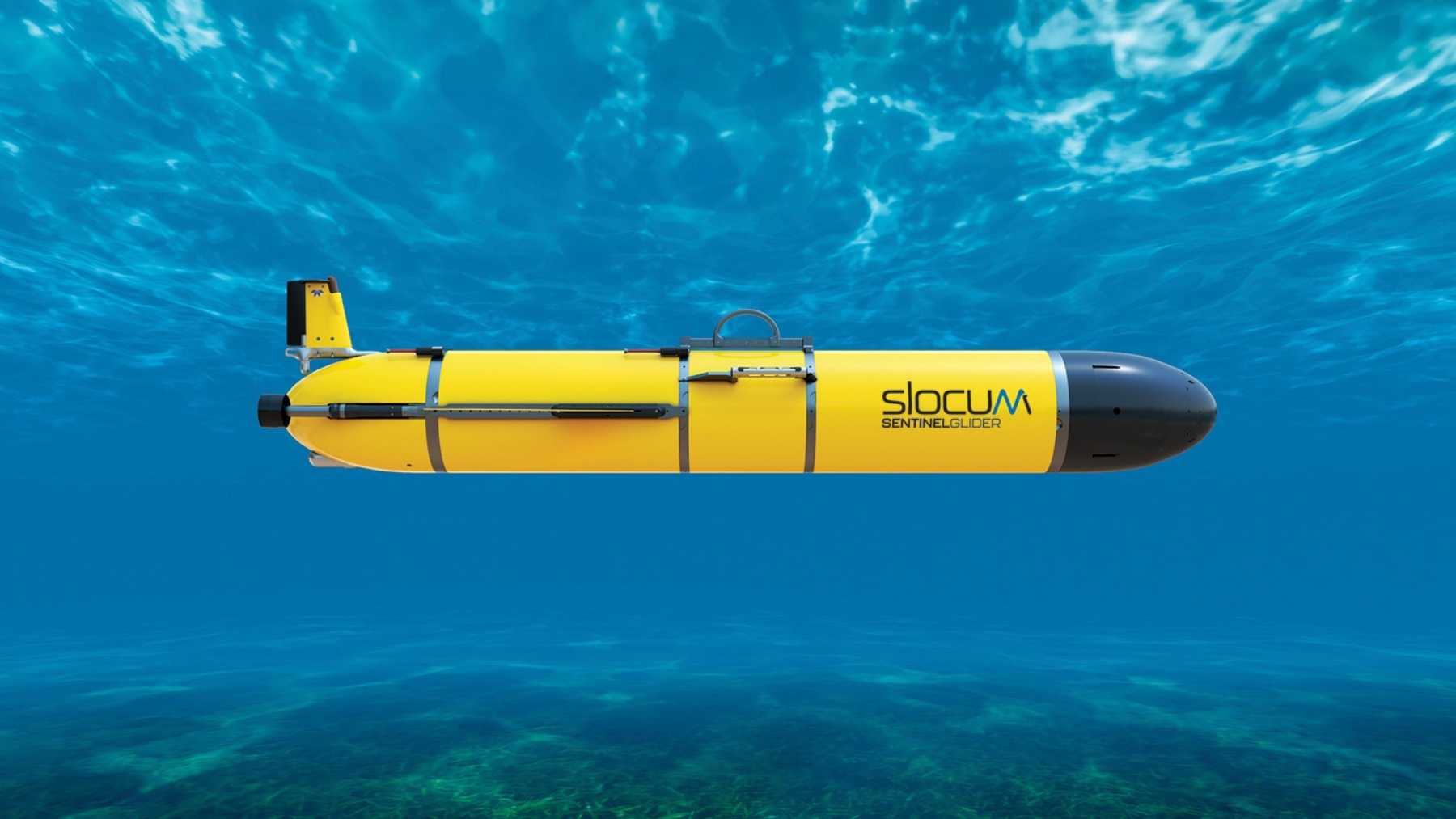
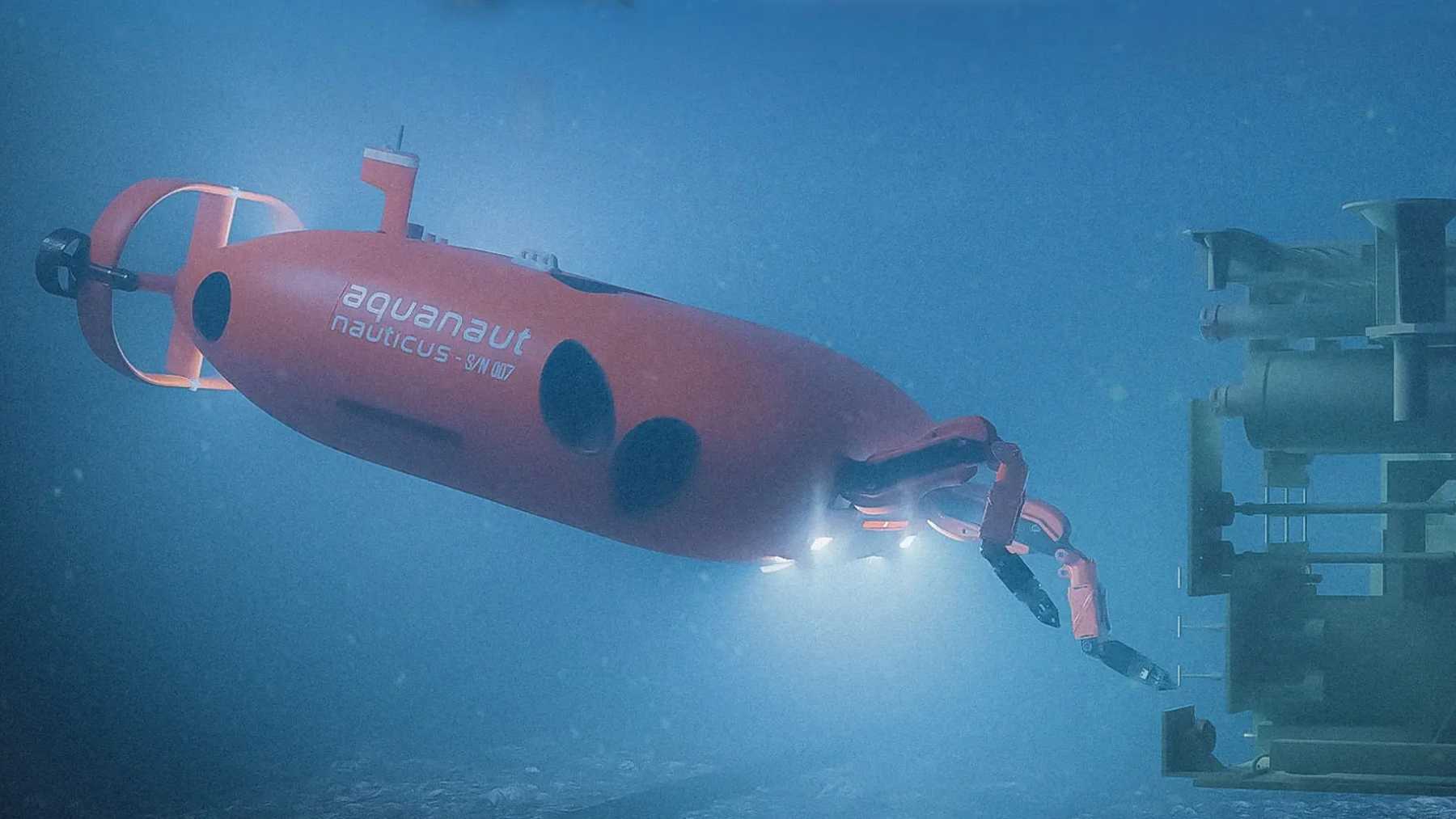
A Houston company called Nauticus Robotics builds the exception. Its Aquanaut Mk2 is a 4,200-kilogram (about 9,260-pound) electric drone, 16 feet long, that swims out to a job site like the first kind of robot, stops in open water, and puts a pair of electric arms on the problem like the second kind. The company even has names for the two personalities: excursion mode when it swims and scans, intervention mode when it goes to work.
And the arm side of the business just got busy. On July 28, Nauticus announced the completed first prototype of a next-generation electric manipulator built specifically for autonomous vehicles like this one. Then on Wednesday, in its second-quarter update, the company said it is steering the whole package toward defense work.
One hull, two different machines
Most long-range underwater drones look like torpedoes, because a torpedo is the cheapest shape to push through water. The Aquanaut is a broad, flattened slab instead: 16 feet long, 6.7 feet wide and 5.6 feet tall (4.82 by 2.03 by 1.71 meters), with an oval ring tail carrying the two main thrusters and a set of tunnel thrusters for hovering and holding position in current.
That shape exists because the machine leads a double life. In excursion configuration it carries sonar, laser scanners and cameras, and behaves like a survey drone. In intervention configuration it carries two robot arms and behaves like the tethered work vehicles the offshore industry has leaned on for decades, except nothing tethers it.
It also packs a frunk. The nose compartment stores extra tooling, and the vehicle can swap tools itself underwater without surfacing, according to a detailed technical review in trade magazine Uncrewed Systems. Your neighbor’s EV uses the same compartment for groceries.
The battery is a 101.1 kWh lithium-ion pack, more capacity than most electric cars carry, good for 30 to 70 hours in the water and a typical range of 87 miles (140 km), stretching to 155 miles (250 km) at best. Cruise speed is a walking-pace 3 knots, with 6 available when it hurries. The cable-cutting half of this story, an untethered run 7,500 feet down off Louisiana, is one we have covered before.
The arms are the hard part
The design DNA here is not from the ocean at all. The team that started Aquanaut built mobile manipulation systems at NASA before pointing the same ideas at the seafloor. Which explains a machine engineered around one assumption: nobody can reach it to help once it leaves.
The current arms come from Nauticus’ own Olympic Arm family, all-electric with interchangeable tools. Each one offers six degrees of freedom, lifts 132 pounds (60 kg) at full extension, and closes its gripper with up to 1,000 pounds (454 kg) of force, with force-feedback sensors so it can feel what it grabs instead of crushing it.
One arm weighs 240 pounds in air and 161 in water (109 and 73 kg), and there is no hydraulic oil anywhere in it. Hydraulic manipulators, the industry standard, carry oil that can leak into the sea. Electric ones have nothing to spill.
Nobody drives these arms with a joystick, either. The operator on the surface sets goals over an acoustic link, the vehicle works out the motions, and a person authorizes each step before the robot takes it. “It’s like a dance,” Todd Newell, Nauticus’ vice president of operations, told Uncrewed Systems.
Precision has to live onboard, because radio dies in seawater and the acoustic link is a soda straw. So the fine control of the manipulators runs on the vehicle’s own ToolKITT software, and its accuracy stays the same however thin the connection from above gets.
The new arm just left the workbench
The July 28 announcement covers a manipulator designed from scratch for autonomous vehicles rather than adapted from the remotely piloted world. The first build runs three joints. Five and seven-joint versions are on the roadmap, according to Marine Technology News, and the arm ties into ToolKITT so it can identify a work site and line itself up on an intervention point without a pilot framing the shot.
“Autonomous underwater intervention requires more than simply attaching a manipulator to a vehicle,” said Ameen Albadri, the company’s vice president of engineering, in the announcement. His argument is that the hardware and the software get designed together from day one, or the autonomy never sticks.
Functional and load testing on the prototype started in July. The older Olympic Arm line keeps developing in parallel with an industry partner for conventional ROVs, which keeps Nauticus selling arms to both halves of the market.
The software has escaped the building too. During the quarter, Nauticus released ToolKITT commercially for other operators’ vehicles and ran it on a Comanche ROV in customer operations, where the company says it reduced pilot workload.
The Navy got here first
Defense noticed this machine before most of the energy industry did. Back in February 2022, the Pentagon’s Defense Innovation Unit hired Nauticus to convert a US Navy mine-countermeasures platform into an untethered autonomous vehicle, keeping explosive ordnance disposal divers away from the things that explode.
Wednesday’s quarterly update leaned hard in that direction. Nauticus said it completed an initial scope of work supporting the evaluation of a broader, multiphase defense opportunity, with potential revenue in 2026 and 2027 if the award lands. The company is also in group proposals around persistent subsea sensing, the polite term for wiring the ocean floor so you notice when somebody touches your cables.
The civilian side has been slower. Nauticus called Gulf Coast oil and gas activity challenging this quarter and pointed instead at offshore wind work on the US East Coast, a finished job for a global subsea cable-laying company, and international deals where it acts as the primary contractor.
The timing tracks with where the whole subsea robot business is heading. Saab already has a Sabertooth living full-time on the seabed of a Norwegian oil field, and the drone at the center of the Saipem and Subsea 7 merger once logged 240 straight days down there. Machines that stay down and do the work, instead of visiting and taking pictures, are where the contracts are going.
What remains is the unglamorous middle. The Aquanaut finished the freshwater phase of its autonomous mooring line and riser inspection workflows at the company’s Florida test site this quarter, and Nauticus says the next step offshore depends on “customer budget cycles and site availability.” The company closed June with $2 million in cash.
Turning a swimmer into a worker took Nauticus eight years of engineering. Turning that trick into a business is supposed to take the rest of this one.