
For about a decade, the small modular reactor was mostly a slide. Utilities pitched it, governments modeled it, and every energy conference had a panel arguing about it, but nobody was pouring any concrete. That finally changed this year. Canada dropped a 1,050-ton foundation into a shaft in Ontario, the U.S. government put serious money behind a fleet of full-size reactors, and the thing everyone kept promising started showing up as actual hardware.
Britain is doing it too, except Britain is doing it two completely different ways at once. One is exactly what you’d expect: the government picked a reactor, wrote a very large cheque, and started work on a state-owned site. The other is stranger. A private company on the northeast coast wants to build four American reactors with none of that money, and the reactor it’s betting on is a shrunk-down version of the one already running in Georgia.
That reactor is the Westinghouse AP300. It’s a small modular reactor in the sense that it makes about a third of the power of a normal one, but almost everything else about it is borrowed from a machine that already exists.
It’s an AP1000 with two-thirds left off
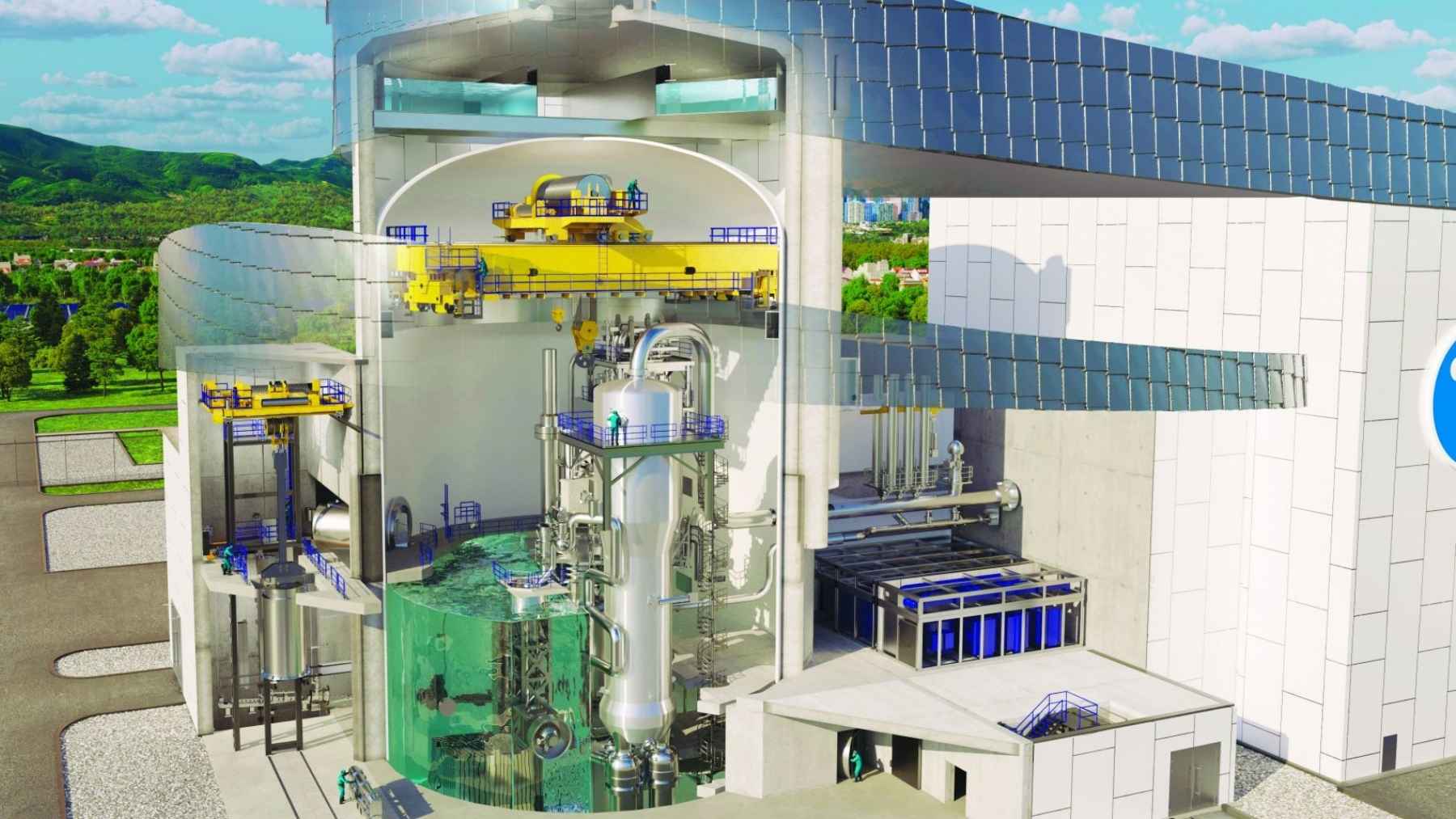
Westinghouse launched the AP300 back in 2023, and the whole pitch is in the name. The AP1000 is the company’s big Generation III+ reactor, the one running at Plant Vogtle in Georgia and at four sites in China. The AP300 is that reactor scaled down to a single reactor loop and about 300 megawatts, using the same major components, the same passive safety systems, the same fuel and control gear.
That last part is the actual argument. Most small reactor designs are first-of-a-kind machines, which means the first one built is also the prototype, with all the schedule and cost risk that implies. Westinghouse’s case is that the AP300 isn’t a prototype of anything. It’s a smaller copy of a reactor that already has regulatory approval in the U.S., the U.K. and China, and it runs on the same supply chain.
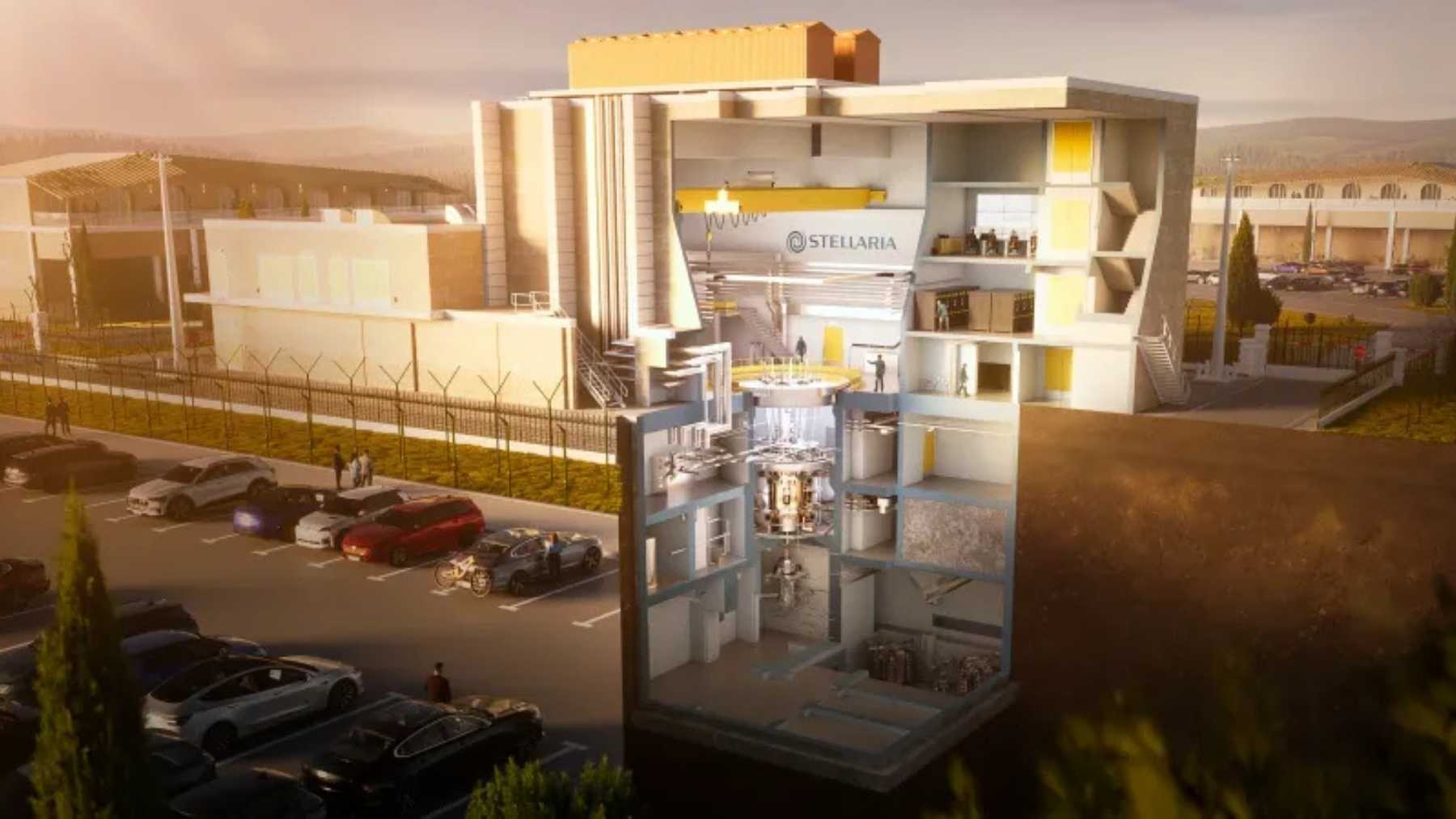
The footprint is small by nuclear standards, about a quarter of a soccer pitch, and Westinghouse has floated a target cost near $1 billion a unit. Like the AP1000, it’s built to run for 80 years and to shut itself down safely without operators or backup power if something goes wrong. The company says design certification should land around 2027, with construction on a first unit toward the end of the decade.
No government money, on a chemical works near Hartlepool
The company doing this is Community Nuclear Power, a small outfit formed in 2022 that bills itself as Britain’s only independent SMR developer. In early 2024 it signed an agreement with Westinghouse to put four AP300s on a site called Seal Sands, on the north bank of the River Tees near Hartlepool, on reclaimed industrial land that once belonged to the chemical giant ICI.
What makes it unusual isn’t the reactor, it’s the funding. There isn’t any public money in it. The plan is four privately financed reactors feeding a planned green energy and chemical hub, the kind of site that turns electricity into hydrogen and synthetic fuels, with a combined output of up to 1.5 gigawatts, enough for roughly two million homes.
Ben Houchen, the mayor of Tees Valley, summed up the part that makes it different: “for the first time in British history,” he said, “the taxpayer is not involved.”
Whether it happens is a separate question. Community Nuclear Power set a target of reaching a fully licensed site by 2027, working with the engineering firm Jacobs, and Westinghouse expects the first unit running in the early 2030s. Those are targets, not dates on a signed build contract, and the project has been quiet since the announcement. The AP300 has at least been moving through the U.K.’s Generic Design Assessment, the two-step licensing review, since 2024, which is the slow paperwork everything else depends on.
Meanwhile, the state wrote a different company a very large cheque
The other British route is the one with the government’s name on it. In April, Great British Energy – Nuclear, the state body set up to run new nuclear, signed a contract with Rolls-Royce SMR to build three reactors at Wylfa, a decommissioned nuclear site on Anglesey in North Wales. The National Wealth Fund put up to £599 million behind Rolls-Royce, and £2.6 billion was set aside in the 2025 spending review for the contract and the wider programme.
Rolls-Royce’s reactor is bigger than the AP300, at 470 megawatts, and it’s a British design rather than an American one. Three of them add up to about 1.4 gigawatts, enough for roughly three million homes, and the government wants them feeding the grid by the mid-2030s. By June, Great British Energy – Nuclear said it had awarded close to £900 million in contracts across the programme, most of it to U.K. companies.
So Britain now has two small-reactor projects running in parallel, aimed at roughly the same finish line, built on opposite business models. One is a British reactor on public money on the Welsh coast. The other is an American reactor on private money on the English one.
Why the American reactor is the safe-ish bet
For an American reader, the interesting part is which reactor the private British project chose. It didn’t pick a startup design. It picked Westinghouse’s, and Westinghouse’s big reactor is having a moment. In June, the U.S. Department of Energy backed a fleet of ten new full-size AP1000s with a $17.5 billion financing commitment, the clearest sign yet that the design Vogtle proved out is the one Washington is building around.
The AP1000 is going abroad, too. Poland picked it for three reactors on the Baltic coast, its first nuclear plant, and that project has already filed to start construction. The AP300 is a bet that all of that momentum, the supply chain, the trained workforce, the licensing groundwork, carries down to the smaller version.
The AP300 isn’t America’s own grid-scale small reactor, though, and that’s easy to mix up. America’s is the BWRX-300 from GE Vernova, the one Tennessee Valley Authority filed to build at Oak Ridge and Canada is already assembling at Darlington. And it isn’t the Rolls-Royce design either, which is British and a bit bigger. What the AP300 has going for it is lineage. It’s the only one of the three that’s a direct shrink of a reactor already generating power on the grid.
The catch
None of this is switched on. The AP300 still has to finish its design certification, Community Nuclear Power still has to turn a target site into a licensed one, and the first reactor on either British project is years of paperwork and construction away. Nuclear timelines have a long history of slipping, and a privately funded project has no government standing behind it if the numbers go sideways.
That’s also what makes the Teesside plan worth watching. Wylfa is the safe version of the bet: state money, British reactor, a delivery body whose entire job is to get it built. Teesside is the same class of technology on the opposite terms, an American reactor and private capital, testing whether small nuclear can pay for itself without a public backstop. Both are aiming at the mid-2030s. One of them is finding out something the other never has to.