
2026 Chevrolet Corvette
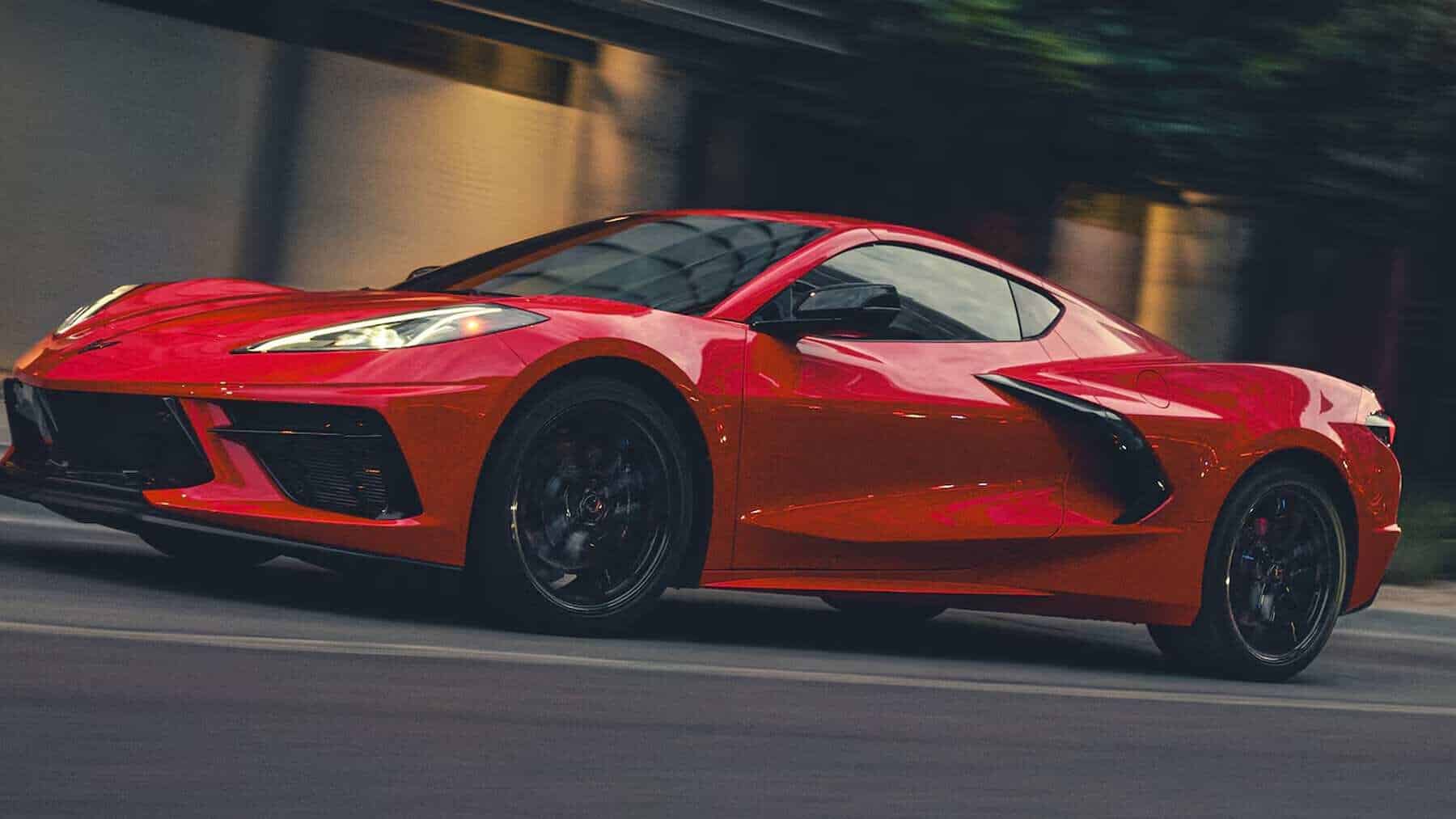
Overview
What's New for 2026
The 2026 Chevrolet Corvette builds upon the mid-engine C8 generation introduced in 2020, which revolutionized American sports car performance by adopting a mid-mounted powertrain architecture previously reserved for exotic marques costing $200,000+. The 2026 model year brings incremental refinement to an already mature generation: improved steering feel through recalibrated power-assist curves, slightly revised aerodynamic tuning focused on cooling optimization and high-speed stability, and more extensive color palette expansion offering customers unprecedented personalization capability. The most significant news involves the arrival of the all-new ZR1 variant—the most powerful production Corvette engine ever produced, featuring twin-turbocharging—unleashing 1,064 horsepower through a twin-turbocharged 5.5-liter flat-plane-crank V8 that represents the culmination of Chevrolet's performance engineering.
The 2026 lineup spans four core variants: the Stingray ($70,195 base), the E-Ray ($108,795 base) offering hybrid all-wheel drive capability, the Z06 ($116,995 base) with flat-plane-crank naturally aspirated performance, and the newly arrived ZR1 ($180,400 base) representing maximum power and track-focused capability. Each variant targets distinct performance priorities and customer psychology: the Stingray appeals to everyday performance enthusiasts, the E-Ray caters to buyers wanting all-weather capability and efficiency, the Z06 attracts purist track-day competitors, and the ZR1 serves as the ultimate expression of American automotive ambition. This lineup diversity positions the Corvette as the most accessible supercar portfolio in the automotive world, spanning accessible performance through maximum American engineering audacity.
Competitive positioning pits the Corvette against Porsche 911 variants (starting $98,000 for the base Carrera), BMW M440 xDrive ($82,000), Nissan GT-R ($117,000), and McLaren Artura ($314,000) in the upper variants. The Corvette's compelling value proposition—supercar performance at fraction of exotic competitor pricing—remains the lineup's primary competitive advantage. Build quality has matured substantially since the C8's introduction, with real-world reliability reports exceeding early-generation expectations and rivaling competitors in the price range.
Overview
The 2026 Chevrolet Corvette is a two-seater, mid-engine sports car available in coupe or targa convertible configurations across all four variants. The C8 architecture positions the engine behind and below the driver, creating a mass distribution that provides optimal handling balance and enables the short wheelbase (104.6 inches) coupled with remarkable ground clearance. The mid-engine layout revolutionizes the Corvette's dynamics compared to previous front-engine generations, enabling cornering performance previously unattainable through conventional architecture.
The Stingray variant enters with a 6.2-liter naturally aspirated V8 producing 490 horsepower (490 base, 495 with optional performance exhaust) and 465 pound-feet of torque. An eight-speed dual-clutch automatic transmission handles power delivery exclusively, with no manual transmission available—a decision that polarizes enthusiasts but delivers lightning-quick shift response essential for competitive driving. The Stingray achieves 0-60 mph in 2.9 seconds and supports 194 mph top speed, figures that embarrass many six-figure supercars.
The E-Ray introduces front-mounted electric motors providing all-wheel drive capability and hybrid energy recovery, boosting combined output to 655 horsepower while adding snow-climate all-weather functionality. The Z06 substitutes the 6.2L with a 5.5-liter flat-plane-crank naturally aspirated engine producing 670 horsepower and 460 pound-feet of torque, emphasizing extreme high-revving performance (8,600 RPM redline) and track-oriented engineering. The ZR1, arriving Spring 2026, pairs a twin-turbocharged 5.5-liter flat-plane V8 with 1,064 horsepower and 828 pound-feet of torque—power figures that position it above many "supercar" competitors despite accessible pricing relative to Ferrari or Lamborghini alternatives.
Driving Experience
The 2026 Corvette Stingray delivers superb balance through mid-engine architecture that places the vehicle's mass at the effective center. Steering feel is direct without artificial heaviness, with responsive input that communicates road texture while filtering out wind-disturbed buffeting. Cornering capability is exceptional for a naturally aspirated V8: the 1.27G lateral acceleration available in tight curves rivals exotic competitors, with throttle input controlling attitude precisely without torque-steer or terminal understeer that compromise many competitors. The naturally aspirated 6.2L engine rewards aggressive driving through linear power delivery and absence of turbo-lag complications that plague forced-induction competitors.
The dual-clutch transmission executes shifts in milliseconds, imperceptible during spirited driving and nearly instantaneous in track scenarios. Paddle shifters enable manual control for enthusiasts, though the automatic mode's aggressive upshift aggressiveness during circuit driving contradicts manual transmission advocates' expectations. Real-world track testing reveals that average drivers achieve nearly identical lap times between manual paddle-control and fully automatic modes, suggesting the transmission's optimization supersedes traditional performance mythology surrounding manual transmissions.
The Z06 elevates the visceral driving experience through the flat-plane-crank engine's distinctive high-revving character. The 8,600 RPM redline enables engine speeds previously reserved for Formula 1 programs, with the accompanying shriek providing unmistakable sensory engagement. Power delivery remains linear through the expanded RPM range, with the engine seeming to accelerate faster as revolutions climb beyond 6,000 RPM. Track-focused weight reduction and stiffened suspension impart noticeably firmer ride quality that translates into superior body control during aggressive cornering. Real-world testing reveals that Z06 handling is measurably superior to Stingray in lateral dynamics, though the difference proves subtle to all but professional drivers on purpose-built circuits.
The ZR1's twin-turbocharged approach fundamentally alters driving character through substantial mid-range torque enhancement. The 828 pound-feet of torque available from 4,200-6,100 RPM provides authoritative acceleration that makes the Stingray feel comparatively restrained. Power delivery exhibits minimal turbo-lag despite the 1,064 horsepower output, with variable vane turbos responding instantaneously to throttle input. The ZR1's performance advantage over the Z06 proves more quantitative than qualitative: acceleration beyond 120 mph becomes noticeably superior, and top speed increases to 233 mph (vs. 215 mph Z06). However, the flat-plane-crank Z06's higher redline and natural aspiration provide engaging characteristics that some drivers prefer despite inferior straight-line performance.
Interior, Comfort & Technology
The 2026 Corvette cabin prioritizes driver engagement through minimalist design that focuses attention on driving rather than accommodating excessive passenger amenities. The steering wheel position adjusts through comprehensive tilt/telescope range, accommodating drivers from 5'2" through 6'4" comfortably. The aggressive windshield rake requires initial adjustment for taller drivers, though most report adaptation within initial driving sessions. The carbon-fiber steering wheel with exposed spokes provides authentic sports car feedback without unnecessary ornamentation.
Material quality reflects the price point: genuine leather seating with prominent stitching, carbon-fiber trim panels (on Z06 and higher), and aluminum accent pieces throughout the cabin. The dual-screen digital gauge cluster and central infotainment display provide comprehensive information without Android Auto/Apple CarPlay integration on many trims—a deliberate choice prioritizing racing-focused functionality over mainstream smartphone integration. Navigation is available as optional equipment, though many buyers accept GPS reliance on smartphone mounting given the track-focused orientation.
Practical storage proves limited given the mid-engine architecture: the front trunk (frunk) provides approximately 5 cubic feet of cargo space for weekend luggage or racing equipment, while the mid-engine location eliminates traditional underfloor storage. The removable targa roof panel on all variants except the base Stingray provides open-air driving capability, with secure storage in the cabin for safekeeping during daily driving. The convertible soft-top option adds measurable weight and complexity, though modern construction techniques minimize visible compromise compared to earlier generations.
The available Magnetic Selective Ride Control (MSRC) suspension on higher trims automatically adjusts damping stiffness based on road texture, providing genuine daily-driving comfort despite the aggressive stance and performance orientation. Heated seats with ventilation capability offer genuine comfort during extended driving across diverse climates. The premium audio system available on Z06 and higher variants emphasizes driver-centric sound delivery rather than ecosystem complexity, with twelve speakers positioned to minimize cabin distortion during engine-cover-off driving.
Trim Levels & Pricing
The 2026 Chevrolet Corvette offers four primary variants with multiple sub-trim options affecting specific equipment availability:
| Variant | Starting MSRP | Powertrain & Key Characteristics |
|---|---|---|
| Stingray Coupe (1LT) | $70,195 | 6.2L NA V8, 490 hp, RWD 2WD, 2.9s 0-60, DCT, coupe configuration, functional aerodynamics, entry-level performance |
| Stingray Convertible (1LT) | $77,995 | Stingray Coupe features plus removable targa top with secure storage, additional $7,800 for conversion capability |
| Stingray Coupe (3LT) | $86,695 | Premium leather seating, MSRC suspension, heated/cooled seats, navigation, Bose premium audio, upgraded materials |
| E-Ray Coupe (1LT) | $108,795 | 6.2L NA V8 + electric motors, 655 hp combined, AWD capability, hybrid efficiency, all-weather performance, 3.0s 0-60 |
| E-Ray Convertible (1LT) | $116,595 | E-Ray Coupe features plus removable targa roof, increases weight but enables open-air driving |
| Z06 Coupe (1LZ) | $116,995 | 5.5L flat-plane NA V8, 670 hp, extreme high-rev performance (8,600 RPM), track-focused tuning, upgraded suspension, weight reduction |
| Z06 Convertible (1LZ) | $127,195 | Z06 Coupe features plus removable targa, adds significant weight but enables open-air driving |
| ZR1 Coupe (1LZ) | $180,400 | 5.5L twin-turbo V8, 1,064 hp, 828 lb-ft, 2.3s 0-60, 233 mph top speed, maximum power and track capability |
| ZR1 Convertible (1LZ) | $190,400 | ZR1 Coupe features plus removable targa, enables open-air extreme performance driving |
The Stingray at $70,195 (Coupe) represents the segment's most accessible supercar option, delivering 490 horsepower and 0-60 capability (2.9s) that rivals Porsche 911 Carrera models at substantially lower cost. The $7,800 targa convertible premium provides open-air capability without full soft-top complexity. The 3LT upgrade at $86,695 adds luxury equipment and refined interior treatments valuable for extended driving. The E-Ray at $108,795 introduces hybrid efficiency and all-wheel drive capability, with 655 horsepower providing noticeable performance enhancement alongside weather versatility. The Z06 at $116,995 targets purist track enthusiasts prioritizing naturally aspirated performance and extreme revving capability, with weight reduction and stiffened suspension optimizing circuit performance. The ZR1 at $180,400 represents the ultimate American performance expression, with 1,064 horsepower and 2.3-second 0-60 acceleration positioning it as the most powerful non-hybrid, non-electric production car available—an astounding value proposition relative to equivalent-performance competing exotics.
Safety
The 2026 Corvette incorporates modern safety technology despite its performance-focused engineering: automatic emergency braking with forward-collision warning, lane-departure warning, and blind-spot monitoring provide foundational crash-prevention systems. The mid-engine layout provides genuine structural advantages, with the front crumple zone isolating occupants from frontal impacts and the engine location behind the occupant compartment providing exceptional protection against rear-quarter impacts. Multiple airbag positioning—including center-console thorax bags—protects against lateral impacts that would compromise traditional sports cars.
Track-focused variants like the Z06 and ZR1 prioritize driver engagement over autonomous safety features, with simplified controls and driver-centric design that emphasizes competent operation over automatic intervention. The available stability control can be progressively disabled for track driving, granting experienced drivers control over vehicle dynamics during circuit performance. Real-world accident statistics for mid-engine performance cars demonstrate competitive safety performance relative to segment competitors, with the Corvette's structure and crash-prevention systems providing protection on par with dedicated safety-focused vehicles despite the performance orientation.
Practical safety features extend beyond formal crash protection: the progressive electric power steering provides excellent feedback during aggressive driving without overassistance that would mask road surface conditions; excellent forward visibility through the deep windshield supports confident driving at high speeds; and the elevated seating position relative to competitors improves sightlines for complex traffic negotiation. For the latest crash test ratings and comprehensive safety assessment, visit nhtsa.gov and iihs.org to review official evaluations, though the Corvette's niche performance positioning means limited comprehensive testing compared to mainstream vehicles.
Warranty & Ownership Costs
Chevrolet's warranty coverage for the 2026 Corvette provides standard protection appropriate to a performance vehicle:
| Coverage | Duration |
|---|---|
| Basic Warranty | 3 years / 36,000 miles |
| Powertrain Warranty | 5 years / 60,000 miles |
| Corrosion Perforation | 6 years / 100,000 miles |
| Roadside Assistance | 5 years / 60,000 miles |
Ownership costs for the Corvette depend substantially on usage patterns and driver discipline. The Stingray delivers approximately 16-18 MPG combined in normal driving, with real-world track usage often depressing fuel economy below EPA estimates. Insurance costs run 15-25 percent higher than comparable sedans due to high repair costs, performance profile risk perception, and limited coverage networks (replacement parts sourcing exceeds mainstream vehicles substantially). Maintenance intervals are relatively straightforward: oil changes every 5,000 miles, fluid flushes at 30,000-mile intervals, and periodic brake service when engagement intensity demands exceeds normal street driving. Tire costs are substantial given the performance-grade equipment; track-focused driving necessitates multiple tire sets (street vs. circuit), adding $3,000+ annually for serious enthusiasts. However, resale values have proven resilient—early C8 models retain 60-70 percent of original MSRP after five years, suggesting Corvette ownership provides genuine value retention despite high acquisition costs. The naturally aspirated powertrains demonstrate exceptional reliability in real-world ownership, with many examples approaching 100,000 miles without major engine issues.
The Bottom Line
The Verdict: The 2026 Chevrolet Corvette represents the American automotive industry's most compelling supercar expression, delivering genuine performance capability previously reserved for exotic marques while maintaining relative accessibility through midsize pricing. The four-variant lineup spanning 490 horsepower (Stingray) through 1,064 horsepower (ZR1) provides unprecedented flexibility in performance customization at entry-level-supercar pricing.
Who Should Buy: Daily-driving performance enthusiasts prioritizing balanced capability and everyday usability should evaluate the Stingray ($70,195), which delivers supercar performance with reasonable interior comfort and modest practicality. Weekend track-day competitors should consider the Z06 ($116,995), whose naturally aspirated flat-plane-crank engine and weight reduction optimize circuit performance. All-weather buyers in snow climates should explore the E-Ray ($108,795), providing hybrid efficiency and all-wheel-drive capability unprecedented in American sports cars. Collectors and maximum-performance seekers should target the ZR1 ($180,400), representing the ultimate expression of American automotive performance engineering.
Who Should Look Elsewhere: Buyers prioritizing practical cargo space and interior accommodation should explore alternative vehicle classes—the Corvette's mid-engine architecture inherently compromises practicality. Those seeking proven reliability track records should evaluate the Porsche 911 (older generations with substantial ownership history) or BMW M440 xDrive. Drivers unable to justify supercar ownership costs should explore the Dodge Challenger or Camaro alternatives, which provide V8 performance at substantially lower pricing despite inferior ultimate performance capability.
Frequently Asked Questions
What is the real-world acceleration of the 2026 Corvette variants?
The Stingray achieves 0-60 mph in approximately 2.9 seconds with traction-limited launches and optimal conditions, with 3.2-3.5 seconds representing realistic real-world performance accounting for traction constraints. The E-Ray improves to 3.0 seconds through all-wheel-drive traction enhancement. The Z06 reaches 3.2 seconds despite higher weight and track-focused tuning. The ZR1 devastates competitors at 2.3 seconds 0-60, approaching hypersupercar performance previously limited to $300,000+ alternatives. These figures assume professional-grade launch control and optimal surface conditions; real-world driving typically adds 0.3-0.5 seconds depending on driver skill and traction availability.
Should I choose the Stingray or Z06?
The choice depends on intended usage: daily drivers balancing performance with comfort should choose the Stingray ($70,195), which delivers 490 horsepower and 2.9-second 0-60 with acceptable interior refinement and fuel economy. Track-day competitors should select the Z06 ($116,995), sacrificing 175 horsepower (670 vs. 495) but gaining superior handling through weight reduction and stiffened suspension, plus the engaging 8,600 RPM flat-plane-crank engine character. Real-world track testing reveals that the Z06's lightweight advantage and suspension tuning provide measurably superior lap times on purpose-built circuits, though the Stingray's superior power delivers better straight-line performance. The $46,800 price differential ($116,995 vs. $70,195) reflects dramatic capability elevation appropriate for serious competitors, though weekend warriors might discover Stingray-based track cars equally satisfying at substantially lower cost.
How does the ZR1's 1,064 horsepower translate to real-world driving?
The ZR1's 1,064 horsepower and 828 pound-feet of torque produce devastating acceleration that makes the Stingray's 490 horsepower feel comparatively restrained. The 2.3-second 0-60 acceleration approaches hypercar performance, with mid-range torque (4,200-6,100 RPM) providing authoritative pulling power for highway passing maneuvers. Top speed reaches 233 mph, exceeding most competitors' capabilities. Real-world driving reveals that 1,064 horsepower presents serious power-delivery management challenges: launch control systems become essential, tire degradation accelerates dramatically, and fuel consumption approaches single-digit MPG during spirited driving. The power advantage proves most apparent during 100+ mph acceleration and top-speed runs, where competitors fall increasingly behind. Street driving between 40-80 mph reveals less dramatic differences, suggesting the ZR1's extreme power serves track and acceleration-run applications rather than everyday driving.
Is the E-Ray worth the premium for all-wheel-drive capability?
The E-Ray at $108,795 commands $38,600 premium over the Stingray ($70,195) for hybrid all-wheel-drive capability, additional 160 horsepower (655 vs. 495), and all-weather driving security. The all-wheel-drive system genuinely improves traction during slippery conditions (snow, ice, rain), enabling confident driving in weather where the rear-wheel-drive Stingray might require excessive caution. The hybrid efficiency improves real-world fuel economy by 15-20 percent compared to the naturally aspirated Stingray. The elevated weight (approximately 150 lbs) slightly impacts straight-line acceleration and circuit performance. For buyers in snowy climates or those prioritizing all-weather capability, the E-Ray represents genuine value despite the substantial premium. For dedicated performance enthusiasts or southern-climate owners, the Stingray's rear-wheel-drive simplicity and lower acquisition cost justify accepting seasonal driving limitations.
Can the Corvette be used as a daily driver?
The Stingray and E-Ray variants are genuinely suitable for daily driving, with reasonable interior comfort, acceptable fuel economy (16-18 MPG), and practical features addressing commute requirements. The relatively spacious driver and passenger seating accommodates occupants from 5'2" through 6'4" comfortably. The approximately 5 cubic-foot front trunk accommodates weekend luggage or business equipment. Winter operation requires acceptable snow/ice driving skill but proves manageable in light-to-moderate winter conditions. However, the aggressive driving dynamics, tire noise, and fuel consumption during spirited driving represent trade-offs compared to conventional sedans. The Z06 and ZR1 prove more challenging for daily driving due to stiffer suspension, reduced cargo space, and increased fuel consumption during performance-focused operation. Most owners report successful daily driving integration using the Corvette as primary transportation, though some maintain complementary vehicles for adverse weather.
How does the Corvette's value compare to Porsche 911?
The Corvette Stingray at $70,195 undercuts the Porsche 911 Carrera ($98,000) by nearly $28,000 while delivering comparable acceleration and handling performance. Both vehicles emphasize driver engagement and authentic sports car character, though the Porsche's rear-engine architecture and German engineering prestige command brand premium despite similar performance metrics. The Corvette's mid-engine layout enables lower pricing through domestic manufacturing and simplified supply chains compared to Porsche's premium positioning. Resale values historically favor Porsche due to brand prestige and perceived durability, though recent Corvette ownership data suggests competitive retention rates. The choice ultimately reflects buyer priorities: the Corvette appeals to performance-value seekers prioritizing ultimate capability per dollar, while Porsche buyers emphasize brand prestige and perceived engineering excellence. Both vehicles deliver legitimate supercar experience at accessible pricing relative to Ferrari or Lamborghini alternatives.
Key Highlights
- Mid-engine layout with four variants from 495 to 1,064 hpnStingray: 6.2L V8 producing 495 hp from $70,195nE-Ray: Hybrid AWD producing 655 hp combined from $112,000nZ06: 5.5L flat-plane crank V8 producing 670 hp from $115,000nZR1: 5.5L twin-turbo flat-plane V8 producing 1,064 hp from $190,400n8-speed dual-clutch transmission across all variants
Powertrain Options
| Engine | Horsepower | Torque | Fuel | MPG |
|---|---|---|---|---|
| 6.2L V8 (Stingray) | 490 hp | 465 lb-ft | Premium Gasoline | 16 city / 24 hwy / 19 combined |
| 6.2L V8 + Electric Motor (E-Ray) | 655 hp | 470 lb-ft | Premium/Electric Hybrid | 15 city / 24 hwy / 18 combined |
| 5.5L Flat-Plane V8 (Z06) | 670 hp | 460 lb-ft | Premium Gasoline | 12 city / 21 hwy / 15 combined |
| 5.5L Twin-Turbo Flat-Plane V8 (ZR1) | 1064 hp | 828 lb-ft | Premium Gasoline | 13 city / 21 hwy / 16 combined |
Transmission: 8-speed dual-clutch
0-60 mph: 2.9 seconds
Specifications
Pros & Cons
✓ Pros
- Stingray delivers supercar performance from $70,195nE-Ray hybrid AWD provides all-season capability with 655 hpnZ06 flat-plane V8 revs to 8,600 rpm with exotic characternZR1 produces hypercar-level 1,064 hpnMid-engine layout provides exceptional balance and gripnStrong value versus European exotics at every level
✗ Cons
- Limited trunk space split between front and rear compartmentsnRear visibility restricted by mid-engine proportionsnZR1 at $190,400 enters hypercar territory pricingnFirm ride even in Tour mode on rough surfacesnInterior storage space genuinely limitednInsurance costs reflect supercar performance capabilities