
Pumped storage is the least fashionable machine in the power business. You put a reservoir up a hill, leave a much bigger body of water at the bottom, and run a turbine backwards to shove water uphill when electricity is cheap. Great Britain has not finished a new one since Dinorwig came online in 1984.
Four of them are now stacked up on Loch Ness. One has been running since the 1970s, one has held planning permission since 2021, one is sitting with government reporters after the local council objected, and the fourth would be the largest pumped storage project ever proposed in the UK.
Then in June, the thing that decided which of them moves first turned out not to be the planning system at all. Ofgem, the energy regulator, published a list of 16 storage projects it intends to underwrite with a guaranteed floor on revenue. Exactly one Loch Ness scheme made the list. It is not the one holding permission.
The loch has been doing this since the 1970s and almost nobody notices
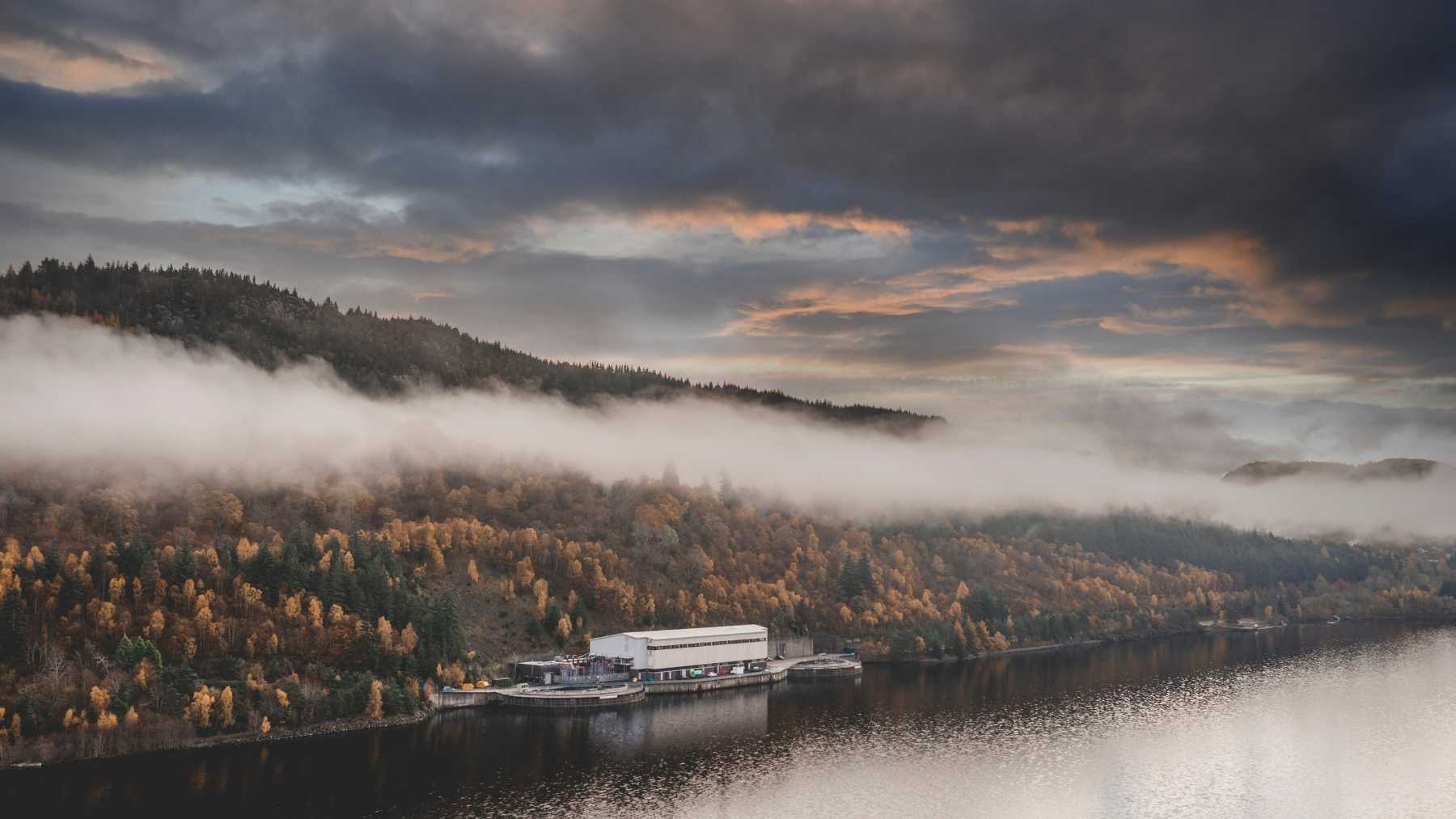
Foyers sits on the eastern shore, roughly halfway down. SSE runs it, and it works the same way every new proposal would: Loch Mhor up top, Loch Ness at the bottom, two 150-megawatt reversible pump-turbines in shafts sunk below the waterline so there is enough head to pump against.
The numbers SSE publishes for Foyers are bigger than the station’s low profile suggests. Each pump-turbine weighs over 900 tonnes, with a rotating assembly of over 300 tonnes inside it. At full output the plant discharges more than 200 tonnes of water a second into Loch Ness, and running the other way it lifts over 160 tonnes a second back up to Loch Mhor.
That adds up to 300 megawatts, enough for around 68,000 homes, and it has been doing it since the mid-1970s without anyone treating the loch as an industrial site. Save Loch Ness, the campaign group formed to fight the newest proposal, puts the effect on the loch itself at 8.7 centimetres, about three and a half inches. That is the baseline everything else gets measured against.
Four schemes, four completely different stages
Loch na Cathrach, above Dores, was consented by Scottish ministers in June 2021 under its old name, Red John. Statkraft, the Norwegian state-owned generator, bought it in December 2023 and lists roughly 450 megawatts and about 2,800 megawatt-hours.
Loch Kemp, near Whitebridge, belongs to Statera. The application filed with the Scottish Government in November 2023 covers up to 600 megawatts and just under 9 gigawatt-hours, using a lochan raised 28 metres behind eight small dams. Highland councillors voted 8-2 against it in June 2025, overturning their own planning officials, who had recommended raising no objection.
Glen Earrach is the big one. Owned by the family firm behind the Balmacaan Estate, it applied on 31 March 2025 for 2,000 megawatts and up to 34,000 megawatt-hours, at a cost the developer puts near £3 billion, roughly $4 billion. The upper loch, Loch nam Breac Dearga, sits close to 500 metres above the surface of Loch Ness, which itself is only 52 feet above the sea.
That 500-metre figure is the entire argument. Head height decides how much water you have to move to store a given amount of electricity. Foyers works with about 179 metres. Loch na Cathrach has roughly 250. Glen Earrach has close to 500, which is why the company keeps saying it moves less water per unit of energy than anything else proposed on the loch, and why it calls itself the most efficient scheme in the UK. That claim is the developer’s, and no regulator has certified it.
There is one more wrinkle, and it is on the Scottish Government’s own consenting portal. Loch Kemp is filed there under the project type “Hydro Non-Renewable”. Glen Earrach, on the other side of the same loch, using the same technology, is filed under “Hydro Renewable”.
Ofgem picked the winners in June and the planning system had nothing to do with it
On 26 June 2026, Ofgem published its minded-to decisions for the first window of the long duration electricity storage cap and floor scheme. The mechanism is simple enough: the project gets a guaranteed minimum revenue, and if it earns above a ceiling, the excess goes back to consumers.
Sixteen projects made the provisional list, totalling about 7,645 megawatts. Three are pumped storage, and together they account for 3,900 megawatts of that: Earba at 1,800, Coire Glas at 1,440, and Loch Kemp at 660. Energy minister Michael Shanks said the government “is getting Britain building again”, forty years after the last such plant was finished.
So the only Loch Ness project with a revenue guarantee behind it is the one without consent, whose council objected, and whose case has been referred to the Division for Planning and Environmental Appeals. Hearing sessions ran in April 2026. The reporters’ findings go to Scottish ministers, who make the actual decision.
Statkraft had a date, a venue and a construction start, then pulled the date
This part is uncomfortable to read in order. On 21 June, Statkraft posted an invitation to a drop-in event at Dores Village Hall for 2 July, said it was on track to start construction at Loch na Cathrach at the end of 2026, and offered to walk people through a revised construction traffic route.
Five days later, Ofgem published the list. Statkraft postponed the event the same day, writing that “Loch na Cathrach has not been included in Ofgem’s Window 1 minded-to initial list”, and that the decision mattered enough to the project’s construction and timing to warrant reviewing the outcome first.
Consent since 2021. Site investigations finished. A transport route worked out with the council. And the community meeting to explain all of it called off because the money mechanism went somewhere else.
Ofgem’s consultation on those provisional decisions closed on 7 August, with final determinations due later this year. Unsuccessful projects can wait for a future window or press on as merchant projects, with no floor under them at all.
Nobody has added up what four of these would do to the water
Loch Ness holds about 7.5 cubic kilometres of water, more than every lake in England and Wales combined, in a trench 22.5 miles long and up to 755 feet deep. It is not the deepest loch in Scotland, but it is comfortably the largest by volume, which is exactly why developers want it as the bottom half of a battery.
The environmental report for Loch Kemp looked at what filling three upper reservoirs from empty would do, and put it at 73 centimetres off the loch, around 2 feet 5 inches, while calling that an extreme case that assumes everything pumps at once. The Ness District Salmon Fishery Board, which wants a moratorium, argues that with four schemes running the daily drawdown could exceed 1.2 metres.
Atlantic salmon numbers in the Ness catchment have been falling for decades, which is what the fishery board is protecting, alongside objections lodged by the RSPB, Mountaineering Scotland and two community councils. No study has yet assessed all four schemes together, which is the objectors’ central complaint and the thing the developers have least to say about. None of the environmental reports mention the monster, which is the correct call.
America built 22 gigawatts of this and then mostly stopped
The Energy Department puts the US pumped storage fleet at roughly 22 gigawatts of generating capacity and 550 gigawatt-hours of storage, about 88% of all utility-scale energy storage in the country. Most of it went up in the 1970s. Bath County in Virginia, at a little over 3 gigawatts, is still the largest.
That fleet is why the American storage conversation sounds different. Lithium is doing the four-hour job and doing it well, but the ten-hour and twenty-hour job is still mostly water and gravity, and nobody has found a cheap way around needing a mountain. Which is why a Houston company is drilling two miles down to make its own head instead of borrowing a hill, why the deepest mine in Europe is being converted into 530 megawatt-hours of underground pumped hydro, and why a Swiss firm is spending over a billion dollars on a tank of vanadium liquid rather than fight anyone over a valley.
Loch Ness is what the alternative looks like when the geography is already sitting there. One machine that has run quietly for fifty years, and three more that want the same water, sorted now by a regulator’s assessment rather than the order they joined the queue.
Ofgem’s final list lands later this year. Loch Kemp still needs ministers to say yes, and the reporters have not published yet. Glen Earrach is still in consultation with a stack of objections against it. And the one project that had everything sorted has already found out how fast a construction date turns back into a maybe.