
Getting rid of big things is never as easy as buying them. Anyone who has tried to offload a dead refrigerator, an upright piano, or a boat that seemed like a good idea a few summers ago knows the routine: nobody wants it, moving it costs more than it’s worth, and it is somehow always your problem. Now run that math on a 1,020-ton nuclear reactor vessel.
That was the job Portland General Electric signed up for after it shut down the Trojan Nuclear Plant, on the Oregon bank of the Columbia River near Rainier, in January 1993. And the solution the company landed on remains one of the strangest heavy hauls in American industrial history. PGE filled the reactor vessel with concrete, loaded it onto a barge built specifically for the trip, and pushed it 270 miles up the Columbia to a burial pit in the Hanford desert.
Burial began on August 19, 1999, according to Nuclear Engineering International, with about 80 stakeholders watching the first commercial reactor vessel in the country go into the ground in one piece. Next week marks 27 years since that audience stood at the edge of a trench in eastern Washington and watched a power plant get buried like a pharaoh.
Trojan was supposed to come apart in 45 boxes
Some background helps here. Trojan was Oregon’s only commercial nuclear plant, and it sat on land previously owned by the Trojan Powder Company, an explosives outfit. Which means the state’s one nuclear station was named after a dynamite brand, and honestly, the marketing never recovered.
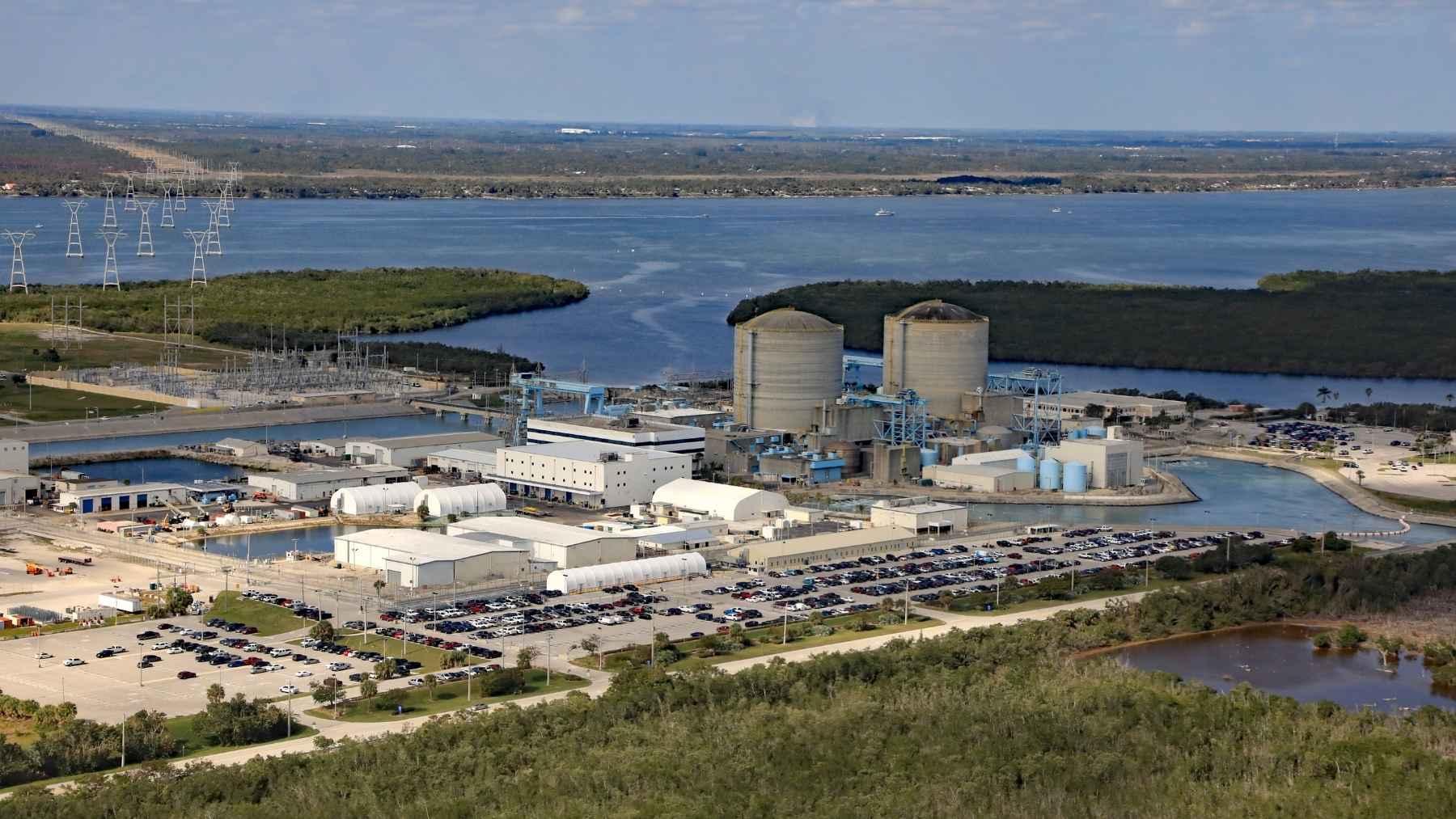
The plant was a giant for its era. When it started commercial operation on May 20, 1976, its 1,130-megawatt capacity made it the largest of its kind, enough to supply more than 900,000 homes, according to PGE’s own history of the site. It was also a money pit. A project originally pitched at about $169 million came in closer to $460 million.
“By all rational standards, Trojan is a sound investment and a technological success,” PGE chairman and CEO Frank Warren declared in the company’s 1977 annual report. The plant then spent the next decade and a half collecting steam generator problems, regulatory fines, and ballot initiatives aimed at closing it. A tube leak on November 9, 1992 kept it offline, and on January 4, 1993, the PGE board pulled the plug for good. The company says it became the first utility in the nation to voluntarily shut down a nuclear plant for economic reasons.
Shutting it down turned out to be the simple part. The original decommissioning plan, approved in April 1996, called for cutting the vessel’s radioactive internals into pieces small enough to pack into 45 standard shipping containers, then trucking the lot to the disposal site. But PGE had already moved Trojan’s four steam generators and its pressurizer upriver as single pieces in 1995, and the whole thing went smoothly enough that in January 1997 the company proposed something bolder. Skip the cutting. Seal everything inside the vessel and move the entire package once.
So that is what the crews did. They plated over the openings, pumped concrete foam into the vessel, wrapped the finished package in blue shrink-wrap plastic, and ended up with a sealed 42-foot steel unit weighing 1,020 tons. One radioactive object, one trip, instead of dozens of smaller ones.
A quarter mile of pavement, then 270 miles of river
By June 1999 the vessel was full of cement and out of the containment building. From there, the route to its grave started small: a quarter-mile paved road from the plant down to a barge slip on the Columbia, as the Northwest Labor Press reported at the time. Waiting at the bottom was a barge built specifically for this cargo, because you do not exactly rent something rated for a concrete-filled reactor off the lot.
Then came the part that made national news. Two tugboats pushed the barge 270 miles up the Columbia, against the current, past Portland and through the river’s dams and locks toward eastern Washington. CBS News reported the trip took about 36 hours, including a two-hour overnight stop at Pasco to wait for daylight on the final stretch.
According to the Nuclear Regulatory Commission, cited in that same CBS report, it was the first commercial reactor of that size and contamination level to pass so close to a major American city. Which sounds alarming until you learn the Columbia was already a well-worn nuclear highway. The Navy has been barging defueled reactor compartments from decommissioned submarines up the same river to Hanford since 1986, and still does.
The barge tied up at the Port of Benton, near Richland. The last leg was 30 miles by road on a crawler transporter at all of 5 mph, per Nuclear Engineering International. If you have ever been stuck behind a wide load hauling a manufactured home, picture that, except the load is a nuclear reactor and the schedule was checked against every pipeline, power line, and road surface on the route.
The burial took three months
The destination was the US Ecology commercial low-level waste disposal site, which sits on leased ground at the Hanford reservation. Hanford made plutonium for the American weapons program starting in World War II, so a retired power reactor moving in was less a shock to the neighborhood and more a change of tenant.
On August 19, 1999, with those 80 stakeholders looking on, the vessel went into a pit 45 feet deep. Covering it over was expected to take around three months, per Nuclear Engineering International, and PGE’s account notes the package was topped with gravel. The Oregon Department of Energy lists the one-piece removal of the reactor vessel and its internals as a first in the nation.
And the reasoning holds up. Every cut into those internals would have meant more underwater work, more packaging, more shipments, more handling of radioactive material. Sealing it all inside 42 feet of steel and concrete and making a single trip traded years of piecework for one very strange boat ride.
The tower outlived the reactor by seven years
The reactor was gone, but Trojan’s most famous landmark stayed up a while longer. The 499-foot cooling tower, the thing everyone actually pictured when they heard the plant’s name, stood until May 21, 2006, when PGE imploded it. The company coordinated a rolling traffic slowdown on I-5 with transportation officials beforehand, so drivers who had no idea a tower was about to drop out of the skyline would not cause a pileup.
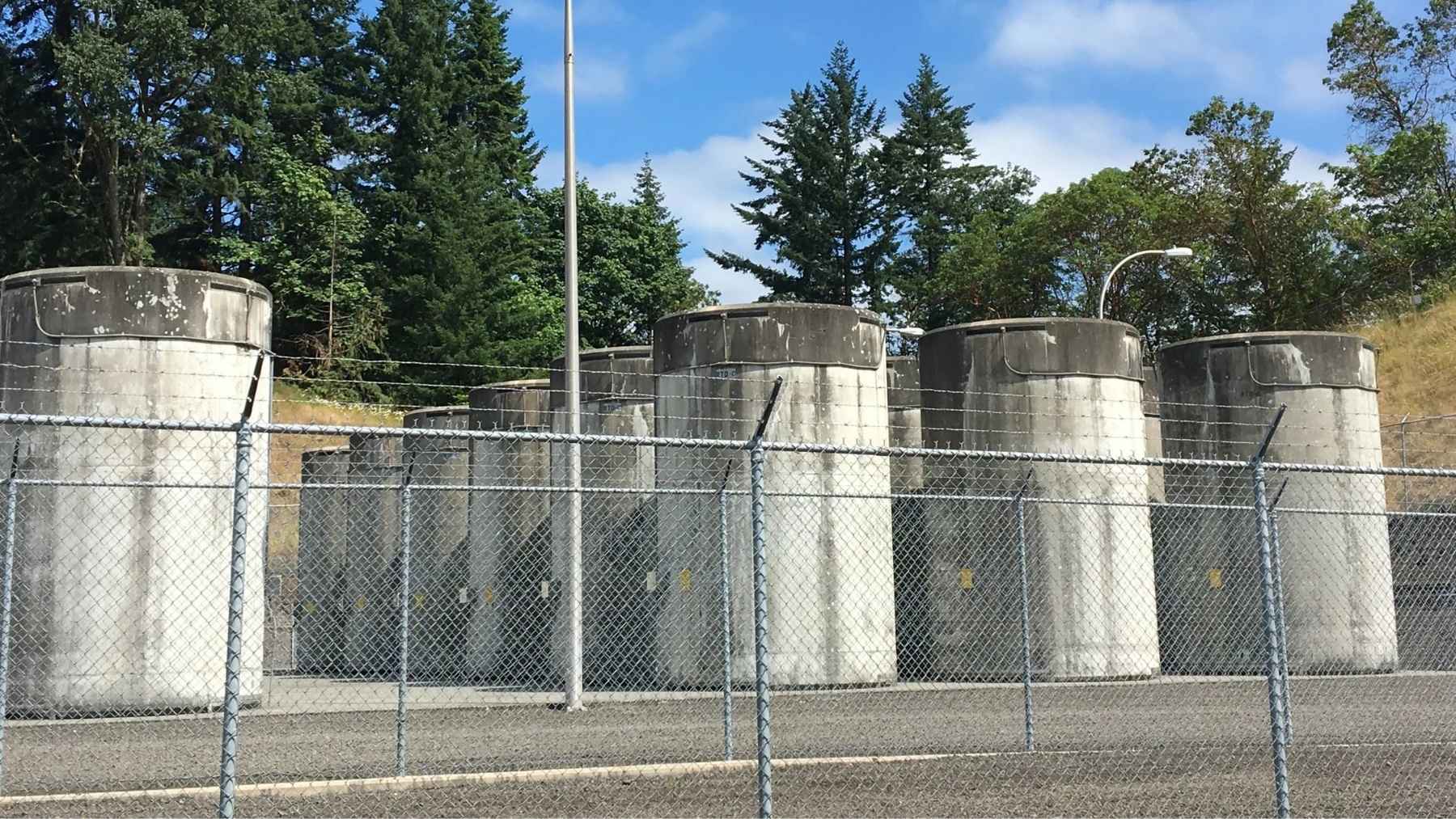
The Nuclear Regulatory Commission had already terminated Trojan’s operating license on May 23, 2005, closing the book on radiological decommissioning. There is one leftover, though, and it is a big one. The plant’s spent fuel never left. It sits at the site today in 34 concrete-and-steel dry casks, waiting on a federal repository that was supposed to start accepting fuel in 1998 and still does not exist. Oregon buried the reactor. The fuel is still waiting for somewhere to go.
As for the land, PGE turned much of it back into green fields, and the 75-acre Trojan Park next door still operates with a stocked lake and picnic grounds. People now fish where a dynamite company once stood and a nuclear plant once ran, which is a fairly complete tour of American industrial history in one afternoon.
There is a reason this story lands differently in 2026 than it did in 1999. The industry is pouring foundations again. Canada just lowered a 1,050-ton basemat into a 115-foot shaft to start the Western world’s first grid-scale small modular reactor, and Britain has welded a full reactor vessel shut in under 24 hours using an electron beam, feeding an SMR pipeline that keeps the world’s heavy forges booked solid. Almost the exact tonnage Oregon once floated upriver to a grave is now being lowered into shafts to start the cycle over.
Every one of those new reactors will eventually hand somebody the same problem Trojan handed PGE. At least this time there is a manual, and it is buried under gravel in eastern Washington.
 @lloydbriner ROOKIE1 month ago