
Every next-generation reactor pitch of the last decade has really been a pitch about coolant. Molten salt. Liquid sodium. Liquid lead. The coolant gets the headline, the cutaway diagram and the entire argument, because the coolant is the part that makes the machine behave differently from the water-cooled plants already sitting on the grid.
Nobody sells you the steel. Which is a shame, because with lead-cooled reactors the steel is the whole story.
On May 18, a Swedish company called Blykalla filed the first commercial application in the country’s history to build an advanced reactor park: six units, 330 megawatts, in a port town called Norrsundet roughly two hours north of Stockholm. The reactors are cooled by molten lead, a coolant that has been technically obvious and commercially impossible for about sixty years for one stubborn reason.
Lead dissolves stainless steel. Slowly, from the inside, at exactly the temperatures a power reactor wants to run at.
Blykalla’s answer is three steels of its own, each assigned a different job, each engineered to grow a skin of aluminum oxide that lead cannot get through. The reactor is the product. The alloys are the reason there is a product to sell.
Lead was always the obvious coolant
The case for lead is almost embarrassing on paper. Blykalla puts its boiling point at 1,740°C, or about 3,160°F, which means a lead-cooled core never has to be pressurized to keep its coolant from flashing to vapor.
Water reactors do not get that luxury. They boil at 100°C unless you squeeze them, which is why a pressurized water reactor carries a vessel with walls 15 to 20 centimeters thick, built to contain the pressure you added to stop the coolant from boiling off.
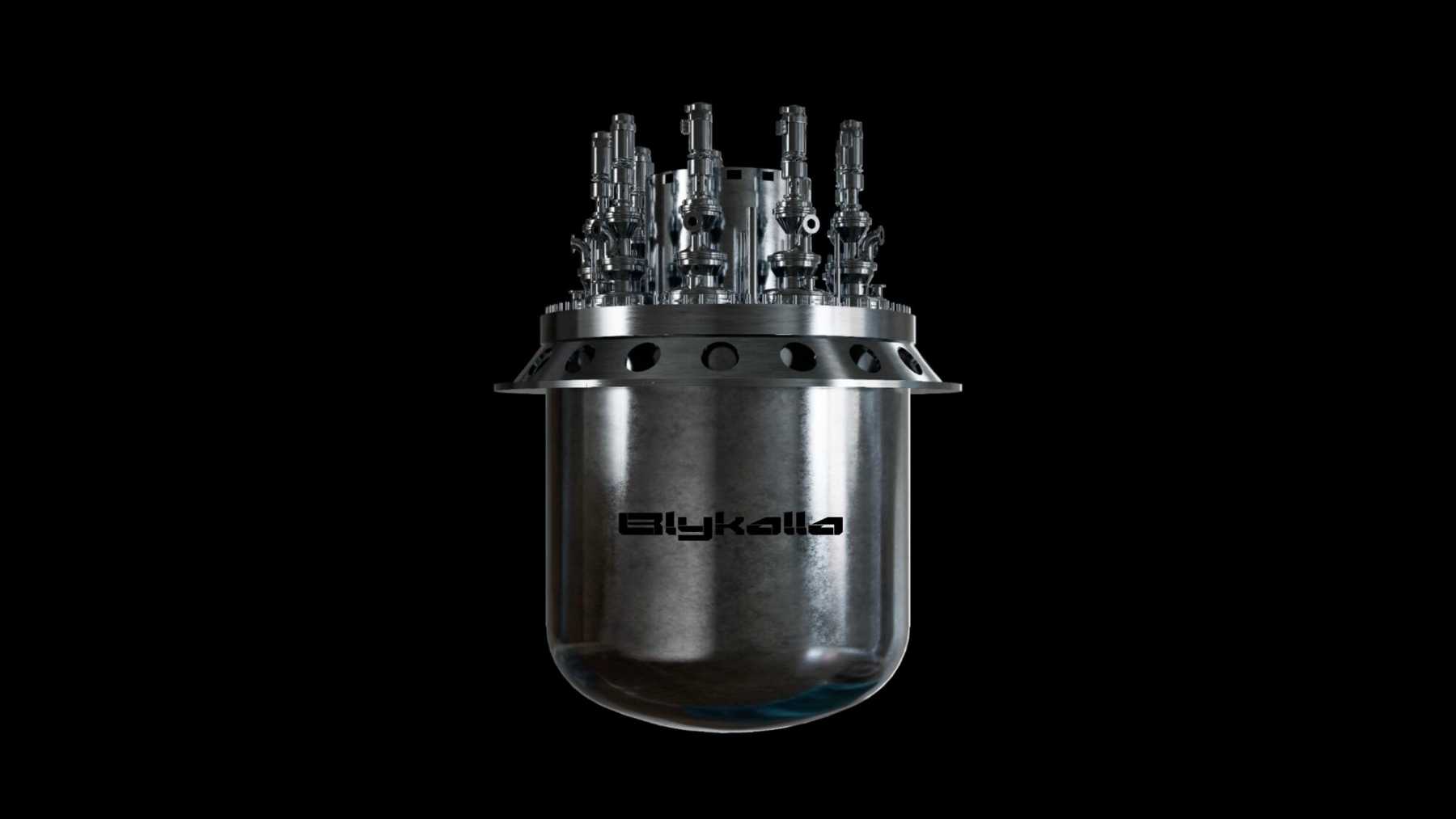
A SEALER vessel, per Blykalla’s own technical FAQ, is about 3 centimeters thick. It runs at ambient pressure. There is nothing to depressurize because nothing was pressurized.
Lead blocks gamma radiation on its own, so the concrete bill drops. It does not catch fire on contact with air or water, which is the standing complaint about sodium. And it locks iodine and cesium, the fission products that actually travel in an accident, into compounds that will not float away.
So why isn’t every reactor on Earth cooled with the stuff? Because that 3-centimeter wall is also the punchline. When your vessel is three fingers thick and your coolant eats steel, you do not have much wall to lose.
Three steels, three jobs
Blykalla’s fix is not one miracle alloy. It is three, and the split between them is the interesting part.
The company’s FAQ lists a ferritic alumina-forming steel, an iron-chromium-aluminum grade, for the components sitting in the hottest lead at 550°C. Then an alumina-forming austenitic steel, chosen partly because it welds easily, for the cooler end of the loop at 420°C. Then a harder alumina-forming martensitic steel for the pump impeller and its housing.
That third one tells you something. The impeller is the part spinning inside 800 metric tons of molten metal, so it is not just being corroded, it is being sandblasted by the coolant it is pushing. Chemistry alone will not save it. It has to be hard.
All three work the same trick. Aluminum in the alloy reacts with oxygen dissolved in the lead and grows a thin oxide film on the surface, and the lead cannot penetrate that film to reach the iron and nickel underneath. Oklo and Blykalla, in their March joint announcement, described the layer as self-healing, meaning it regrows where it gets scratched.
Here is the part that makes an engineer smile. The thing protecting the steel is an oxide. And oxide is exactly what killed the last serious attempt at this.
The Soviets learned this part the hard way
Lead-cooled reactors are not a thought experiment. The Soviet Union put them to sea.
The K-27 was commissioned in October 1963 with two lead-bismuth reactors, and on May 24, 1968, in the Barents Sea, one of them dropped from about 87 percent power to 7 percent in the space of a moment. Oxide impurities had accumulated in the coolant and blocked the flow. Part of the core overheated and melted. Nine men died of acute radiation syndrome.
Read that failure carefully, because it is not the failure people assume. The lead did not chew through the hull. Oxide particles clogged the plumbing.
Oxygen in liquid lead is a dial, not a switch. Too little and the protective film never forms and the metal starts dissolving your alloys. Too much and you are growing debris that collects somewhere inconvenient, which is roughly what the K-27’s crew was dealing with the week they were ordered out on an exercise anyway.
The later Alfa-class boats had a different miserable problem. Lead-bismuth freezes solid if you let it cool, so the coolant had to be kept molten permanently, in port, forever. They were the fastest submarines in the world in their day, and they were withdrawn from Russian service anyway, because keeping them alive cost more than they were worth.
Sixty years later, the physics has not changed. The instrumentation and the metallurgy have.
How much of this is actually proven
Blykalla’s marketing says its steels show “perfect corrosion resistance” in lead. That is a company describing its own patent, and it is worth treating like one.
The published record is more specific and more useful. Research in the Journal of Nuclear Materials, from the same Stockholm academic world where these alloys were developed across roughly 25 years, held alumina-forming austenitic steel in liquid lead at 550°C for a full year and found a protective aluminum-rich oxide under 100 nanometers thick still doing its job.
Separate published work on the same family of steels, in lead-bismuth rather than pure lead, found the film stops protecting at 650°C. Past that, the liquid metal gets through the scale and starts on the steel underneath.
Which explains a design choice that looks boring until you know what to look for. The SEALER is capped at 550°C at the core outlet. Blykalla did not build a material that beats lead everywhere. It built one that wins comfortably inside a temperature window, and then designed a reactor that never leaves the window.
That is not a knock. That is how materials engineering is supposed to work. But it is a long way from magic, and the alloys have not yet spent a decade in a machine with uranium in it.
Six reactors, one port town, and a queue
Norrsundet is an old industrial port in the Gävle municipality, chosen for unglamorous reasons: an existing harbor, existing infrastructure, and a position between two Swedish electricity bidding zones.
Six SEALER units at 55 megawatts each add up to 330 megawatts, which the company reckons covers about 150,000 households, one large industrial site, or a medium-sized data center. Sweden wants 2,500 megawatts of new nuclear by 2035, so the park would cover roughly 13 percent of the national target on its own.
Each unit is designed to run 25 years without refueling. The limit is not running out of uranium. It is radiation damage to the fuel cladding, which is to say the steel again.
World Nuclear News reported the filing on May 18, and Blykalla CEO Jacob Stedman called it “a historic first for Sweden.” Note the scope of that claim. First for Sweden, and an application rather than a permit.
What comes next is the Swedish government, the Swedish Radiation Safety Authority, the Land and Environment Court, and a municipal sign-off from Gävle. Blykalla filed for state financing on June 5 too, the first company to use a Swedish nuclear financing framework that only took effect in August 2025. Best case, the site runs in the early 2030s.
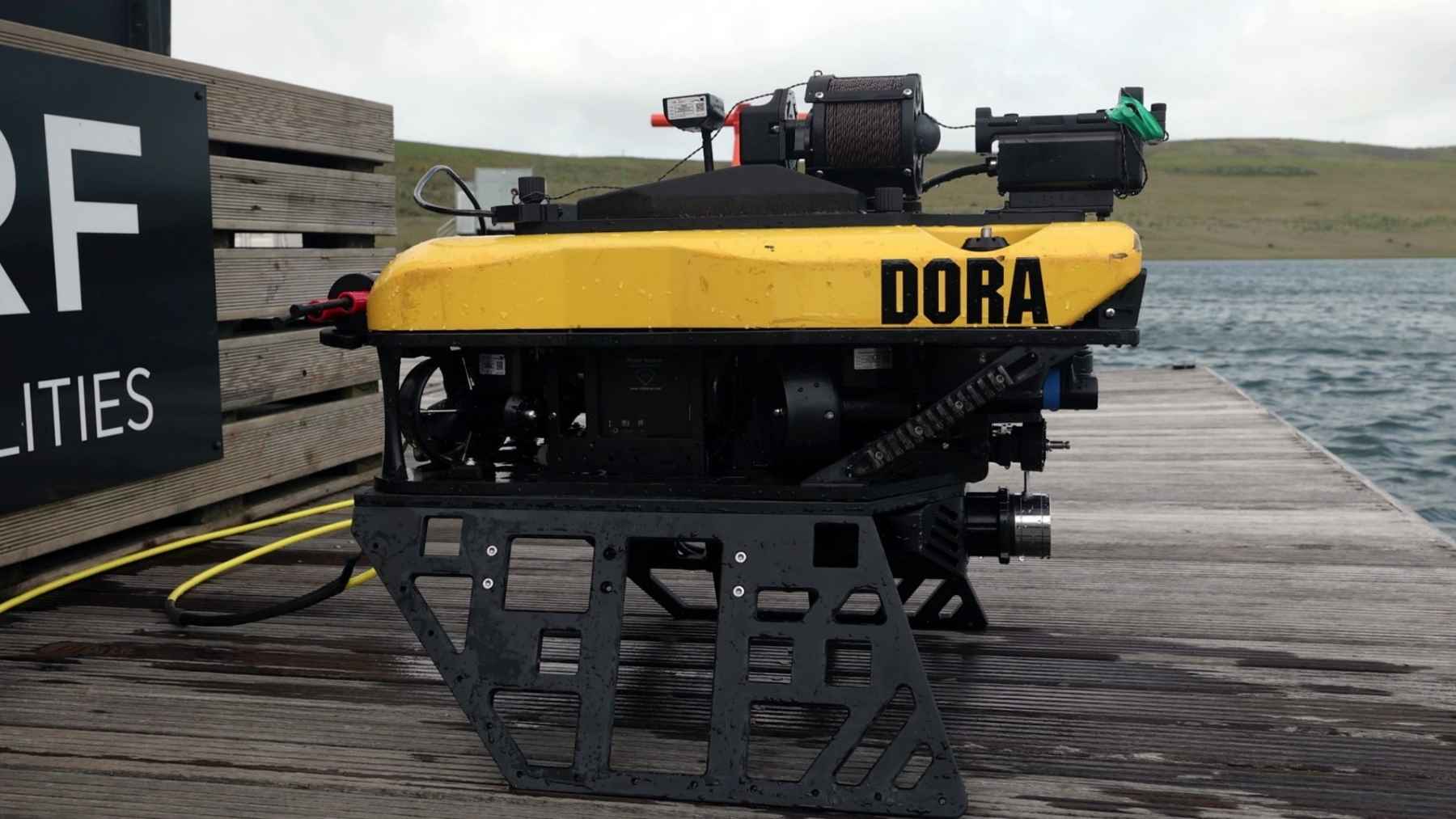
Meanwhile the hardware that exists today at Oskarshamn is a test site, not a power plant. Blykalla broke ground there in February 2025 with Uniper, ABB, NCC and KTH, backed by a 99 million kronor grant, roughly $9.3 million, from the Swedish Energy Agency.
It runs corrosion rigs and thermal-hydraulic rigs, and the SEALER-E prototype it was built to house is heated by electricity. There is no nuclear fuel in it, and there is not supposed to be.
That is a real distinction, and it is the same one Newcleo is drawing in Italy with its full-scale lead demonstrator, which also spins a turbine with electric heaters standing in for a core. The only lead-cooled machine anywhere with actual uranium going into it is Russia’s BREST reactor, and it is not expected to make power until 2028 at the earliest.
Oklo is writing checks, and the NRC hasn’t listed Blykalla yet
The American thread here is bigger than the Swedish filing.
Oklo, the fission company chasing data center contracts, co-led Blykalla’s $50 million round, and in March the two expanded their partnership. Blykalla said it plans to put $100 to $200 million and 30 to 40 engineers into the United States, subject to final planning and approvals. Oklo CEO Jacob DeWitte joined Blykalla’s board in April, and the Swedes opened a New York office in March.
Under the deal, Blykalla would run neutronics and thermal-hydraulics analysis for Oklo’s Department of Energy-authorized pilot project, and the two would explore fast-neutron irradiation testing using Oklo’s powerhouses. Which is a tidy trade. The Swedes need somewhere to bombard their alloys with fast neutrons, and Oklo’s sodium-cooled powerhouse is a place to do it.
On June 18, Blykalla announced it had begun pre-application engagement with the Nuclear Regulatory Commission. That is the earliest, loosest stage of American licensing, the part where a vendor and the staff work out what questions will eventually be asked.
It is also worth checking. The NRC’s public roster of pre-application projects, last updated July 15, lists six companies under liquid-metal-cooled reactors. Oklo is there. Newcleo Americas is there. TerraPower is there. Blykalla is not.
The agency’s own rule explains why that gap is not damning: a company only makes the list once it files a Regulatory Engagement Plan or racks up a real history of interactions. Blykalla announced its engagement four weeks ago. The roster is the receipt, and the receipt hasn’t printed.
What Blykalla is actually selling
Every serious lead-cooled program on the planet is betting on the same unproven thing: that somebody finally solved the metallurgy. It is the same instinct that had Copenhagen Atomics run a molten salt pump for two years straight before touching a core, because in this business the material is the schedule.
What Blykalla has is three patented alloys, a documented year of lead exposure at temperature in the peer-reviewed literature, a supply chain forming around the steels themselves with Höganäs on metal powders and ESAB on welding, and a test hall on the Simpevarp Peninsula where the lead is hot and the neutrons are absent.
What it does not have is a reactor. The park is a decade out and needs four separate Swedish approvals to exist at all. So the pitch is not really the six units in Norrsundet. The pitch is that after sixty years of lead beating steel, the steel won, in a laboratory, and somebody should be willing to bet a power plant on the rematch.