
Digging a rail tunnel under a river sounds like a water problem. It mostly isn’t. The machines run well below the riverbed, and the water stays where it is as long as the ground in between holds its shape.
On the Manhattan side of the Hudson, the ground does not hold its shape. The western edge of the island out toward 12th Avenue is fill, dumped there over the last century to shove the shoreline into the river. It is soft, it is wet, and there are things buried in it.
So the crews building the $16 billion Hudson Tunnel Project are going to freeze it first.
Jim Starace, chief of program delivery at the Gateway Development Commission, laid out the method in an interview published by Railway Age on July 14. “Essentially it’s like drilling through a giant soil ice cube,” he said.
That is closer to literal than it sounds. Pipes carrying chilled brine go into the ground, the water in the surrounding soil turns to ice, and the whole mass stiffens into something a machine can cut through without it slumping back in behind the cutterhead.
Manhattan’s western edge isn’t really ground
The bores have to get through what engineers call the Manhattan bulkhead, the structure holding the Hudson back from the 20th-century fill along 12th Avenue. Everything west of the original shoreline out there is made land.
Engineering News-Record reported that the contractor on this stretch, a Frontier-Kemper and Tutor Perini joint venture, will sink casings and run freeze pipes circulating cold brine through them. Benjamin Engle, Gateway’s senior program manager for program planning, told the magazine the point is to “freeze the ground and create a hardened mass.”
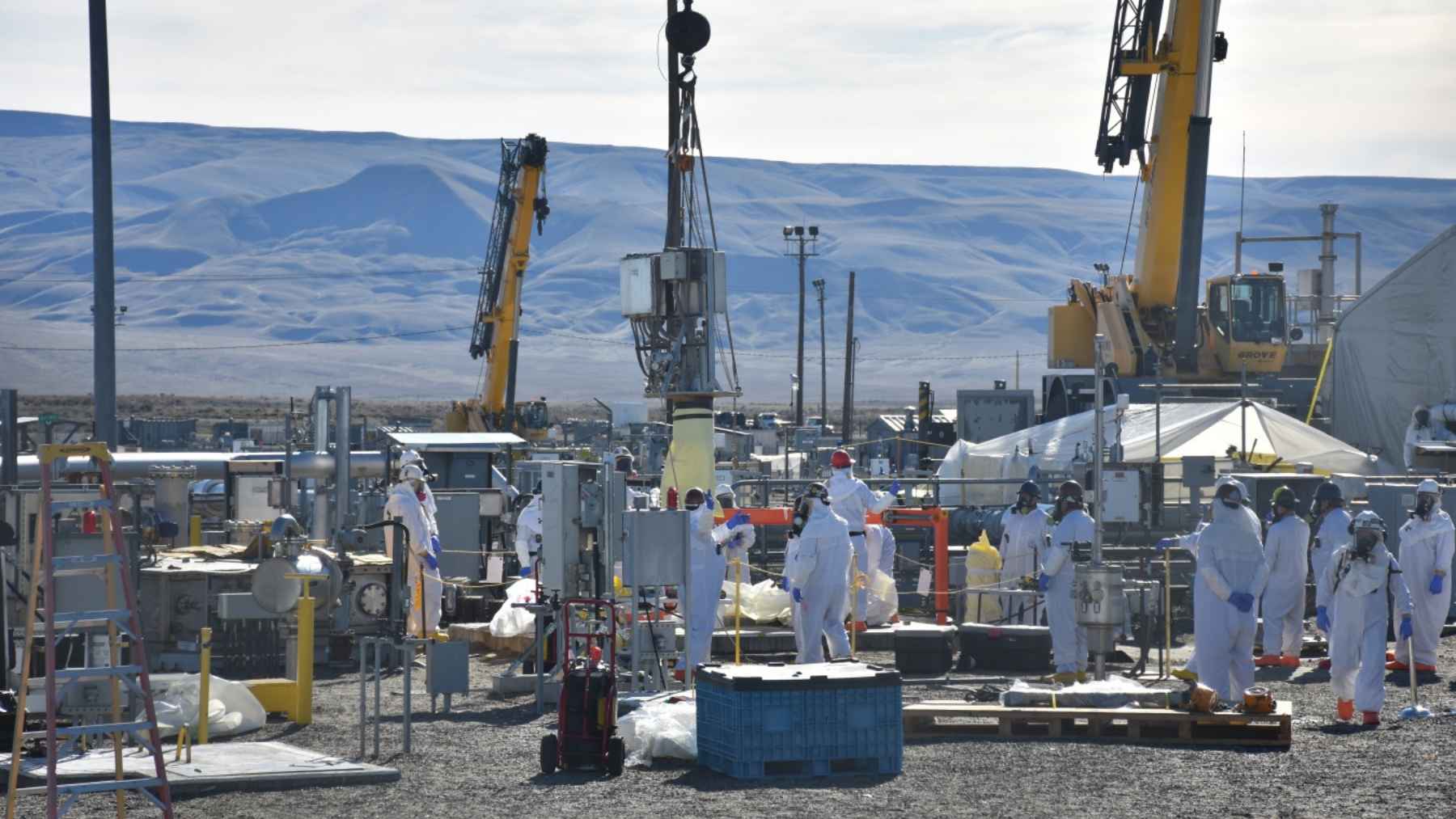
Freezing is only half of the treatment. The other half is jet grouting, which means injecting grout into more than 1,000 boreholes to bind the soil chemically instead of thermally. Both are running at once, per Railway Age, and between them they are supposed to leave the ground firm enough to excavate.
A platform built out on the bank of the Hudson holds the workers and the equipment doing it. Starace calls the Manhattan Tunnel the very challenging part of the job, and this is the same man whose other tunnel drive goes through volcanic rock at 35,000 psi.
There’s a highway buried in the way
Ground freezing solves soft. It does not solve solid objects that were never supposed to still be down there.
Per ENR, crews have to pull obstructions out of the route, including the steel foundation of the old West Side Highway, which got abandoned in place rather than dug out when the elevated road came down. The voids left behind get backfilled with low-strength concrete so the boring machines meet something predictable instead of a surprise.
For the worst of it, the crossing under 12th Avenue doesn’t use a boring machine at all. It uses a digger shield.
GDC’s own explanation of the difference is straightforward enough: a digger shield works like a TBM but excavates with a hydraulically powered arm rather than a flat cutterhead. An arm can work around an obstruction nobody knew about. A cutterhead has one move, and that move is forward.
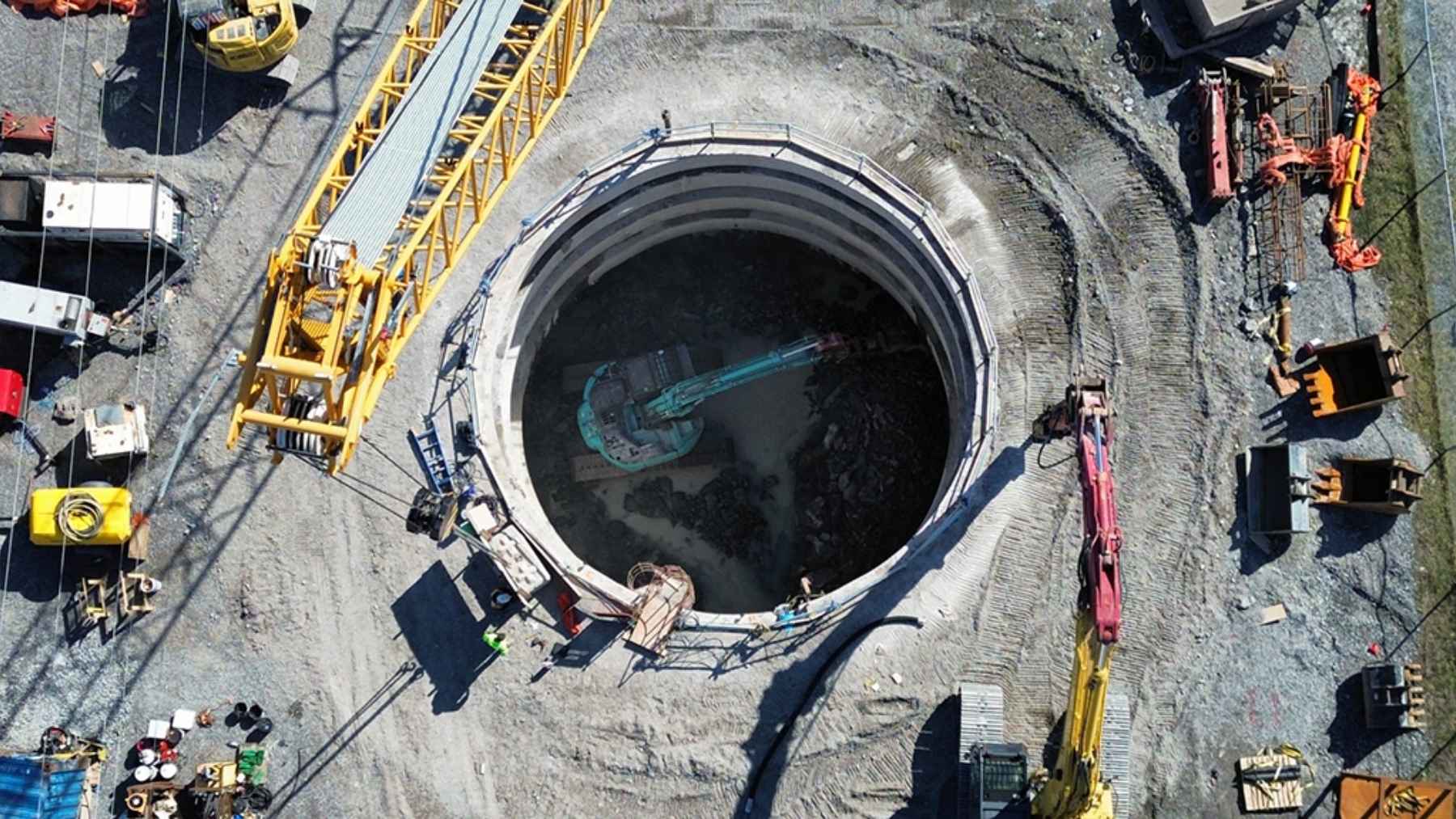
The machines that eventually bore under the river come out at an access shaft at 12th Avenue, roughly 130 feet across, according to ENR. Once they’re lifted out it stays where it is and becomes a permanent ventilation shaft.
The Manhattan Tunnel Project is the largest single contract on the job at around $1.2 billion, and all it builds is roughly 700 feet of tunnel joining the river bores to the concrete casing already sitting under Hudson Yards. GDC anticipates finishing it in 2029.
An endangered fish outranks a $16 billion tunnel
The Hudson has Atlantic sturgeon in it. NOAA Fisheries lists the New York Bight population as endangered, which means the calendar for a federal megaproject answers to a fish.
Starace told Railway Age that crews aren’t allowed to disturb them between January and July. That is half the year gone on the one part of the job that has to happen in open water.
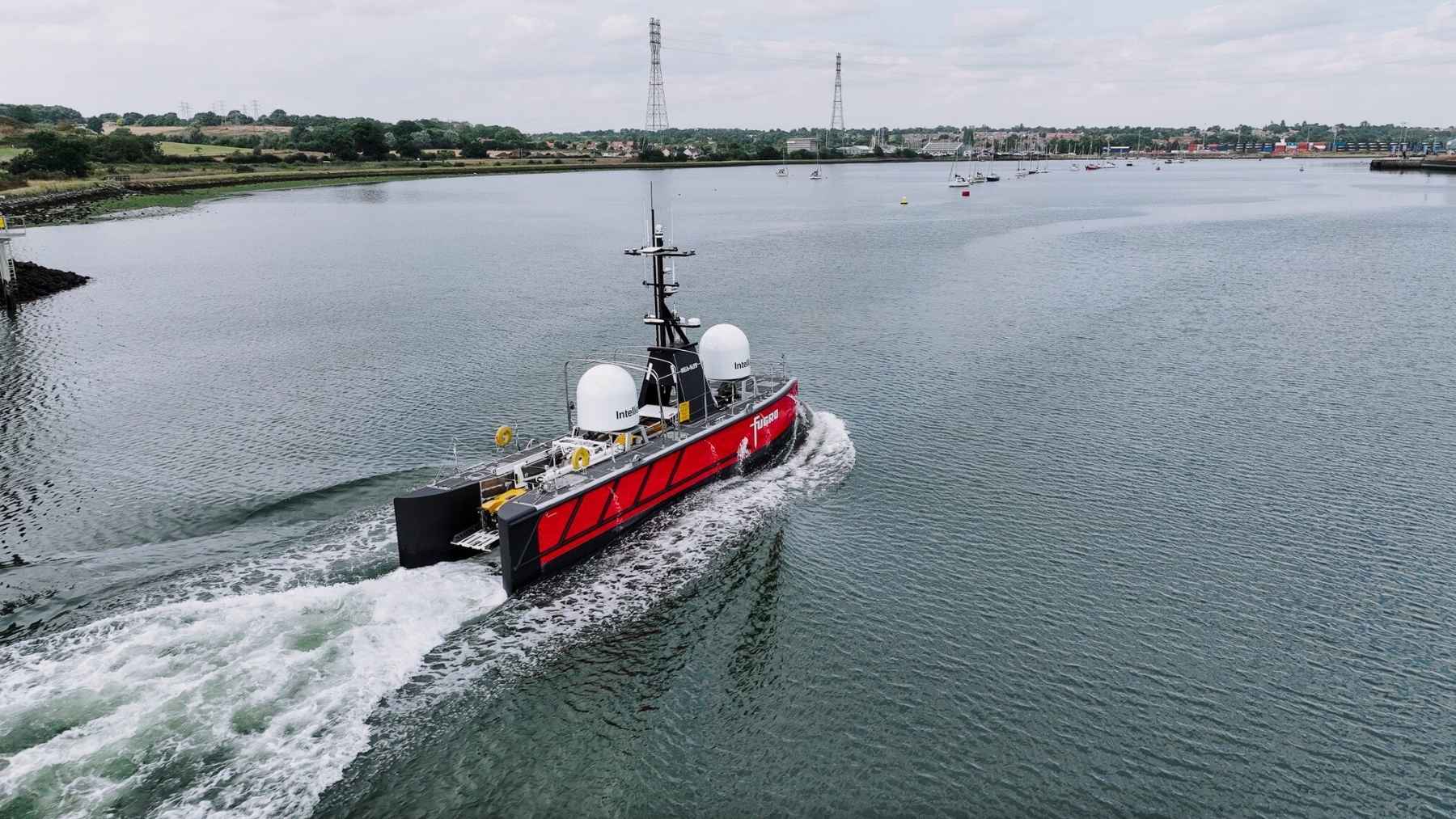
The workaround is a box. Engineers drove large metal sheet piles into the riverbed to form a rectangular cofferdam, and inside it work runs year-round regardless of what month it is. It also keeps the Hudson’s tidal current off the worksite, which crews were going to want anyway.
ENR put that cofferdam at 600 feet long. Inside it, Weeks Marine crews inject grout into the silt along a 1,200-foot stretch of shallow riverbed and mix cement and water into columns of soil, building what Gateway spokesperson Stephen Sigmund described to the magazine as a lightweight 100-foot-wide block of reinforced earth. By October 2025, GDC’s own construction log had 378 primary and 309 secondary columns mixed.
The fish earn the trouble on their own terms. NOAA has them recorded at up to 14 feet long and up to 60 years old. They mature slowly, and in the Hudson a female doesn’t hit half of her lifetime egg production until roughly 29 years of age. Wreck a few good spawning years and you don’t get them back on any timeline a construction contract recognizes.
Four machines, because one kind of dirt won’t do
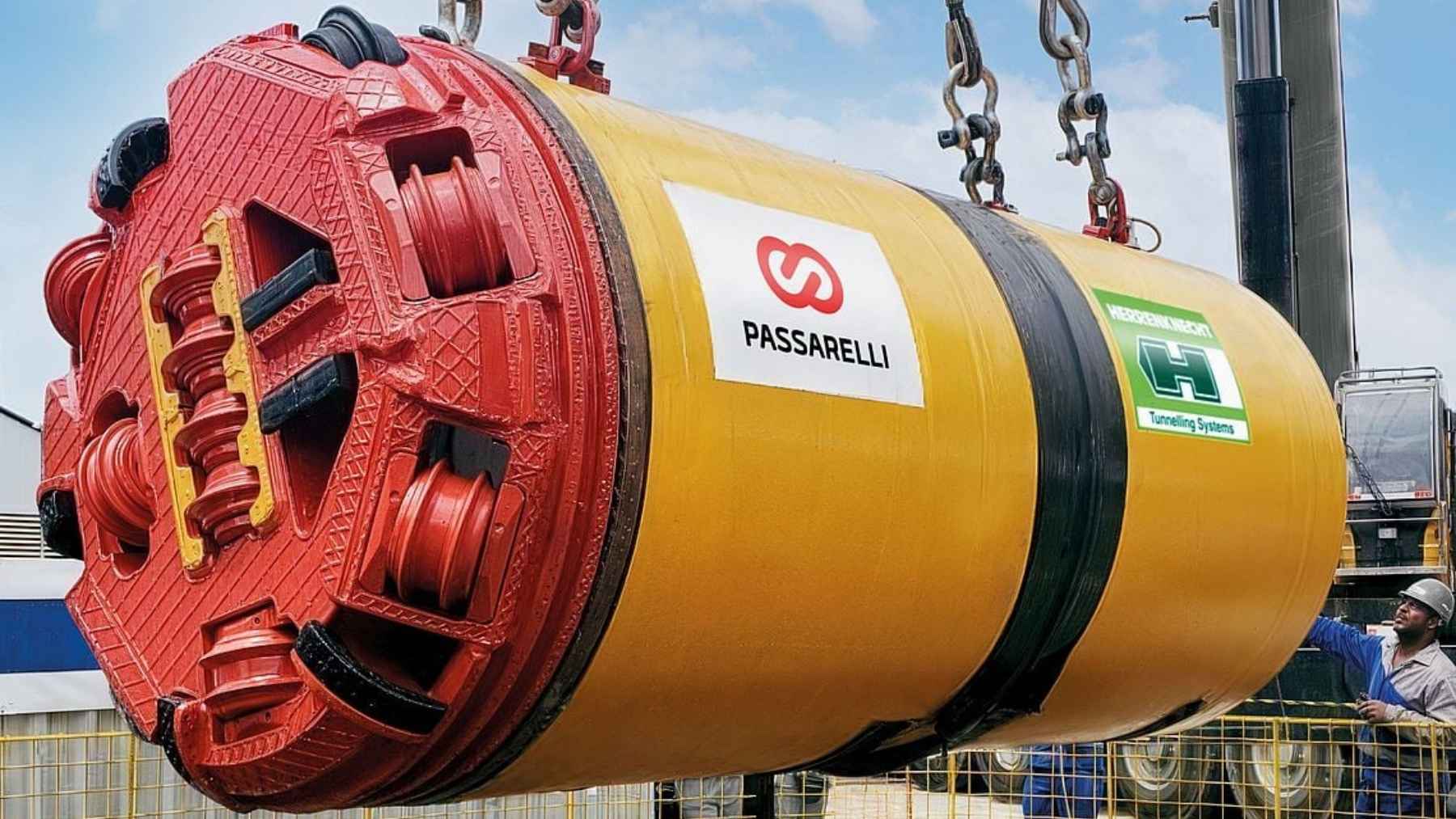
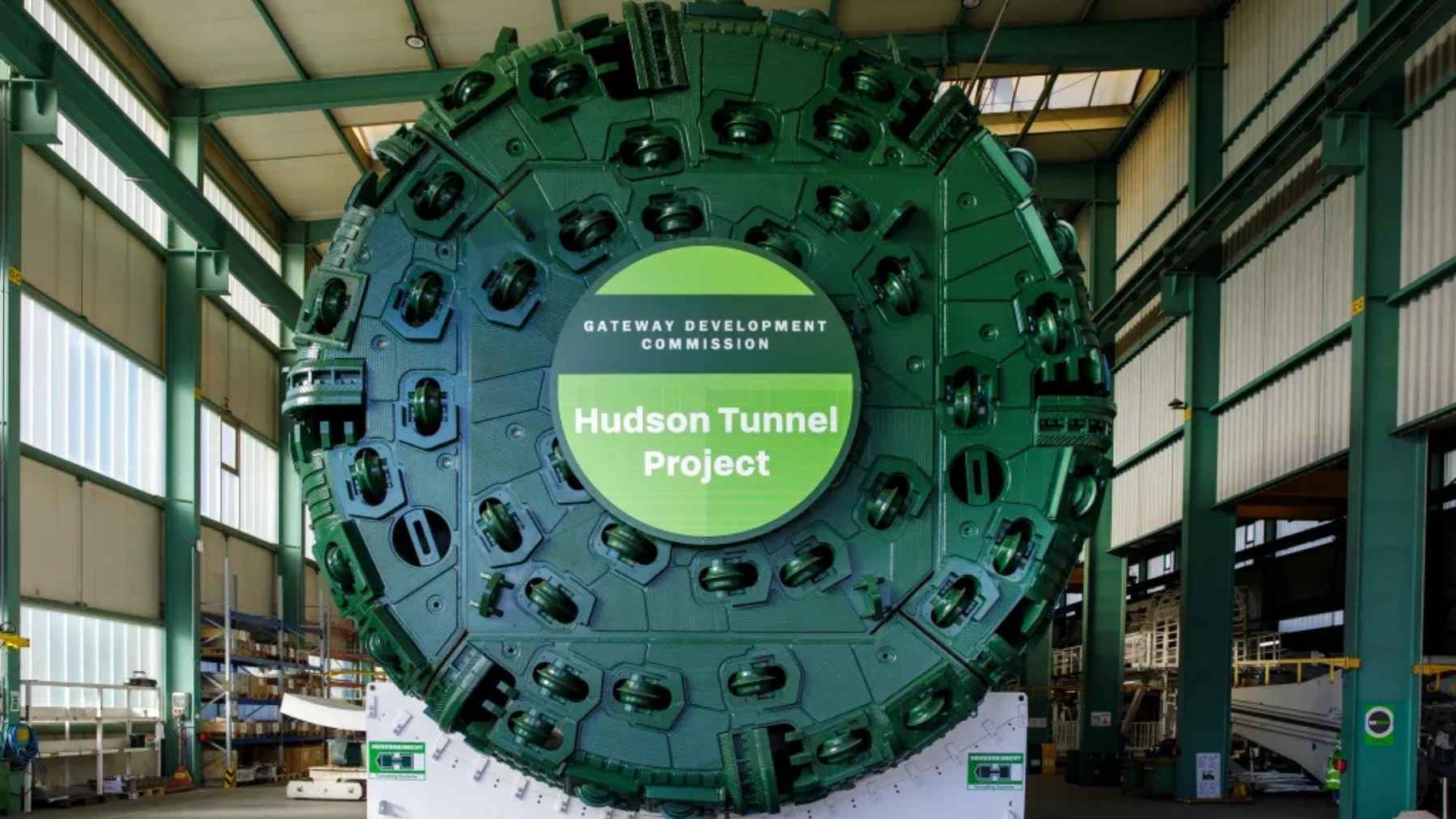
Starace put the fleet at four boring machines, 498 feet long apiece, in two pairs carrying different cutterheads. GDC’s published spec backs the length from the other direction: the gantries alone trail roughly 500 feet behind each cutting face.
The first pair is the one already sitting in a New Jersey trench, built for the diabase of the Palisades. Those are being bolted together now and are due to launch later this year.
The second pair doesn’t go in until 2028, and it is not a copy of the first. Starace told GDC’s board on July 8 that river boring is planned for that year, per Construction Dive’s account of the meeting. The river crossing has its own headaches, including roughly 500 wooden piles somebody left in the river back in 1964.
A machine tuned for 35,000-psi rock is the wrong tool for saturated mud, which is the whole reason nobody is just sending the Palisades pair straight through. They stop in Weehawken and get lifted out through a shaft about 131 feet across, and the river machines drop in behind them.
None of that is a Gateway quirk. DC Water is running two different borers under the Potomac for exactly the same reason, because the geology changes along the route. Dubai’s new metro borer is chewing through wet, salty ground riddled with voids, and that machine was built for that ground and nothing else.
The money fight is settled and the clock didn’t move
None of this looked guaranteed in February.
The U.S. Department of Transportation froze the project’s federal payments during a review of its disadvantaged business contracting rules. GDC sued on February 2. New York and New Jersey filed their own suit the next day. Work stopped on February 6 and about 1,000 people lost their jobs the same day.
Judge Jeannette Vargas issued a temporary restraining order, money started moving again, and crews were back by the end of the month. On June 29 she made the ruling permanent.
Prendergast told Railway Age the commission never planned for a shutdown, that a job this size can’t simply be switched off but has to be wound down and secured, and that he would rather not do it a second time. He also said the dates held. The new tunnel opens in 2035. The 116-year-old North River Tunnel finishes its rehab in 2038.
GDC itself is 68 people, which for a $16 billion program is lean by any reading. Prendergast describes the commission as a single-purpose delivery body that ceases to exist once the tunnel is done. Research the commission cites puts the construction phase at 95,000 jobs and $19.6 billion in economic activity.
The old tubes keep running through all of it
Nothing described here carries a passenger for another nine years. The 1910 tubes go on moving Amtrak and NJ Transit trains under the Hudson the entire time, salt damage and all, and the rehab that follows runs to 2038.
Twelve years is a long build. It is not a long time to be a sturgeon.
A fish that swims past that cofferdam this summer, assuming it dodges the propellers, can still be alive and spawning when the last crew walks out of the North River Tunnel in 2038. Which makes it the only party in this entire $16 billion argument that can afford to just wait the thing out.