
The small modular reactor has been the nuclear industry’s favorite slide for about a decade. Utilities pitch it, governments model it, conference panels argue about it, and for years that was as far as it got in the Western world: a promising design nobody had actually built at the scale of a power grid.
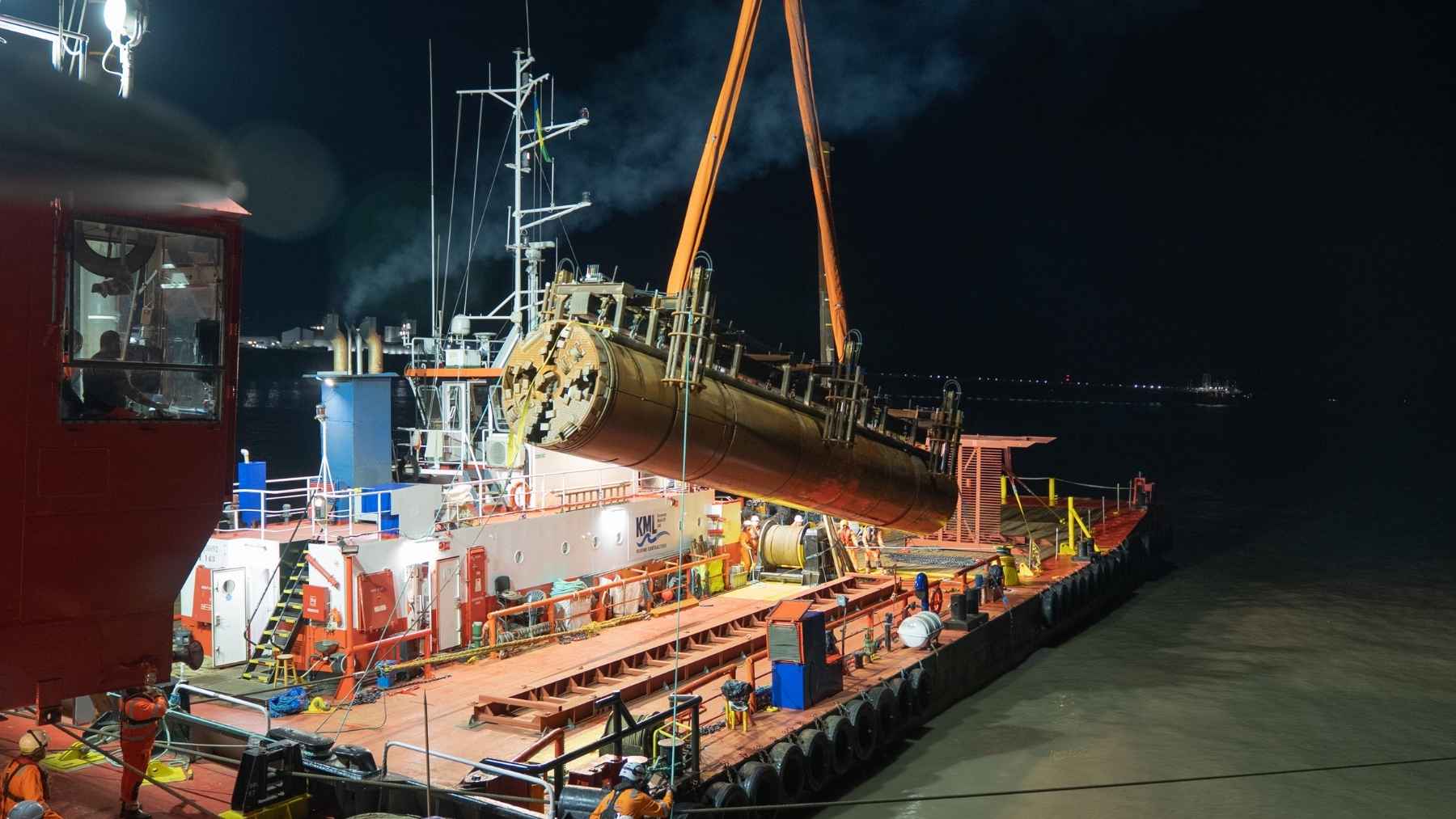
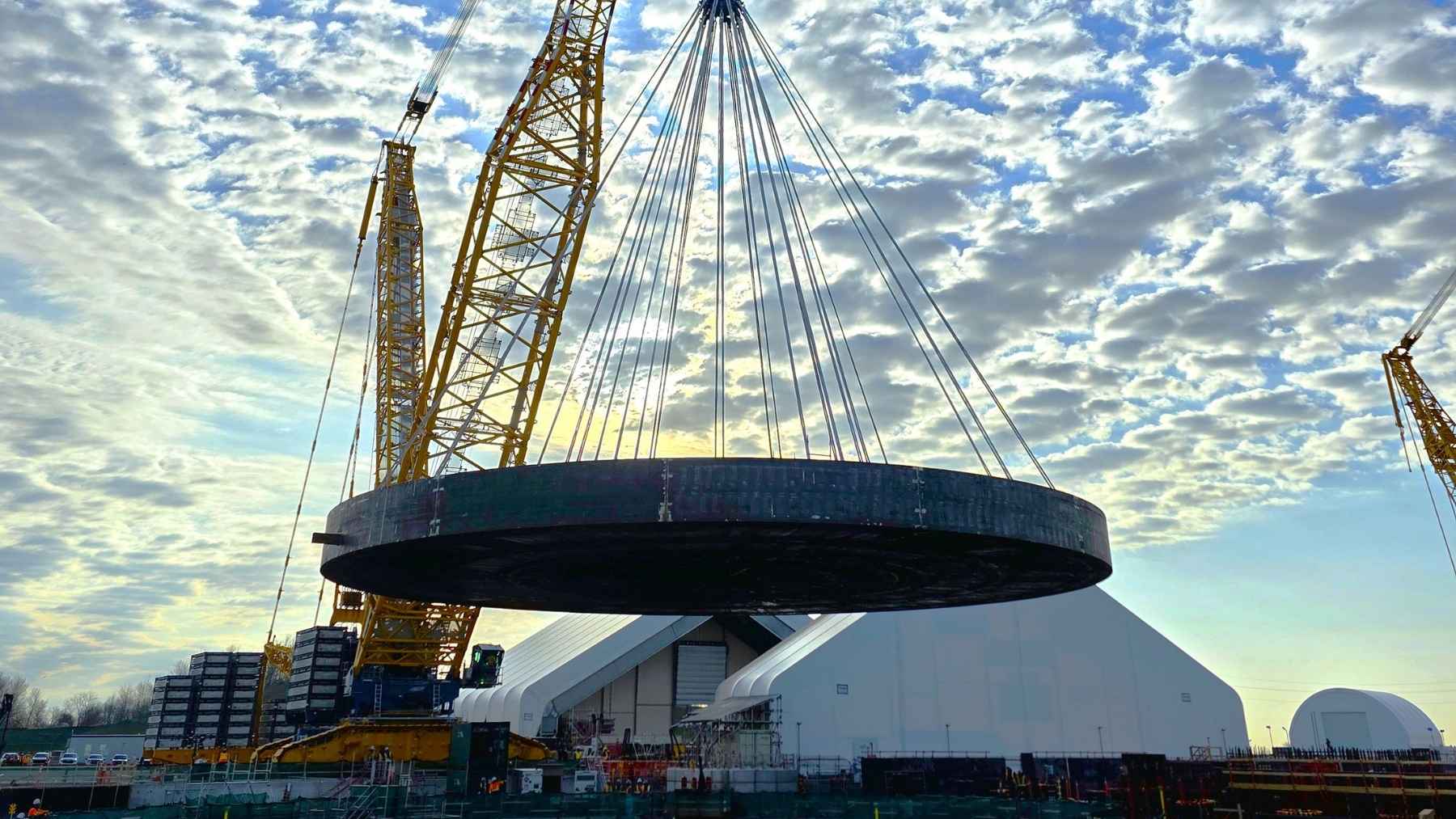
Then this spring, a crane in Ontario lowered a 1,050-ton slab of steel and concrete into a shaft 115 feet deep and quietly ended the talking phase.
That slab is the basemat, the foundation of the first GE Vernova Hitachi BWRX-300, going up at the Darlington site east of Toronto. Ontario Power Generation, the provincial utility building it, and GE Vernova both call it the Western world’s first grid-scale small modular reactor. It is designed to make 300 megawatts, enough for roughly 300,000 homes, and it is the first of four planned for the same site.
None of them will generate a watt until the end of 2030. But the concrete is in the ground now, which is further than anyone in the West has gotten with this technology before.
What OPG actually put in the ground
The basemat went into place on April 22, and it is a genuinely strange piece of engineering.
It weighs about 1,050 tons (953 metric tons, or roughly 2.1 million pounds, more than three fully loaded Airbus A380s), measures 121 feet across, and was welded together in one piece before one of the world’s largest crawler cranes set it 115 feet below grade in the excavated reactor shaft.
It is not really a slab of concrete, either. The module is built from Diaphragm Plate Steel Composite, a steel-and-concrete sandwich that OPG and its partners fabricated on site specifically so the thing could be assembled in one go rather than poured in stages. According to World Nuclear News, it is the first time a reactor-building foundation in Canada has been assembled modularly, which OPG described as “putting the ‘M’ in SMR.”
The reason a slab of concrete counts as news comes down to nuclear bookkeeping. For a conventional plant, pouring the first concrete for the reactor basemat is the moment a project officially becomes a nuclear unit under construction.
The Canadian Nuclear Safety Commission issued the construction license in April 2025, the province gave its final go-ahead a few weeks later, and the basemat is the physical proof that the build is real.
It is also the first brand-new reactor Ontario has started since the early 1990s, when the last of the existing Darlington units came online. The province spent the years since refurbishing what it already had rather than building anything new.
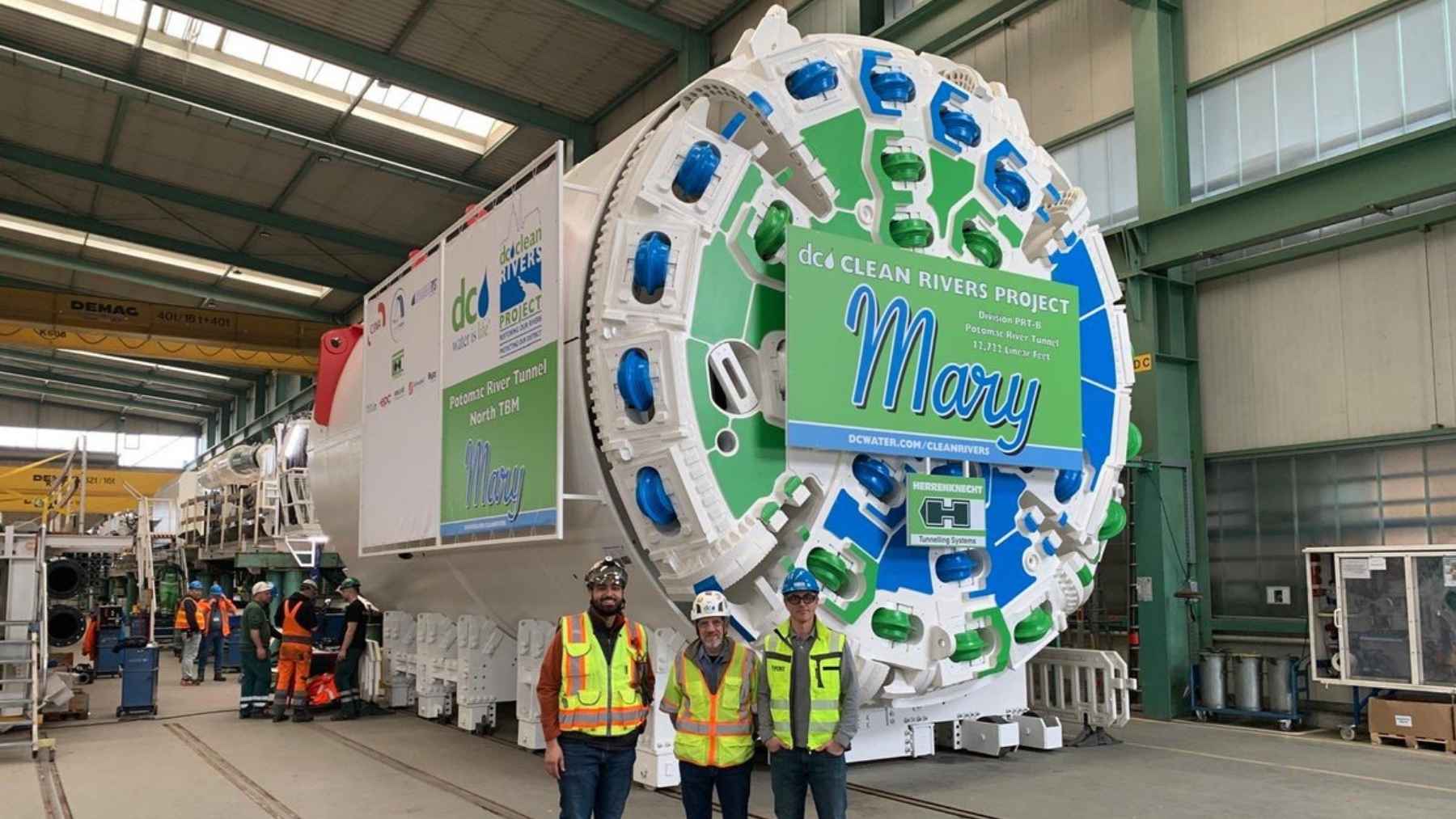
The site has kept moving since. All three major shafts are excavated, the reactor building is now going up instead of down, and OPG is preparing a foundation pad for the tower crane that will lower components into the hole. A tunnel boring machine named Harriett Brooks, after Canada’s first female nuclear physicist, is being assembled to dig the 2.1-mile cooling water tunnel that will serve all four units. OPG also filed its application for a licence to operate the first unit in March, which is the paperwork that decides whether the finished machine is ever allowed to run.
The reactor is small on purpose
The BWRX-300 is exactly what the name implies: a 300-megawatt boiling water reactor, about a third the output of the large units that anchor most nuclear stations.
GE Vernova calls it a tenth-generation design, which is a polite way of saying it is the latest in a very long line of boiling water reactors and borrows its safety case from the ESBWR, a bigger design the U.S. Nuclear Regulatory Commission already certified.
It cools itself by natural circulation instead of relying on electric pumps, sits in a containment buried below grade, and according to GE Vernova the entire power block fits within about two soccer fields. The build time, the developer says, drops to 24 to 36 months for later, repeat units, once the first one has worked out the kinks.
There is one wrinkle, and it has to do with fuel. The BWRX-300 runs on standard low-enriched uranium, the same kind feeding most of the world’s reactors, not the high-assay HALEU that more exotic designs need. That part is routine, and it is arguably the design’s quietest advantage, since the HALEU bottleneck is currently strangling half the advanced-reactor industry.
The catch is local: Canada’s existing CANDU fleet runs on natural, unenriched uranium, so the country does not enrich uranium domestically, and the new reactors will need a fuel supply it currently has to source from elsewhere. It is a solvable problem. It is not solved yet.
The “first” comes with asterisks
The press releases lean hard on the word “first,” so it helps to pin down which kind of first you are looking at.
Both OPG and GE Vernova are careful to say Western world’s first, or G7’s first, grid-scale SMR, and that scoping matters. Russia and China already operate small modular reactors, and Argentina has a pilot under construction, so this is not the first SMR on Earth. It is the first one a G7 country has built and wired to a major grid.
There is a second asterisk on the number four. Only Unit 1 has been approved and funded. The other three are still pending regulatory approval, are targeted for the mid-2030s, and their cost estimates are nowhere near as mature as the first one’s.
It is also a different machine from the other advanced-reactor projects breaking ground right now. Bill Gates’ TerraPower just started building a sodium-cooled reactor in Wyoming, and a company in Italy is testing a full-scale lead-cooled rig with electric heaters standing in for the fuel. Those are fast reactors chasing exotic coolants.
The BWRX-300 is the opposite bet: a deliberately conventional, water-cooled reactor scaled down and built in a factory-style sequence, designed to be boring and repeatable rather than novel. It is also the opposite bet from the three shipping-container microreactors America ran critical in thirty days, which is the other way the West is trying to solve this problem: go small enough that the regulator barely applies.
And none of this is making electricity yet. OPG is targeting the end of 2030 for grid connection, with construction itself wrapping up around 2029.
Twenty-one billion dollars, and what it buys
This is not a cheap way to find out.
OPG’s release-quality estimate puts the first reactor at CAD 6.1 billion, plus another CAD 1.6 billion for roads, tunnels, cooling-water lines and other infrastructure shared across all four units, for CAD 7.7 billion to get the first one standing.
The full four-unit program is budgeted at CAD 20.9 billion (about USD 15 billion) in 2024 dollars, with interest and contingencies baked in, and OPG expects each later unit to cost less as the supply chain matures, dropping to roughly CAD 4.1 billion for the fourth.
For that money, the four reactors are meant to deliver 1,200 megawatts, enough for about 1.2 million homes. The Conference Board of Canada estimates the program will add CAD 38.5 billion to the national economy over 65 years and sustain 18,000 jobs during the five-year construction phase, with more than 80 percent of the spending going to Canadian companies and about 5 percent to U.S. firms, mostly GE Vernova for the design.
The Canada Growth Fund and the Building Ontario Fund are each taking a minority stake, putting up CAD 3 billion in equity between them.
In June, the ownership structure got one more name on it, and it is the most interesting one. Seven Williams Treaties First Nations put CAD 700 million into the project, structured as a commercial loan that converts to equity once all four units are built. It is the first time First Nations have taken an equity position in a nuclear project in Canada, backed by what the federal finance minister called the largest Indigenous loan guarantee the country has ever issued, split 50/50 between Ottawa and Ontario.
“Today, our Nations are taking a historic step forward,” the Chiefs said in a joint statement. The province’s argument for the structure is less lyrical and more practical: cheaper borrowing, which it projects could save ratepayers up to CAD 15 billion over the life of the four units.
As for the power itself, Ontario’s grid operator put it at about 14.9 cents per kilowatt-hour, contingent on federal investment tax credits. It priced an equivalent build-out of wind, solar and storage at 13.5 to 18.4 cents, and concluded the reactors were the lower-risk option rather than the flatly cheaper one.
Not everyone buys it. Jack Gibbons of the Ontario Clean Air Alliance told the Globe and Mail that SMRs are the highest-cost way to keep the lights on and will push rates up. Whether the 14.9 holds depends entirely on the first reactor coming in on budget, which is the part nobody can promise.
Why the rest of the world is watching a hole in the ground
The reason this particular construction site matters beyond Ontario is that Darlington is the reference unit for a much bigger plan.
In Tennessee, the Tennessee Valley Authority became the first U.S. utility to file a construction permit application for a BWRX-300, for a single reactor at its Clinch River site near Oak Ridge. The U.S. Nuclear Regulatory Commission docketed that application in July 2025, and in June its staff published a safety evaluation report formally recommending the commission grant the permit.
That came in ahead of the agency’s own November target, and the mandatory hearing is now set for August 13, months earlier than the original December schedule. The final call belongs to the commissioners. The Department of Energy has already put a USD 400 million grant behind the project.
Poland’s Orlen Synthos Green Energy plans a fleet of about 24 of the reactors, with its first unit targeted near Wloclawek by 2032, and utilities in Sweden, Estonia, Hungary and the Canadian province of Saskatchewan are all somewhere on the same path.
The whole economic argument for SMRs rests on standardization, on building the identical machine over and over until the price comes down, the way the Darlington refurbishment shaved 250 days off its second reactor compared with its first.
Darlington is where that theory either holds up or it doesn’t. Get the first one right and the next two dozen get easier and cheaper to finance. Blow the budget and every utility watching quietly revises its plans.
The basemat is set, the cranes are lifting the reactor building up out of the shaft, and OPG is leaning hard on the roughly 8,000 lessons it logged refurbishing the existing Darlington reactors. That CAD 12.8 billion project wrapped up construction in February, four months ahead of schedule and CAD 150 million under budget, which in the global nuclear industry is close to a miracle.
That track record is the strongest card in the deck. But a foundation is still just a foundation. The reactor has to be built on top of it, fueled, licensed to operate and actually switched on, and all of that lands in 2030.
The West has spent the better part of two decades talking about small modular reactors. Canada is the first to find out whether the pitch survives contact with poured concrete.
 @larrybaisden ROOKIE4 months ago