
A solar panel is a dark, flat surface built to soak up as much sunlight as it can. Point one at the sky and you would expect the ground underneath to warm up, the same way a parking lot bakes on a July afternoon.
A team from the Chinese Academy of Sciences spent a full year testing that assumption on the Tibetan Plateau, and the ground did the opposite. Under the panels, the soil stayed frozen for roughly 50 extra days a year.
The measurements come from a peer-reviewed study in the journal Atmospheric Chemistry and Physics, published by the European Geosciences Union, and they land at an awkward moment for a region that holds more fresh water than anywhere on Earth outside the poles.
A 50-megawatt plant with sheep grazing between the rows
The site is the Dongneng plant near Maqu, in Gansu Province, sitting at 3,440 meters (about 11,000 feet) on the eastern edge of the plateau. It was built in September 2021, switched on in August 2022, and runs at 50 megawatts using bifacial LONGi panels rated at 21.1 percent efficiency.
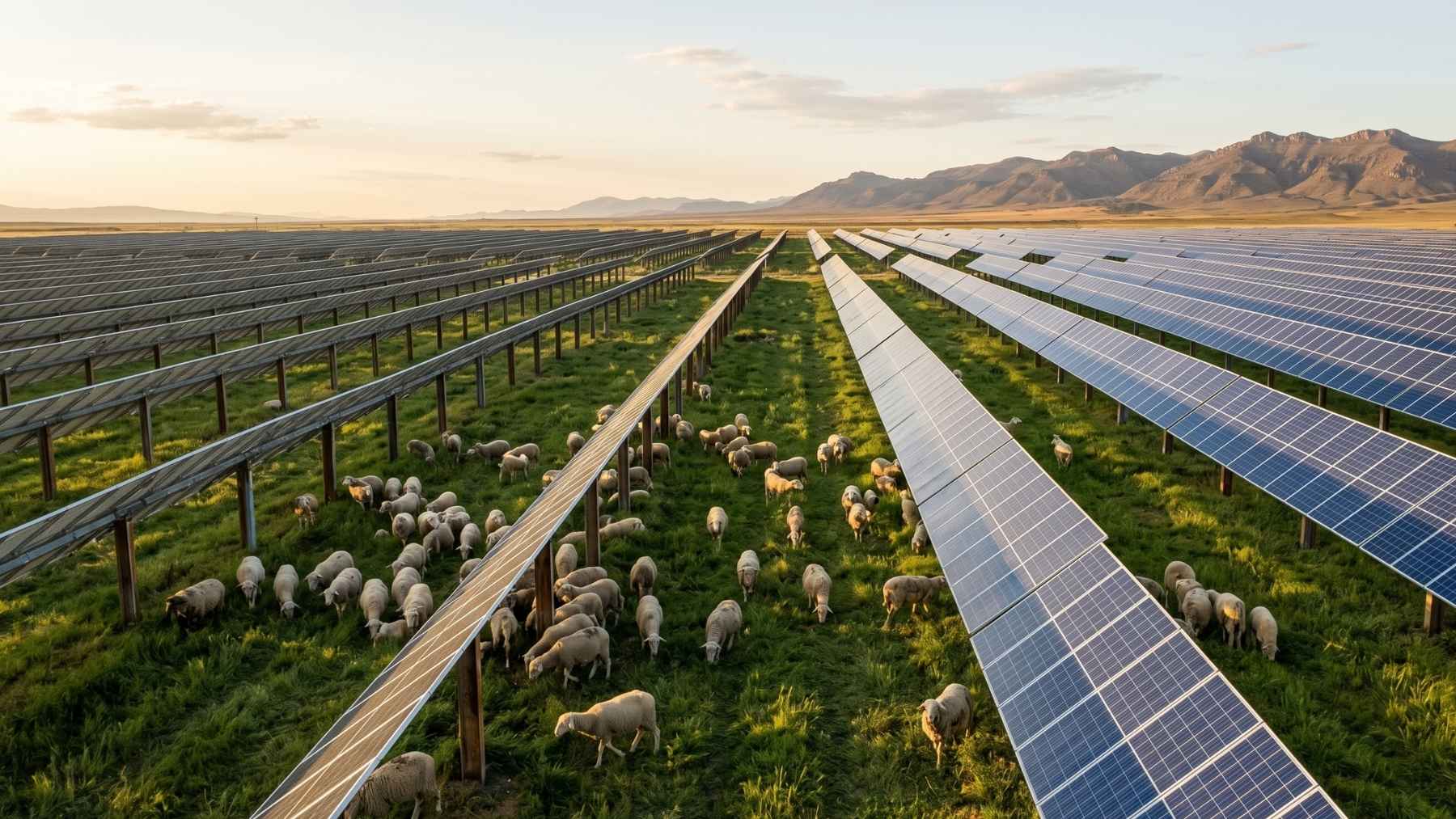
Nothing about the hardware is exotic. The arrays face south, tilted at 36 degrees, spaced 8 meters apart, with their lower edge 1.7 meters off the ground. Local herders run free-ranging sheep across the whole area from May to September, which makes this a working pasture and a power station at the same time.
That detail matters, because it puts Dongneng in the same family as the giant Chinese solar farm that grew so much grass its operator had to bring in 20,000 sheep. Same basic idea, same animals underneath. What happened below the panels turned out to be very different.
Two towers, one year, and a lopsided temperature reading
To measure what the plant was doing, the researchers put up two 10-meter towers: one inside the array, one in an untouched stretch of alpine meadow about 180 meters away. Both sat on the same flat ground, grazed by the same sheep, so the panels were the only real variable. They logged radiation, wind, humidity and soil conditions every 10 minutes from June 2023 to May 2024.
The panels shifted the surface energy balance in the directions you would guess. Annual net radiation rose 28.9 percent. Albedo, the share of sunlight the ground bounces back, dropped 31.6 percent, because dark silicon reflects far less than pale grass. Wind speed at 2.5 meters fell 36.2 percent in winter, with the rows acting as a fence.
Air temperature is where it gets strange. Averaged over the year, the panels warmed the air a trivial amount, about 0.08 degrees at 2.5 meters. That tiny number hides a split personality, though. On summer days the panels ran up to 1.6 degrees warmer than the open meadow. On winter nights they ran up to 0.89 degrees colder. Warm by day and in summer, cold by night and in winter.
The dirt froze early and thawed late
The soil is where the headline lives. Shade from the panels kept the ground cooler all year, and that pushed the freeze-thaw calendar in both directions.
Beneath the panels, the soil started freezing 27 days earlier than the reference site and thawed 20 days later. In the gaps between rows, freezing came 20 days early and thawing ran 31 days late. Add it up and the frozen period stretched by about 50 days across the plant.
The ground held onto its water, too. During dry spells with no rain, soil under the panels lost moisture up to 3.5 times slower than the open meadow, and the inter-row gaps drained about 1.3 times slower. Colder, wetter, and frozen for longer, all from bolting some panels overhead.
The same trick grew grass in one place and locked in ice in another
The comparison worth slowing down on is that famous grass-covered farm, because the mechanism is identical. Panels cut the wind, throw shade, and hold moisture in the soil. What changes is the starting point.
On a hot, near-total sand desert, cooling the ground and trapping water is a gift. It lets grass take hold where there was none, which is how a power plant ends up needing sheep. The same logic is playing out over California’s irrigation canals, where roofing the water cut evaporation by up to 70 percent, and on rewetted German peatland, where panels and a flooded bog earn off the same acre.
On a high alpine meadow that is already cold and already green, the same cooling does something else. It holds the soil below freezing for an extra seven weeks and shortens the window when anything can grow. One environment reads it as help, the other as a longer winter. The panels are not doing anything different. The land is.
What colder ground could mean for the water downstream
The reason a soil study on a Chinese plateau is worth your attention comes down to plumbing. The Tibetan Plateau is often called the Third Pole, and its frozen ground and glaciers feed the Yellow, Yangtze, Mekong, Indus and Ganges rivers, water that a large chunk of Asia drinks, farms and generates power with. That ice has been thawing faster as the climate warms, which threatens the timing and the supply of all that runoff.
A solar plant that keeps the ground frozen longer cuts against that trend. The researchers suggest it could buffer the soil against warming and maybe slow permafrost loss, and that the extra retained moisture could feed groundwater recharge. Maqu sits in the source region of the upper Yellow River, so even small shifts in when the ground freezes and thaws can nudge how and when water moves downstream.
The team is careful not to oversell it. This is one plant, one year of data, and they say plainly that confirming any permafrost benefit needs multi-year measurements they have not made yet. There are costs on the other side of the ledger, as well: a shorter growing season could cut how much carbon the meadow pulls from the air, and splitting the ground into wet gaps and dry under-panel strips will reshuffle which plants grow where.
So it goes on the list of things solar farms do that nobody wrote into the design brief. Some of them make rain, some grow grass, some shelter foxes. This one, at 11,000 feet, quietly added seven weeks of winter to the ground it stands on.
 @minorhull ROOKIE3 months ago