
Every thermal power plant has the same problem at the back end. You boil water, spin a turbine, and then you are left holding a huge amount of heat that has to go somewhere. Most plants hand it to a river, a lake, the ocean, or a cooling tower.
Turkey Point, on the coast about 25 miles south of Miami, was told in the early 1970s that it could not hand it to Biscayne Bay. So Florida Power & Light dug its radiator into the ground instead: 168 miles of canals cut across the marl between Biscayne National Park and the Everglades.
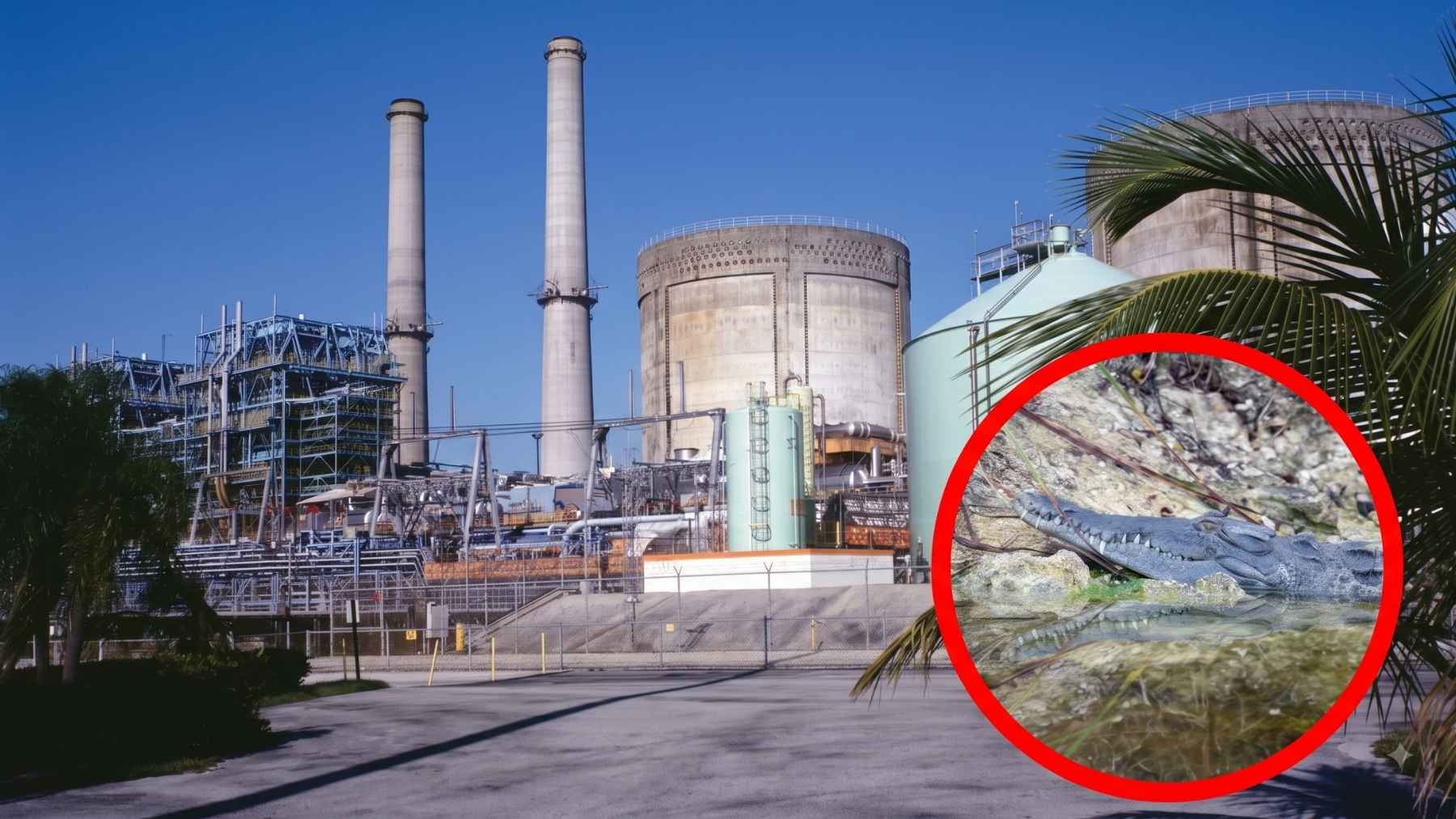
Nobody drawing those canals was thinking about reptiles. Five decades on, that property is one of three main strongholds in the United States for the American crocodile, and the crew that works the canal banks at night counted 606 hatchlings last season. It was the highest total in the program’s 47 years.
This year’s hatchlings are coming out right about now. FPL’s own timetable puts emergence between late June and early August, and no count for 2026 has been published yet.
A reactor has to put its heat somewhere
Turkey Point Units 3 and 4 are Westinghouse pressurized-water reactors, each licensed by the Nuclear Regulatory Commission to run at 2,644 megawatts of thermal power. Gross electrical output is about 811 megawatts from Unit 3 and 821 from Unit 4.
Do the subtraction and you get the reason the canals exist. Something over 3,600 megawatts of waste heat has to leave the site, continuously, and a light-water reactor gives you no say in the matter.
In the first years of operation that heat went straight into Biscayne Bay, and the warm water did enough damage to seagrass and marine life that the federal government stepped in. A 1971 consent decree required FPL to build a closed loop that did not touch the bay. The canal system has been carrying the heat since 1973.
Two miles wide, five miles long, two days per lap
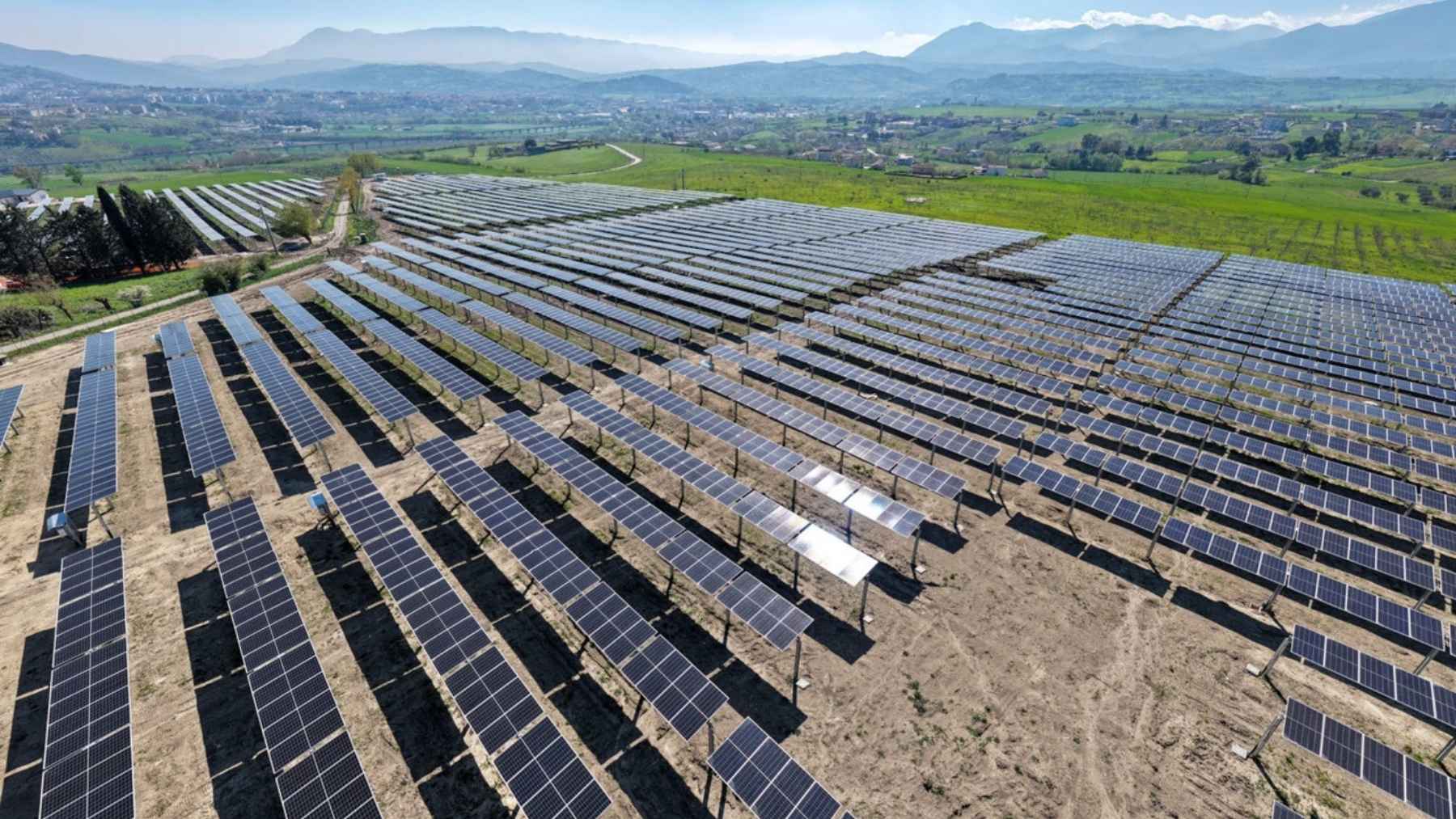
The layout is stranger than the aerial photos suggest. Hot water is discharged at the north end, runs south through 32 parallel canals, then comes back north through seven return canals to the intake.
Each of the southbound canals is roughly 200 feet across and only about 4 feet deep, spaced 90 feet apart, running anywhere from two to five miles. The whole grid covers around 5,900 acres, of which about 4,370 acres is open water. Those figures come from a University of Miami study prepared for Miami-Dade County and filed into the NRC docket.
Nothing pumps the water around the loop. The discharge end sits about three feet higher than the intake end, and the water creeps along at roughly a quarter of a foot per second, shedding heat to the air the whole way. A full lap takes 44 to 48 hours.
That is the whole trick: build a shallow puddle big enough that two days of sun, wind and evaporation will pull 3,600 megawatts back out of it. Cities solve the same heat problem with hardware rather than acreage, which is what Toronto does with 39-degree water from 270 feet down in Lake Ontario and a stack of plate heat exchangers.
The dirt they dug out is what the crocodiles actually wanted
Cutting that grid left miles of excavated fill, and it went into long raised banks between the channels. A nesting female American crocodile wants ground that stays dry and above the waterline through about 90 days of incubation, sitting right next to water she can carry the hatchlings into.
South Florida had been losing exactly that kind of ground to seawalls, fill and development for decades. Turkey Point had accidentally built miles of it, fenced, closed to boats and patrolled around the clock.
FPL says the first crocodile turned up on the property in 1976 and the first nest in 1978, which is when the monitoring program started. By 1979 most of the site was designated critical habitat for the species.
The company has since gone from tolerating the animals to engineering for them. Crews clear vegetation off the berms, and they use amphibious backhoes to dig freshwater ponds along the banks, because a hatchling takes about three months to develop the salt glands it needs to handle the water it was born beside.
606 in one season, every one of them picked up by hand
The count happens at night, from an airboat, with a headlamp. A hatchling gives itself away as two red points of reflected light set about an inch apart, somebody leans off the bow and lifts it out, and the animal gets measured, microchipped and released back into the same canals.
The 2025 season produced 606 hatchlings from an estimated 30 nests, the first time the program cleared 600 in 47 years of counting. “Lovingly, we’re calling it the 600 Club,” Mike Lloret, the FPL wildlife biologist who runs the Turkey Point team, told bioGraphic, which had the crew out on the water two nights a week from late June to the middle of August.
Lloret puts the running total north of 10,000 tagged hatchlings since 1978. FPL’s own crocodile page still says more than 8,000, so the animals are currently outrunning the corporate web team.
On the population question, be careful with the numbers you see quoted. FPL counts 300 to 400 adult and juvenile crocodiles living in and around the canal system, and coverage built on the company’s data has long put roughly a quarter of the US population on the property.
The Florida Fish and Wildlife Conservation Commission estimates 1,500 to 2,000 crocodiles statewide, hatchlings excluded, up from a few hundred animals in the 1970s. The US Fish and Wildlife Service downlisted the Florida population from endangered to threatened in 2007, and a 2006 opinion from the agency attributed part of the increase to the utility’s management of its cooling canals.
The water in those canals is also the problem
A shallow open loop in the subtropics evaporates. Evaporation leaves the salt behind, and after a 2012 and 2013 power uprate raised the heat load, canal salinity and temperature climbed sharply.
The canals are unlined and the rock underneath them is porous limestone, so the dense salty water sank and spread west as an underground plume in the Biscayne Aquifer, which supplies drinking water to millions of people in South Florida. Miami-Dade County issued a notice of violation in 2015, and a county consent agreement and a 2016 state consent order followed.
Those orders require FPL to hold the canals at an annual average salinity of 34 practical salinity units and to pull the plume back to its property line. The retraction tool is a line of ten deep extraction wells along the western edge of the canals, sending the recovered water into a deep injection well.
FPL says the well system removed more than 36 billion gallons of hypersaline groundwater over six years, a figure company spokesman Bill Orlove gave to WLRN.
The Miami Herald reported in February 2025 that the 10-year target will not be met, citing a 2024 consultant report for the county that found no available option would pull the plume fully back by 2028 or even 2033. No court has found the utility in violation of any law here, and the work continues under those negotiated orders.
The crocodiles are not indifferent to this. A long-running USGS and University of Florida study of the South Florida population found that animals exposed to hypersaline conditions above 40 practical salinity units in the dry season grew 13% slower after one year, 24% slower after five and 29% slower after ten. Good nesting ground and bad water are coming out of the same excavation.
The nursery is licensed until 2053
Turkey Point was the first plant in the country cleared to run for 80 years, and after a procedural reversal and a fresh environmental review, the NRC restored those dates in 2024. Unit 3 now runs to July 19, 2052 and Unit 4 to April 10, 2053.
The argument is still live. The Commission rejected Miami Waterkeeper’s remaining challenges in an order issued March 4, 2026, and the group filed a petition for review in the D.C. Circuit on May 4.
A related case went the industry’s way three weeks ago. On July 21, 2026 the D.C. Circuit denied a petition from Beyond Nuclear and the Sierra Club, with Miami Waterkeeper filing as amicus, that had challenged the generic environmental analysis the NRC leans on for license renewals nationwide.
There is an alternative to the canals, and the NRC studied it during the renewal: mechanical draft cooling towers. Towers fit on a fraction of the footprint and do not leak brine into an aquifer.
They would also make 5,900 acres of berm unnecessary. The densest nesting ground the American crocodile has in this country exists because a utility was ordered in 1971 to stop putting hot water in Biscayne Bay and answered with a shovel, and it lasts as long as that answer does.
Animals move into industrial infrastructure all the time, from burrowing owls in Arizona solar farms to seals hunting the turbine rows of North Sea wind farms. What they almost never get is 5,900 acres with a federal operating license attached to it, good until 2053.