
If you’ve ever pulled a fistful of leaves out of a pool pump basket, you already understand the only thing that went wrong at Africa’s only nuclear plant in August. Stuff gets sucked toward the pump, stuff piles up on the screen, the flow drops, and eventually the pump quits. Now swap the pool for the South Atlantic, swap the leaves for a mass of dead sardines, and swap your pump for one that’s keeping a 930-megawatt reactor cool.
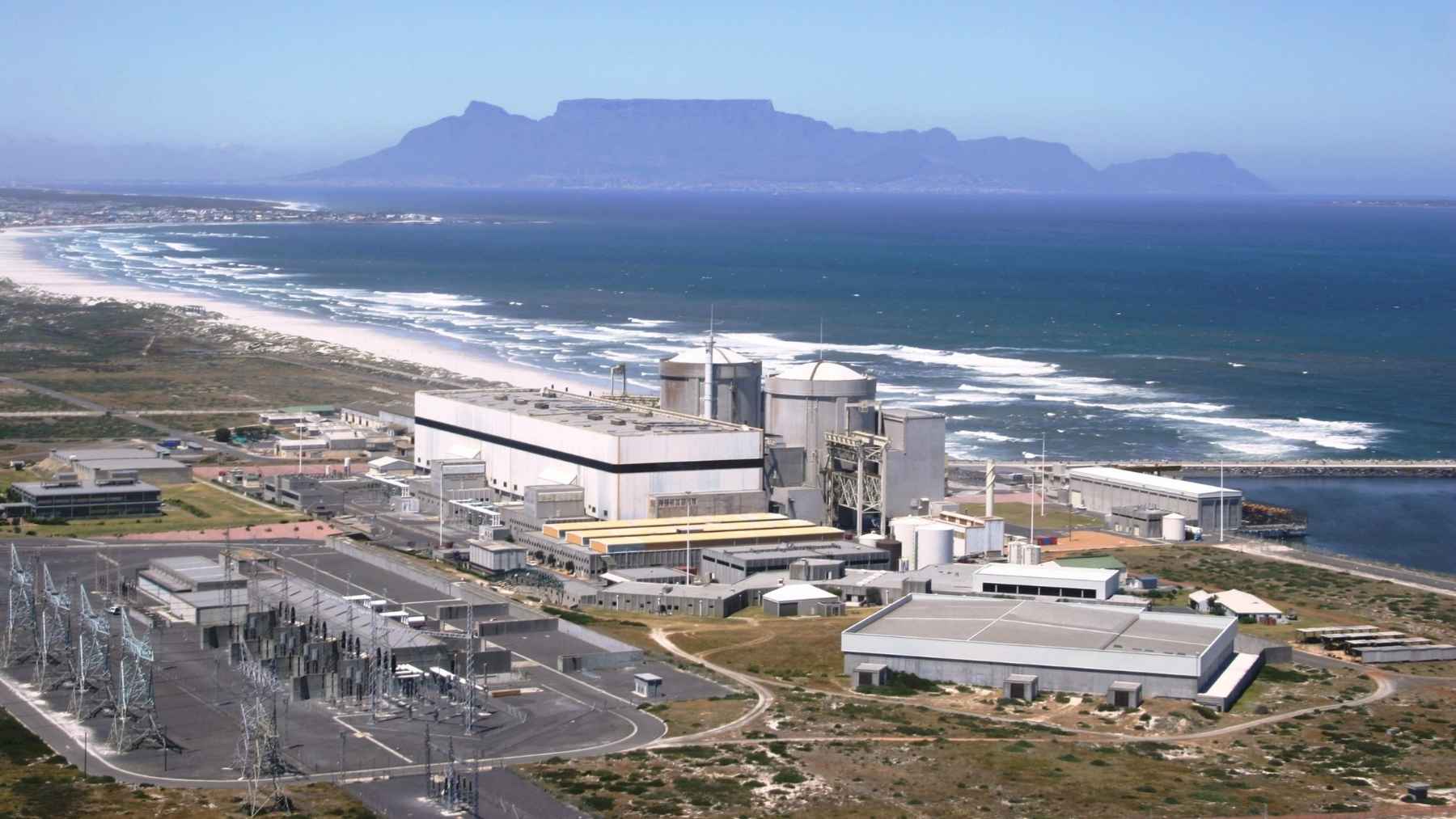
That’s pretty much what happened at Koeberg, which sits on the coast about 17 miles north of Cape Town. On Friday, August 21, Eskom, the state utility that runs the place, cut Unit 1 back to 50 percent. A cooling pump had shut itself off because the seawater intake was packed with what Eskom called “marine material,” which turned out to be fish. Lots of fish.
Eskom sent emergency teams in to clear the intake and said the reduction was a routine precaution. In the statement carried by IOL, the utility put it this way: “Nuclear and operational safety at the station was never at risk.”
So why’s this a story at all?
Because Koeberg only has two reactors, and the other one, Unit 2, had been down since April 26 on a planned maintenance and refueling outage. For most of a week, the only nuclear plant on the continent was running on one machine at half power. When both units are up, Eskom says they put out over 1,860 megawatts, about 5 percent of everything the utility generates. In late August, the plant was putting out about a quarter of that.
So what were the sardines doing there?
Dying, basically. South Africa has been dealing with a sardine die-off since late July, when dead fish started washing up at several spots along the Western Cape coast between Saldanha Bay and Gansbaai. Koeberg sits right in the middle of that stretch. Dead and dying sardines were also spotted drifting on the surface about 9 miles offshore near Hout Bay, which gives you some idea of how much fish was floating around out there.
On August 14, the Department of Forestry, Fisheries and the Environment said lab sequencing had confirmed pilchard herpesvirus in the sampled fish. PHV is a virus that infects sardines and, as far as anyone knows, nothing else. It doesn’t infect people, and the department says canned sardines sold through the normal channels are fine. It’d never been reported in South African sardines before, but it was behind two big die-offs in Australia and New Zealand in the 1990s, and the genetic match to the Australian strain came back at more than 99 percent.
The department’s been fairly careful about how it phrases this. The virus showed up in dead fish and, at lower levels, in some fish that looked healthy, so for a while the official line was that PHV alone might not be enough to kill a sardine. By September 13, once the die-off had spread east to the Gqeberha area and the department was putting its reach at about 1,600 miles of coastline, the DFFE had upgraded that to “the most likely primary cause.” Scientists are still looking at whether low oxygen or an algal bloom in Saldanha Bay weakened the fish first.
No one has published a figure for how much fish actually ended up in Koeberg’s intake. I looked, and Eskom hasn’t said, so I can’t tell you whether we’re talking about a few hundred pounds on a screen or a basin full of them. All I can tell you is it was enough to trip a pump.
Why does a reactor care about fish?
It’s a fair question, because the reactor itself never touches seawater. A pressurized water reactor like Koeberg’s heats a closed loop of water, which boils a second loop into steam, which spins the turbine. After the turbine, that steam has to be turned back into water, and that’s the job of the condenser, which is essentially a giant radiator with ocean water running through it. Koeberg pulls that water in from a basin on the beach, runs it through screens to keep out anything that isn’t water, and sends it back out warmer.
Block the screens and the flow drops. Let the flow drop far enough and the pumps protect themselves by shutting down, which is what happened here. With less cooling water, the plant can’t condense as much steam, so it can’t run the turbine as hard, so the operators dial the reactor back. That’s the chain between a dead sardine and a 50 percent power cut, and Eskom confirmed the intake system is designed to react that way automatically.
You might be thinking this sounds familiar. It should. French crews at Gravelines spent August fighting jellyfish off the exact same kind of screens, and ended up shutting reactors down by hand before the swarm could trip them. In Florida, Turkey Point has been pulling sea turtles out of its intake canal for 47 years. Coastal plants have been fighting the ocean’s contents since the day they opened. Koeberg’s version is arguably the cheapest kind of problem a nuclear plant can have, since the fix is a cleanup crew and a few days of lost output, but it’s a problem all the same.
The week that followed
The cleanup worked, more or less. By Wednesday, August 26, Eskom had Unit 1 back up to 70 percent. Then, just before 1 a.m. on Thursday, August 27, the turbine tripped and the unit came off the grid entirely.
Eskom’s statement on the trip, published through the South African government, said the cause was under investigation and didn’t tie it to the fish. It did mention the sardines, mostly to point out that there’s no evidence the die-off had anything to do with Koeberg’s operations, which is a different question from whether the fish caused the trip. Reading between the lines, Eskom seems keen to make sure no one blames the plant for the dead sardines, and I can’t blame them for that. Frankly, if I ran a nuclear plant next to a mass fish kill, that’s the first thing I’d want on the record too.
Either way, with Unit 2 still in maintenance, Koeberg was now producing nothing. Unit 1 came back on Monday, August 31, according to Eskom.
The fish are still a problem, just not for Eskom
The die-off itself eased by mid-September. The department said on September 21 that the only new report in the previous week was one fresh stranding on the Wild Coast, and on October 11 it said there’d been no new reports at all while more lab testing ran. It also said, pretty flatly, that no effects on seabirds or marine mammals had been confirmed, which you may want to keep in mind given how much of the coverage has focused on the African penguin colonies that eat these fish.
What’s still in force is the fishing limit. The DFFE capped sardine boats at 25 percent of their remaining 2026 quota through October 2, then reset that to 33 percent from October 3 through October 30. A scientific working group is due to look at it again on October 27, and the department’s survey of how many sardines are actually left starts in early November, covering the coast from Hondeklip Bay to Port St Johns. Until that comes back, no one really knows how big a chunk of the stock died, and the department’s been upfront that the scale is uncertain.
That strikes me as the right amount of caution. A virus no one had seen in these waters before, in a stock that was already low, is the kind of thing you’d rather measure than guess at.
And then Koeberg went dark again
Here’s where the timeline catches up to this week. On Friday, October 16, Eskom reported that Unit 1 had tripped again, this time during testing linked to Unit 2’s maintenance outage. An electrical protection system picked up a disturbance outside its limits and opened the unit’s 400-kilovolt and 24-kilovolt breakers, which is the equipment doing what it’s built to do. Eskom’s engineers are still working out why the disturbance happened in the first place.
Sardines didn’t have anything to do with this one. The fish were an August problem, and as far as I can tell the intake has been clear since. But it does mean that for the second time in two months, Africa’s only nuclear plant was producing zero power with one reactor in a planned outage and the other in an unplanned one. Eskom says it’s got enough other generation to cover the gap and that the grid isn’t affected, and given that South Africa has gone more than 500 days without rolling blackouts, I’m inclined to take that at face value.
Eskom said in July that Unit 2’s outage is scheduled to wrap up in November 2026, and its October 16 statement says the engineering teams are in the middle of fault-finding on Unit 1.