
Offshore wind has turned into one of those arguments where the volume runs ahead of the evidence. In the US the fight usually lands on whales, with claims that survey ships and turbine foundations are killing them, and a federal pause on new offshore wind leasing has given the whole thing a fresh political charge.
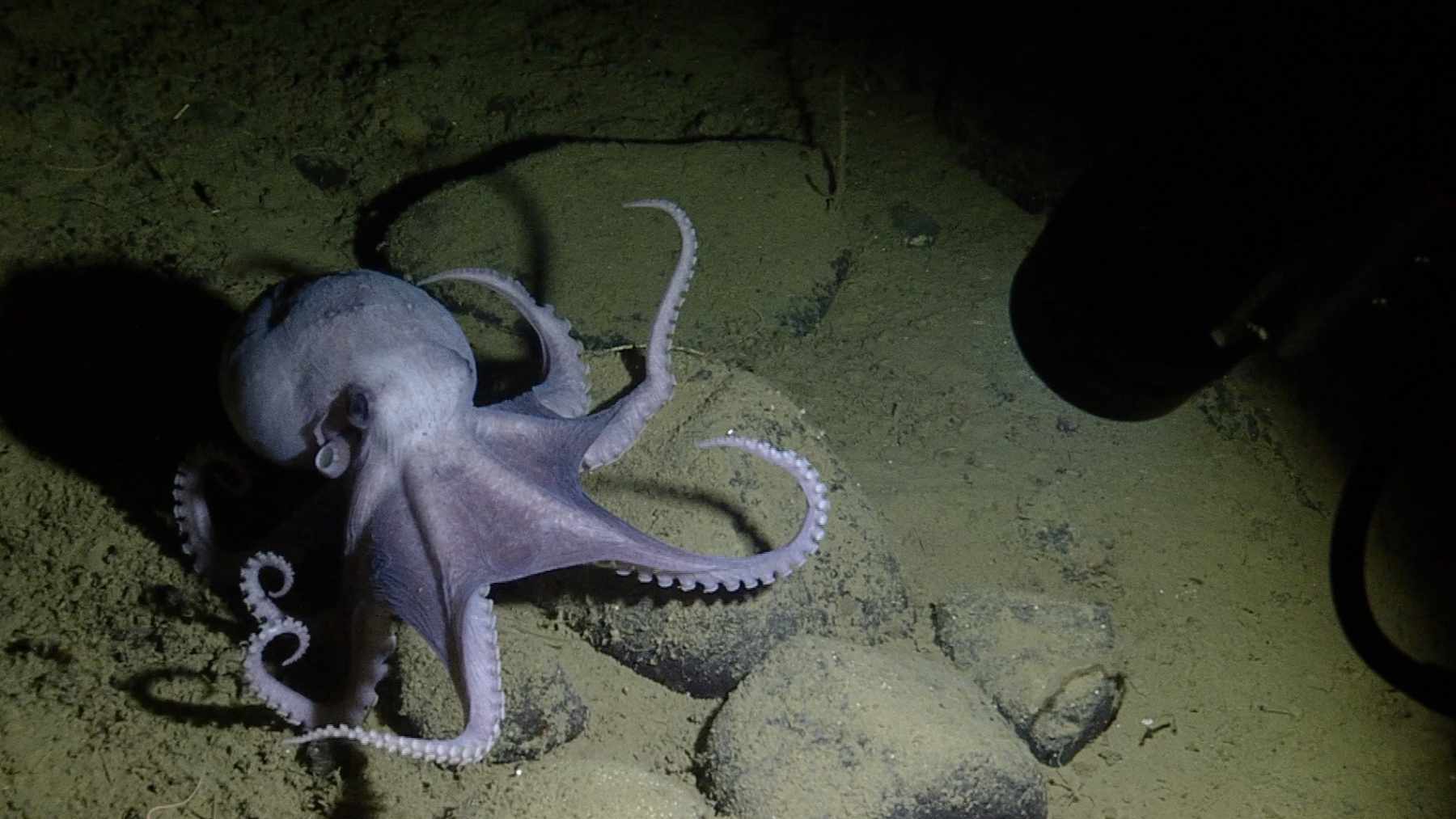
So it is a little awkward for everyone involved that when scientists first strapped GPS tags to seals in the North Sea, the animals were not running from the turbines. They were hunting them, and they were doing it in straight lines.
That image is more than a decade old now, and the science has spent the years since arguing about what it actually means. The latest round landed this year, when an international team pulled together evidence from 18 countries across 42 years and reached a conclusion that is more useful than either side’s slogans: whether a wind turbine helps the ocean or hurts it depends almost entirely on how old it is and where it stands.
The timing matters, because the biggest US offshore wind farm to date is energizing off Virginia in 2026, and Europe is about to start deciding whether to rip out a generation of aging structures or leave the reefs they have grown. Here is what the evidence shows, upside and downside included.
The seals were hunting in straight lines
The picture that kicked all of this off came from marine ecologist Deborah Russell at the University of St Andrews. Her team glued GPS phone tags to harbor and gray seals along the British and Dutch coasts of the North Sea, then watched where the animals went. Eleven harbor seals spent time inside two operating wind farms, Sheringham Shoal off Norfolk in the UK and Alpha Ventus off the German coast, and a few of them traced the turbine layout so precisely you could have mapped the foundations from the seal’s path alone.
“I was shocked when I first saw the stunning grid pattern,” Russell said when the University of St Andrews announced the findings, which were published in the journal Current Biology. The seals were not just passing through. They appeared to be working the structures one at a time, swimming the rows like a delivery driver hitting addresses, stopping to forage at certain turbines and moving on.
By Russell’s account it was the first time marine mammals had been documented using these man-made structures to feed, and it flipped a debate that until then had been almost entirely about harm.
A turbine’s age and address decide everything
The reason the seals were there comes down to the reef effect. Drop a steel monopile into the sea and within a season or two it gets colonized. Mussels and barnacles take the upper sections fast, brown seaweeds spread near the surface, and anemones and reef-building worms move in lower down. The pile of rock dumped around the base to stop the seabed scouring out, the unglamorous part of the engineering, doubles as habitat for cod and lobster. Small fish shelter in the gaps, bigger fish come to eat the small fish, and predators like seals show up at the top of that chain.
The newest and broadest look at this came in a review from the University of Aberdeen and the Scottish Association for Marine Science, published this year in the journal Ecosystem Services. Lead author Megan Squire and her colleagues synthesized findings from 18 countries over 42 years, covering oil and gas platforms as well as wind turbines, and found that the single biggest factor in whether a structure helped or harmed the surrounding sea was its life stage, followed by exactly where it sat.
A new foundation being hammered in is a disturbance. A foundation that has been quietly growing mussels for fifteen years is something closer to a reef. “The potential value of these structures as artificial reefs should be considered,” Squire said, especially as governments start writing the rules for tearing them down.
The numbers behind that split are sobering in both directions. A separate global analysis led by Plymouth Marine Laboratory found that during construction, impacts on marine life were predominantly negative, around 52% of cases versus only 8% positive. Once a wind farm was up and running, the picture flipped to roughly even, with positive effects in about 34% of cases and negative in about 32%, depending heavily on the site. And there is a humbling caveat buried in that work: the researchers estimated that more than 86% of offshore wind’s possible effects on ocean ecosystems and the benefits people draw from them are still unmeasured. Anyone selling you a clean yes or no is filling that gap with confidence they have not earned.
More fish in one spot isn’t the same as more fish
Here is where the brochure version falls apart. Aggregation is not the same as production. A reef that gathers fish from a wide area into one easy-to-spot cluster looks like abundance, but it might just be concentrating animals that were already there rather than creating new ones, and that distinction is the whole ballgame for fisheries. Long-term monitoring at Sweden’s Lillgrund wind farm, run by Vattenfall together with the Swedish University of Agricultural Sciences, found exactly the reef effect you would expect, with certain species clustering near the turbines. But the total amount of fish inside the wind farm did not measurably go up or down compared with two reference areas nearby.
The turbines gathered fish without obviously growing the overall stock, and that is a long way from “wind farms are good for fish.” Newer work keeps landing on the same nuance. A January 2026 study in Frontiers in Marine Science tracked fish around turbines in Asian waters and confirmed the foundations function as artificial reefs, while pointing out that the effect operates within a finite footprint rather than seeding the wider ocean. The reef is real. The claim that it rescues an entire fishery is not, at least not yet.
Off Virginia Beach, the anglers got there first
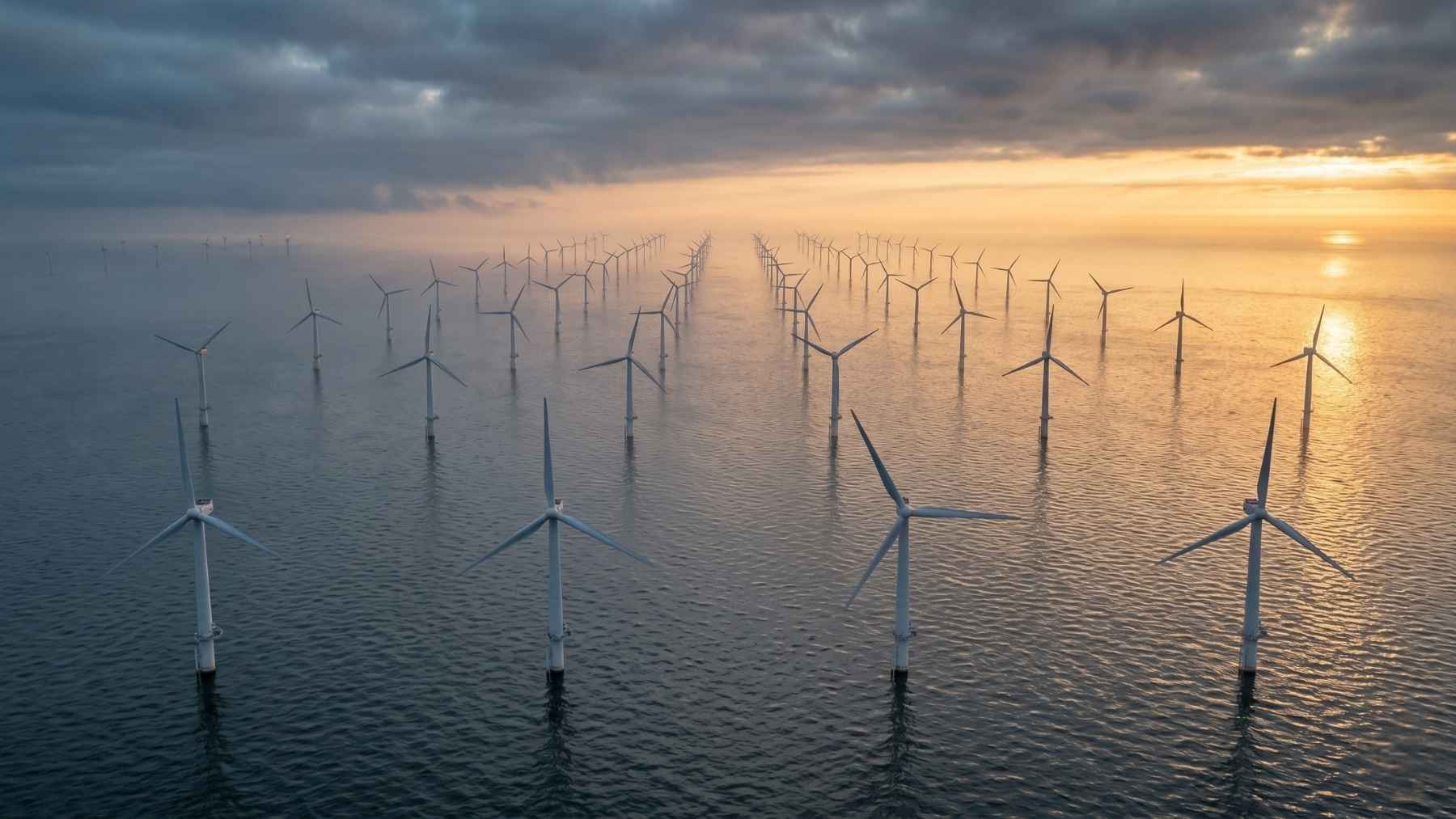
This is not just a North Sea curiosity anymore. Dominion Energy’s Coastal Virginia Offshore Wind project is putting 176 turbines into the Atlantic about 27 miles off Virginia Beach, a 2.6-gigawatt build that the company says will power roughly 660,000 homes once it is finished in 2026. Two pilot turbines have been spinning out there since 2020, and they have been quietly doing the reef thing the whole time.
According to Dominion’s own briefings, each monopile holds fish from top to bottom, an anode cage about 40 feet down sits packed with mussels, and the scour-protection rock spreads roughly 75 feet out from the base.
Recreational anglers and divers got the memo before most of the scientists did, reporting cobia, mahi and sea bass stacking up around the pilot structures. Brendan Runde, a marine scientist with the Virginia chapter of The Nature Conservancy, has been tagging fish around those two turbines to track what the build-out does to local populations. The politics around all this got loud in 2025, when a federal order paused new offshore wind leasing, but Coastal Virginia was already approved and under construction, so it kept going, the way the broader fights over offshore wind permitting have mostly spared projects already in the water. The full project is being built out under federal oversight from the Bureau of Ocean Energy Management.
Building it is the loud part
The reef effect shows up once a turbine is running. The damage concentrates earlier, while it is being built, and it comes from the same physics that makes a pile driver work, which lines up neatly with that 52% negative figure for the construction phase.
The same Sea Mammal Research Unit at St Andrews that tracked the foraging seals also modeled what happens when you hammer those foundations into the seabed. Monopiles get driven in by what are essentially enormous hammers throwing a pulse of sound every few seconds, and in a study in the Journal of Applied Ecology, lead author Gordon Hastie estimated that about half of the tagged seals were exposed to noise above the threshold for permanent hearing damage.
Hastie called pile driving “some of the most powerful man-made sounds produced underwater,” and harbor porpoises tend to clear out of the area entirely while it is happening. Russell herself flagged the limit on her own 2014 findings: that study only covered the operational stage, and construction is when the worst effects are predicted. The industry is not blind to this.
Developers now use bubble curtains that wrap the pile in a wall of rising air to muffle the blow, Dominion is running a double big bubble curtain at the Virginia site, soft-start ramping gives animals time to leave before the hammer reaches full force, and floating turbines that anchor instead of driving piles skip the loudest step altogether.
The real fight is what happens when the reef comes up for removal
Here is why a decade-old seal study suddenly matters again. The North Sea’s first generation of offshore wind farms and its aging oil and gas platforms are reaching the end of their working lives, which means somebody has to decide what to do with the structures, and the marine life now living on them.
Current rules in much of Europe lean toward complete removal at decommissioning, hauling the whole foundation out and leaving bare seabed behind. The Aberdeen team’s central argument is that doing that on autopilot throws away habitat that took twenty years to build, and that the call should be made case by case, weighing the reef against the cleanup.
The foundations off Virginia Beach are going to sit on that seabed for 25 or 30 years before anyone faces the same question there, so it is worth being precise about what they do. They build real habitat once they are running, and they make real noise going in, and the same research community documented both halves without flinching.
The honest version is that offshore wind is neither the marine apocalypse its loudest critics describe nor the accidental nature reserve its boosters like to imply. It is a large steel structure that reshapes the patch of ocean around it, for better in some ways and worse in others, and the science is finally precise enough to say which is which. The seals worked that out years before the policy did. They just went where the food was, in very straight lines.