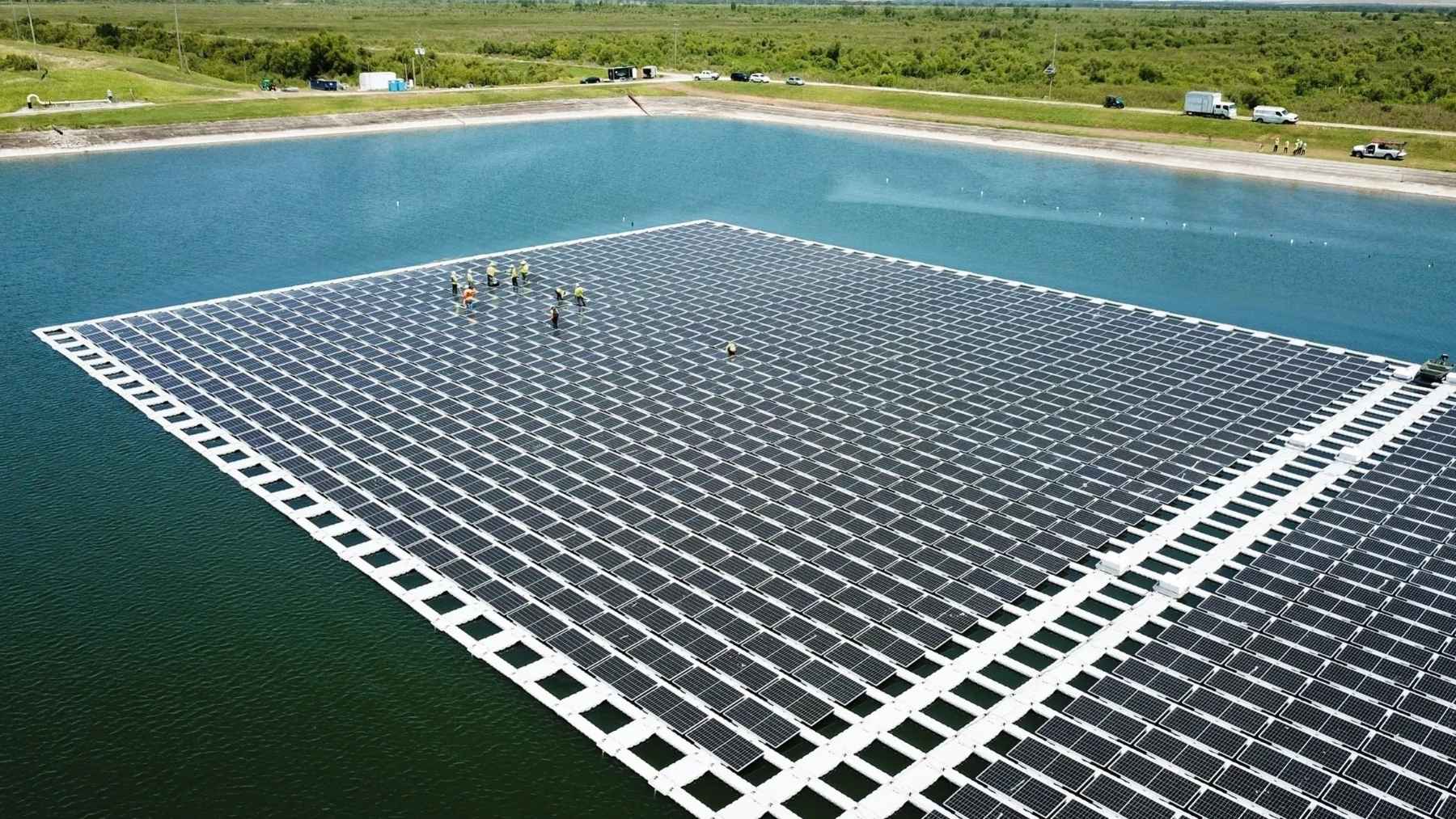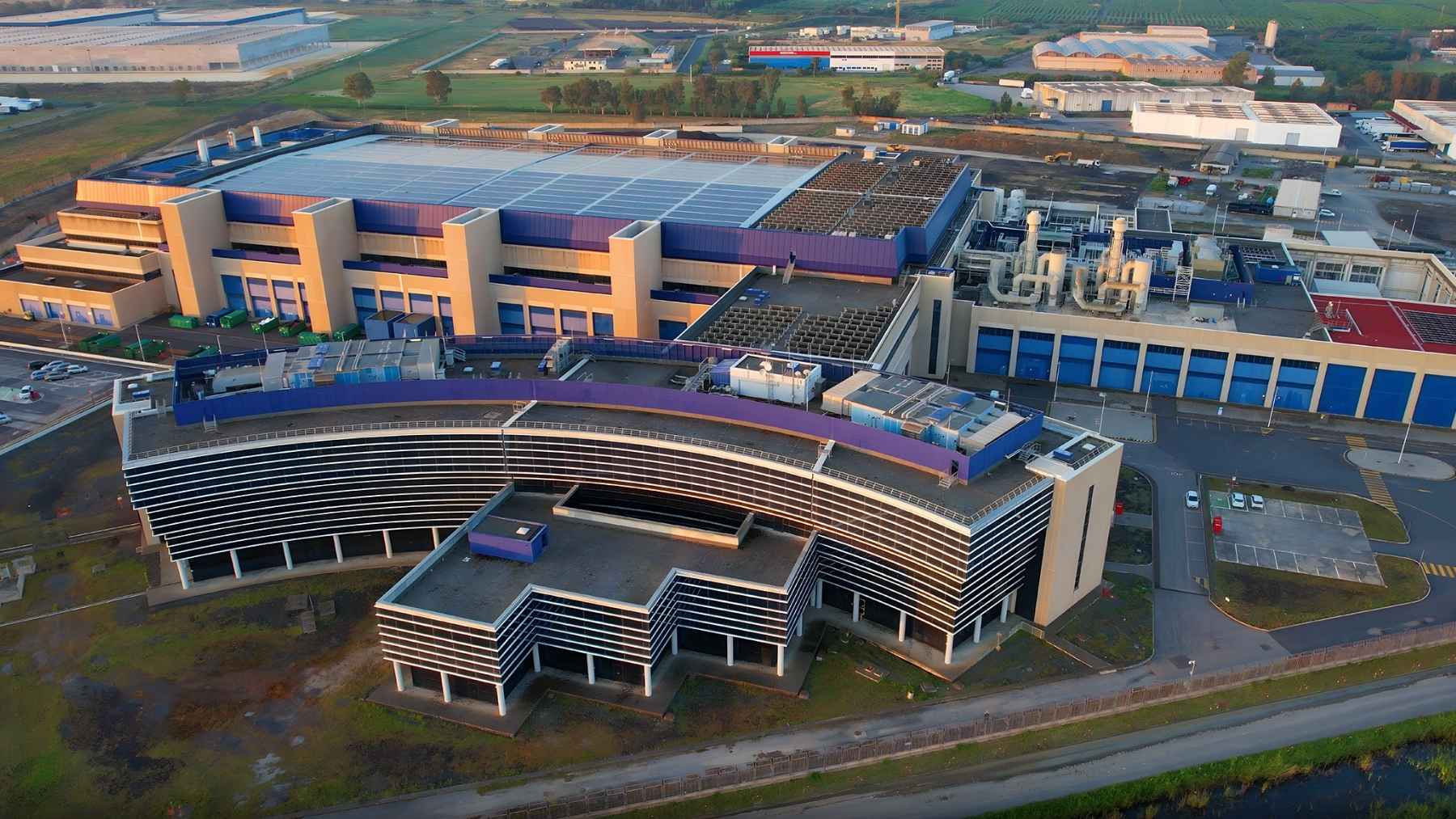

Every rechargeable thing you own runs on lithium. Your phone, your laptop, the EV sitting in a lot of driveways, and the steel battery boxes that keep showing up at substations to soak up solar and hand it back after dark. Lithium also comes with a headache you have heard about more than once: it gets mined in a handful of countries, the price swings like a mood ring, and most of the refining that turns rock into a usable cell happens in China. So the battery industry has spent years hunting for a backup chemistry that does not depend on any of that. The one it keeps coming back to is sitting in your kitchen.
Sodium is the metal in table salt, and 2026 is the year it stops being a lab curiosity and starts going grid-scale for real. MIT Technology Review put sodium-ion batteries at the top of its 10 Breakthrough Technologies list for the year. In April, the world’s biggest battery maker rolled out a grid-scale sodium cell at a Beijing trade show with commercial production slated for this year. And the part that makes all of it harder to wave off as a press release is that the biggest sodium battery on the planet has already been quietly feeding a Chinese power grid since 2024.
The machine is already running, and it isn’t small
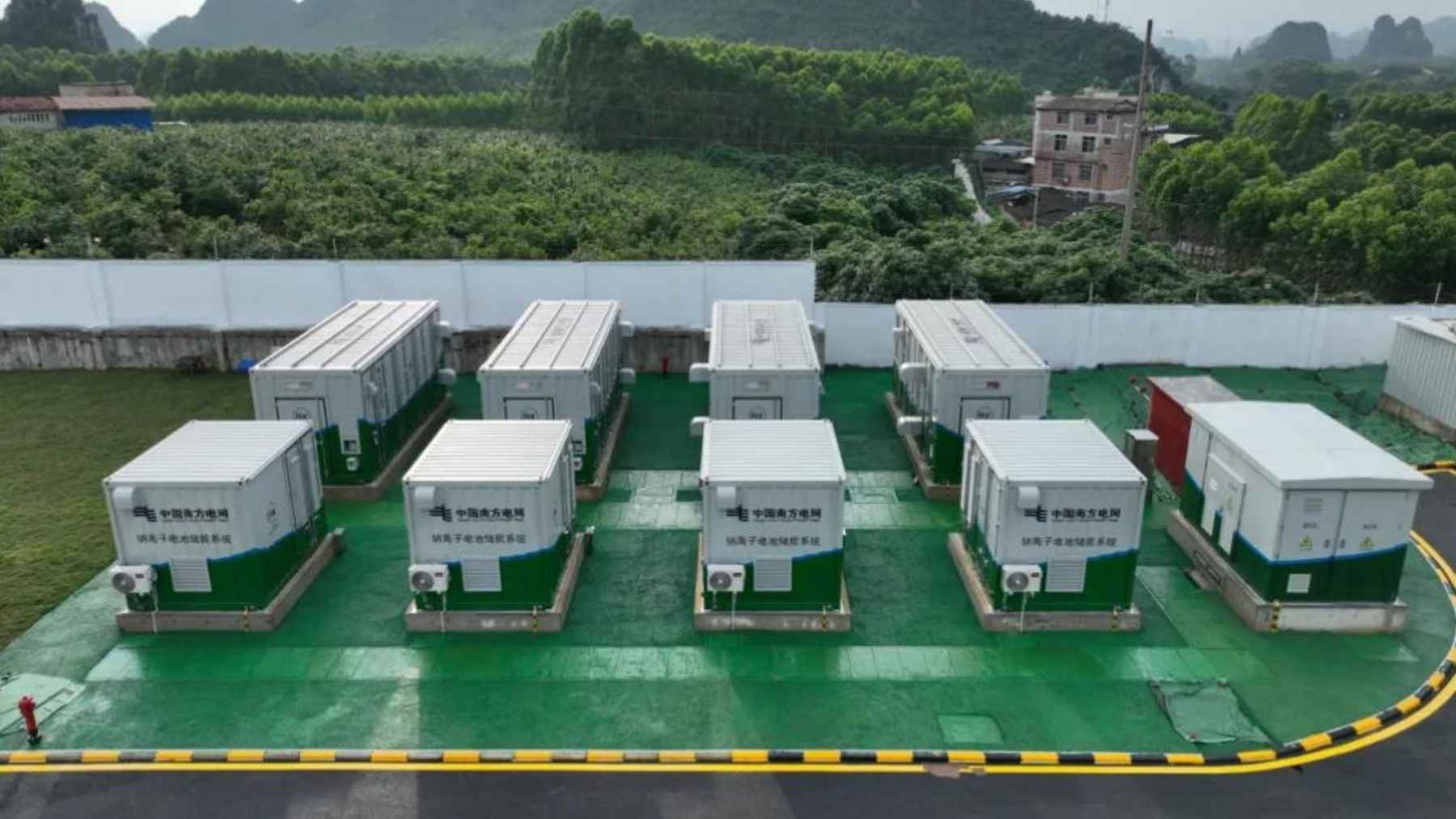
Outside the city of Qianjiang, in China’s Hubei province, sits a sodium-ion battery station big enough to matter to a grid. It is the Datang Hubei Sodium Ion New Energy Storage Power Station, and the first phase came online in mid-2024 with 50 megawatts of power and 100 megawatt-hours of capacity. That works out to 100,000 kilowatt-hours stored on a single charge, which the operator says is enough to cover the daily power needs of about 12,000 homes. The build sprawls across 30 acres, or roughly 15 soccer pitches, and the plan is to eventually double it to 200 megawatt-hours.
The cells come from HiNa Battery Technology, and the chemistry buys a few things lithium struggles with. According to pv magazine, the station holds 85% of its charge-and-discharge efficiency at minus 20 degrees Celsius and is rated for 1,500 cycles even running at a brutal 60 degrees. “Sodium-ion batteries have excellent safety and low-temperature operating performance,” said Cui Yongle, a project manager at the plant. Trade tracker Energy-Storage.news still rates it as probably the largest sodium-ion installation in the world. For contrast, the lithium grid battery getting all the headlines lately is the wall of 448 Tesla Megapacks that switched on in the Australian outback. Same job, completely different rock.
Sodium is everywhere, lithium isn’t
This is the whole pitch, and it is refreshingly simple. Sodium makes up about 2.3% of the Earth’s crust and turns up in seawater, salt flats and ordinary mineral deposits basically everywhere people have looked. Lithium does not. It is comparatively rare, concentrated in a few countries, and by most counts sodium is hundreds of times more abundant, with one widely cited figure putting it around 500 times. You are not going to win a trade war over a substance that is, functionally, salt.
A sodium-ion cell works almost exactly like the lithium one in your car, shuttling ions back and forth between two electrodes. The difference is the supply chain underneath it. The same chemistry chase is playing out on the lithium side too, where countries keep discovering enormous deposits at home, like the 43 million tons of lithium Germany found under an old gas field. But finding lithium and refining lithium are two very different problems, and the second one is where China already has a stranglehold. Sodium sidesteps that fight entirely, which is exactly why it landed on MIT’s list. Sodium also takes the cold better, holding its capacity in deep winter temperatures where a lithium iron phosphate pack would sulk, which is why a lot of the Chinese projects are going up in the frozen north.
CATL just put a grid version on the floor in Beijing
The reason this stopped being a 2024 novelty and became a 2026 story is who is building it now. At the Energy Storage International Conference and Expo in Beijing in April, CATL, the largest battery producer on earth, debuted its first sodium-ion cell built specifically for grid storage rather than cars. Per Energy-Storage.news, the cell clears 300 amp-hours, runs at 97% efficiency, is rated for more than 15,000 cycles, and operates from minus 40 to 70 degrees Celsius without thermal runaway in nail-penetration, crush and overcharge tests. It is aimed at two-to-eight-hour storage and the AI data centers that are suddenly inhaling electricity, with commercial rollout planned for this year. CATL even built it to share the same enclosure as its flagship lithium cell, so a customer can mix the two.
CATL is not alone in the scrum. BYD broke ground on a sodium-ion plant in Xuzhou with a planned 30 gigawatt-hours of annual capacity, and in January it started selling the world’s first mass-produced sodium-ion forklift, rated to run from minus 40 to 60 degrees. Envision started pulling sodium storage cells off a production line in March. If you want the version of this story aimed at cars instead of the grid, that is its own saga, and the same company is betting on sodium for cheap EVs while the rest of the industry keeps promising solid-state.
The cheap part is the rock, not the battery
Here is the catch that does not make it onto the slide deck. The raw material is dirt cheap and the finished cell, right now, is not. As of early 2026, CATL’s second-generation sodium cells run roughly $70 per kilowatt-hour, while the lithium iron phosphate cells coming out of Chinese factories sit around $40 to $45, according to industry analysis from PatSnap. So the thing built from salt costs more than the thing built from lithium. MIT was blunt about it, noting today’s sodium cells are not meaningfully cheaper and the savings only show up once production scales.
The other honest knock is energy density. Sodium ions are bigger and lazier than lithium ions, so they store less energy in the same space, which makes the cells heavier and bulkier per kilowatt-hour. That is a real problem for a long-range car and a non-problem for a battery bolted to the ground next to a solar farm, where nobody cares what it weighs. The International Energy Agency puts the cost math plainly: sodium only competes with LFP when lithium prices spike or when the energy density climbs. BYD says its sodium packs will eventually undercut LFP as factories get bigger. Whether that pencils out is the entire bet.
Outside China, the math gets lopsided fast
The American version of this is real but small. A Colorado startup called Peak Energy switched on its first sodium-ion storage system at a test facility outside Denver in late 2025, a 3.5 megawatt-hour install, and has since signed a deal to supply 4.75 gigawatt-hours of its systems between 2027 and 2030. That is a genuine foothold for a chemistry the company only introduced in 2025.
The trouble is geography. The IEA projects that China will hold roughly 95% of global sodium-ion production capacity by 2030, counting plants that are already built or announced. When South Korea’s LG Energy Solution wanted to pilot its own sodium line, it put the line in Nanjing, China, because that is where the whole ecosystem lives. So sodium fixes one dependency and quietly creates another. The dream was a battery that loosens China’s grip on the supply chain. The reality, at least today, is a battery whose factories sit almost entirely in China anyway. It is the same plot as the grid-scale battery boom lighting up California, just with a different element doing the work.
None of that makes sodium a dud. The cells are safer, they shrug off cold, and the raw material is the second-most-common thing dissolved in the ocean. But cheap salt does not automatically buy you a cheap battery, and the place that builds the battery still matters more than the place that mines the salt. Sodium’s grid moment is genuinely here in 2026. Whether it actually dethrones lithium comes down to whether those factories deliver the cost curve they keep promising, and right now nearly all of them answer to the same address.