
Drone wingmen have officially gone mainstream. The Air Force is buying robot escorts for its fighter jets, the Navy has let an uncrewed boat lead warships through the Strait of Hormuz, and at this point a crewed military vehicle without a robotic sidekick is starting to look underdressed. The logic never changes: send the expendable machine in first and keep the expensive humans breathing. Now the Navy wants to run that same play in the one place it has never really worked, which is underwater, alongside the mini-submarines that haul SEALs toward shore.
Navy Capt. Mike Linn of the Naval Special Warfare program office confirmed the effort to The War Zone on the sidelines of SOF Week 2026 in Tampa, the special operations industry’s big annual gathering, held May 18 to 21. Teaming uncrewed underwater vehicles, or UUVs, with SEAL delivery vehicles is exactly where the service wants to go, Linn said, and the Naval Surface Warfare Center’s Panama City Division in Florida is already running tests to figure out how. The concept is easy to grasp. The physics underneath it are a genuine nightmare, and Linn, refreshingly, did not pretend otherwise.
The SEALs commute in a wet boat and a dry one
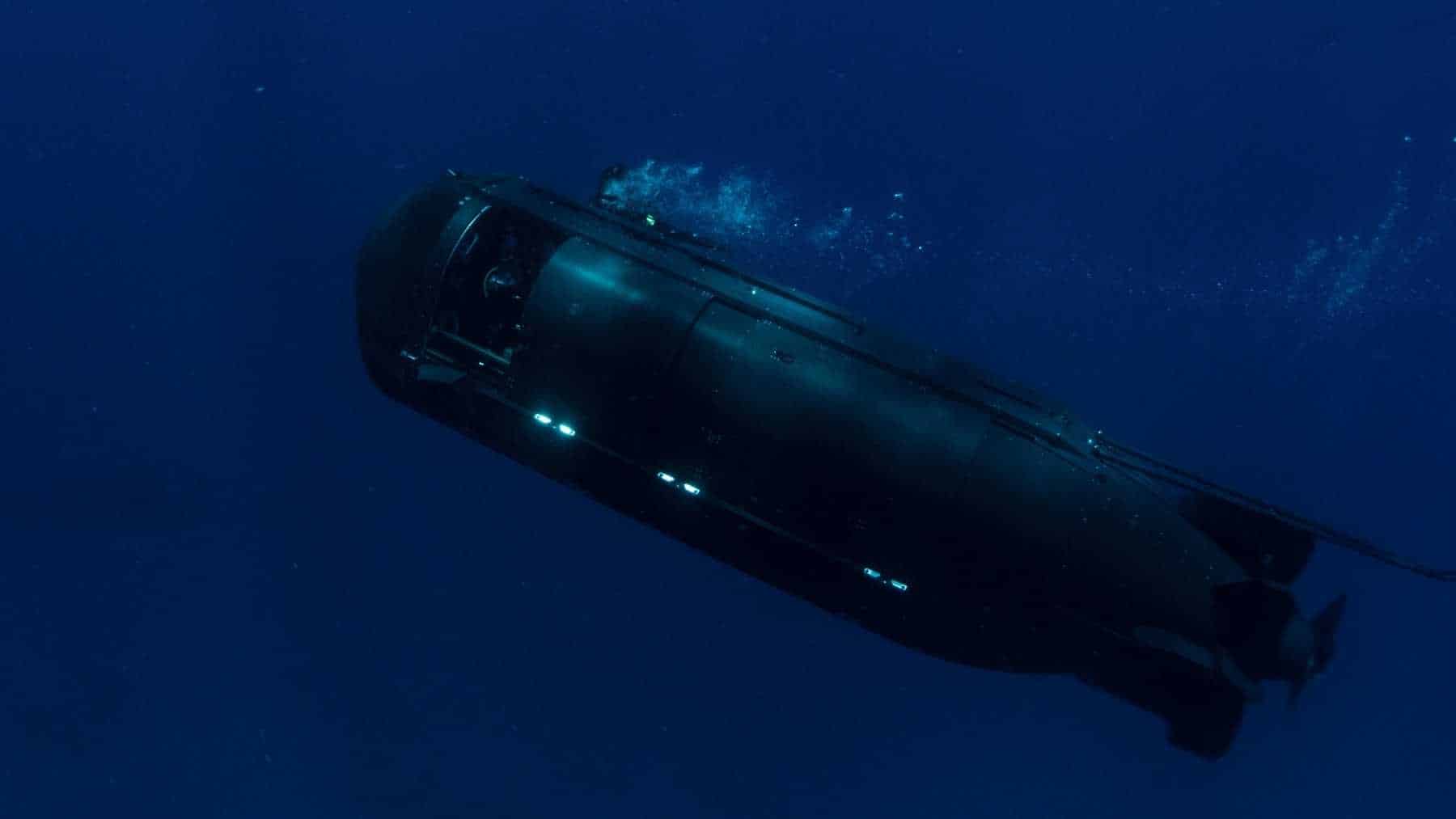
The workhorse of the SEAL delivery fleet is the Mk 11, also known as the Shallow Water Combat Submersible. It is just under 22.5 feet long, carries a crew of two plus six passengers, and rides out of a Dry Deck Shelter, the removable hangar bolted onto the backs of certain Navy submarines. The Navy classifies it as a wet submersible, which is the engineering way of saying everyone aboard spends the entire trip soaked in seawater, breathing off dive gear, at whatever temperature the ocean happens to be that day.
Cold water drains people, and that is not a small detail when those people are supposed to arrive somewhere hostile and then do their actual job. So the Navy spent decades chasing a dry alternative, and the result is the Dry Combat Submersible, or DCS, a Lockheed Martin boat with a pressurized cabin built for two crew and eight SEALs, a lock-in and lock-out chamber so divers can slip out while submerged, and the ability to work down to roughly 330 feet, deeper than the unpressurized Mk 11 can manage. U.S. Special Operations Command declared it operational in June 2023, seven years after a $166 million contract for up to three of them got the program moving in 2016. Occupants show up dry, warm, and a lot less chewed up by the ride.
The DCS has one catch, and it is a big one. It does not fit inside the existing Dry Deck Shelters, which at least publicly means it needs a surface mothership to get to work. So the Navy currently fields one mini-sub that launches covertly from submarines but soaks its passengers, and another that pampers its passengers but needs a ship loitering on the surface nearby. Neither is the full answer, which is exactly the kind of gap robots get hired for.
Send the robot through the harbor mouth first
Linn’s pitch for the pairing starts with reach. An SDV can already carry SEALs a long way, and if that boat can then release a drone to push even farther forward and handle a task on its own, the whole package gets more capable. He drew a straight line to the unmanned wingmen the Air Force is matching with fighter pilots and the robotic co-pilot boats the Navy has trialed on the surface, arguing the same logic carries underwater. Once a drone is swimming alongside you, his point went, the applications mostly write themselves.
His go-to example was a harbor. The mouth of a defended harbor is a chokepoint, the kind of spot where sensors and defenses concentrate, and pushing a large crewed platform through one is the sort of decision nobody enjoys signing off on. Sending a small uncrewed scout through first, in Linn’s telling, is simply the logical move. The drone hunts mines, maps obstacles, fills in the picture of what is waiting above and below the surface, and takes the first look so the humans behind it do not have to. Linn framed the arrangement as an overall risk reducer, which is program-office speak for keeping people out of the most dangerous stretch of water.
None of this is hand-waving about 2040, either. Mine-hunting is already a core UUV mission, scout drones already deploy from special operations boats, and underwater drones elsewhere are learning tricks like parking on the seabed for 16 days straight on a single hydrogen fill to keep watch over cables. The pieces exist. What does not exist yet is the connective tissue between a drone and a crewed mini-sub moving together through dark water. Which brings us to the actual story.
Talking through water is the real fight
Linn described both today’s SDVs and the Navy’s UUVs as “deaf, dumb, and blind” when it comes to communicating and coordinating with one another. That is not the kind of phrase program officers usually volunteer about their own gear, and it deserves to be taken at face value. A wingman that cannot hear its lead, talk back, or confirm where anyone is at a given moment is not a wingman. It is a stray.
The problem is the medium. Radio, the link every other drone-teaming program on Earth leans on, quits within a few feet of saltwater. That leaves two realistic families of options. Acoustic signals travel impressively far through the ocean, but they are slow, carry little data, and broadcast sound into a domain where the entire point of your profession is silence. Light-based links can move data quickly, but only across short distances and only when the water cooperates. Linn told The War Zone the service is examining every through-water transfer mode, acoustic and optical included, with two constraints stapled on top: whatever method gets picked cannot give the team away, and both machines need systems synchronized tightly enough to be in the right place at the right time. Every transmission method comes with a survivability bill attached.
This is not a uniquely American headache. A German drone-submarine program spent a decade copying how dolphins chirp at each other just to get a swarm of uncrewed subs coordinating acoustically without a human in the loop. When the best engineering benchmark available is a marine mammal, you are working at the hard edge of physics. Doing it covertly, inside someone else’s defended harbor, is harder still.
The scout itself has had a rough few years
The closest thing the Navy has to a ready-made scout for this job is the Razorback, a militarized cousin of the REMUS 600 with HII as prime contractor. The base design is 10.6 feet long and 12.75 inches across, weighs 530 pounds, dives to 600 feet, and can run for up to 70 hours depending on how it is configured. The program around it, though, has moved in fits and starts, and the Navy’s own budget paperwork lays it out.
Per the service’s Fiscal Year 2026 budget documents, Razorback comes in two flavors. The Mk 19 launches from Dry Deck Shelters and has been deploying with the fleet since 2021. The Mk 20 was supposed to launch and come home through a standard torpedo tube, which would have let nearly any submarine play mothership instead of the select few Virginia-class boats and four Ohio-class guided missile submarines that can carry a shelter. On February 10, 2025, the Navy terminated the Mk 20, citing schedule slips and an inability to meet key requirements. A separate torpedo-tube drone called Yellow Moray has fared better, deploying operationally from the attack submarine USS Delaware, but the broader lesson stands: getting robots in and out of submarines, reliably, remains genuinely hard.
Then March 2026 handed the program its best week in a while, courtesy of an ally. Between March 16 and 20, off Toulon, a French Suffren-class nuclear attack submarine launched and recovered a U.S. Navy Razorback through its own Dry Deck Shelter, a first for the two navies, according to USNI News. The drone ran oceanographic survey work while the boat stayed submerged the whole time. The undersea neighborhood keeps getting more interesting too, with China floating a full-sized submarine with no sail at all showing up on satellite in early June. The race to fill the deep with machines is fully on, and the SEAL community would rather not show up to it alone.
Bungee cords are still on the agenda
There are unglamorous puzzles to solve even before the data link gets cracked. A Mk 11 has almost no spare volume inside, so where the drone physically rides is unresolved, and Linn openly floated whether it simply gets lashed to the outside of the hull. When a program office’s open agenda item is essentially bungee cords, you know the work is early. Linn’s own estimate is that the reliability these teams need remains years out.
Still, the destination is hard to argue with. The Air Force needed roughly a decade to get its loyal wingmen from slideware to contract, and those robots get to chat with their humans over radio in open sky. The Navy’s version has to hold the same conversation through a medium that eats radio for breakfast, in silence, in the dark. Years away sounds about right. So does the reason for trying.