- 4 MONTHS AGO · INDUSTRYFour boring machines 498 feet long each will dig New York’s new rail tunnel in two pairs with different cutterheads, because a machine built for 35,000-psi volcanic rock is the wrong tool for the saturated mud waiting on the Manhattan side
- 4 MONTHS AGO · INDUSTRYA 3,200-ton machine three football fields long just arrived under the Alps hauled 500 kilometers in pieces, now being assembled inside the tunnel it’s meant to dig because there’s no other way to move it, and it won’t cut rock for months
- 2 MONTHS AGO · INDUSTRYA 254-ton steel ring rolled out of an Australian port at night on a truck 180 feet long and wider than two traffic lanes, the front shield of a tunnel-boring machine so large that no road vehicle on Earth could move it assembled in one piece
- 2 WEEKS AGO · INDUSTRYA 900,000-pound boring machine started a nearly mile-long tunnel in a Texas city 29 days after it finished digging in another town, and the fight that followed is over how many miles the company has actually dug in nine years, a total it still has not published
- TODAY · THIS ARTICLEEvery foot of machine digging under the Alps is done. The last of nine boring machines, 600 feet long and 5.7 million pounds, now sits at the end of 4.7 miles with no way to back out
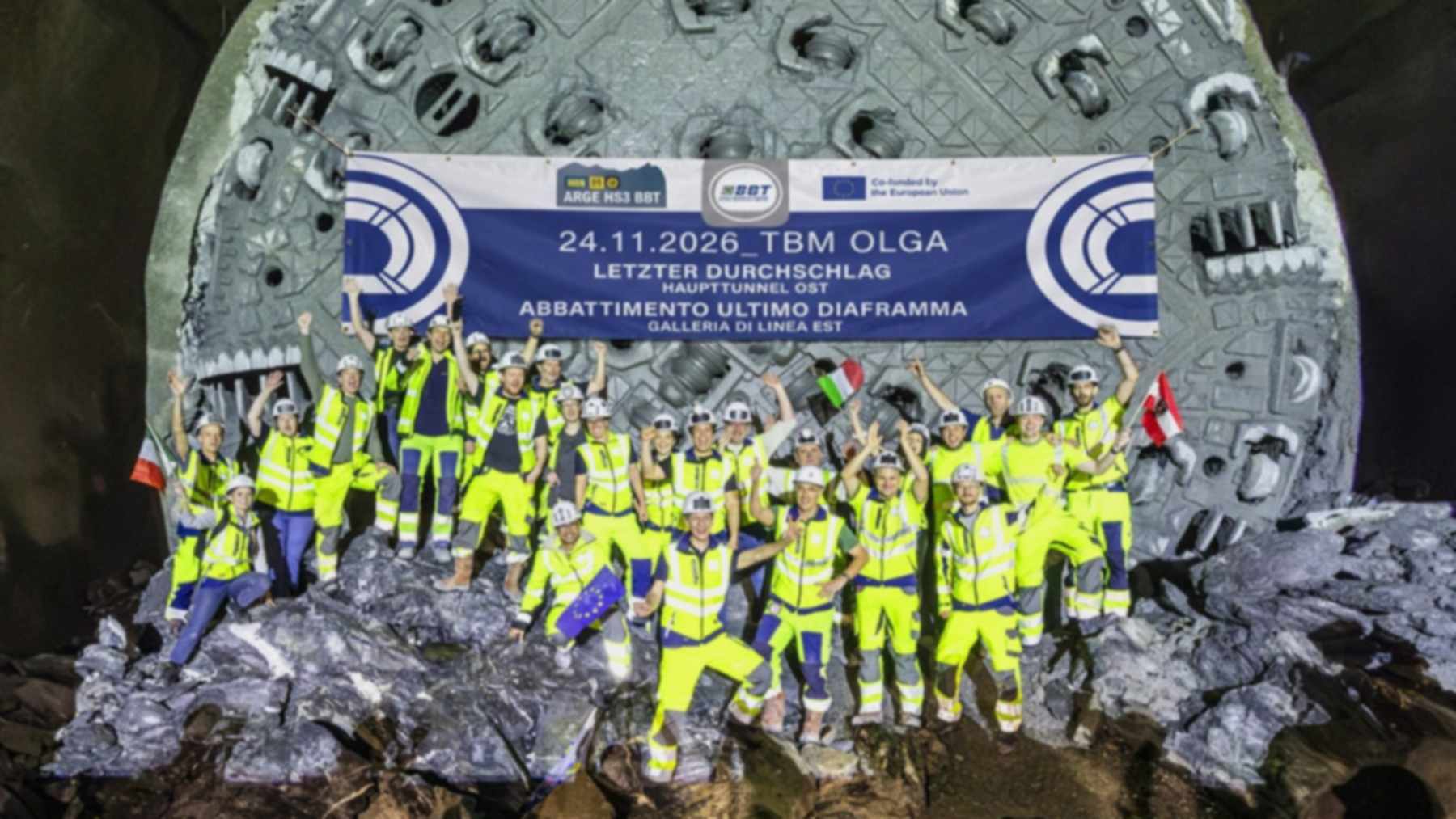
If you’ve seen one tunnel breakthrough photo, you’ve pretty much seen them all. A wall of rock gives way, a huge steel cutterhead noses through the dust, and a crowd in hard hats lines up in front of it for the group shot. The pictures BBT SE put out on Nov. 24 follow that script almost to the letter.
But this one’s a little different, because the machine in those photos was the last one still digging.
Her name is Olga, and she’s a tunnel boring machine, or TBM, working on the Brenner Base Tunnel, a 34-mile rail tunnel being dug under the Alps between Innsbruck, Austria, and Fortezza, Italy. BBT SE, the Austrian-Italian company building it, says Olga reached her destination on Nov. 24 after boring the eastern main tube north toward Innsbruck on the H53 Pfons-Brenner construction section. With that, every foot of machine excavation on the whole project is done.
Olga didn’t work alone. We covered Olga’s twin in August, when Wilma finished boring the western tube after launching the same day from the same section. That left Olga as the last of the nine TBMs that have worked on the Brenner Base Tunnel, eight of which were built by Herrenknecht, a German company.
Michael Knapp, the project manager for the H53 section, called Olga’s arrival “the conclusion of an intensive excavation phase.” For a drive that ran a little over two years, that’s a pretty modest way of putting it.
There’s a lot of machine behind that cutterhead
BBT SE says Olga is roughly 600 feet long and weighs around 2,600 metric tons, which works out to about 5.7 million pounds. Don’t picture a 600-foot drill bit, though. Only the front end, a 34-foot cutterhead, actually touches the rock, and BBT’s figure for the section counts the backup structure trailing behind it. That’s basically a train of gantries carrying the power gear, the conveyor that hauls the rock out and everything else the crew needs to keep the thing moving.
The drive is rated at 4,550 kilowatts, or about 6,100 horsepower. Torque is where it gets silly. It comes in at 26,400 kilonewton-meters, and I’ll admit that unit doesn’t mean much to most of us, so here it is in truck terms: roughly 19.5 million lb-ft.
So how fast does something that big actually move? Olga covered about 4.7 miles in 797 days. By my math, that’s an average of roughly 31 feet a day, and that number includes every slow day in bad rock. Knapp says the crew had to keep adjusting how they ran the excavation as the geology changed along the way, which isn’t exactly a shock under a mountain range.
So what’s a double-shield machine?
Olga is what’s called a double-shield TBM, and so is Wilma. Picture two big steel tubes, one sliding inside the other. The front one holds the cutterhead and keeps grinding forward while the rear one braces itself against the rock, and inside that rear section a mechanical arm sets curved precast concrete segments into rings. So by the time the machine has moved on, the tunnel behind it already has its permanent concrete lining. In decent rock, it can cut and build rings at the same time. That’s a pretty clever arrangement when you’ve got miles of hard Alpine rock to get through.
So what happens to a 600-foot machine when it’s done?
BBT’s release doesn’t say what’s next for Olga, and honestly that’s the first thing I’d want to know. She can’t just back out the way she came, since her shield is wider than the concrete-lined tunnel she leaves behind. As far as I can tell, machines like this usually get taken apart near where they stop and hauled out in pieces, and big parts often end up refurbished for another job.
If that’s the plan, it won’t be a small job. Our August piece counted roughly 80,000 components and 170 special transports just to get Wilma to the site, so I’d bet getting Olga out is a similar headache in reverse.
There’s still a railroad to build in there
Finishing the digging doesn’t mean the tunnel’s ready for trains. BBT says Olga’s breakthrough moves the project into its next construction phases, though the release doesn’t spell them out. Basically, crews still have to lay track, hang the overhead power lines and install the signaling, communications and safety systems along the whole route. None of that happens fast.
Then there’s the schedule. On Oct. 20, after a supervisory board meeting, BBT SE pushed the opening to 2034 from 2032 and raised its cost forecast to €11.7 billion from €10.5 billion, Austrian public broadcaster ORF reported. That’s about $12.8 billion at the euro reference rate of $1.0963 published Nov. 24.
Part of that comes from a design change. The project’s exploratory tunnel, a smaller bore that runs underneath the two main tubes, was originally there to check the rock ahead and help move material in and out during construction. BBT now plans to turn it into a service tunnel, a decision ORF says came out of comparing notes with Switzerland’s Gotthard Base Tunnel and other big European projects. Two extra years is a bit of a letdown if you were hoping to ride through in 2032. Still, I’d argue that learning from a tunnel that’s already carrying trains is a pretty reasonable thing to do before you bolt the equipment in.
So Olga’s done, and as of Nov. 24 there’s nothing left under the Brenner for a tunnel boring machine to dig. BBT SE says the trains should follow in 2034.
 A 1,790-ton tunnel boring machine and its twin digging toward central London are past the halfway mark of a 4.5-mile run as deep as 217 feet, each moving about 52 feet a day as they line the bores with 48,294 concrete segments, and both are due to stop short of the station in 2027Industry · 1 day ago
 There are no coral atolls in the mid-Atlantic, yet scientists suspected for 30 years that it once had them. They found one almost 3,000 feet down: nearly 1,000 feet tall and about 5 million years oldIndustry · 4 hours ago
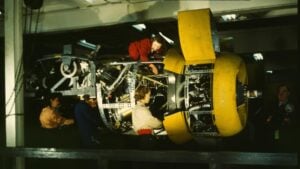 A 3.5-million-square-foot car plant once rolled a four-engine bomber off its line every 63 minutes, and now the military, which says it will buy millions of drones, is in talks with the car industry to build their motors, actuators, sensors and lidarIndustry · 23 hours ago