- 2 MONTHS AGO · MILITARYA 110-inch drone boat weighing 455 pounds empty spent two weeks off a California beach hunting mock mines the Marines built for it, and it carries sonar and an infrared camera up to 250 nautical miles on a tank of no more than 30 gallons
- 2 MONTHS AGO · MILITARYA 155-pound underwater drone that hunts sea mines for the Australian navy is built to skip the six-hour recharge: two sailors pull its battery and the 1-terabyte memory that processes the sonar while it swims, slide in loaded spares, and send it back under in 30 minutes
- 2 MONTHS AGO · MILITARYAn underwater drone that goes into the sea from a box lowered by a hovering helicopter is flown to the mine by hand through a fiber-optic thread, because radio dies in seawater — and the Navy has penciled in up to 668 of a drone that never comes back
- 2 WEEKS AGO · MILITARYA torpedo-shaped American underwater drone carrying a synthetic-aperture sonar just beat three rival bidders to hunt sea mines for the Royal Navy, which picked 24 of them in sets of three, each set with its own machine that lowers them into the water and hauls them back aboard
- TODAY · THIS ARTICLEThe Navy’s first order for this 155-pound mine-hunting drone covered nine. Now 175 are on order, and the sailors who launch it never have to go anywhere near the mines
I spent a good chunk of this week reading spec sheets for underwater drones, which is about as thrilling as you’d expect. Most of it is depth ratings, battery sizes and sonar frequencies. But one detail on the Navy’s newest mine-hunting drone kept pulling me back, and it’s the least technical line on the page. Two people can carry it.
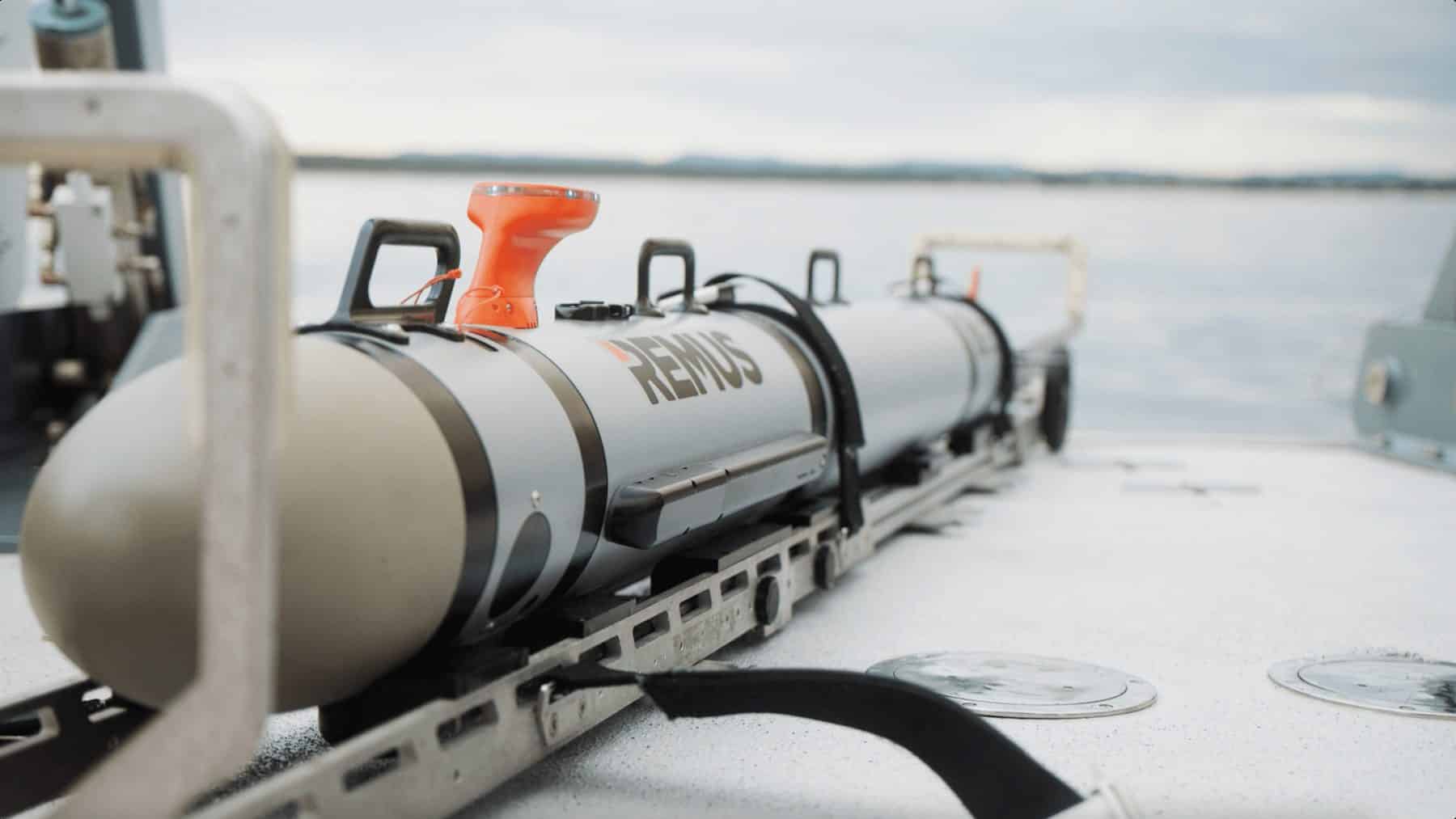
That drone is called Lionfish. It’s 8 feet 8 inches long, weighs 155 pounds and needs a crew of two, according to the U.S. Naval Institute’s Proceedings magazine. That’s a pretty awkward thing to haul down a pier, I’ll admit. Still, two sailors can manage it without a crane, and you’ll see why that matters in a minute.
Lionfish is a military version of the REMUS 300, a commercial drone that HII builds in Pocasset, Massachusetts, on Cape Cod. HII’s REMUS 300 spec sheet lists three battery sizes. Go with the smallest one and you get an 80-inch drone that weighs 107 pounds. The biggest stretches it to 104 inches and 155 pounds, which matches the Naval Institute’s Lionfish figures. On that battery, HII says it can dive to 1,000 feet and keep going for up to 30 hours.
So why bring it up now?
Because the Navy now has 175 of them on order. On Nov. 16, HII announced that the Navy had added 82 more Lionfish to its contract, which brings the number HII has to build, test and deliver to 175. The program leaves room to go as high as 200. And 50 had already been handed over to the Navy as of Oct. 21.
HII didn’t put a price on the 82-drone batch by itself. The only dollar figure in the announcement covers the whole five-year production program, which HII says is worth more than $347 million. It also didn’t give a delivery schedule for the new ones.
So how does a drone hunt mines?
Basically, it takes pictures with sound. The REMUS 300 that Lionfish is based on uses side-scan sonar for mine work. The sonar fires pulses of sound out to either side as the drone works its way over the seabed, and the echoes get turned into an image of the bottom. Anything shaped like it doesn’t belong down there shows up in that image.
That’s handy, because people don’t have to be anywhere near the mines while it happens. According to HII, the drone surveys big areas on its own, so operators can “review the data away from the mine field” and figure out which objects actually look like mines. So the drone does the risky swim, and the humans look at the pictures later from somewhere a lot safer.
That’s pretty much how the Defense Innovation Unit, the Pentagon office that helped get Lionfish off the ground, pitched it too: as a way to protect the Navy’s explosive ordnance disposal teams. Lionfish is replacing an older drone called the Mk 18 Mod 1 Swordfish. The Navy apparently has a real soft spot for fish names, since there’s a Mk 18 Mod 2 Kingfish out there as well.
It’s pretty slow, though. HII’s product page lists a top speed of 5 knots, which is a little under 6 mph, so you could pretty easily keep up with it on a bicycle. For a drone that’s carefully mapping the seafloor, that’s probably fine.
Lionfish went from nine drones to 175
The first Lionfish production contract covered just nine vehicles. HII delivered the first two about a year and a half ago, and the count had reached 50 by Oct. 21. Now the order stands at 175.
HII says Lionfish is the Navy’s first program to make it all the way from an OTA prototype to full-scale production. An OTA, short for Other Transaction Authority, is basically a contracting shortcut. It lets the Pentagon pay a company to build and test prototypes without running them through the standard acquisition process first, which is frankly famous for taking forever. The Naval Institute is a bit more careful and calls Lionfish one of the first programs to pull that off, so I’d treat the first-ever label as HII’s claim.
HII’s factory is growing too. On Sept. 22, the company said it had added 10,000 square feet to its 40,000-square-foot plant in Pocasset, where it says about 300 people work, and it said the extra space would help with Lionfish production. Two days later, the Navy placed the Sept. 24 order we wrote about back in October. Now there’s this one on top of it.
Why buy so many small drones?
I can’t find anything from the Navy that lays out its thinking here, so take what follows as my read rather than official policy.
Military & Aerospace Electronics says two people can move the REMUS 300 and get it into the water quickly from any vessel. Logistically, that’s a pretty big deal. You don’t have to wait for one particular ship to show up with the right deck and the right gear. Whatever boat is already nearby can probably do the job. And if you’ve got a lot of these drones spread around, you can cover a lot more water at the same time.
Then there’s what happens if you lose one. If a 155-pound drone gets tangled in something on the seabed, that’s a bad day and some paperwork. Lose a much bigger, much pricier vehicle and it’s a far bigger headache, which is arguably why buying lots of small ones makes more sense than betting on a few big ones.
Apparently mines aren’t the only job, either. HII lists intelligence gathering, anti-submarine work and electronic warfare as other Lionfish missions, thanks to a modular design that lets the Navy swap payloads and add upgrades later. It’s kind of the same thinking behind a lot of the small naval drones we’ve covered lately, like the diver-launched one that climbs out of the ocean and starts flying.
So HII’s Pocasset crew has 125 more Lionfish to finish, on top of the 50 the Navy already had by Oct. 21.
 A 15,000-foot wire unspools from the tail of a 50-year-old jumbo jet to carry orders to missile submarines hiding underwater, and the pilots must hold exact speeds and bank angles in a circling orbit for hours to keep it under tension, because a slack wire cannot be reeled back inMilitary · 17 hours ago
 A Mach 1.7 run is part of the final exam for fighter jets stripped to bare metal at a Georgia depot every seven years or so, with no paint, no external tanks, no weapons and sometimes no gun, the highest-performing of their type, and reserve pilots test every one before it goes homeMilitary · 19 hours ago
 A 24-foot drone boat with radar and cameras on every side patrolled the water at the two Army terminals that ship military ammunition, after the California port asked for help with short staffing and boats that kept breaking down, and nobody has said if the Army will buy anyMilitary · 20 hours ago