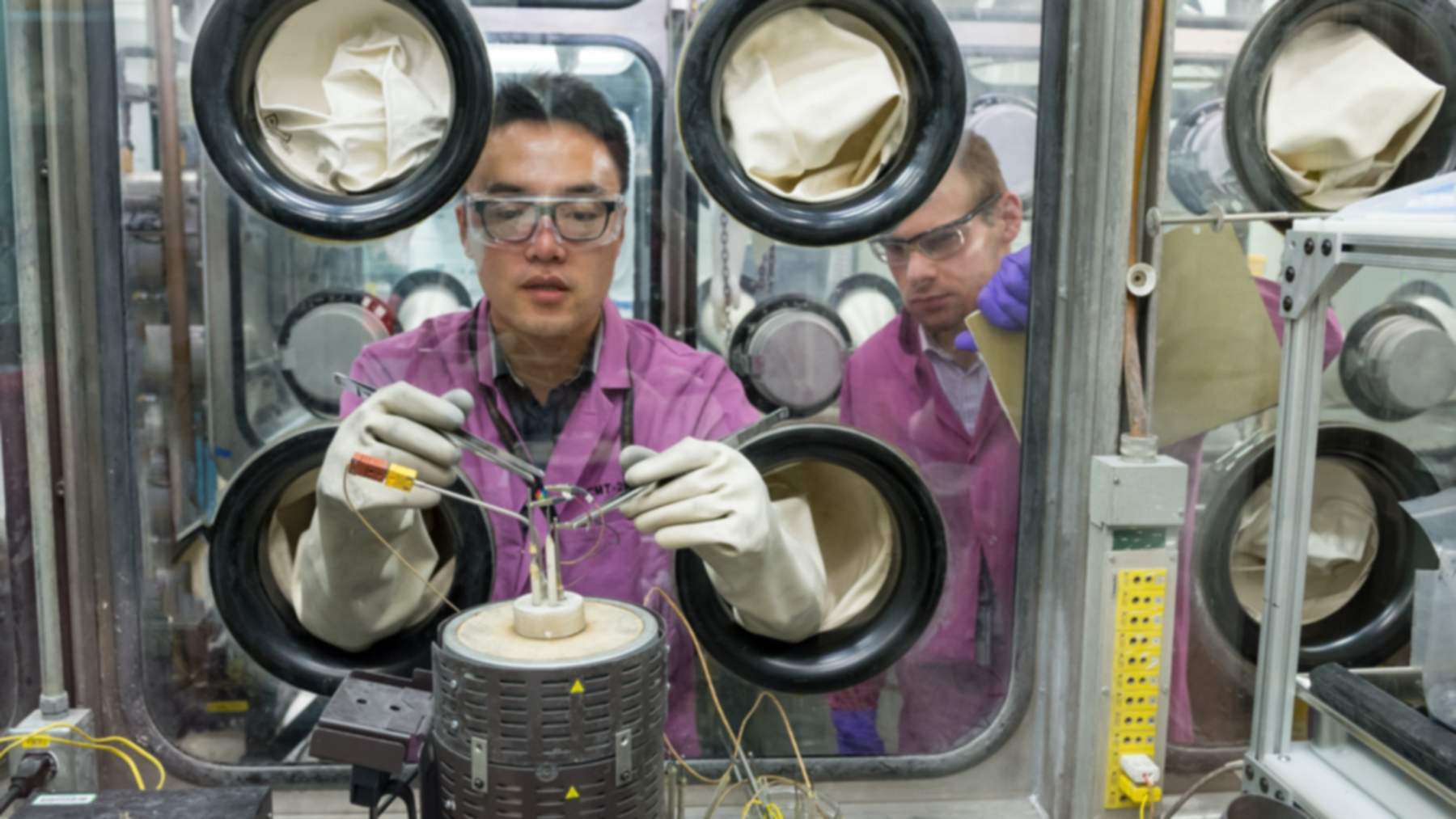
- 3 MONTHS AGO · ENERGYWhile four American microreactors were going critical this summer, a British startup was heating molten salt in a mass spectrometer outside Cambridge to work out which metals it eats, on a reactor meant to run fuel that pulses to 22,000 megawatts and stops itself
- 2 MONTHS AGO · ENERGYAn 8-foot clear column filled with 25% salt water let researchers watch how a nuclear battery would move its liquid fuel with no pump, heated by electric current pushed straight through the water, and the reactor it stood in for is designed to put out 20 megawatts of heat
- 2 MONTHS AGO · ENERGYA tungsten alloy held at 2,282°F for 100 hours shrank the crystals inside it by 60 percent without a single pass through a rolling mill, because two mismatched lattices build up strain while it sits there, doing to the metal what a steel mill does by crushing it
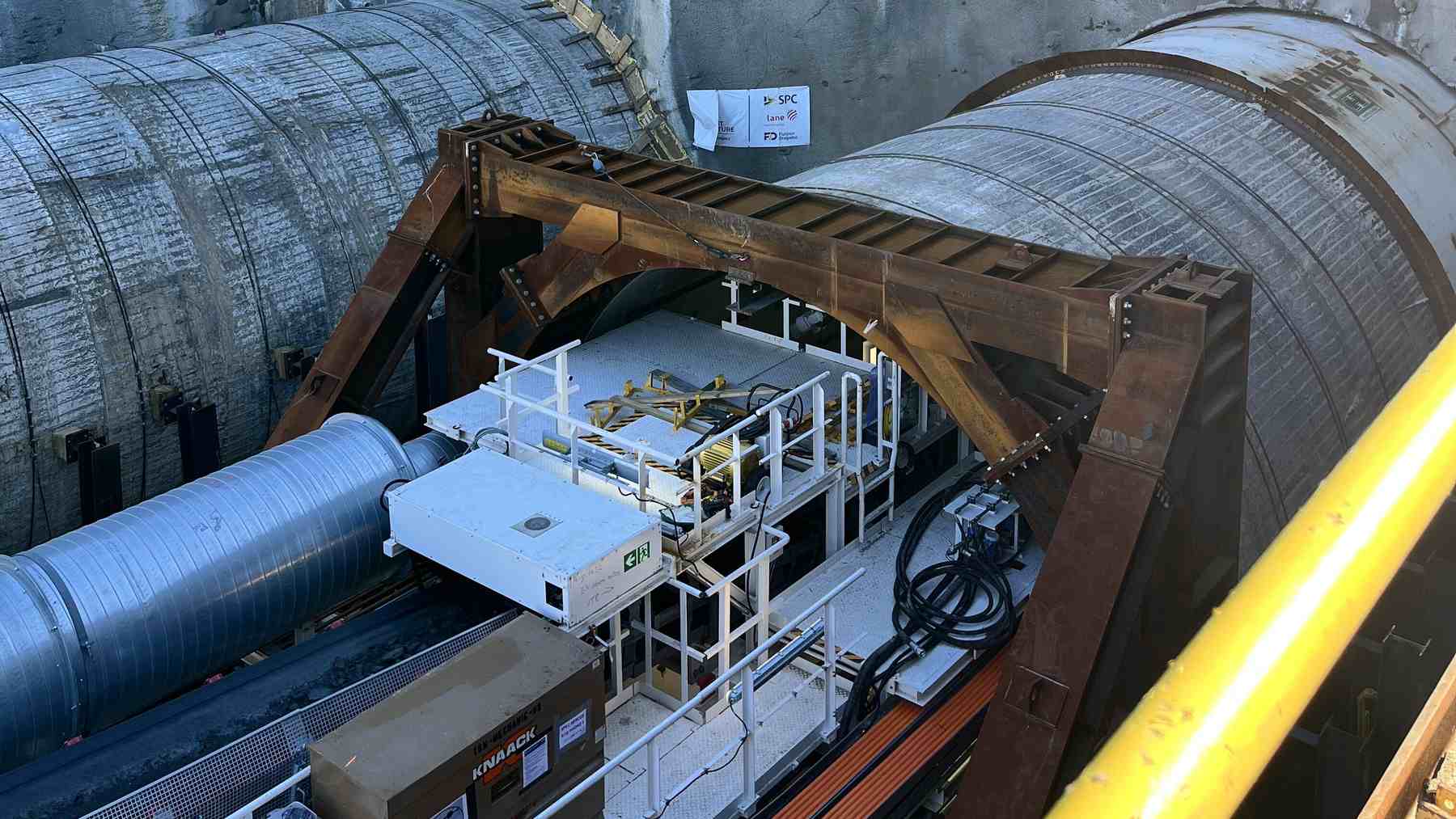
- 1 MONTH AGO · ENERGYA 15-foot reactor cooled by a liquid metal that stays liquid at room temperature got its vessel delivered to an Idaho reactor built to break fuel on purpose, and will go critical in December dry, with no coolant inside, before the sodium-potassium is poured in to make heat
- TODAY · THIS ARTICLERadioactive metal builds up inside liquid-fuel reactors like insulation. Lab models built on a 1960s 8-megawatt reactor point to a fix that may need no exotic alloy, only better plumbing
Pretty much every nuclear reactor you’ve heard of runs on solid fuel. The uranium gets pressed into ceramic pellets, the pellets get sealed inside metal rods, and whatever fission spits out stays locked inside those rods until they come out of the reactor.
A molten salt reactor does it differently. The fuel is dissolved in salt that’s been heated until it’s liquid, and that liquid gets pumped around a loop, so anything fission produces goes along for the ride.
That’s great for some things and a real headache for others. A team from Argonne National Laboratory in Illinois and Rensselaer Polytechnic Institute in Troy, New York, has been looking at one of the headaches, and I’ll get this out of the way early: it’s a computer simulation. The team didn’t build a reactor or run a physical test. It took data from a small reactor that shut down 57 years ago next month and ran it through modern modeling software.
So what’s the problem with liquid fuel?
According to Argonne’s write-up of the research, most fission products end up dissolved in the salt or locked into chemical compounds. A group called noble metals doesn’t play along. Tellurium, molybdenum, ruthenium, rhodium, palladium and silver stay as plain metal, and in a reactor they’re radioactive.
Those particles ride around the loop and stick to whatever they run into. That includes the primary heat exchanger (the big component that pulls heat out of the salt so it can actually be used). A layer of metal on there basically works like insulation. The reactor has to work harder to put out the same power, running and repair costs go up, and Argonne says it can raise safety concerns too.
So how do you get metal out of a liquid that never stops moving?
Helium bubbles were the 1960s fix
The old data comes from the Molten Salt Reactor Experiment, which Oak Ridge National Laboratory ran in Tennessee. It was a test reactor, putting out about 8 megawatts of heat according to Oak Ridge’s own systems performance report, which also notes that a later calibration pointed to something closer to 7.3. Its fuel salt circulated at around 1,200°F.
Oak Ridge’s engineers bubbled helium through that hot salt. The main job was stripping out gases like xenon and krypton. But metal particles latch onto the bubble surfaces too, and when the gas gets pulled out of the loop, those radioactive hitchhikers leave with it and get stored as waste.
It’s a pretty neat trick. Unfortunately, it doesn’t last. Argonne says the bubbles eventually load up with contaminants and stop picking anything up, and the lab compares it to soap scum in a bathtub. That’s a fair comparison if you’ve ever cleaned one. Soap gets the tub clean for a while, and then at some point the leftover soap is what you’re scrubbing off.
Fresh bubbles beat recycled ones, according to the models
Ling Zou and Rui Hu, both nuclear engineers at Argonne, built two models from the old Oak Ridge data and SAM, Argonne’s software for simulating how a whole reactor system behaves. Both models followed tellurium-132, one of those radioactive noble metals, as it worked its way around the loop.
The first model assumed the bubbles slowly lose their grip during a single trip through the system. The second tracked how the bubbles change over thousands of trips around the loop, which is basically what you get if you keep reusing the same bubbles.
Bubble size and how many bubbles are in the salt turned out to decide where the noble metals end up. They either leave on a bubble or settle somewhere you don’t want them. The team’s conclusion is pretty simple from there. Keep injecting fresh helium bubbles and keep pulling the used ones out, instead of letting worn-out bubbles do laps.
Zou, who also manages Argonne’s system analysis and methods group, says the bubbles “make a big difference in keeping a system clean, cost-effective and safe.”
It’s arguably the least glamorous fix you could come up with for a nuclear reactor, and frankly I think that’s a point in its favor. If the models hold up, nobody needs an exotic new alloy. They need better plumbing for gas.
The paper itself, published in Nuclear Technology, comes at this through surfactants. That’s the chemistry word for stuff that collects on the surface of a liquid or a bubble and changes how it behaves (the soap in your bathtub is one). Huihua Yang, Qiyun Cheng and Wei Ji at Rensselaer are on it alongside Zou and Hu. As far as I can tell from the abstract, the point is that whatever coats a bubble’s surface controls how readily it grabs metal, and that shifts where the metal lands around the loop.
Nobody has tried this in a working reactor yet
So does it work? We don’t know yet. Everything here is a model built on data from one small test reactor, and I couldn’t find anything in Argonne’s announcement about trying the idea in an operating molten salt reactor or even a salt loop in a lab.
Argonne’s summary also doesn’t put a number on the ideal bubble size or on how often the bubbles should be swapped. The full paper sits behind the journal’s paywall, so I can’t tell you whether those numbers are in there. I’d guess that’s exactly what anyone designing one of these reactors would want to see before betting a heat exchanger on it.
Molten salt chemistry is getting plenty of attention in other labs too. In England, a startup has been heating salt to see which metals it eats before any fuel goes near it.
The Department of Energy’s Nuclear Energy University Program and Argonne funded the work, and Argonne published its summary of the findings on November 23.
 A finished 77-megawatt Ohio solar farm leaves over 95% of its ground open and has farm-style fencing up. The one thing missing from its farm pitch: the sheep, with no arrival dateEnergy · 4 hours ago
 A 120-acre flooded gravel pit in central New York is getting floating solar panels engineered for 69 pounds of snow per square foot, the heaviest load of any floating array in the country, with transformers and switchgear riding on custom barges instead of farmland, 22.5 megawatts in allEnergy · 17 hours ago
 A 10-plant alert went out after wiring defects turned up in two actuators bound for a Kansas reactor’s emergency feedwater system, the parts that set how fast a steam turbine spins its pump, and every site using them is being advised to confirm its spares energize and strokeEnergy · 17 hours ago