
The Brenner Pass is the low point in the wall of Alps between Austria and Italy, which is exactly why it has been a traffic problem for about two thousand years. The modern numbers are brutal. More than 2.5 million trucks cross the pass every year, which works out to roughly one every 12 or 13 seconds around the clock, on top of some 14 million cars and around 50 million tons of freight.
A few hundred meters under all of that, the machines built to take most of the trucks off the road are almost done digging.
The Brenner Base Tunnel is down to its last two tunnel boring machines. Two German-built borers named Wilma and Olga are grinding out the final stretch on the Austrian side. When they punch through, expected around the middle of 2026, the longest railway tunnel ever built will be dug end to end.
The finished tunnel runs 64 kilometers counting the Innsbruck bypass, and it ties the rail network of northern Italy into the existing line north to Innsbruck and on toward Munich. Nothing else on rails is longer. The running total sits at around $11.5 billion, and it will not carry a paying passenger until roughly 2032.
Wilma and Olga are doing the last of the digging
The two machines still working are the last of nine used on the project. They are double-shield borers, and they set off from the H53 Pfons-Brenner site on the Austrian side, each one driving about 7.6 kilometers north toward Innsbruck.
By early February, one had passed the 4-kilometer mark in the east tube and the other had cleared 5 kilometers in the west, according to Engineering News-Record. Between them they had built more than 9 kilometers with fewer than 6 left, which is the entire remaining gap in a 55-kilometer main bore.
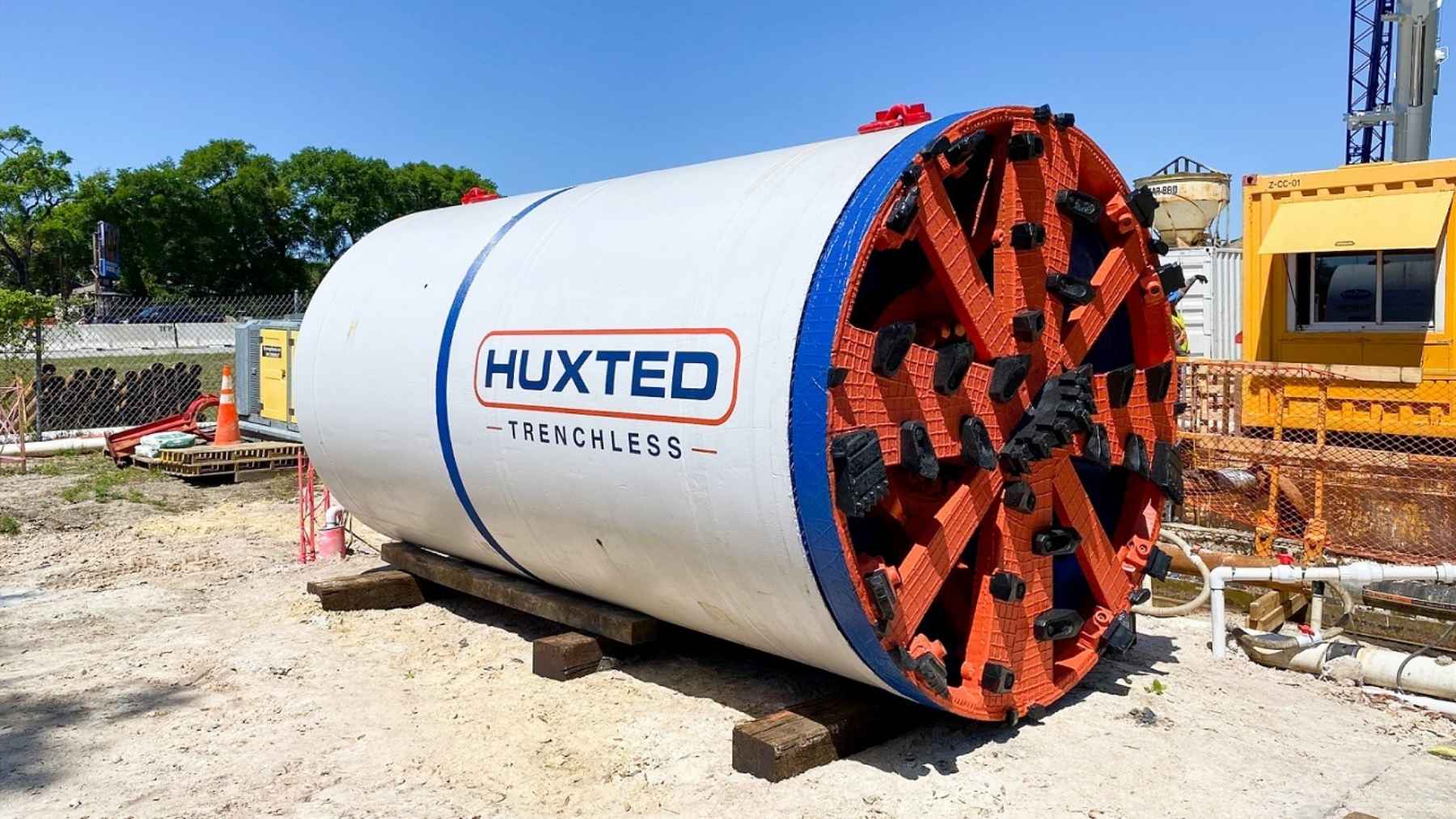
There is a habit on this job, and on most big tunnels, of naming the machines after women. The two that finished the Austrian main tubes last year were Lilia and Ida. They came out of the same Herrenknecht factory in Schwanau, Germany that built a 3,500-ton machine called Mary now chewing under the city of Adelaide, and the pair of borers waiting in a New Jersey trench to dig the new Hudson River rail tunnels. That New Jersey pair is the exception here: no names, just serial numbers.
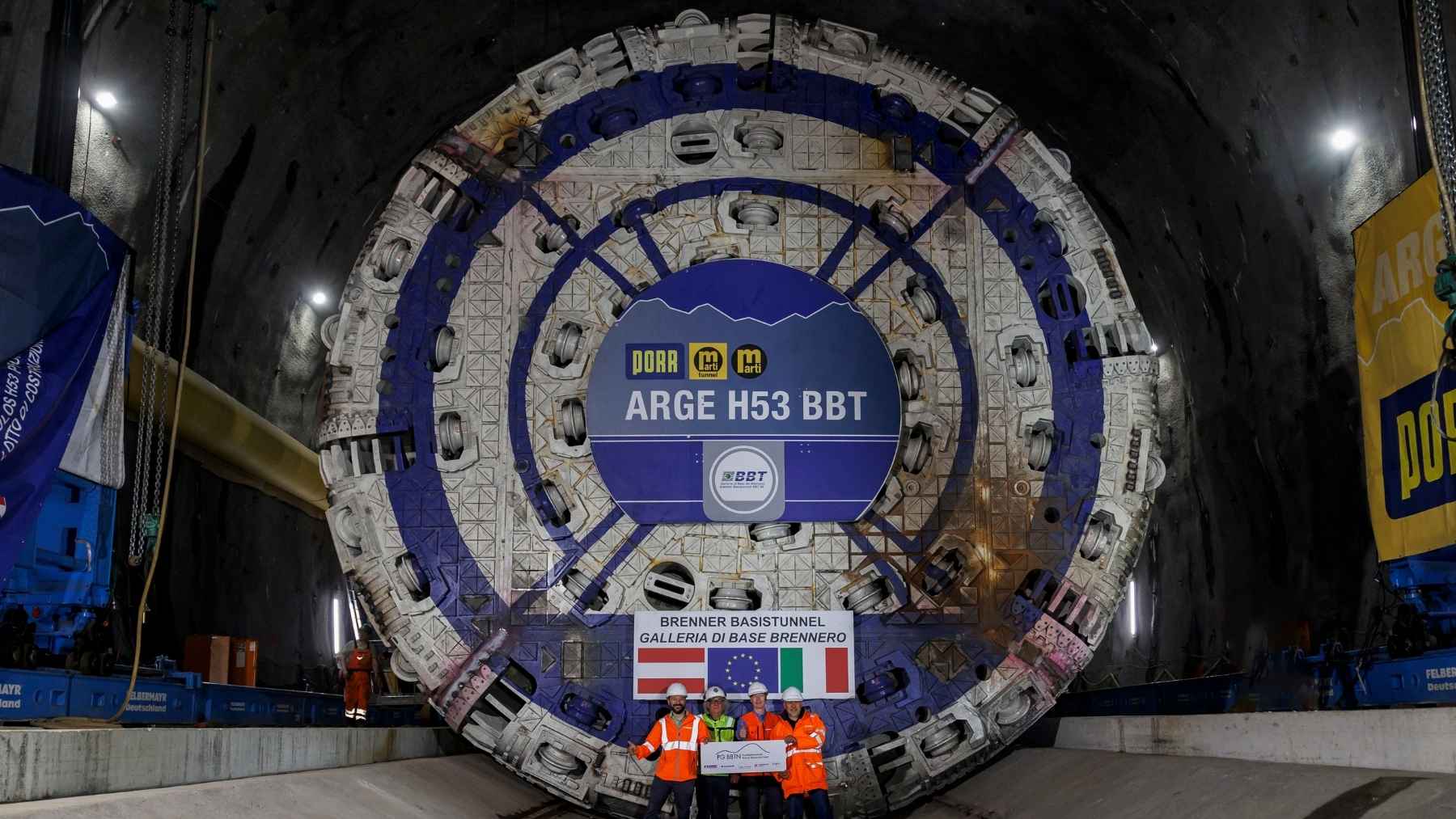
Lilia and Ida give a sense of the scale. Each weighed more than 2,400 tons and ran about 160 meters long counting the trailing gear, longer than a football field. The cutting head measured 10.25 meters across and was driven by 4,550 kilowatts, a little over 6,000 horsepower.
They spent from mid-2023 to late 2025 boring a bit over 8 kilometers of the Sill Gorge-Pfons section and lining it with precast concrete rings as they advanced. Ida broke through in late August, Lilia in early October, and the two got a joint ceremony in November. Counting main tubes and the exploratory bore, Herrenknecht’s machines have carved close to 90 kilometers of rock under the Brenner.
Why anyone drilled 64 kilometers under the Alps
The point of the whole thing is grade. The current railway over the Brenner dates to the 1860s and climbs the pass on slopes steep enough to need two locomotives on the Italian side and three on the Austrian one. Trains crawl. Freight mostly gives up and rides a truck instead.
The base tunnel runs almost flat, on a grade of roughly 0.4 to 0.7 percent, buried deep enough that the rock cover reaches about 1,720 meters at its thickest. That flat profile is the entire trick. It lets longer, heavier freight trains run under the Alps without the climb, which is how the project expects to pull traffic off the motorway.
For passengers, the tunnel cuts the Fortezza-to-Innsbruck trip from about 80 minutes to roughly 25, with trains running up to 250 km/h. It is the central link in the European Union’s Scandinavian-Mediterranean corridor, the rail spine that runs from Helsinki down to Malta, and the EU has put in €2.3 billion of the cost.
The design is two single-track tubes, 40 to 70 meters apart, joined by cross passages every 333 meters for escape. Running between them and about 12 meters lower is a third, smaller bore, the exploratory tunnel, which mapped the rock ahead of the main dig and will handle drainage and maintenance once trains are running.
The hardest part was a river, not a mountain
Most of the tunnel goes through solid Alpine rock, which is hard but predictable work. The section that gave engineers real trouble sits at the southern end near Fortezza, under the Isarco River, with only 5 to 8 meters of cover between the tunnel roof and the riverbed.
Digging under the river without draining it or dropping the groundwater meant freezing the ground first. Crews circulated liquid nitrogen through boreholes to turn saturated soil into temporary cylinders of ice strong enough to hold up the excavation, then advanced in one-meter steps, with jet grouting to bind the soil chemically alongside it.
ENR’s framing was blunt, and fair: the breakthrough under the mountain was never the hard part. Proving you could tunnel under a live river through wet gravel, without changing the water table in the valley above, was.
Toward the south from the Austrian machines, crews skipped the boring machine entirely and used drill-and-blast, the same low-tech but proven method Norway reaches for on most of its tunnels rather than shipping in a cutterhead the size of a house.
Most of the rock is already gone
The tunnel had its big public moment on September 18, 2025, when crews broke through the last diaphragm of the exploratory tunnel 1,400 meters under the border and joined Italy and Austria underground for the first time. Italian Prime Minister Giorgia Meloni and Austrian Chancellor Christian Stocker were both there, along with about a thousand guests and the EU transport commissioner.
It was a real milestone, and also a reminder that these projects run on caveats. Stocker, standing at his own celebration, said “the tunnel alone will not solve the transit problems,” and pushed for road-and-rail cooperation between the two countries. Austria’s Tyrol region already caps truck traffic on certain days, which has been a running fight with Italy.
The main tubes followed through late 2025, when Ida and then Lilia finished their drives. By August 2025 the project reported about 88 percent of all excavation complete. Add up every bore on the job, from the main tubes to the access, ventilation and emergency galleries, and the tunnels run to roughly 230 kilometers.
What is left is the boring part
Once Wilma and Olga break through, the work shifts to years of systems installation: ballastless track, traction power, ventilation, and European Train Control System signaling along all 55 kilometers of running tunnel. That phase, not the digging, is what sets the opening date.
And that date keeps moving. When the project was first sold, the tunnel was meant to be carrying trains around 2015. The current target is 2032, the running total has climbed to around $11.5 billion, and at least three workers have died building it.
None of that shows up in the hero shot of a 10-meter cutting head grinding through the last wall of rock, which is the image that will travel. The freezing plants, the timeline that slipped from 2015 to 2032, and the trucks still crossing overhead every few seconds are the parts that do not photograph as well.
 irabloomgarden DRIVER3 months ago