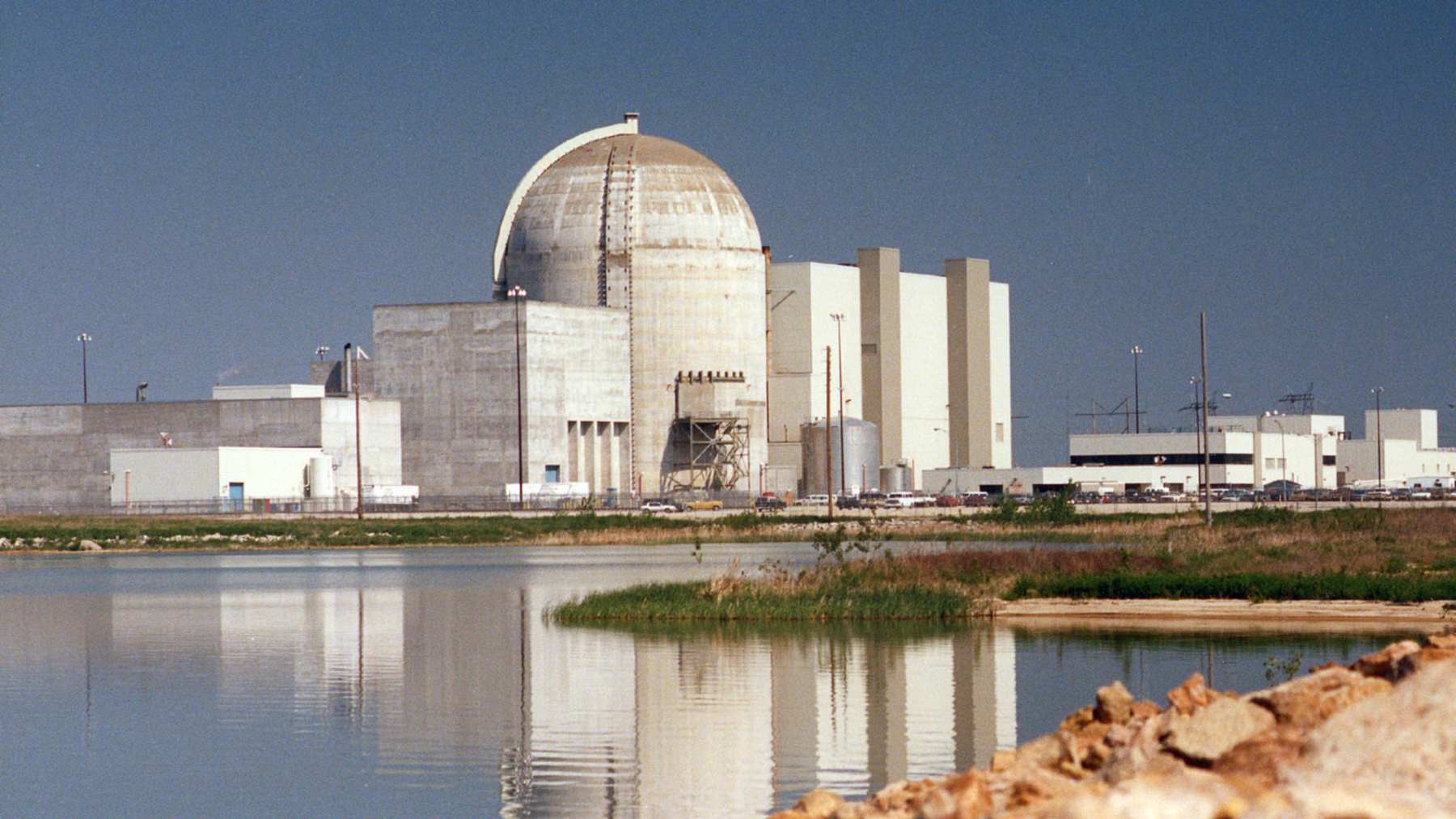
- 2 MONTHS AGO · ENERGY9,222 solar panels now float on the reservoir where a village of 1,300 people gets its drinking water, on 12 acres instead of the 30 of farmland the same output needs on land, and the retired village administrator who pushed it saw it switched on
- 1 MONTH AGO · ENERGY79,000 solar panels on a New York farm had two, four and eight sheep per 2.5 acres grazing under them for three summers, and the lightest flock left 38 percent more bees and ladybugs than a mower did while the heaviest kept the grass shortest and cut the honeybees nearly in half
- 1 MONTH AGO · ENERGY22,908 solar panels now shade 4,315 parking spaces at a California theme park, sized to cover a year of power for the park and the water park next door, and when the utility cuts the valley’s lines for wildfire risk the array shuts off too
- 5 DAYS AGO · ENERGY208 solar panels have floated since their first winter on a pond 8,100 feet up in the Colorado Rockies, in a town that has seen 47 below zero and two feet of snow in a day, and the first freeze locked their mooring lines into the ice without puncturing a single float
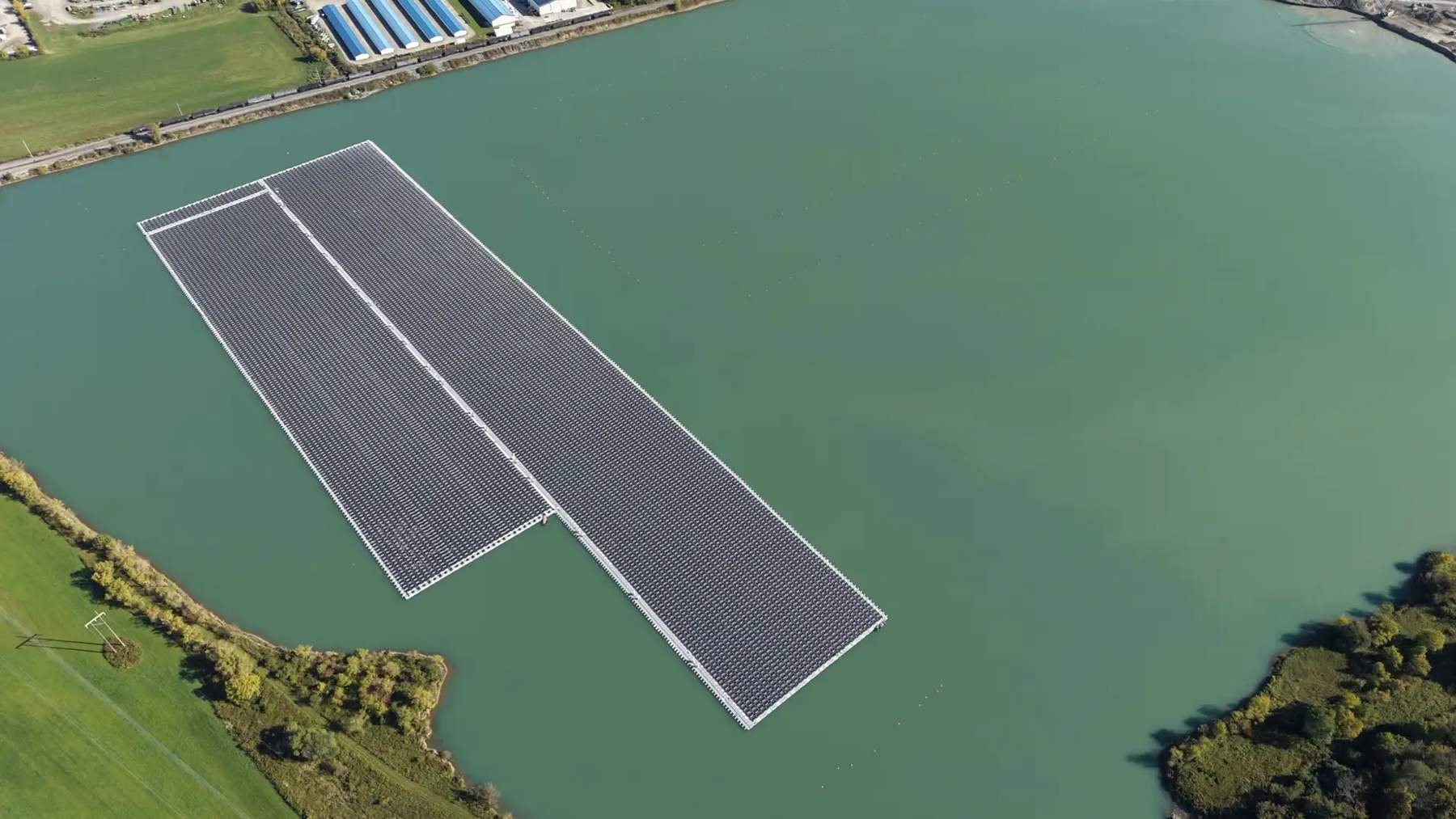
- TODAY · THIS ARTICLEA 120-acre flooded gravel pit in central New York is getting floating solar panels engineered for 69 pounds of snow per square foot, the heaviest load of any floating array in the country, with transformers and switchgear riding on custom barges instead of farmland, 22.5 megawatts in all
Solar panels and snow have never really gotten along. Panels need sunlight, snow blocks it, and a few feet of the wet stuff puts a lot of weight on whatever’s holding the panels up. So if you had to guess where the developer of North America’s biggest floating solar complex would decide to build it, you’d probably say Florida or Arizona.
You’d be wrong.
It’s going up on a flooded gravel pit in Cortlandville, New York, right next to a city whose nickname has to do with altitude, not royalty. Cortland is apparently called the “Crown City” because it sits on a plain more than 1,000 feet above sea level. Third Pillar Power announced on November 17 that construction is underway on Crown City Solar, a three-phase project that adds up to 22.5 megawatts. The company calls it the biggest floating solar site in North America, and it says the first phase, Crown City Solar 1, is the first community solar project on water anywhere on the continent. I can’t independently check either claim, so treat them as Third Pillar’s own.
So why put solar panels on a gravel pit?
Because nobody’s going to farm it, basically. The pit belongs to the Polkville Crushed Stone Facility, a sand and gravel mine that’s still operating, owned by Suit-Kote Corporation (which Colas Inc. bought in October). There’s an asphalt plant and a storage terminal on the same site, and about 120 acres of the mine pit are flooded. Third Pillar pitches the project as a way to keep solar off farmland and open space, and frankly, a hole full of water at a working mine is a pretty sensible place to start.
It’s not the first quarry to get this treatment, either. A cement plant in Belgium has floated 31 megawatts of solar panels on its own flooded chalk quarry, though that power goes straight into the plant instead of out to the grid.
Then there’s the water itself. Solar panels lose a bit of efficiency as they heat up, and a panel floating over a lake stays cooler than one baking over a gravel lot. Idaho National Laboratory, which is working with NREL on floating solar, says that cooling effect is why floating arrays tend to outperform ground-mounted ones.
So how much is 69 pounds of snow per square foot?
Third Pillar says it designed the system around central New York winters, using a ground snow load of 69 pounds per square foot. According to the company, that’s the highest of any floating solar project in the US.
Ground snow load is basically the number engineers start from. It’s the weight of snow they expect could pile up on flat, open ground at that spot in a bad winter, and the load the structure has to carry gets worked out from there. To get a feel for it, picture a 4-by-8 sheet of plywood lying in a field. I did the math, and at 69 pounds per square foot that one sheet would be holding up 2,208 pounds of snow. That’s more than a ton.
On land, all that weight presses down on posts driven into the ground. On water, it presses down on floats, and those floats have to keep the panels above the surface without tipping. Third Pillar didn’t go into how the 69-pound figure translates into float design, so I can’t tell you how much margin is built in.
Floating solar in cold places isn’t brand new. We’ve covered an array in the Swiss Alps that rests on a gravel pad on the lakebed for about half the year while its reservoir is drained. Third Pillar’s CEO, Jaimeet Gulati, seems pretty confident about the climate side of things in central New York. “The question is no longer whether floating solar works here,” he said in the announcement.
Why are the transformers on barges?
This is arguably the cleverest bit of the whole project. Every solar farm needs electrical gear between the panels and the grid. Transformers step the voltage up so the power can travel efficiently, and switchgear is basically a big cabinet of breakers and switches that lets workers cut off parts of the system when something goes wrong or needs maintenance. Normally that equipment sits on a concrete pad on dry land. At Crown City, Third Pillar is putting the medium-voltage transformers and the switchgear on purpose-built barges, which the company says hasn’t been done on a floating solar project in the US before.
The company gives three reasons for it: less farmland used, fewer floodplain siting problems, and better electrical efficiency. The floodplain one makes the most sense to me. Low ground next to a flooded pit isn’t the safest place to park a transformer, and a barge rides up with the water while a concrete pad stays put. The efficiency gain I’ll have to take on trust, because the release doesn’t put a number on it.
Crown City Solar is being built in three pieces
Each phase is 7.5 megawatts, and every figure Third Pillar gives is in DC. That matters a little. DC is what the panels themselves produce, while AC is what’s left after inverters convert it for the grid, and the AC number is usually somewhat lower. Third Pillar only published DC ratings, so I can’t tell you the AC capacity.
Phase 1 is the furthest along. Third Pillar expects mechanical completion in December, which basically means the hardware is installed and wired up but isn’t selling power yet. Phase 2 is under construction too, and both phases 2 and 3 are scheduled for October 2027. D3Energy is the contractor doing the building.
Third Pillar also says it went from securing the site and applying for interconnection to construction in under two years. If you’ve ever watched a solar project sit in a utility’s interconnection queue, you’ll know that’s pretty quick.
So what is community solar?
Community solar lets you buy into a solar project without putting a single panel on your roof. The project feeds its power into the grid, and subscribers get credits on their monthly electric bills for their share of what it produces.
Third Pillar says the finished complex should have about 1,500 subscribers through New York’s community solar program, and that it should cut carbon dioxide emissions by roughly 19,800 short tons (18,000 metric tons) a year. According to NYSERDA, the state agency behind the NY-Sun program, community solar subscribers usually save somewhere between 5% and 10% a year on the electricity they use.
What I can’t tell you is what Crown City will charge. Third Pillar hasn’t published a subscription price, which is the number most of you would want if you live nearby. The release doesn’t name the utility whose customers can sign up, either. And I couldn’t find a construction cost anywhere.
If Third Pillar hits its dates, the first 7.5 megawatts on the Polkville pit should start earning bill credits for subscribers in February 2027, when Crown City Solar 1 is due to begin commercial operation.
 A 10-plant alert went out after wiring defects turned up in two actuators bound for a Kansas reactor’s emergency feedwater system, the parts that set how fast a steam turbine spins its pump, and every site using them is being advised to confirm its spares energize and strokeEnergy · 20 minutes ago
 A 214,000-square-foot nuclear fuel factory in Tennessee went up with welds thinner than the 5/8-inch throat its main force-resisting system was designed for across 10 X-braced steel frames, and regulators have now made the fixes binding after the design was cut to 7/16 inchEnergy · 8 hours ago
 A 602-foot dam in Northern California is showing again, for the first time since 2022, the steel tower that helped pour its concrete around the clock for four and a half years, now that the reservoir sits more than 94 feet below full, and buoys have been tied to it for safetyEnergy · 12 hours ago