
- 4 MONTHS AGO · INDUSTRYAn underwater drone that sizes up salmon on Norwegian fish farms went fully autonomous for a strange reason: sunshine kept scrambling the beams of light used to steer it, so the team gave up and let it drive itself
- 3 MONTHS AGO · INDUSTRYA 197-foot German shaft borer is hanging like a chandelier under an English national park, 2,966 feet down, a spinning drum milling 8-inch passes while a vacuum sucks the rock out — nobody on the floor, no explosives, 2,283 feet still to go
- 2 MONTHS AGO · INDUSTRYA 303-ton machine that carves rectangular tunnels so mine trucks can drive straight in behind it flooded 2,300 feet down in Mexico’s oldest silver mine, took 14 months to put right, backed itself 1,640 feet away from the fault, and is cutting a second tunnel
- 3 WEEKS AGO · INDUSTRYA flooded nickel and copper mine outside Sudbury sat under water for 25 years with every building on top torn down, and a small Ontario company just approved digging a new ramp into it, pumping it dry and putting the old shaft back to work to haul out 2,400 tons of rock a day for 12 years
- TODAY · THIS ARTICLEAn Idaho silver mine flooded to about its 3,400 level traded the hoist it had used for 110 years for one that lifts 3,500 tons a day, and the shaft it hangs in is the only way down to a deposit that gave up about 365 million ounces of silver and that its owner wants back in production
A lot of mines don’t close because they run out of ore. They close because whatever’s in the ore stops being worth the trouble. That’s pretty much what happened to the Sunshine Mine in Idaho’s Silver Valley. According to the technical report its owner filed with the SEC in March, the mine shut down in 2001 because silver prices were too low. Apart from a brief run in 2008, it’s been on care and maintenance ever since.
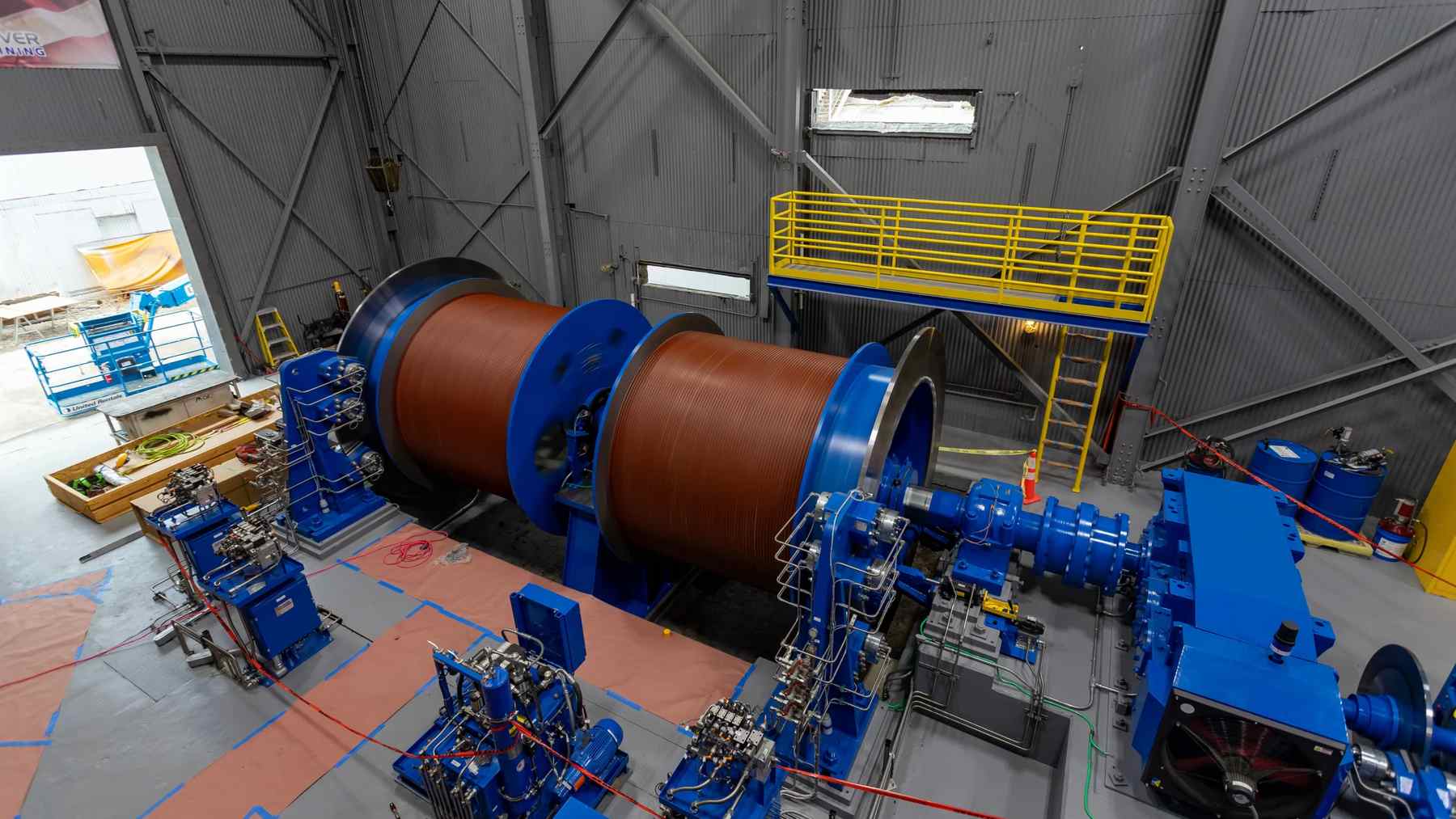
Before that, it was a monster of a silver mine. The same report says the Sunshine produced 364,893,421 ounces of silver through 2001. Now its owner, Sunshine Silver Mining & Refining, wants it running again, and in May it finished installing and commissioning a new main hoist on the Jewell Shaft, the mine’s main way in.
The machine it replaced was a Nordberg double-drum hoist built in 1916, according to the Shoshone News-Press. That’s 110 years old, which makes it older than the Golden Gate Bridge by a couple of decades.
So what does a hoist actually do?
If you’ve ever wondered what’s humming away at the top of an old elevator shaft, you’re most of the way there. A hoist is a big powered drum in a building at the surface, and it winds and unwinds the steel rope that raises and lowers cages full of people and skips full of rock. Mines also count depth in “levels,” and at the Sunshine each one’s named for how many feet it sits below the top of the Jewell Shaft. So the 3100 Level is about 3,100 feet down.
So what did Sunshine put in?
The new main hoist comes from Siemag Tecberg, a German company that builds mine hoists. SLR, the consulting firm that wrote the technical report, lists it as a 1,500-horsepower machine with two drums, each 8.5 feet across. It’s rated to move its rope at 2,000 feet per minute, which works out to a bit under 23 mph, straight up.
The double drum’s a pretty old trick, and a smart one. Each drum carries its own rope and skip, wound in opposite directions, so one skip comes up while the other goes down. Because they hang in balance, the motor’s mostly lifting rock instead of hauling the weight of two steel buckets every trip. At the Sunshine, those are kibble-style skips that hold 4 tons each, and each one’s got a small trailer cage hooked to it.
The Shoshone News-Press reports the package also includes a secondary egress hoist (basically a dedicated way to get people out), and Nick Furlin, the mine’s operations and technical services manager, told the paper it was a multi-million-dollar job. Sunshine hasn’t published an exact figure. I couldn’t find a weight for the new hoist in anything the company or SLR has put out either, which is a shame, because I’d love to know what it took to get it into the hoist room.
Nordberg isn’t completely gone from the Jewell, by the way. SLR’s report lists a 1968 Nordberg single-drum service hoist known as the Chippy, which runs a 36-person conveyance made of four linked cabs.
Then there’s capacity, which comes in two flavors depending on who you ask. Sunshine’s second-quarter results say the new hoist can handle 3,500 tons a day from the 4,000 Level. SLR puts the shaft’s hoisting capacity at about 1,600 tons a day, assuming three shifts and leaving time for service trips and maintenance.
My read is that they’re measuring different things. The first is what the machine can do, and the second is what a real working day looks like. Either way, the mine plan in SLR’s report only calls for about 1,000 tons a day.
Why does one shaft matter so much?
Because when SLR wrote its report in March, the Jewell was the only way in or out of the mine’s underground workings. The shaft drops 4,088 feet and has four compartments: two for the skips and their cages, another cage compartment and one for services. There’s no manway, which is mining talk for a ladder route, so you can’t just climb out.
The bottom of it’s underwater, too. SLR says the Jewell is flooded to about the 3400 Level, and the water’s being held there. In its October 19 update, Sunshine said the shaft is in use as deep as the 3100 Level. In a shaft with no ladder, a dedicated escape hoist is basically the backup plan, so I’m glad to see one in the package.
Getting people out of the Sunshine fast isn’t an abstract worry, either. On May 2, 1972, a fire broke out underground at about 11:40 a.m., and 91 of the 173 men on shift died from carbon monoxide, according to the Mine Safety and Health Administration. Two miners were brought out alive a week later.
The US Bureau of Mines’ final report, issued in February 1973, listed the death of the hoistman on the mine’s No. 10 Shaft, and the failure to fully use that shaft’s hoists, among the problems it found. MSHA credits the disaster with leading to the Mine Safety and Health Act of 1977, which the agency still works under today.
So when does the Sunshine reopen?
Not yet, and not on the Jewell alone. Sunshine says it’s building another portal on the Sterling Ramp, which serves the mine’s Upper Country, and expects to finish it in the first half of 2027. It’s also started upgrading the Silver Summit Shaft, a roughly 5,400-foot shaft that’s supposed to become a second shaft route in and out, with that work running into early 2028.
We’ve seen a few of these old-mine revivals lately. Glencore sank a new shaft from the bottom of a mine it closed in 2009 in Ontario, for one. The Sunshine’s arguably the oddest of the bunch, because the shafts it needs are already there. The job’s mostly getting them working again.
Sunshine’s feasibility study is due in the second quarter of 2027, and the company says it’s aiming to be producing silver again in late 2028. I’d treat that as a target. It depends on the study and on a construction decision that hasn’t been made yet. Still, Sunshine had $288.7 million in cash and cash equivalents on June 30, up from $31.0 million at the end of 2025, which should keep the lights on in the hoist room for a while.
The Shoshone News-Press says the site employs about 150 people, 110 of them trained for underground work, and current plans call for a mine life of about 24 years. “We hope to continue to add to that life span,” Furlin told the paper.
There’s antimony in the picture too, a metal you’ll find in things like flame retardants and lead-acid batteries. The Sunshine’s concentrate used to go through an antimony plant that stripped out antimony and arsenic, but SLR says that plant’s been demolished. Sunshine is now studying a new one that it says could make up to 34.5 million pounds of antimony a year, enough for up to 60% of what the US uses in a year if it gets there, based on a December 2025 Argus Media assessment. Admittedly, that’s a lot of ifs for one paragraph.
Right now, the new hoist’s day job is supporting rehab and drilling. Sunshine says infill drilling has moved down the shaft to three new drill stations off the Jewell, and on October 19 it said the feasibility study was still on track for the second quarter of 2027.
 An 89-year-old lock gate on the upper Mississippi was lifted out by a 500-ton floating crane and replaced in a 12-hour closure, one of eight steel leaves up to 33 feet tall swapped in four closures at a lock that passes close to 5,000 barges a yearIndustry · 3 hours ago
 A 29.5-foot-wide spaceship fell back from orbit over northern Mexico and South Texas, flew in flat until the last moment, flipped upright on three engines and was caught by a launch tower’s two arms, the first time a tower has caught the top half of this rocketIndustry · 10 hours ago
 A 15.7-foot government drone boat sat on Lake Erie with one foot of hull above the water, no radar reflector and its cameras off until a 45-foot cruiser hit it and wound it into a propeller pod, and federal investigators now want the Coast Guard to write rules for boats with nobody aboardIndustry · 1 day ago