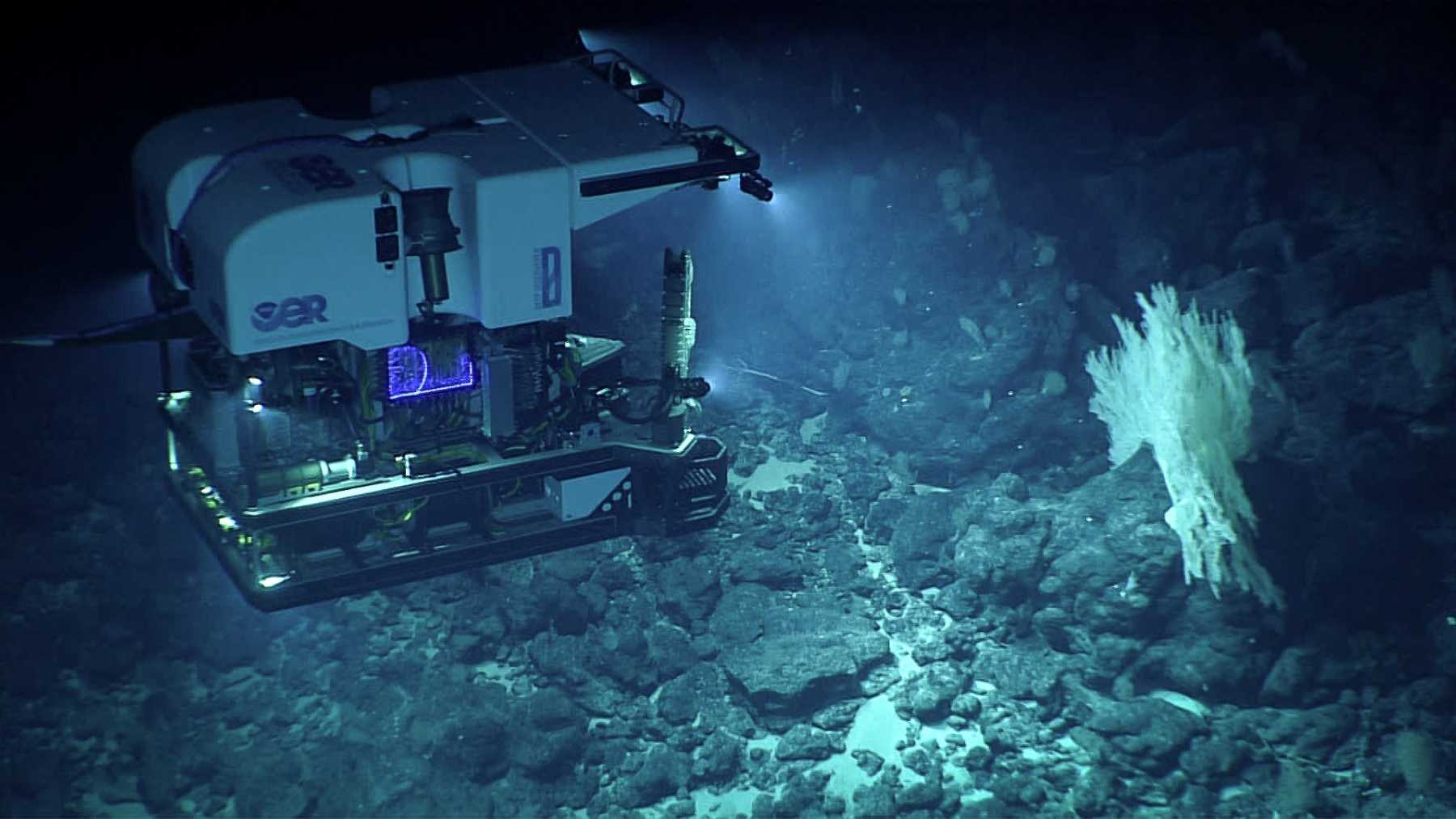

The underwater robots that live on the seabed and recharge without a ship have mostly shown up here as heavy industrial hardware. Saipem’s Hydrone-R weighs about as much as a pickup truck and recently clocked a residency record off Norway. Saab’s Sabertooth is roughly 12 feet long and turns valves a kilometer down for oil majors. Big machines, big budgets, big oil-and-gas jobs.
There is a much smaller one doing the same basic trick, and it spends most of its time checking on fish.
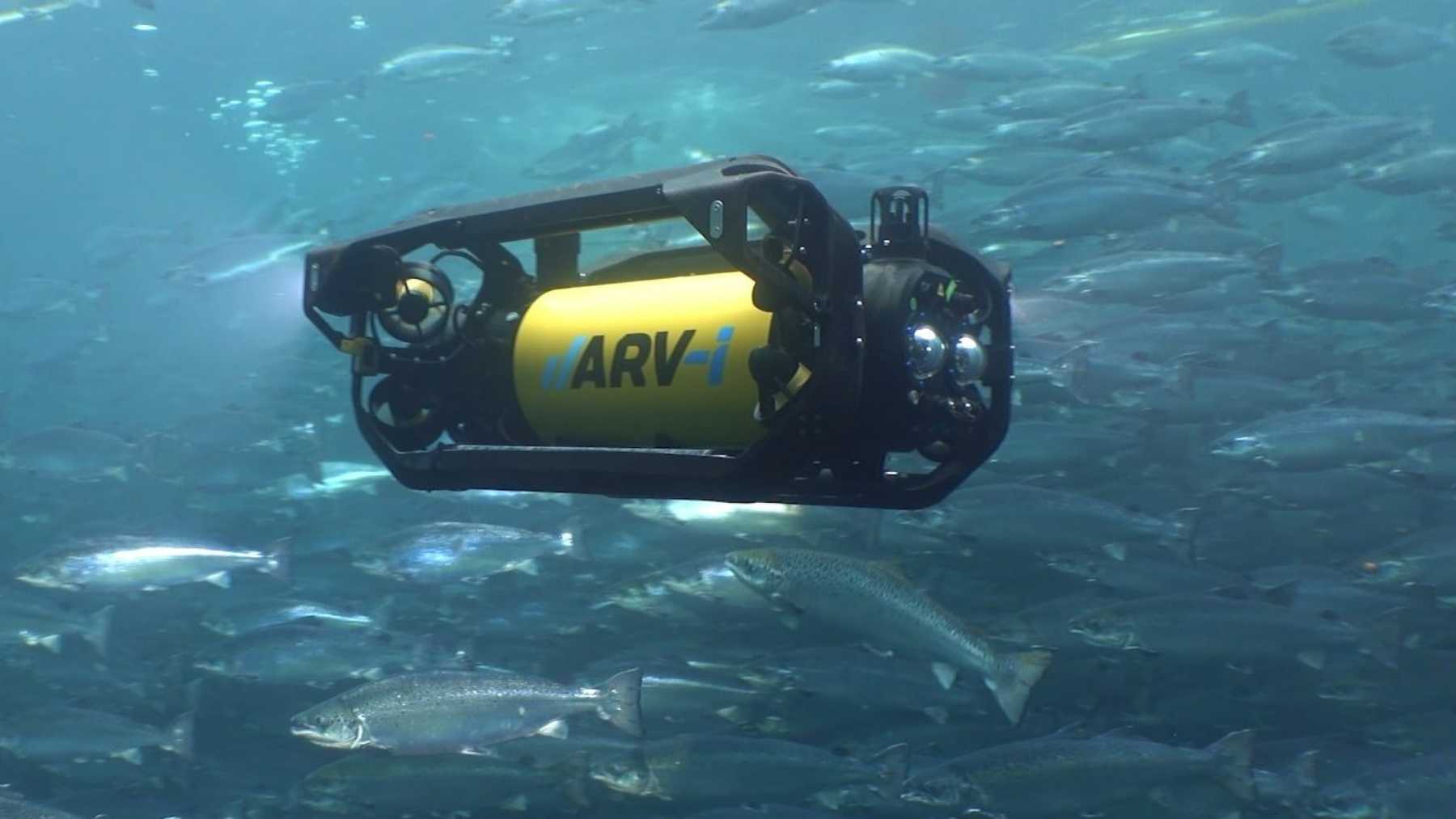
It is called the ARV-i, and it weighs 25 kilograms, light enough to ship to a job site as ordinary air freight. It was built by Boxfish Research in New Zealand and Transmark Subsea in Norway, and it can sit underwater for up to 12 months at a stretch. It swims out to inspect something, then finds its own way back to a dock on the seabed to recharge wirelessly and hand over its footage. No ship overhead. No diver in the water. No cable to the surface.
None of that is new, exactly. The ARV-i was shown off at the Ocean Business trade fair in Southampton back in October 2021, and it has been working in Norwegian waters ever since. What makes it worth a second look now, while the record-setting machines get the headlines, is that it is the cheap, small, deeply unglamorous end of the same idea.
Its day job is a fish farm
Fish farming is quietly moving further offshore, into rougher and deeper water where there is more room and fewer neighbors to annoy. That also makes the pens harder and riskier to reach, and somebody still has to go look at the fish.
That somebody is increasingly a robot. In a salmon farm off the west coast of Norway, the ARV-i moves through the site with stereoscopic cameras and works out the size and mass of individual fish, tracks feeding and growth, and flags anything that looks off. The data tells the farm manager when the fish are healthy and when they are big enough to harvest.
Getting a drone to do that near a salmon cage is harder than it sounds. The vehicle has to move around a flexible net full of fish without snagging on it, often in murky water. Boxfish says the ARV-i handles the navigation with a mix of machine-vision cameras and acoustic sensors: a USBL system to fix its position and a Doppler velocity log to track how it moves over the ground.
The hardware is built around seeing things clearly. Up to six machine-vision cameras, one 4K navigation camera, and 17,000 lumens of light for water where the sun gave up a long way up. Eight thrusters keep it steady enough to park in one spot and circle a target.
It docks itself to charge, sometimes off wave power
The residency part is the whole point. Instead of getting winched back onto a boat every few days, the ARV-i lives on a docking station bolted to the seafloor. When its battery runs low or its task is done, it finds the dock on its own, settles in, and recharges through the water with no physical plug. Power and data pass wirelessly between two transducers.
That wireless connection is the piece Transmark spent years on. The company has said the ARV-i was the first vehicle to use its 150-watt Maelstrom connector, which roughly tripled the power it could push across the gap compared with earlier hardware. Contactless charging matters underwater because a wet electrical plug is exactly the kind of thing that fails on the seabed.
Then there is the question of where the dock gets its own electricity. Usually it is a cable to shore. In one demonstration off Orkney, in northern Scotland, the answer was the ocean itself.
The ARV-i and its dock took part in a project called Renewables for Subsea Power, run over 2023 and 2024. The dock drew its charge from a subsea battery, Verlume’s Halo, which was topped up by a wave-energy converter floating on the surface, Mocean Energy’s Blue X. No umbilical to land. A robot on the seabed, charging off a battery, fed by the waves overhead.
The project was a roughly two-million-pound demonstrator backed by names like TotalEnergies and Shell, and it was making a blunt point. The cables that normally power offshore kit are expensive, slow to install, and carbon-heavy, and there may be a cleaner way to keep a resident robot alive.
Why the robot ended up fully autonomous
The path to full autonomy came out of a problem, not a plan. Early on, the team wanted to keep a human loosely in control of the ARV-i while it worked the salmon pens. Acoustic control was a poor fit near the cages, so they tried free-space optical modems, essentially sending commands through the water on beams of light.
That worked until the sun came out. In Boxfish’s own account, the optical link turned unreliable in Norwegian sunlight, which is not a sentence you expect to read about an underwater robot. Sunshine, of all things, was scrambling the signal.
So they gave up on steering it remotely and let it steer itself. The ARV-i went fully autonomous, running pre-programmed missions plus onboard AI and machine vision to find assets, dodge obstacles, and plan its own path. The failure of one control method is the reason the whole vehicle got smarter.
The small, cheap end of a crowded seabed
Living on the seabed and charging without a ship is not a rare trick anymore. The Norwegian oil field Johan Sverdrup has had a resident Saab Sabertooth since 2022. Saipem’s Hydrone-R has racked up hundreds of days down there. A Canadian company’s hydrogen-powered Envoy can grab a cable junction and watch it for more than two weeks on a single fuel load. Most of those machines are large, expensive, and pointed at oil, gas, or defense work.
The ARV-i is aiming somewhere else. It is small, comparatively cheap, and its natural customers are fish farms, port operators, and offshore-wind sites that want routine eyes underwater without chartering a support vessel every time. A crewed inspection boat can run well into six figures a day, so a robot that mostly stays put and does the boring, repetitive checks has an obvious pitch.
It helps that the thing is portable. At 25 kilograms it can be flown to a site as normal air freight rather than riding out on a dedicated vessel, which is not something you can say about a drone the weight of a pickup.
This is a modest machine, and that is the whole point. Boxfish is a small outfit, the development leaned partly on grant money from Innovation Norway, and the ARV-i is not setting endurance records or turning wellhead valves a kilometer down. It does the smaller, commercial version of a job the flashier machines do in harsher conditions.
The interesting thing about the ARV-i is not a number on a spec sheet. It is that a 25-kilo robot from a small company has been quietly doing the resident-drone routine, swim out, look around, dock, charge, repeat, in Norwegian fish farms for years, while the attention goes to the machines breaking records.
If uncrewed inspection keeps spreading into offshore wind and aquaculture the way it has been spreading through oil and gas, the useful robots may end up looking less like the pickup-sized record holders and more like this one: cheap, light, and content to spend a year underwater sizing up salmon.