- 1 MONTH AGO · MILITARYAn 18,750-ton submarine, the biggest America ever built, came home for the last time after firing in the strikes on Iran, and the week she tied up the Navy signed for nine attack submarines that haul 40 cruise missiles apiece, four of them to match the 154 she carried alone
- 4 WEEKS AGO · MILITARYA 24-foot American drone boat that helped pull two Army helicopter pilots out of the water off Oman and drove into an Iranian naval base a month later was launched off a Greek navy ship this month, and Athens has asked to buy at least 30 of them
- 3 WEEKS AGO · MILITARYA 6,000-pound drone helicopter the Navy was trucking to the Arizona boneyard is flying again over Utah with Army sensors bolted on, after the Army asked for four of them, two years after the Navy decided a drone a hundredth of the price could do its job
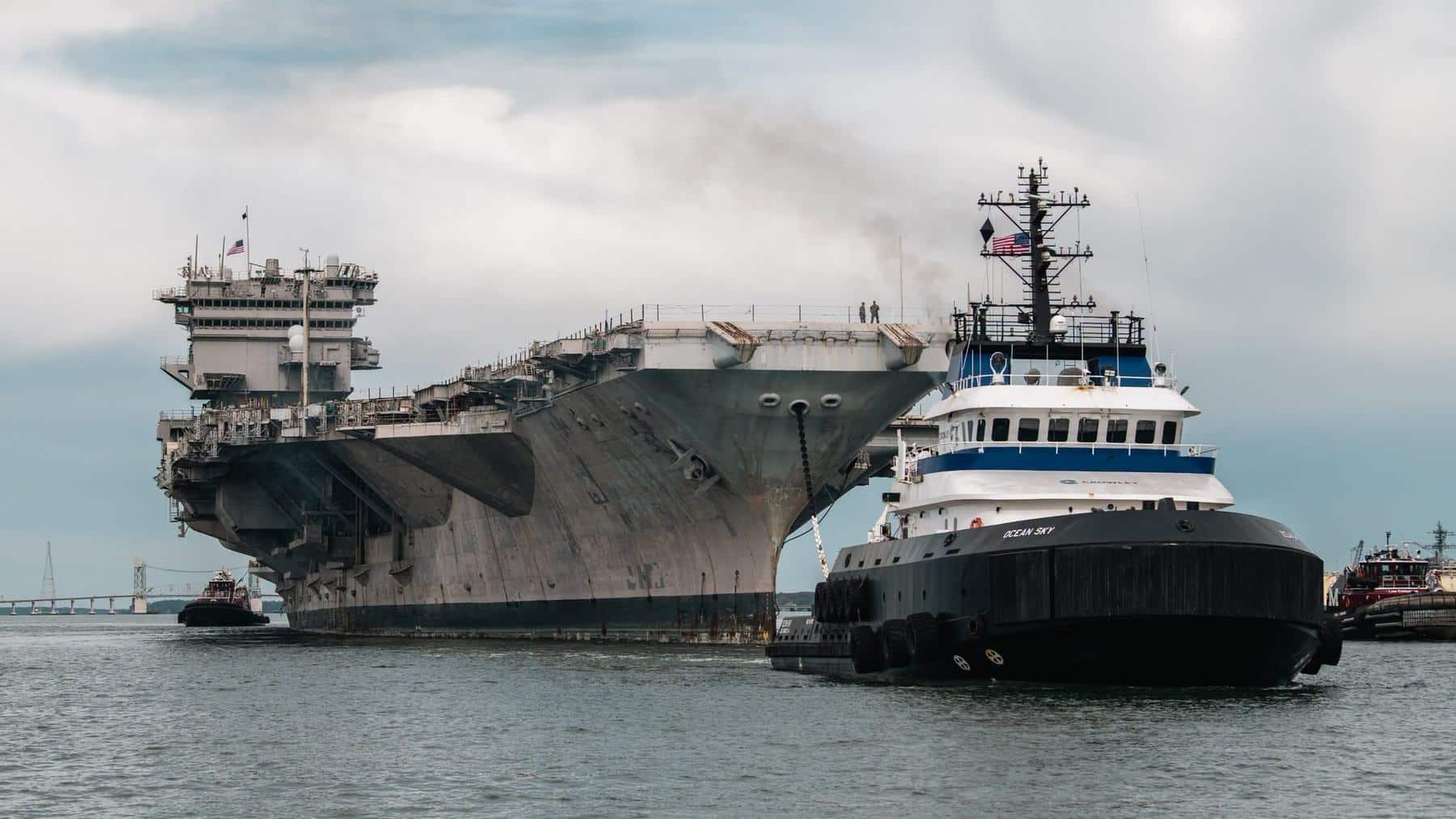
- 1 WEEK AGO · MILITARYA 100,000-ton nuclear carrier left her Pacific home port for the last time, rounded South America and tied up in Virginia to be retired, and she is still in commission and landing jets months later because her replacement is late, with her reactors to be emptied once she retires in March
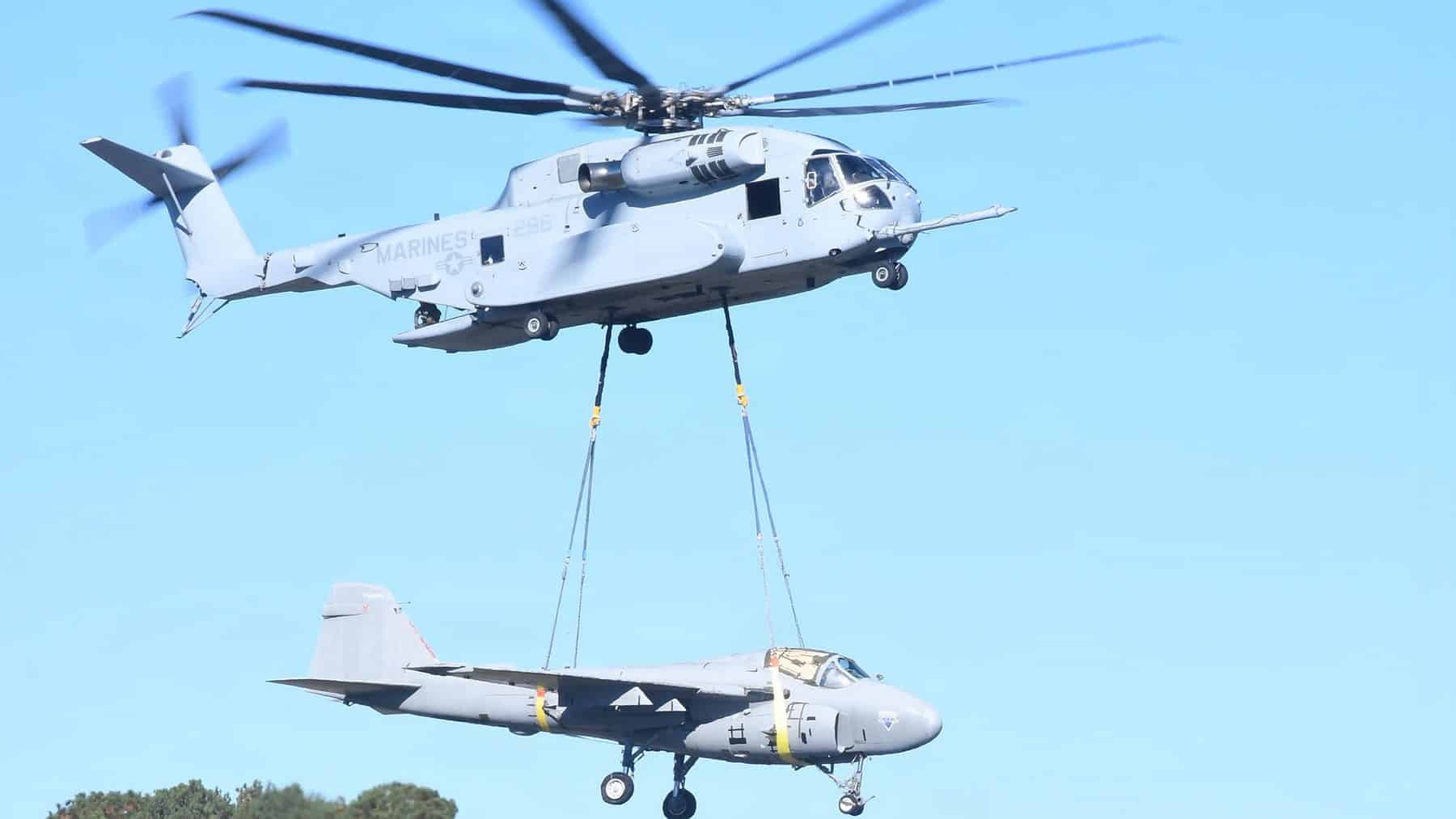
- TODAY · THIS ARTICLEA 36,000-pound-capacity heavy-lift helicopter carried a retired Navy attack jet about 18 miles on a sling, partly over the Potomac River, from the Virginia test base where the airframe stayed after the type left service in 1997 to a Marine airfield that plans to use it for training
The CH-53K King Stallion has developed a bit of a habit of carrying things helicopters really aren’t built to carry. Over the past few years, the Marine Corps’ heavy-lift helicopter has hauled a non-flying F-35C, the very first F-35B ever built and, at one point, another CH-53K.
Now you can add a retired Navy A-6 Intruder to that list. On November 18, a CH-53K from Marine Heavy Helicopter Squadron 461, the “Ironhorse” squadron of the 2nd Marine Aircraft Wing, picked the old attack jet up at Naval Support Facility Dahlgren in Virginia and flew it about 18 miles to Marine Corps Air Facility Quantico, according to The Aviationist. Part of that route ran over the Potomac River.
I’ll admit it’s pretty delightful. The A-6 entered fleet service in 1963, according to the Naval History and Heritage Command, and this one made its latest move hanging under a helicopter like a package on its way to a new address.
So what’s an external load?
An external load is basically anything a helicopter carries hanging underneath it instead of inside the cabin. Ground crews rig the cargo with slings, chains or straps, clip all of that onto a hook on the helicopter’s belly, and the aircraft lifts it straight up off the ground.
That’s how the A-6 traveled. At Dahlgren, logistics Marines from the 2nd Distribution Support Battalion attached chains and straps to the jet and got the static line ready, and eight of them show up on the ground in the lift photos. Three more Marines from the same battalion rode inside the helicopter, which, according to The Aviationist, most likely staged out of Stafford Regional Airport before the lift. If you’ve never seen sling work up close, a static line in this kind of job is generally there to bleed off the static electricity a big rotor builds up in flight. That way nobody on the ground gets zapped when they reach for the hook.
Jets are awkward things to hang under a helicopter
A pallet of supplies doesn’t do much more than dangle. A jet is a different animal, because its wings are shaped to make lift, and they don’t stop doing that because the engines are off. Once the helicopter picks up forward speed, air flows over those wings, and the load can start to rise, swing or twist on the end of its rigging. The pilots have to manage that the whole way.
NAVAIR made the same point about its own heavy-lift tests this spring, when it said engineers were studying flight characteristics and load dynamics with an aircraft under the hook. I don’t have any flight data from the A-6 trip, and the Marines haven’t published airspeeds or rigging diagrams, so I can’t tell you how well the Intruder behaved on its way north.
Then there’s the weight, and honestly it’s the part nobody can pin down. NAVAIR gives the CH-53K a 36,000-pound external lift envelope, but nobody’s said what this particular airframe weighed on the day, or whether it still had its engines. So I wouldn’t guess at the load that actually went over the Potomac.
Dahlgren is where the Navy kept this jet after the A-6 left service in 1997. NSF Dahlgren says the airframe stayed behind to support test operations, though it hasn’t gone into what those were. If you’ve read our piece on a museum submarine sitting on blocks in a drained Wisconsin dry dock, or the one on the 453-foot submarine that’s been the Navy’s only special warfare support boat for 21 years, you’ll know the military tends to hang on to old hardware a lot longer than you’d expect.
The A-6 joins a pretty odd list
The CH-53K’s track record with aircraft under the hook goes back a few years now.
Frankly, I’m most impressed by the 2024 flight. Holding a helicopter steady enough to take fuel from a tanker while an F-35C hangs below it sounds like a pretty stressful afternoon. The April 2026 lift, with a stripped-down CH-53K development airframe of about 28,000 pounds, was a different kind of test. It hung the load from two attachment points instead of one, and NAVAIR used it to work out how the Marines would recover a downed King Stallion. That airframe is now headed to Marine Heavy Helicopter Training Squadron 302 in New River, North Carolina, as a ground trainer.
Next to a 552-mile trip with an F-35B, an 18-mile hop is arguably pretty tame.
So why not use a truck?
Marine Corps Base Quantico described the flight as external lift training for HMH-461, which basically means the move itself was the practice. A real airframe that genuinely needs to go somewhere is probably more useful to a heavy-lift squadron than yet another practice load.
An official Marine Corps post on X dated November 21 labeled the jet an EA-6B Prowler, according to The Aviationist, while NSF Dahlgren and the photos point to an A-6 Intruder, and the easiest way to tell them apart is the Prowler’s longer four-seat cockpit and the bulbous fairing on top of its tail.
What the Marines want the A-6 for
The 2nd Marine Aircraft Wing says the jet went to Quantico “for further use in training,” and that’s about as specific as anyone’s gotten. The Aviationist points out that MCAF Quantico is home to HMX-1, the presidential helicopter squadron, and regularly runs firefighting and helicopter evacuation exercises. But nobody’s said which of those, if any, the A-6 is meant for.
The Aviationist also thinks the in-flight photos suggest another helicopter may have flown along with the CH-53K. That’s the site’s read of the pictures, and the Marines haven’t confirmed it.
HMH-461’s CH-53K set the A-6 down at Marine Corps Air Facility Quantico on November 18, and The Aviationist ran photos of the lift, taken by Lance Cpl. Perri Wood, on November 23.
 A 17.7-foot drone catamaran that carries its own interceptor drone and an underwater robot on deck joined a Baltic capital’s parade for the first time, beside a carbon-and-aramid strike drone rated for 53 mph and about 560 miles, both now in serial productionMilitary · 2 hours ago
 A nearly 10,000-pound stash of degraded primer explosive at an Iowa ammunition plant is now set to be blown up Wednesday, even after a federal appeals court froze its permit, because government lawyers say it could go off on its own once the cold sets inMilitary · 1 day ago
 A jet drone about twice the size of the Air Force’s first robot wingmen stands on its tail to take off and land with no runway, using a fighter engine whose nozzle swivels to steer it, and the first full-scale prototype has been shipped to Kansas to be tested hanging from a craneMilitary · 2 days ago