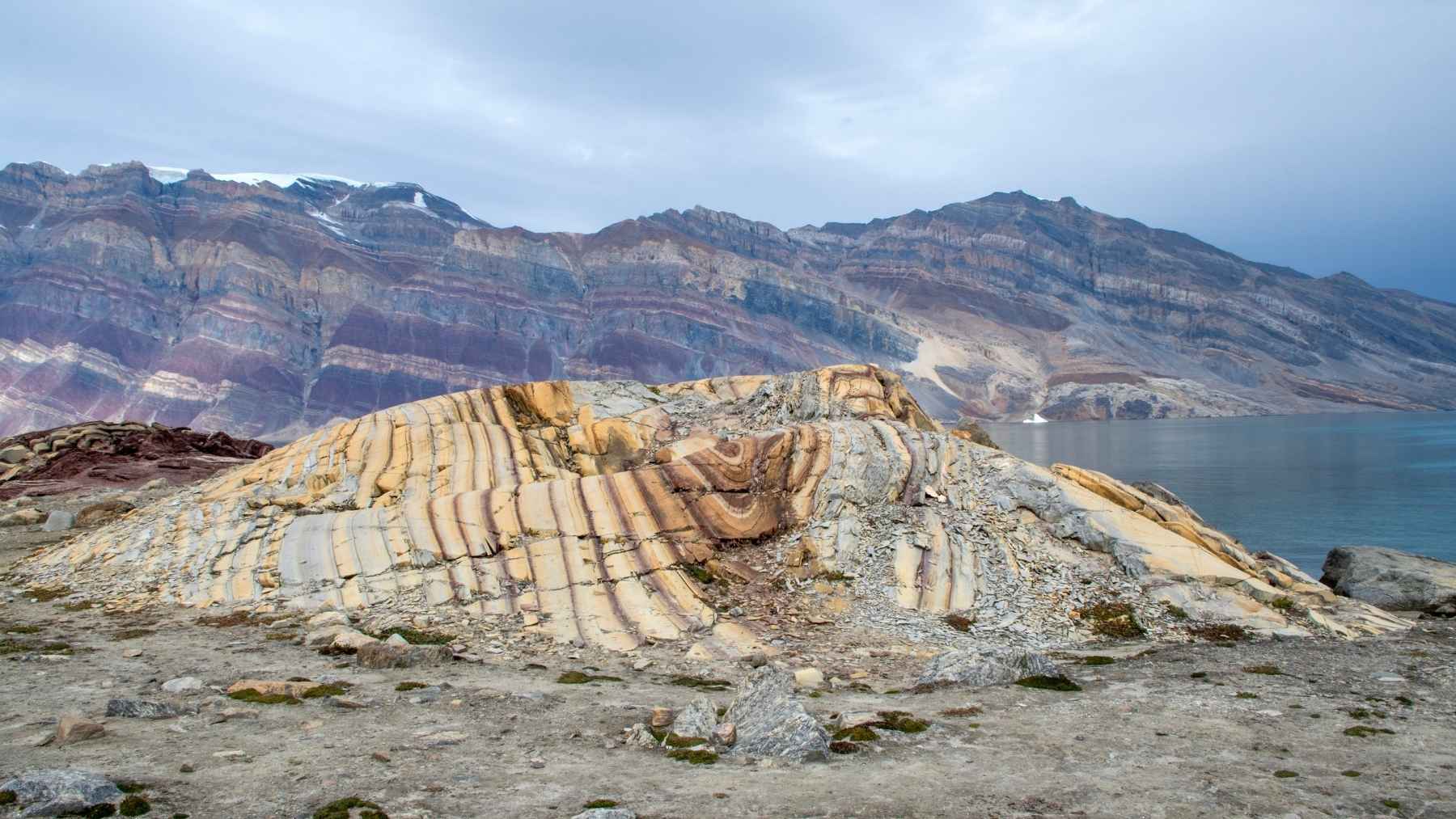

For most of the past year, the story out of Washington about Greenland has been about the island itself: who owns it, who controls the Arctic, whether the place is even for sale. The island was never really the point. What sits under it is.
On May 21, a U.S. metals company called REalloys signed a definitive 15-year deal for a slice of one of the largest heavy rare earth deposits on the planet, the Tanbreez project in southern Greenland. The agreement, struck with Critical Metals Corp (NASDAQ: CRML), covers 15% of the project’s Phase 1 output, and OilPrice.com reported it the same week. On paper it reads like a routine offtake contract. In practice it’s about two specific elements, dysprosium and terbium, and the fact that almost none of the world’s supply of either gets processed anywhere outside China.
Those two elements are what keep a permanent magnet from losing its magnetism when it gets hot. That magnet sits in an F-35’s actuators, a Tomahawk’s guidance fin, a drone’s motor, a radar array, and, as it happens, the traction motor in your neighbor’s electric Mustang. There’s also a deadline attached. A Pentagon rule barring Chinese-origin magnet material from U.S. weapons takes effect on January 1, 2027, which is roughly seven months from now.
What REalloys actually locked up in Greenland
Under the agreement, REalloys gets 15% of monthly Phase 1 production from Tanbreez for an initial 15-year term. What makes Tanbreez worth chasing isn’t only its size, although it has that. Most rare earth deposits around the world are dominated by the lighter, cheaper elements. Tanbreez is the opposite. Critical Metals Corp’s Tanbreez project profile runs roughly 27% heavy rare earths, and the heavies are exactly where dysprosium and terbium live. The deposit is already fully permitted, with Critical Metals holding a controlling 92.5% stake after Greenland signed off on the acquisition earlier this year.
For REalloys, this turns a maybe into a contract. The company had previously listed Greenland among a set of non-binding feedstock leads alongside Kazakhstan, Brazil and North America. The Tanbreez agreement is the binding version of that, a named, permitted, 15-year source rather than a line on a roadmap.
Why dysprosium and terbium are the whole argument
Neodymium-iron-boron (NdFeB) magnets are the strongest commercial permanent magnets made, and they turn up in basically anything that converts electricity into motion at scale. Their weakness is heat. Push an NdFeB magnet to high temperature and it starts to lose its field, which is a problem if it’s bolted next to a jet engine, packed inside a missile, or spinning in an EV motor under hard acceleration. The fix is doping the magnet with dysprosium and terbium, which hold the magnetism together when things get hot. There’s no clean substitute.
That’s the catch. By most government and industry estimates, China mines around 70% of the world’s rare earths and processes close to 90% of them, and for the heavy elements specifically its grip on metallization, the step that turns oxide into usable metal, is tighter still. The U.S. Government Accountability Office has noted the country imported more than 95% of the rare earths it consumed between 2019 and 2022.
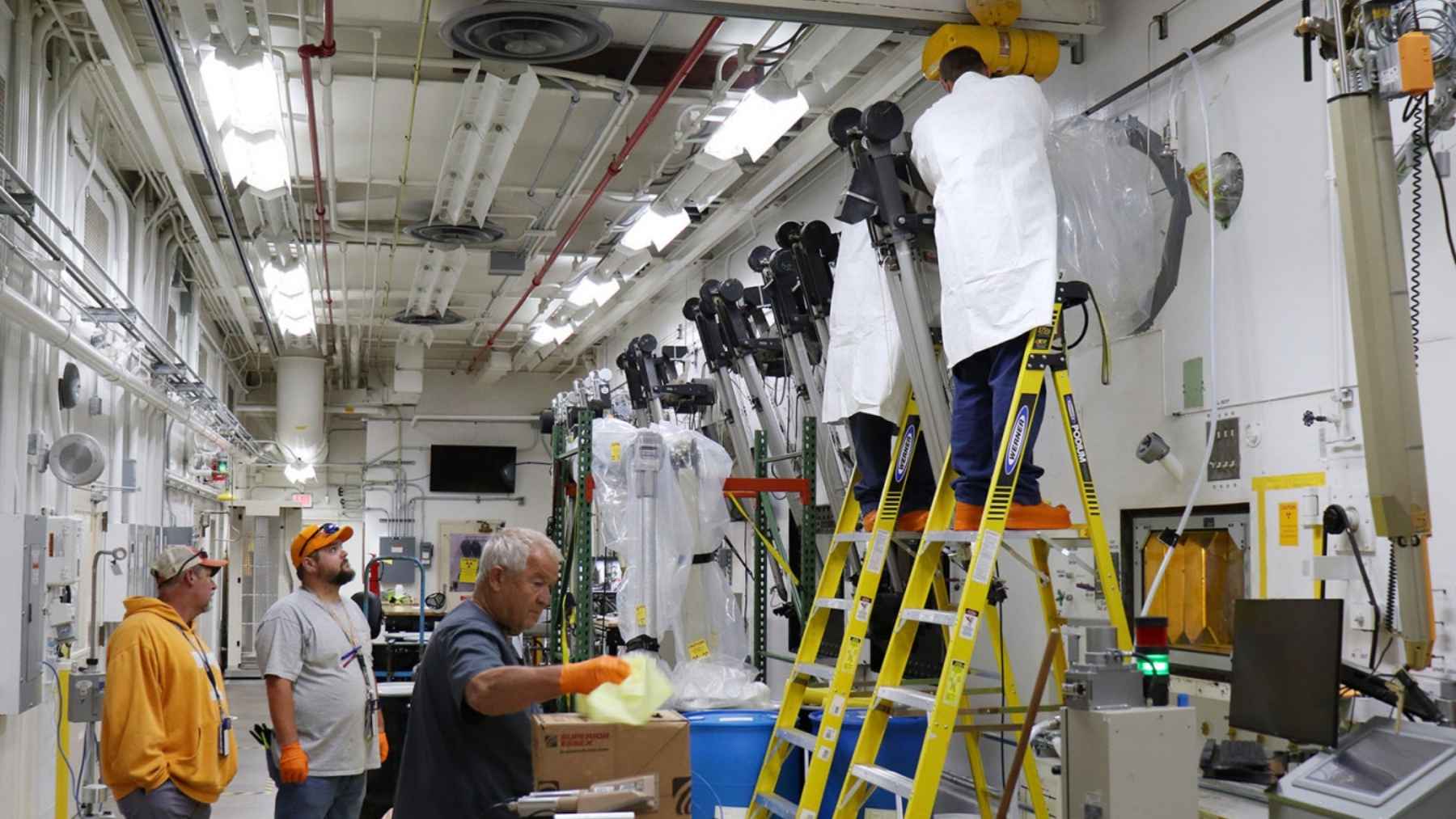
REalloys’ answer sits in Euclid, Ohio, where the company runs what it describes as one of the only operations in North America converting heavy rare earth oxides into defense-grade metal and alloy. Digging ore out of the ground was never the hard part. Turning it into qualified metal, and eventually into finished NdFeB magnets, is what China spent two decades cornering. REalloys is targeting magnet manufacturing in Ohio by 2029, which would close the loop from processed material to finished component on U.S. soil.
The seven-month clock
The reason any of this is moving now is a rule with a hard date on it. Starting January 1, 2027, defense contractors are barred from putting Chinese-origin rare earth magnet material into U.S. weapons systems, and the restriction reaches all the way back to the mine, covering anything refined, separated or metallized in China, Russia, Iran or North Korea. The rule has roots going back to 2018 and was tightened through later defense authorization acts. The 2027 phase is the one that extends the ban from finished magnets to the underlying materials. Enforcement isn’t cosmetic either, since non-compliant contractors can be disqualified from programs and the Defense Department has signaled checks down to X-ray fluorescence testing.
The problem is the industry isn’t ready. The Financial Times reported in mid-May that defense suppliers are asking the Trump administration to push the deadline back, worried they can’t source enough compliant material in time. Lockheed Martin and Northrop Grumman have been overhauling their magnet supply chains and forcing traceability requirements down through their suppliers. The Pentagon’s logistics arm is buying what it can in the meantime, and on May 26 it awarded E-VAC Magnetics and Noveon Magnetics roughly $26 million combined for NdFeB magnet blocks. It’s also leaning on bigger bets, like a $96 million oxide-supply deal with Australia’s Lynas and a $400 million equity stake in MP Materials, both built to stand up a non-Chinese chain for the defense base and the auto industry at the same time, as we covered in the Pentagon’s Lynas and MP Materials deals.
REalloys is positioned squarely in that lane, and its bench reads like a Pentagon reunion. Its advisory board is chaired by Joe Kasper, a former Chief of Staff to the U.S. Secretary of Defense. Its board chair is Stephen duMont, president of GM Defense. And General Jack Keane, a former Vice Chief of Staff of the Army, sits on the board. Kasper’s framing, in remarks to OilPrice, is blunt: a supply chain you don’t process and manufacture at home isn’t really your supply chain at all.
The numbers behind the scramble
So how much of this material does the U.S. military actually need? The Pentagon’s own often-cited figure puts about 920 pounds of rare-earth material in a single F-35, with an Arleigh Burke destroyer at 5,200 pounds and a Virginia-class submarine at 9,200, per Air & Space Forces Magazine. That 920-pound number deserves a small asterisk. A 2026 engineering audit by Adamas Intelligence argues the real figure is closer to 50 pounds of samarium-cobalt per jet, and the GAO has pointed out that DoD’s total rare-earth demand is under 0.1% of global consumption. Either way, the headline isn’t the tonnage. It’s that the specific high-temperature grades, samarium-cobalt and dysprosium/terbium-doped NdFeB, are the ones with no domestic supply, and the military burns through them faster than it can replace them.
That last part stopped being theoretical. Johns Hopkins economists Steve Hanke and Jeffrey Weng told Fortune that the U.S. has already spent down a large share of key precision-weapons stocks across Iran and Ukraine: by their estimate, around 45% of its Precision Strike Missile inventory in Iran alone, close to half its THAAD interceptors, and roughly 30% of its Tomahawks. Replenishing just four major systems, they figure, could take five to ten metric tons of finished defense-grade magnets, more than 95% of which currently trace back to China. The Defense Logistics Agency’s magnet stockpile, by various accounts, covers only about two months of wartime demand.
The part that should worry your driveway too
This is where it stops being purely a defense story. The magnet that steers a missile and the magnet that drives your EV are, chemically, close cousins. The traction motor in a 2026 Mustang Mach-E carries something like one to three kilograms of NdPr-iron-boron permanent magnet, with maybe 50 to 200 grams of dysprosium and terbium in it to stop it demagnetizing when you floor the accelerator. The F-150 Lightning, the Tesla Model Y and every GM Ultium-based EV lean on the same chemistry, a point we dug into in how the same magnets power both EVs and U.S. munitions. Almost none of it is processed in the U.S. at commercial scale.
The civilian side is arguably more exposed than the military one, because it isn’t sitting behind any stockpile at all. When China tightened rare-earth export licensing in 2025, automakers in Europe and India came within weeks of idling plants. So when a U.S. magnet-maker locks up dysprosium and terbium out of Greenland, it isn’t only the Pentagon that has a stake in whether the Ohio line actually gets built. Every automaker betting its next lineup on permanent-magnet motors is downstream of the same pipe.
What it does and doesn’t fix
None of this is finished. REalloys still has to build, its Phase Two scale-up and the Ohio magnet line aren’t running yet, with magnet manufacturing penciled in for 2029, and 15% of one Greenland project’s first phase doesn’t on its own close a gap measured in thousands of tons a year. But it’s a signed, 15-year claim on two of the few non-Chinese-processable elements the entire system bottlenecks on, held by a company already turning out defense-grade metal today. With the ban roughly seven months out and contractors still asking for more time, a permitted, non-Chinese source of dysprosium and terbium is worth a good deal more than another roadmap. The island was never for sale. What’s under it, apparently, was.