
The pitch for small modular reactors hasn’t changed in fifteen years. Build the reactor in a factory instead of a field, keep it under 300 megawatts, ship it to the site in pieces, and skip the decade-long construction saga that turns big nuclear plants into financial horror stories. Smaller, faster, cheaper, repeatable.
China is running the cleanest test of that pitch anyone has managed to set up. So far it isn’t going the way the brochure said.
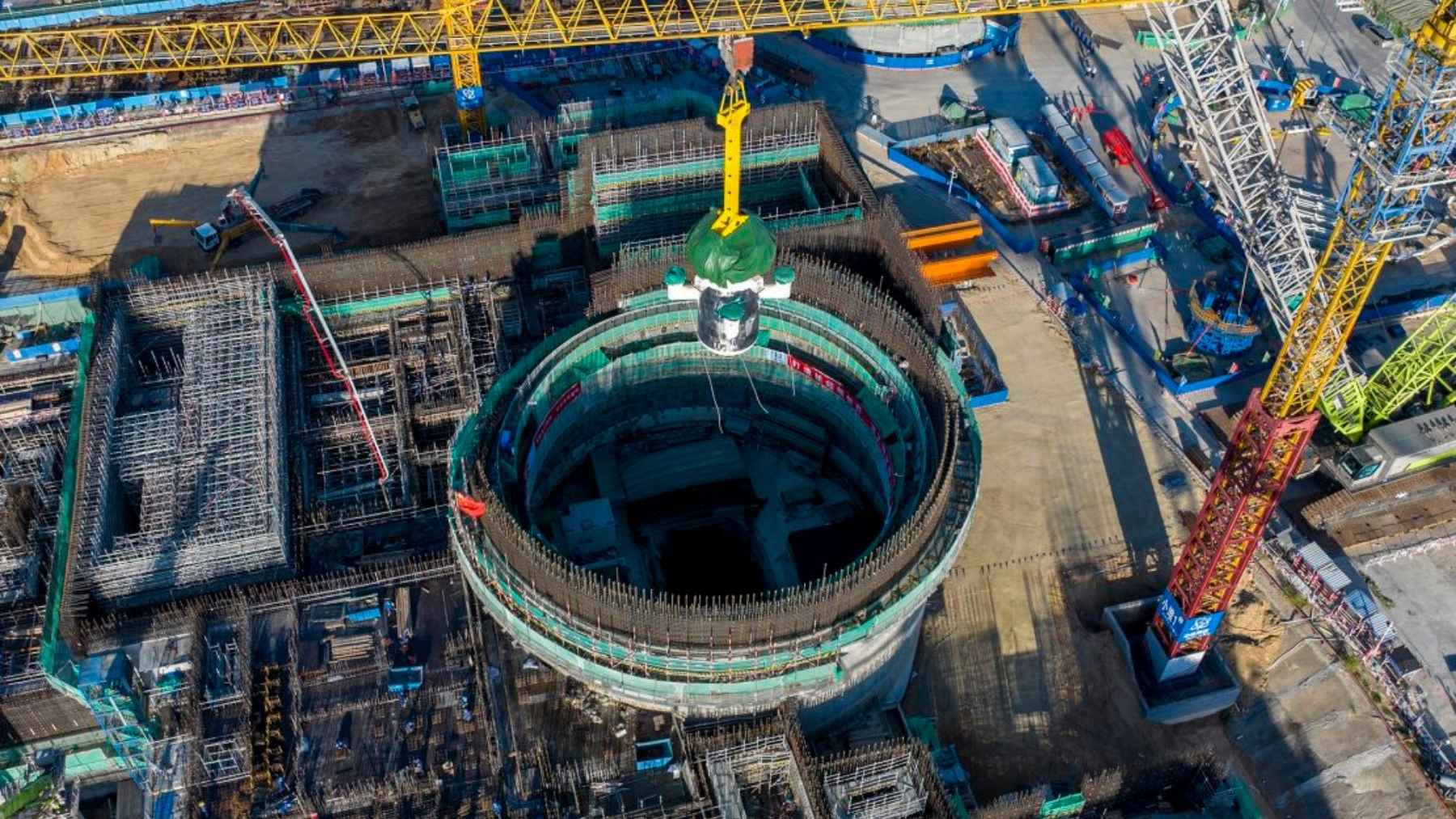
On the coast at Changjiang, on the island province of Hainan, two reactors went into the ground 104 days apart. One is Linglong One, the 125-megawatt machine China has spent a decade calling the world’s first commercial land-based small modular reactor. The other is Changjiang Unit 3, a full-size Hualong One rated at exactly ten times the output, net for net, the kind of machine small reactors are supposed to make obsolete.
The big one poured concrete first, on March 31, 2021. The small one followed on July 13.
The big one went critical last week. The small one is still in testing.
The reactor next door was poured first and lit first
CNNC says Changjiang 3 reached first criticality at 18:00 local time on July 10, its first controlled chain reaction, which is the moment a construction site turns into a reactor. World Nuclear News carried the announcement on July 13. Grid connection comes next, then a slow climb through power levels, then commercial operation, currently targeted for early 2027.
That same story has one line about the small reactor at the other end of the site. Linglong One is undergoing pre-commissioning tests.
That’s the whole update. Five years in.
The IAEA’s reactor database refreshed its Linglong-1 file on Thursday. It still lists the machine as under construction. The fields for first criticality, first grid connection and commercial operation date are all blank. Net capacity 100 megawatts, gross 125, thermal 385, construction start 13 July 2021.
Databases lag, and that cuts both ways. The same file hasn’t logged Changjiang 3’s criticality either, so an empty field is not proof that nothing happened.
The silence is the tell. CNNC publicizes every milestone on this project. The main pump, the containment dome, the control room, the cold functional test, all of it got an announcement. Nothing has come since December.
Linglong One was supposed to be finished 216 days ago
The design called for 58 months from first concrete, which put completion at May 13, 2026. That date went by nine weeks ago.
Fifty-eight was never the number the builder was working to, though. In July 2023, with the core module arriving by sea, Chen Jianxin, chief engineer at Hainan Nuclear Power Co, told the Global Times the schedule had been trimmed to 53 months because the work was running ahead. Fifty-three months from July 13, 2021 lands on December 13, 2025. That was 216 days ago.
Then it moved again. An official at CNNC’s research arm told Reuters on December 11 that commercial operation would start in the first half of 2026. The first half of 2026 ended on June 30.
The last public milestone was the non-nuclear turbine test on December 23, passed first time. That test is a dress rehearsal for the conventional side of the plant, run on steam piped in from outside, and its entire purpose is to prove the turbine works before anyone loads uranium.
So the last thing the world knows for certain about the world’s first commercial small modular reactor is that, 206 days ago, it was ready to be fueled.
A billion kilowatt-hours a year is a number that needs the thing to never stop
Every story about this reactor, including the ones on CNNC’s own site, runs the same figures: a billion kilowatt-hours a year, enough for 526,000 households, 880,000 tons of carbon dioxide avoided, the same as planting 7.5 million trees.
Do the arithmetic on the first one. 125 megawatts gross times 8,760 hours in a year is 1.095 billion kilowatt-hours, and that is with the machine never stopping for maintenance, refueling, a typhoon or a bad valve. A billion means running at 91.3% of full power, every hour, all year. China’s mature fleet does hit numbers in that range. A first-of-a-kind reactor in its opening years generally does not.
The IAEA lists the net capacity at 100 megawatts, which is what’s left after the plant has finished powering itself. A hundred megawatts flat out for a full year is 876 million kilowatt-hours. The billion is a gross number.
And 526,000 households works out to 1,901 kilowatt-hours each, per year. The Energy Information Administration puts the average American home at about 10,500. Same billion kilowatt-hours, roughly 95,000 US homes.
That isn’t a knock on the engineering. It’s a knock on the brochure, and the brochure is what the whole industry is being financed on.
The small reactor costs two and a half times more per megawatt than the big one
Chen gave the Global Times the other number nobody quotes. Linglong One: 5 billion yuan. Each Hualong One: 20 billion yuan, about $2.8 billion at the time.
Sounds like a bargain until you divide. Five billion yuan for 100 net megawatts is 50 million yuan per megawatt. Twenty billion for 1,000 net megawatts is 20 million. The small reactor costs two and a half times more per megawatt than the big reactor on the same site, from the same industry, in the same currency.
The cross-check holds. China Huaneng, which owns 51% of Changjiang’s second phase, puts units 3 and 4 together at 40 billion yuan, which is 20 billion each.
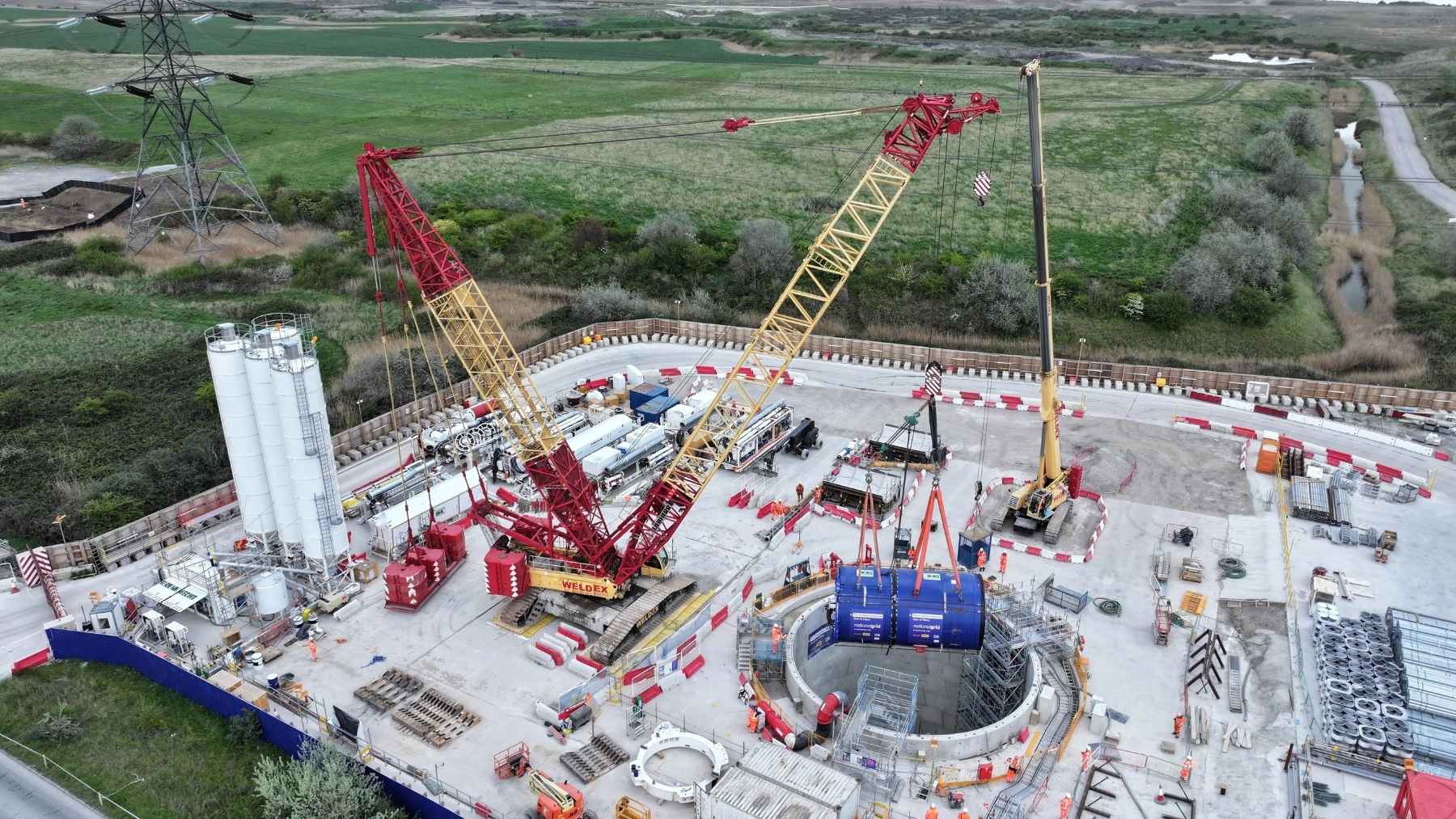
The SMR answer to this is repetition. Unit one is expensive, unit twenty is cheap, and the savings arrive once you have built the identical machine enough times that the supply chain stops charging a first-of-a-kind premium. It’s the same bet Ontario is making at Darlington, where a 953-tonne basemat went into a shaft in June under the first of four identical BWRX-300s.
It’s a fair bet. It just can’t be tested on unit one, and unit one is all anybody has.
Lin Boqiang, director of the China Center for Energy Economics Research at Xiamen University, said as much in Chinese state media back in 2023, while the core module was still being lifted into place. He called Linglong One a demonstration project, and said the small reactor “faces the issue of economic feasibility as well as a difficult path to commercialization.”
China’s other small reactor has been running for two years at a fifth of its rating
Anyone thinking about buying power from a small reactor should look at Shandong first.
China already has one in commercial operation. The HTR-PM at Shidao Bay is a pebble-bed gas-cooled unit that went critical in September 2021, reached the grid that December, and entered commercial operation on December 6, 2023.
In 2024, its first full year as a commercial plant, it supplied 272 gigawatt-hours. Against its 150-megawatt reference rating, that’s a load factor of 20.7%. It was online 6,329 hours, about 72% of the year, and averaged 43 megawatts while it ran. The IAEA has also cut its reference power from 200 megawatts to 150.
It’s a demonstration plant, and demonstration plants spend their early years being tested rather than selling electricity, so that number isn’t a verdict on the technology.
It is a verdict on the phrase “commercial operation.”
Which explains the qualifiers in Linglong One’s own title. First commercial land-based SMR: land-based, because Russia’s Akademik Lomonosov, two 35-megawatt reactors on a barge at Pevek in the Arctic, has been in commercial operation since May 2020. Commercial, because Shidao Bay is officially a demonstration plant.
Linglong One is also officially a demonstration project. World Nuclear News calls it one in every story it files, and CNNC’s own name for it is a technology demonstration project.
Every small-reactor pitch in America is selling the same two promises
Factory-built, therefore fast. Repeatable, therefore cheap.
Radiant wants a Tennessee factory turning out 50 sealed microreactors a year. TVA is waiting on an NRC construction permit for a 300-megawatt BWRX-300 at Clinch River, with agency staff recommending approval in June and a hearing set for August 13. Four experimental microreactors went critical in Idaho by the Fourth of July. China is pitching a 10-megawatt reactor on a truck bed straight at data centers.
Changjiang is the one place on earth where a small reactor and a big reactor are running the same race with almost everything else held constant. Same island, same regulator, same national supply chain, a fence line between them. Different owners on paper, the IAEA lists Hainan Nuclear Power on the small one and China Huaneng on the big one, but nothing like the gap between a Chinese build and an American one.
Five years in, the 1,000-megawatt machine is lit and climbing toward the grid. The 125-megawatt machine that was built to prove small means fast is 216 days past the deadline its own builder set, and the last thing anyone announced about it was that the turbine works.
None of that means Linglong One won’t run. It probably will, and probably this year. It means the half of the pitch that sells the machine, small therefore quick, hasn’t turned up yet in the one place it should have been easiest.
 @familyman ROOKIE2 months ago