
A shipping container works because everything else agreed to be shaped around it. Ports, cranes, chassis trailers and the ships themselves all got rebuilt around a corrugated steel box that comes in two standard lengths, and global freight has run on that agreement for about seventy years.
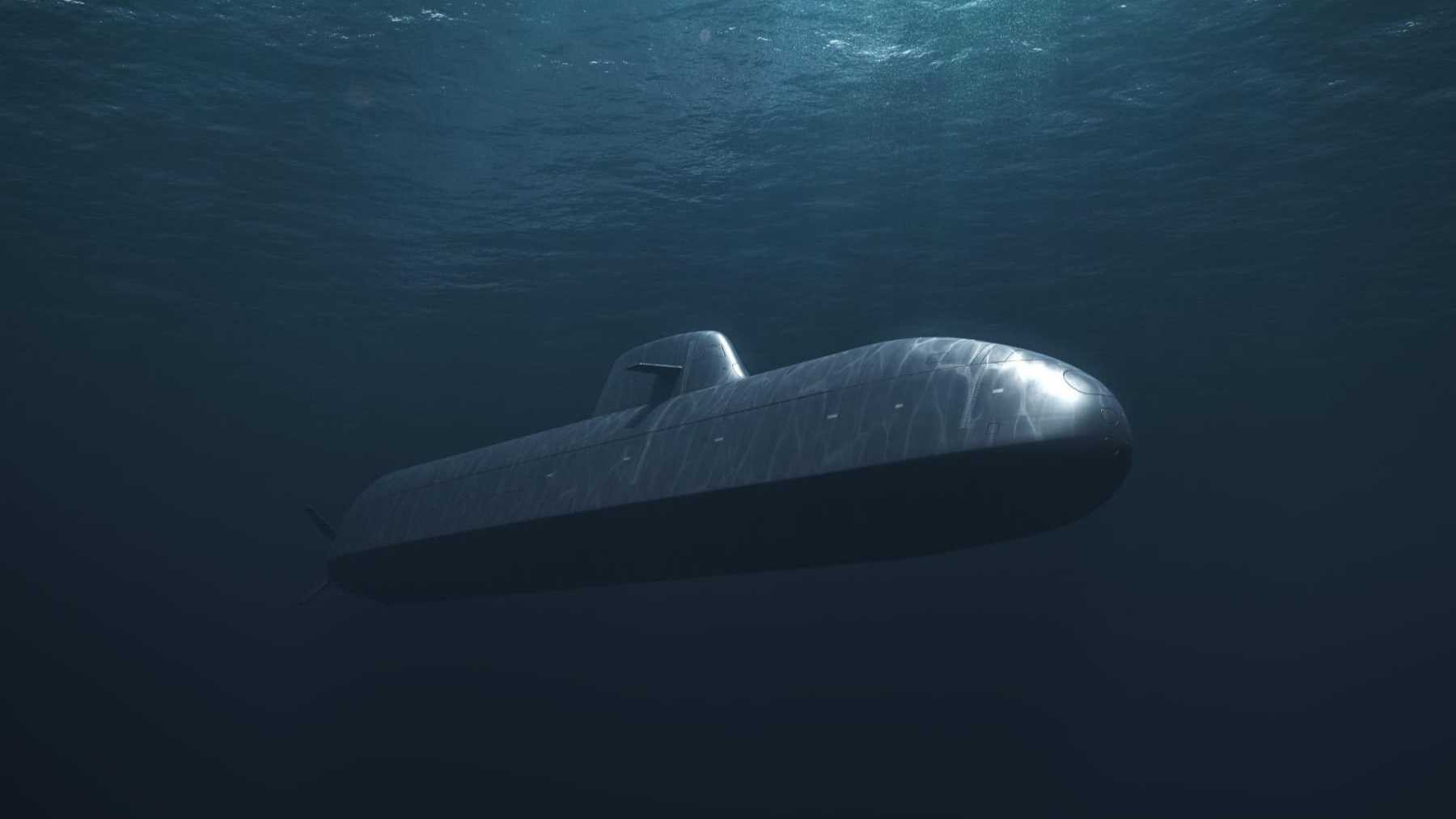
German shipbuilder TKMS has spent nine years applying that idea to a submarine. Not by building one small enough to ship inside a container, which several companies already do. By building the hull itself out of container-shaped blocks and wrapping a hydrodynamic shell around the stack.
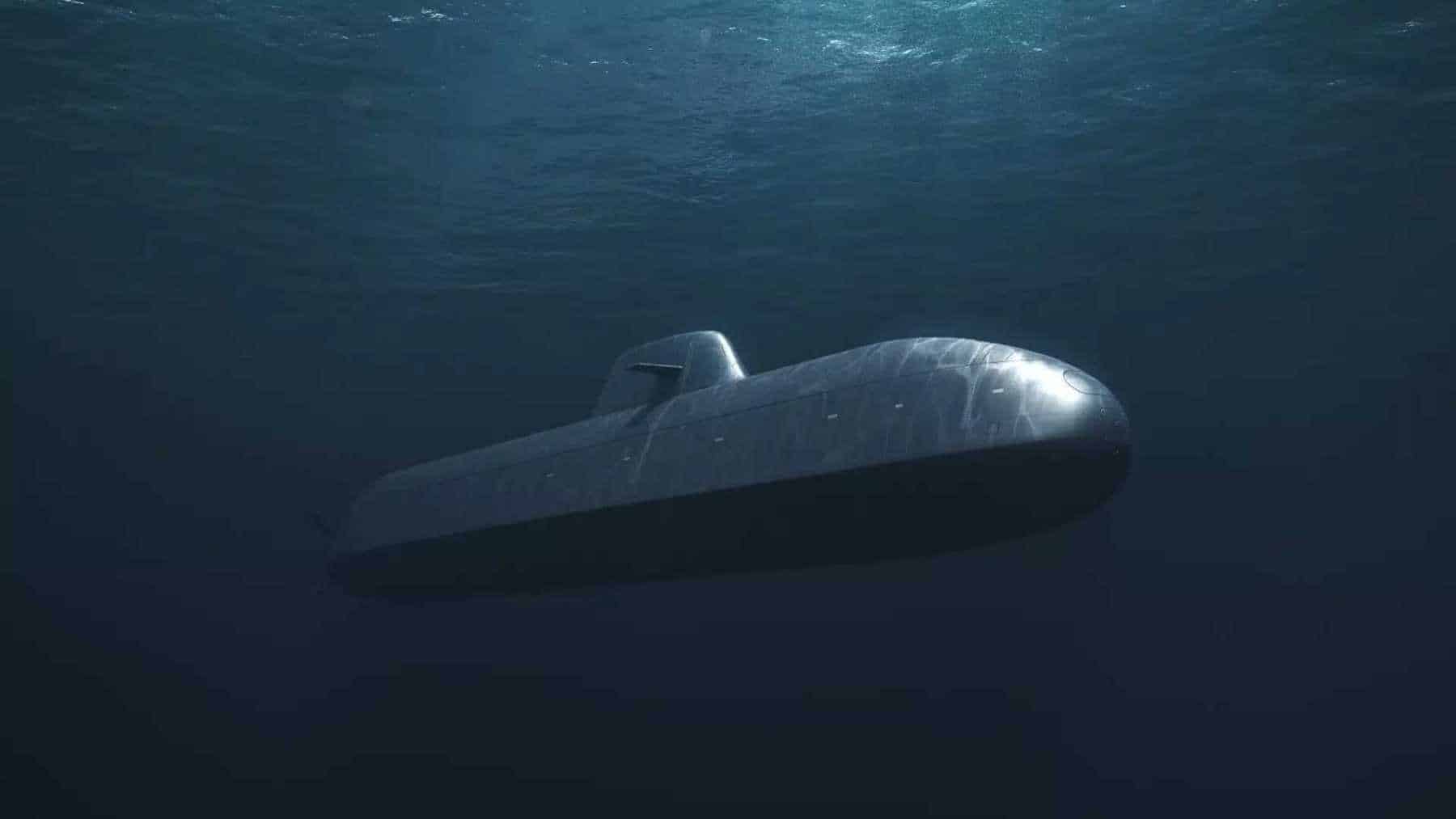
The result is 82 feet long and 23 feet wide, or 25 by 7 meters. Nobody rides in it. It runs on hydrogen fuel cells backed by lithium-ion batteries, and it was drawn up to do offshore work rather than fight anybody: drop seismic sensors on the seabed, carry a drill rig, swap out subsea control modules, haul a work-class ROV to a job site.
On May 7, TKMS announced that the classification society DNV had granted the vehicle an Approval in Principle. The machine is called MUM, short for Modifiable Underwater Mothership, and it is supposed to get wet for the first time before the end of this year.
The certificate is thinner than the headline
TKMS put the news out under a headline calling it the first company anywhere to receive an AiP for an autonomous unmanned watercraft. The body of the same release says something narrower: first German company. Both sentences live in the same document.
The gap matters, because DNV hands these out constantly. In the past eighteen months it has issued Approvals in Principle for a propulsion system, a liquefied CO2 carrier design, a marine battery architecture and a 3D-printing process for pressure vessels rated to hold people. The instrument is routine paperwork in this industry.
The boilerplate DNV attaches to every one of them calls an AiP “an independent evaluation of a concept based on a predefined framework of requirements”, confirming the design is feasible and that nothing in it is a showstopper. It is a read of drawings by somebody who doesn’t work for you.
It is not permission to put the thing in the water and walk away. TKMS hasn’t claimed it is.
DNV has been signing off on crewless boats for years. All of them floated.
This is where the claim gets more interesting than the press release makes it sound.
DNV published its first guideline for autonomous and remotely operated ships in 2018 and has been grinding through the category since. Its autonomy team says it has verified concepts ranging from 7-meter craft up to 78-meter vessels, crewed and uncrewed, covering ferries, survey boats, drone boats and cargo ships.
Kongsberg Maritime took an AiP in 2024 to move a chief engineer’s job off the ship and into a control room ashore. Ocean Infinity picked up the first Statement of Compliance for remotely supported operations at the SMM trade fair the same year. Reach Subsea has a 24-meter uncrewed survey vessel sitting in DNV class right now.
Every one of those floats. They have a waterline, a radar horizon and a radio link that works.
MUM’s approval came under two DNV documents at once: the class rule for underwater technology and the class guideline for autonomous and remotely operated vessels. That combination is where the claim has some substance.
The rulebook for a hull under pressure and the rulebook for having nobody aboard hadn’t been stapled together before. Not for something built to spend its working life in the dark, where radio doesn’t reach and nobody topside can see that the vehicle is in trouble.
Christian Rogge, who runs TKMS’s Submarines Operating Unit, called compliance with class rules “one of the most challenging hurdles” in developing autonomous maritime systems. He’s right, and it’s the least promotional sentence in the whole announcement.
The hull is built around the container, not to fit inside one
Robot submarines that ship in containers are already a genre. Australia’s Speartooth, which C2 Robotics handed to the U.S. Navy in June, travels in a standard commercial box and goes in the water off a boat ramp. Turkey’s Sinarit concept does the same trick. In both cases the container is the crate.
MUM turns that around. Naval News, which covered the design as assembly was starting back in 2023, drew the distinction cleanly: other extra-large drones are sized to fit inside a container, while this one is built around one.
TKMS’s own page for the project describes the modules as ten- or twenty-foot standard containers, sorted into two families.
- Base modules run the vehicle: trim, control and hovering, the fuel cell and propulsion, communications and control.
- Mission modules do the job: a bay with an ROV inside, gear for laying and recovering hydrophones, drilling equipment for pulling soil samples off the bottom.
Interfaces are standardized, so a customer or a third-party supplier can build a module and bolt it into the stack. That’s the part TKMS is actually selling. Not a submarine, a kit.
It’s also where the 23-foot beam comes from. Boeing’s Orca is a tube. MUM is a row of boxes with a shell over it, which per Naval News is why TKMS calls the layout a flat fish, and why there’s enough surface stability to hang the sail off one side rather than perch it on top.
Boeing went long and narrow. TKMS went wide and civilian.
The Navy’s Orca is the reference point for anyone in America trying to picture this thing, and the two vehicles are close enough in length to invite the comparison.
Boeing’s spec sheet puts Orca at 51 feet on its own, stretching to 85 with the 34-foot payload module bolted into the middle. It runs up to 6,500 nautical miles on a hybrid setup, batteries submerged and marine diesel generators on the surface. Boeing calls it the largest UUV going.
The Navy’s May 2026 shipbuilding plan funds two in fiscal 2027 and 16 through fiscal 2031, for roughly $1.13 billion.
So Orca is three feet longer than MUM with its extension fitted, and a fraction of its width. The Navy’s own bar for extra-large is a diameter over 84 inches. MUM is 23 feet across.
The mission gap is wider than the beam gap. Orca exists because the fleet wanted a way to lay mines without sending anybody. MUM’s operational concept, in TKMS’s words, covers ROV work, exchanging subsea control modules, deploying and recovering ocean bottom nodes for seismic surveys, and carrying an underwater drilling rig.
Offshore energy, deep-sea research, infrastructure inspection. It’s a work boat with nobody on it, aimed at an industry that currently pays for a support vessel, a full crew and a weather window to do those same jobs.
The demonstrator is running about two years late
None of this is in the water yet, and the schedule has moved more than once.
TKMS’s project page still says MUM2 started in spring 2021 and was scheduled to end in early 2025. It’s July 2026 and the page hasn’t been touched. Janes reported in that same window that the demonstrator was expected in trials from mid-2024. Overt Defense noted in May that trials first set for 2024 had slipped to late 2026, with funding still flowing.
The money is federal. TKMS put the collaborative project at roughly €35 million when the MUM2 award was announced, with €22 million of that from the German economy ministry’s maritime research program, a figure Fraunhofer FKIE repeated when the funding decision was handed over in Kiel in 2021.
TKMS coordinates the consortium. The rest is EvoLogics, the University of Rostock, TU Berlin, the German Aerospace Center and Fraunhofer FKIE. EvoLogics is the same Berlin shop whose dolphin-inspired acoustic networking turns up inside the Greyshark program, which tells you how few people in Germany are actually working on this problem.
The crewed side of the house is having a considerably better year. On July 6, Prime Minister Mark Carney named TKMS the preferred supplier for up to 12 Type 212CD boats under the Canadian Patrol Submarine Project, which Ottawa calls the largest defence procurement in Canadian history.
Contracts are meant to close by the end of 2027, with the first four hulls in 2034. We covered how the German yard beat South Korea’s Hanwha Ocean to it.
Those are boats with people in them.
TKMS hasn’t published the numbers that matter
There is no released figure for the demonstrator’s rated depth, speed or endurance. Those numbers arrive after testing, not before.
The 5,000-meter figure that follows the MUM name around comes from the project’s own material describing what the full vehicle family is meant to reach, alongside a payload target of ten tons and missions measured in weeks. That’s the ambition for the class. It is not a spec sheet for this 25-meter demonstrator, and TKMS hasn’t said which configuration it’s built to.
An Approval in Principle says the drawings hold together. It says an outside body read them and couldn’t find a reason to stop. What it can’t say is whether a 23-foot-wide stack of containers with no crew and no radio can figure out on its own that something has broken, several hundred meters down, and get itself home anyway.
The demonstration test at the end of this year is the first time anybody asks that question in salt water.