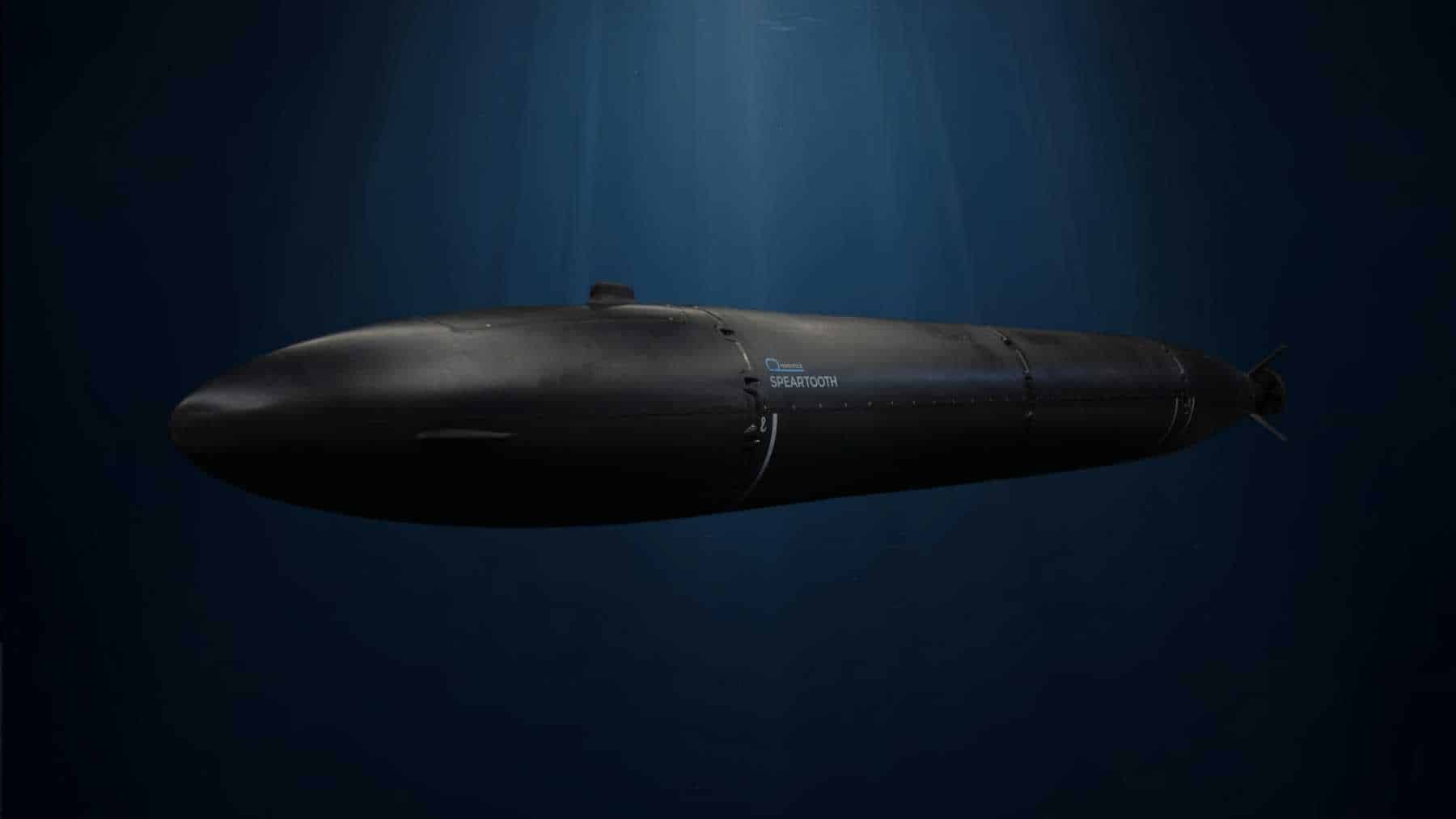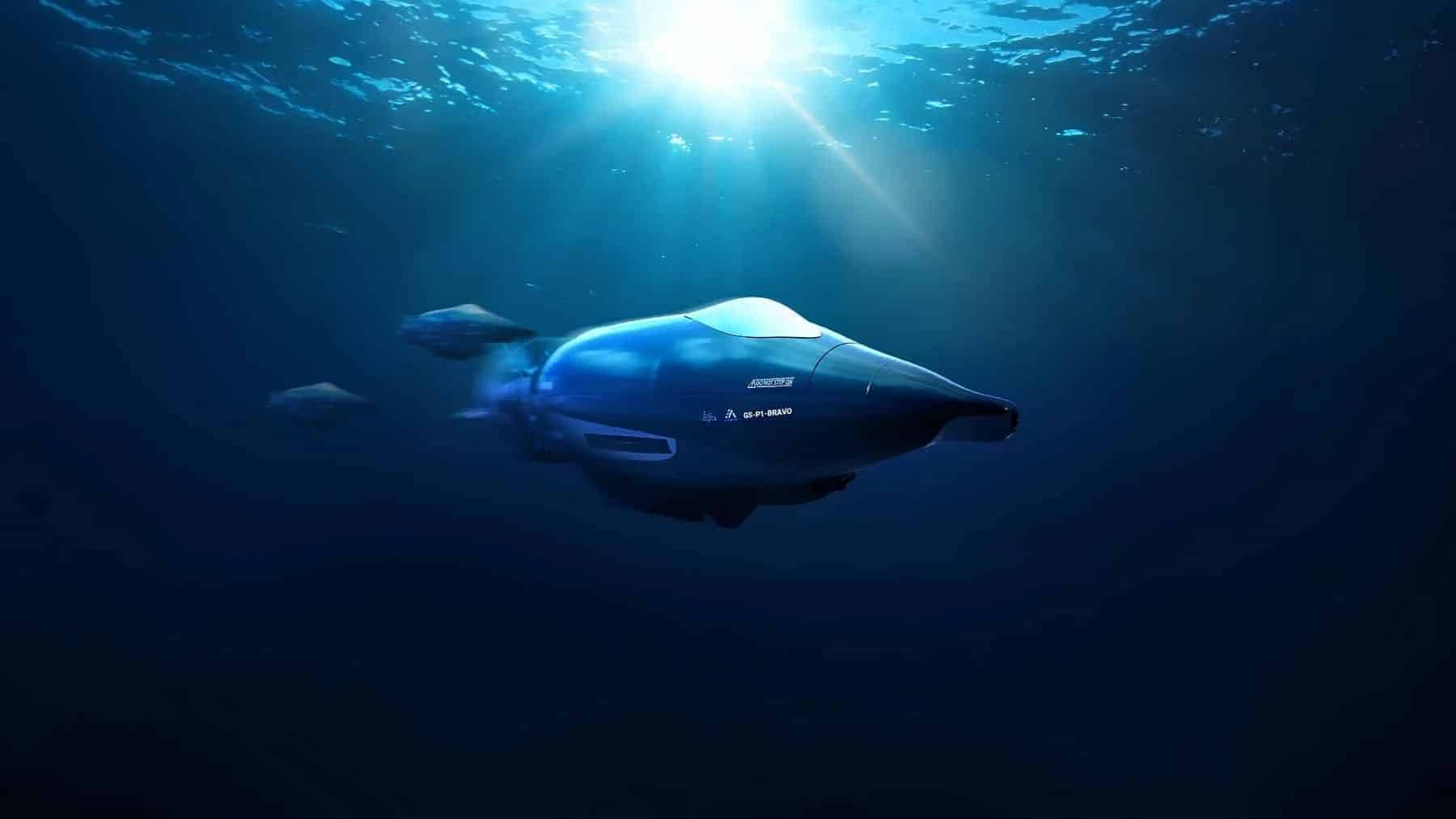

Drop your phone in a swimming pool and the first thing that dies, before the screen even floods, is the signal. Water swallows radio waves and GPS within a few feet, which is why your map app quits the instant you’re under the surface. Now scale that headache up to a robot submarine that’s supposed to vanish for sixteen weeks, find its own way around, and coordinate with a handful of other robots, all without surfacing to phone home. That, far more than the fuel tank, is the hard part of Greyshark, the German drone sub we looked at when Euroatlas first showed it off. And the fix the company reached for borrows its trick from dolphins.
Underwater, your whole toolkit stops working
Everything you rely on to find and steer a vehicle on land falls apart at sea. Radio and GPS signals barely penetrate water, so a submerged drone can’t get a position fix the way your car does and can’t be joysticked from a control room over a wireless link. Below the surface, the only thing that travels any real distance is sound.
That sounds like a tidy solution until you try to use it. Acoustic communication is slow, carries very little data, and bounces off the seabed and the surface so signals arrive as a smeared echo of themselves. Add the background racket of waves, engines, and marine life and you have a channel that makes dial-up look generous. A machine meant to stay down for four months can’t be remote-controlled through that. It has to run itself, and any swarm of them has to talk in sound.
Why Euroatlas went to the dolphins
The communications work comes from EvoLogics, a Berlin outfit that co-developed Greyshark’s stack and spent the better part of a decade studying how dolphins talk before patenting a method it calls Sweep-Spread Carrier, or S2C. Dolphins chirp across a sweeping range of frequencies and adjust on the fly so their calls stay intelligible in churning, noisy water. S2C copies the idea, sliding its carrier signal across a band while it carries data, which keeps a link alive in shallow, echo-filled, high-noise water where a fixed-frequency tone would get shredded.
That’s what lets a group of Greysharks cross-check each other’s findings over acoustic links and pass messages node to node, with one drone relaying for another to stretch the range. Run several together and the pitch shifts from “clever robot” to a moving underwater sensor network, which is the same problem AutoNotion looked at from the cheap, tethered end of the market with the SU10. Greyshark attacks it from the long-range, leaderless end.
A robot that rewrites its own orders
Communication only gets you so far when the channel is this thin, so the bigger half of the answer is autonomy. Euroatlas rates Greyshark at “Level 5,” the top rung, meaning it’s built to operate with no human in the loop and to change its own mission mid-deployment without coming up for air. The company’s own example: a drone sent out to inspect a cable can switch to hunting a submarine on its own if its sensors flag something worth chasing, no call home required.
To make those calls, it fuses 17 sensors into a single picture and maps the seabed sharply enough to resolve about 1.6 inches per pixel, fine enough to tell a rock from a mine. “Persistent maritime awareness is simply impossible to achieve with only manned assets,” Niko Schmidt of Euroatlas told Interesting Engineering. The only way a machine actually delivers that is by deciding for itself.
The engine was never the hard part
It’s worth keeping the famous hydrogen powertrain in perspective here. The fuel cell that lets Greyshark stay down for months is not new technology. Germany has run hydrogen fuel cells in crewed submarines since the mid-2000s, in the Type 212, which can sit submerged for around three weeks on its fuel cell instead of snorkeling near the surface to recharge. The chemistry was settled twenty years ago.
What wasn’t settled was getting a vehicle to do all of it with nobody aboard. No pilot to navigate, no operator to make the call when a sensor pings, no cable to the surface feeding it instructions. A crewed submarine carries two dozen people partly because someone has to run the boat. Strip them out and you don’t just lose the bunks and the galley, you lose the judgment, and something has to replace it. Greyshark’s real breakthrough isn’t the fuel in the tank. It’s the brain and the nervous system wrapped around it.
None of it is proven in salt water yet
The honest caveat is that the autonomy and the swarm are still mostly a brochure. Acoustic links are slow and short-range by nature, ocean noise is unpredictable, and software that behaves in a test tank has a habit of getting rattled by real currents, biofouling, and the clutter of a busy strait. Euroatlas has scheduled sea trials for August 2026 to find out whether the navigation and the sensor fusion survive away from the spec sheet. That’s the test that counts. A drone that can stay under for four months is only worth anything if it knows where it is the entire time and can report what it found.
For decades, the ceiling on how long a machine could lurk underwater was energy, and that problem is basically handled now. The new ceiling is trust: whether you can send a robot into the dark, cut the cord, and believe it’ll navigate, decide, and report back on its own for sixteen weeks. Greyshark’s whole pitch is that a fleet of them can do exactly that, chattering to one another in something close to dolphin. August will show whether the ocean agrees.