
Hyperscalers buying clean power by the gigawatt-hour isn’t news anymore. Google alone has spent years signing offtake deals for solar, wind, geothermal, even small modular reactors, and most of those headlines blur into the same press release with a different logo on top.
The Ireland one this week is different. The “battery” sitting behind Google’s name doesn’t hold a single lithium cell.
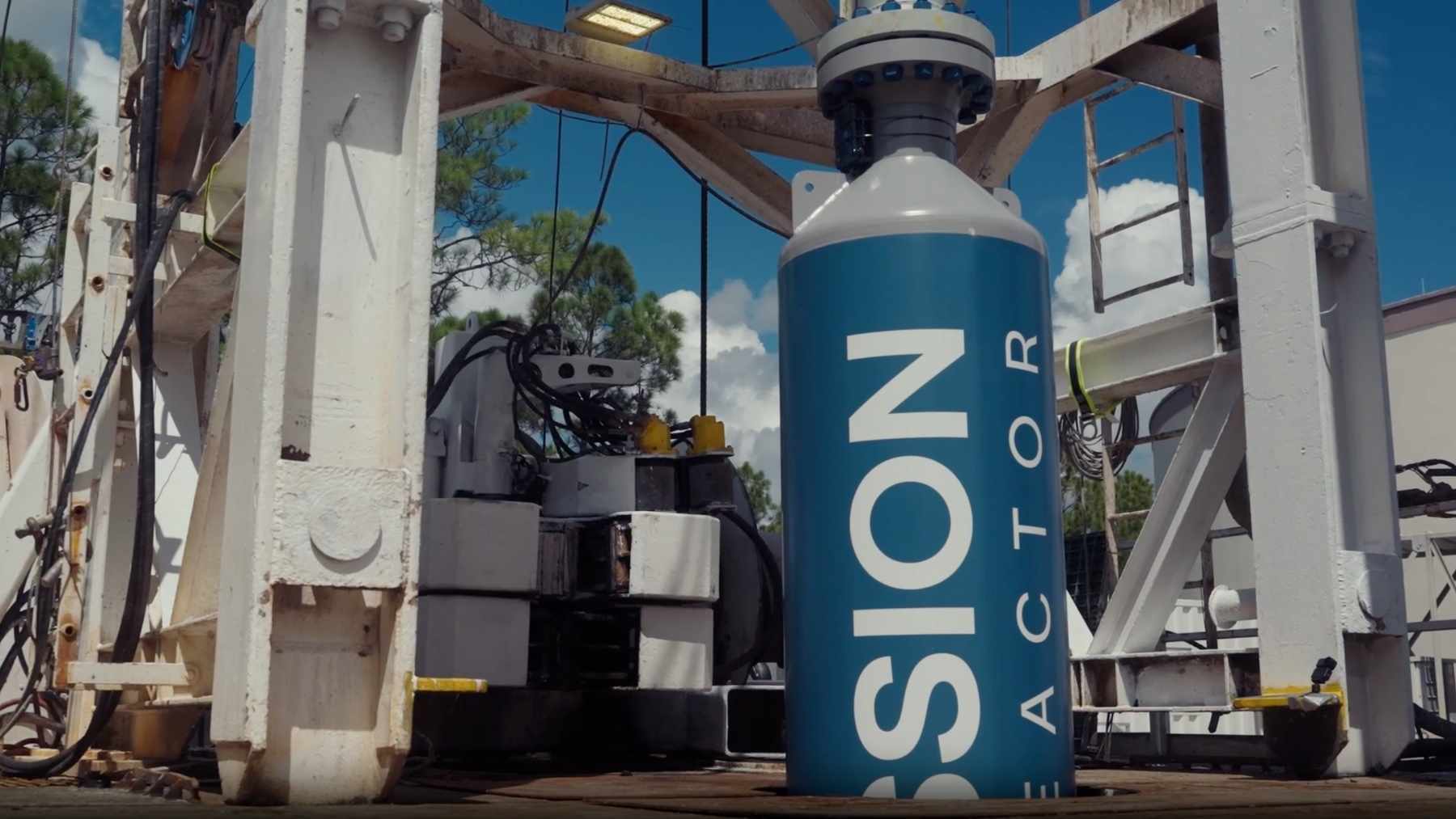
What Google actually signed, per Energy Dome’s announcement out of Dublin and Milan on June 23, is a tolling deal for a 23MW/200MWh CO2 Battery in County Offaly.
That’s roughly an 8-hour system that stores energy by squashing carbon dioxide into a liquid, then lets it expand back through a turbine when the Irish grid wants the electrons. Google is the sole offtaker, with commercial operation targeted for 2028.
No lithium. No cobalt. None of the thermal-runaway fire risk you’d recognize from a grid-battery incident report.
What a “CO2 battery” actually means in a field
The mechanics are less exotic than the name suggests.
Grid electricity runs a compressor that pushes gaseous CO2 into a liquid inside pressurized tanks, and the heat from that compression gets captured and stored. When the grid needs power back, that heat goes back in, the liquid CO2 flashes to gas, and the expanding gas spins a turbine.
Energy Dome calls it a closed thermo-mechanical cycle. Nothing is vented, nothing is burned, and the same CO2 just keeps getting shuffled between liquid and gas.
The hardware is boringly familiar on purpose. Compressors, turbines, heat exchangers and steel pressure tanks, the kind of off-the-shelf industrial gear Energy Dome says it can source from any Tier 1 supplier, with no rare earths and a 30-year-plus operating life.
That’s the whole pitch. Lithium-ion supply chains are tight, pricey and geopolitically annoying. CO2 hardware can be ordered from anyone who’s ever built a refinery.
It’s the same bet behind other non-lithium storage plays, like the 40-story Chinese tower that stacks 35-ton concrete blocks to bank wind power with no chemistry to degrade or catch fire.
Why Offaly, and why a substation called Derryiron
The location isn’t random. The project sits near Rhode, a town in the Irish Midlands that used to host peat-fired generation, on a high-voltage node that feeds Dublin’s load.
Ben Potter, who runs Energy Dome’s energy-as-a-service division, pointed to the Derryiron 110kV substation as a critical injection point feeding the Greater Dublin area. Build outside the city, stabilize the city. That’s the play.
It also fixes a problem the Irish grid has griped about for years. The Midlands are stuffed with wind farms, solar, batteries, flywheels and a few gas turbines for backup, but the wires heading east to Dublin are congested.
When the wind howls at 3am and nobody in the capital is using anything, a chunk of that generation gets curtailed. Park long-duration storage at the bottleneck and it soaks up the surplus, holds it for 8 hours, and ships it east when commuters wake up and data centers ramp.
It’s the same job California’s giant battery fleet now does on a bigger scale, flooding the grid at the exact evening hour it used to strain.
That last bit is the kicker. Ireland’s grid operator has been openly nervous about data center load for a while, and Google’s hyperscale footprint outside Dublin is part of why.
Pairing a data center customer directly with a co-located storage asset is, in regulatory terms, an elegant way to say “we’ll bring our own batteries.” It’s the same scramble to feed data center load playing out on every grid right now.
The contracts behind the contract
The headline tolling agreement isn’t the only paperwork holding this up.
The site already has planning consent, secured land and a grid connection, plus a 10-year capacity contract from EirGrid, Ireland’s state-owned transmission operator. It’s specifically a T-4 capacity market deal, won in competition against thermal plants, hydro and lithium battery storage.
In a capacity auction, that’s the box you tick before any developer can credibly promise a 2028 in-service date.
Energy Dome will build, own and operate the plant. Google takes 100% of the output, meaning every megawatt-hour discharged is contractually theirs to count against a 24/7 carbon-free electricity target.
A single corporate buyer paying a tolling fee for full dispatch rights is becoming common for hyperscalers. Doing it for a non-lithium long-duration system at this commercial scale is a first.
Phase two is already drawn up
There’s room on the site for a second identical unit, and Energy Dome has already locked down its planning, capacity rights, grid connection and land.
Potter expects that second unit to bid into an upcoming long-duration storage scheme being designed under Ireland’s Electricity Storage Policy Framework. Stack two at the same node and you’re suddenly talking about 400MWh of dispatchable, lithium-free storage feeding the country’s biggest load center.
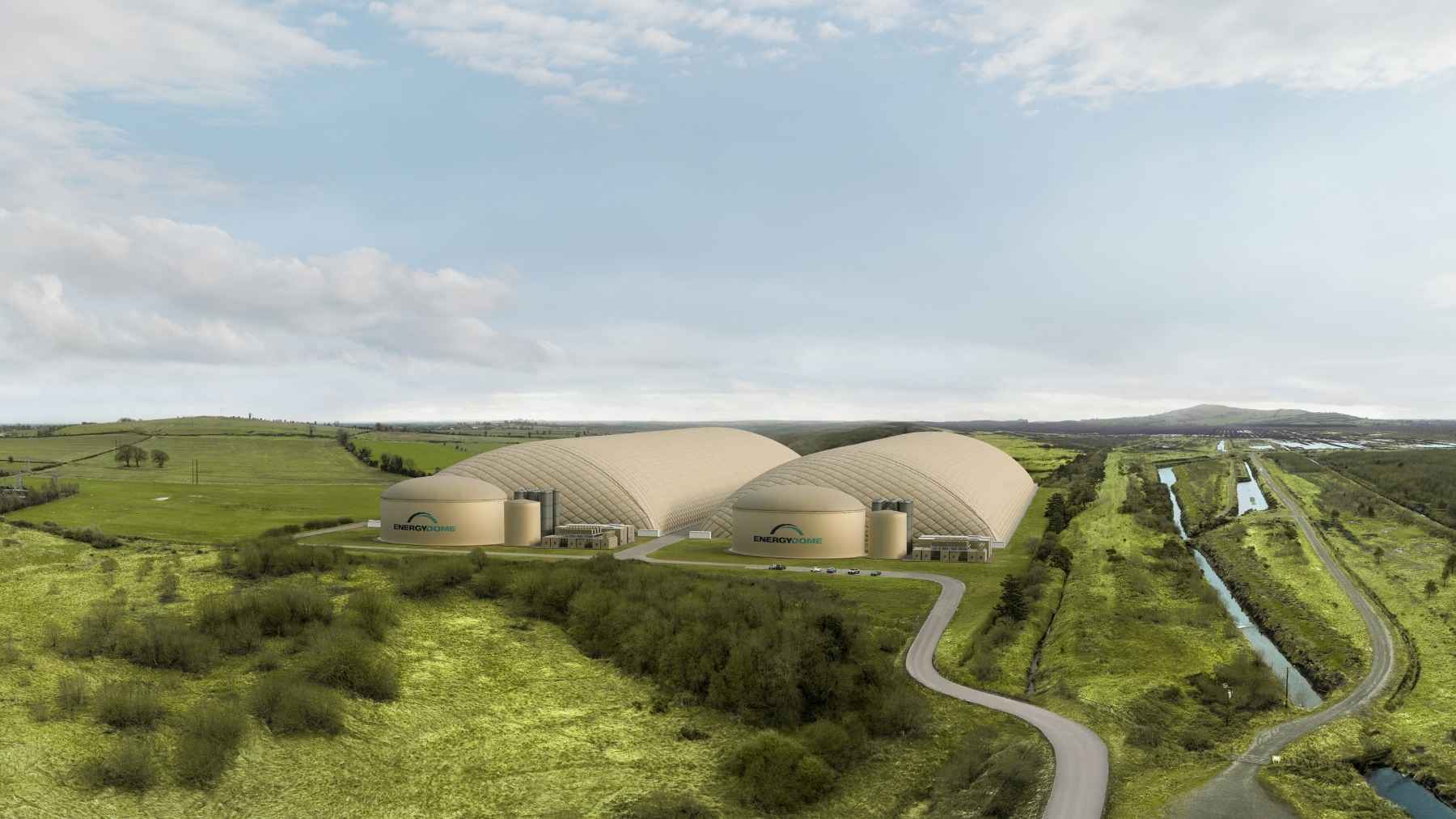
The two domes themselves run about 34 metres tall, on a 22-hectare site just outside Rhode, and Energy Dome says they’ll be coloured to blend into the surroundings.
For context, Google and Energy Dome formed a broader strategic alliance late in 2025 covering Europe, North America and Asia-Pacific. Ireland is the first bilateral commercial contract under that umbrella.
There’s also a sibling project in Arizona, a 19MW/200MWh unit contracted through utility Salt River Project rather than directly with Google. Different market structure, same hardware.
What this proves about non-lithium storage
Long-duration storage has spent the better part of a decade as a PowerPoint category. Iron-air, flow batteries, gravity, compressed air, molten salt, hydrogen, every one of them has a deck claiming the lowest cost past four hours, and most are still measured in pilot megawatts.
Energy Dome’s Sardinia plant was already running at real scale, 20MW/200MWh, about a year in with utility Engie as offtaker. But Ireland is the first time a hyperscaler has put its name on a tolling deal for a commercial CO2 plant wired to a transmission grid, with capacity payments and a confirmed in-service year.
That matters for two reasons.
First, it hands project finance a reference asset to underwrite against. Banks don’t fund prototypes, they fund things that look like things already running with a creditworthy buyer.
Second, it forces lithium-ion’s pricing to compete against a chemistry that doesn’t care about cobalt mines, nickel spot prices or thermal-runaway insurance premiums. For 8-hour duration, that’s a fight lithium doesn’t automatically win.
Ireland wants 80% renewable electricity by 2030, and the wires from the Midlands to Dublin won’t magically widen between now and then.
If the Offaly tank delivers on schedule in 2028, Google gets cleaner electrons for its Irish operations, and EirGrid gets a congestion-relief valve that never needs a mining permit to refuel. The second unit is the test of whether anyone else writes the same check.