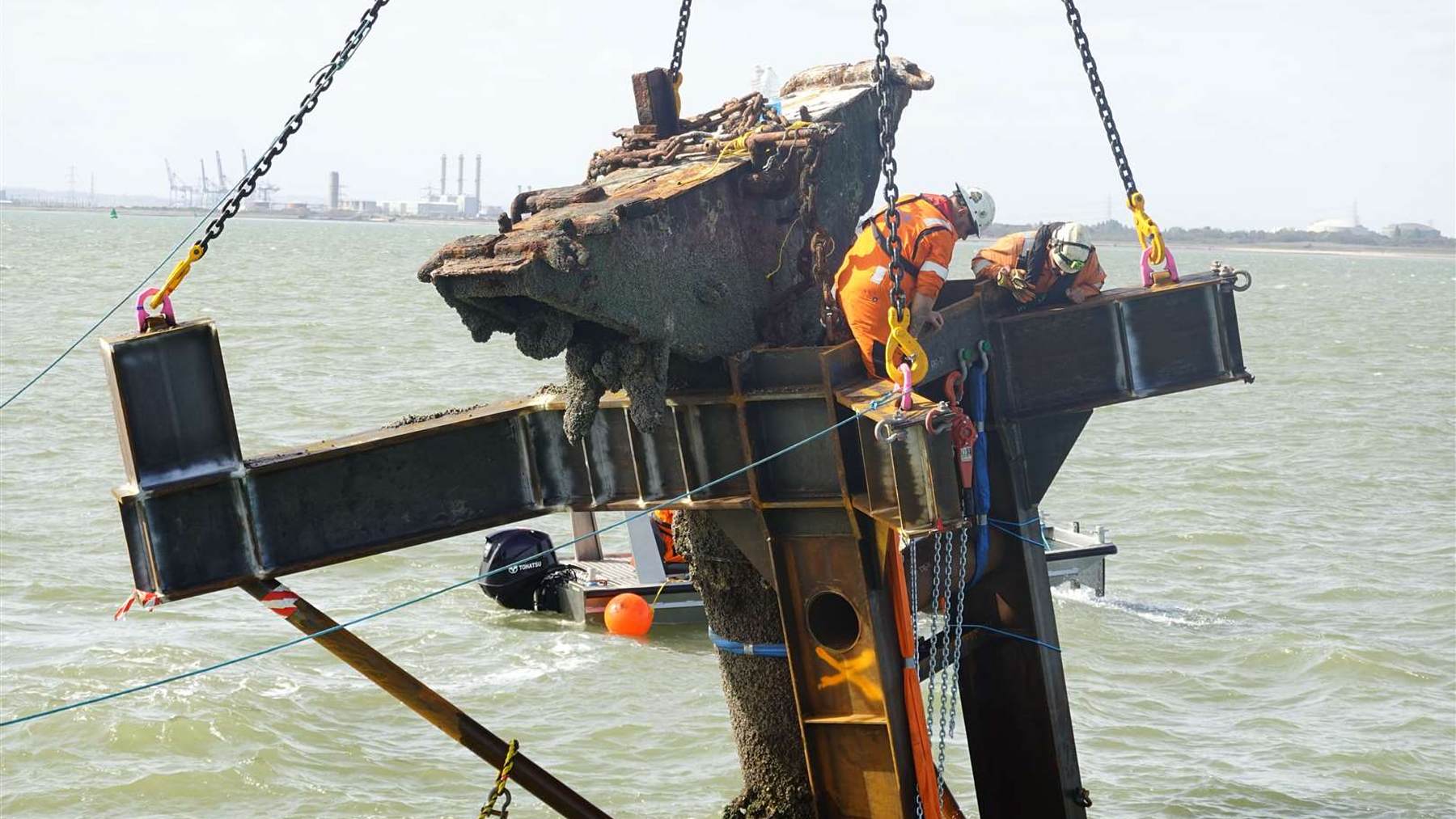

If you’ve paid any attention to the AI buildout over the past year, you already know the shape of the problem. Data centers are pulling electricity faster than the grid can deliver it, drinking enormous volumes of fresh water to stay cool, and pushing utilities and tech companies to approve new natural gas plants at a pace nobody’s planning models saw coming. The default American answer to “how do we power all this compute” has quietly become “build more gas, and deal with the water later.”
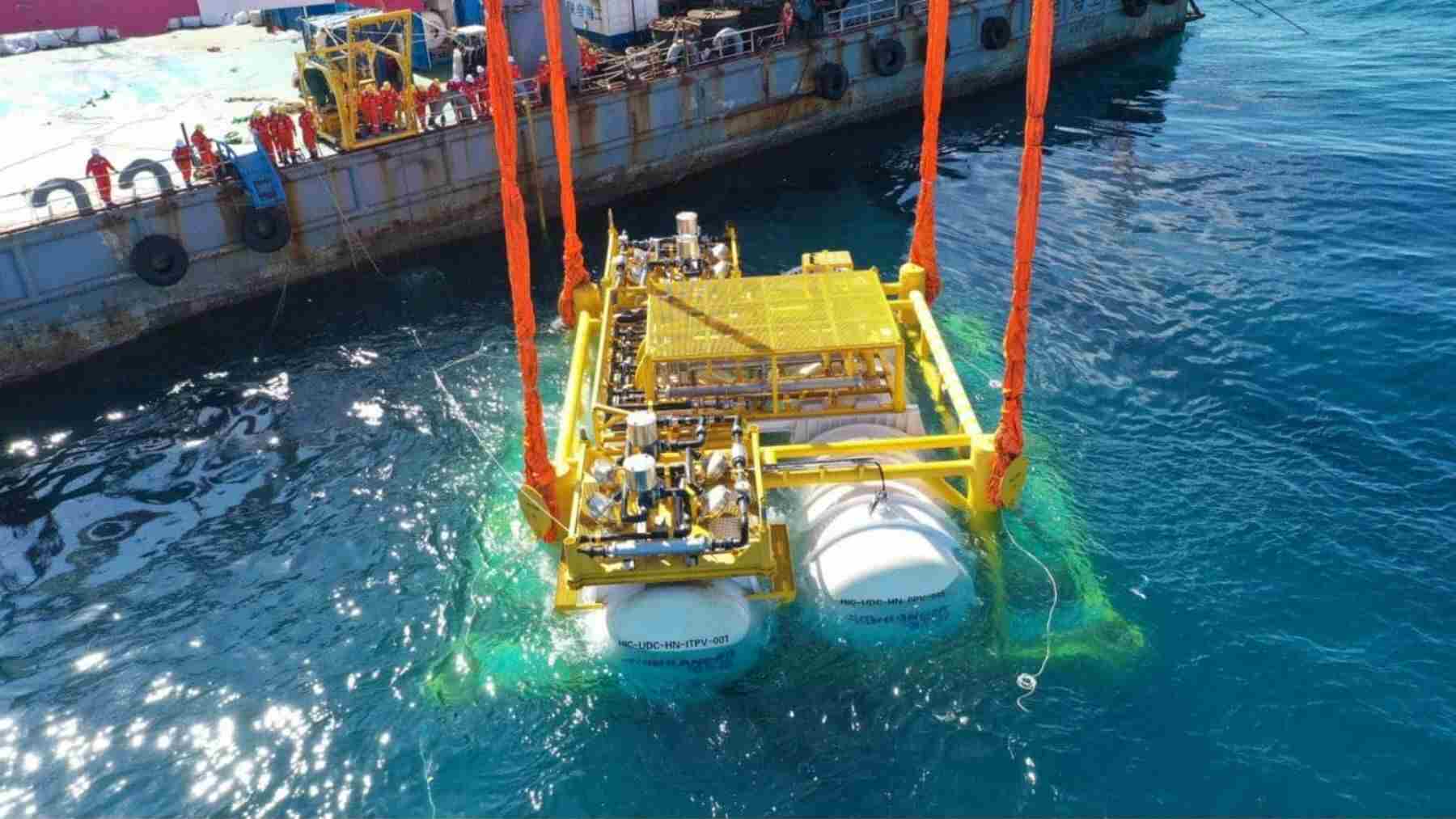
China just went the other way entirely. In late May, a subsidiary of China Communications Construction switched on what its developers are billing as the world’s first undersea data center wired straight to an offshore wind farm, off the coast of Shanghai. It cools itself with the ocean, takes its power directly from the turbines next door, and uses no fresh water at all. According to state news agency China Daily, the server modules sit about six miles (10 km) offshore, tucked between the two phases of the area’s offshore wind farm.
China Sank a Data Center Off Shanghai and Wired It Straight to a Wind Farm
The project’s full name is the Shanghai Lingang undersea data center demonstration project, and the trick it’s built around is something the developers call a “direct offshore wind connection.” Instead of routing power from the wind farm out to the regional grid and back, the electricity runs straight to the submerged server modules through subsea power cables, skipping the grid entirely. New Atlas estimates the wind farm supplies roughly 95% of the electricity the center needs.
Cooling works the way a submarine’s does. Seawater circulates through a sealed copper-pipe heat-exchange system, carrying heat off the servers and back out into the ocean, with no chillers and no cooling towers sucking down fresh water. The Lin-gang Special Area government puts the facility’s power usage effectiveness at around 1.15, which is strong. Most land-based centers sit closer to 1.5, and a PUE of 1.0 would mean every watt goes to computing and none to overhead.
On paper it’s rated at 24 megawatts, enough to power roughly 20,000 households, though it’s currently running at 2.3 MW in this first demonstration phase. New Atlas reports it houses 192 server racks stacked across four levels, running GPU workloads that range from big-data labeling to training homegrown large language models. China Telecom has already moved computing clusters in, alongside a local provider called LinkWise. The whole thing cost about 1.6 billion yuan, or roughly $228 million.
Microsoft Already Proved This Works. Then It Walked Away.
If sinking servers in the sea sounds like a stunt, it isn’t a new one. Microsoft’s Project Natick dropped a sealed pod holding 864 servers about 117 feet (roughly 36 meters) onto the seabed off Scotland’s Orkney Islands back in 2018 and left it there for two years. When the team hauled it back up, the underwater servers had failed at about one-eighth the rate of identical machines on land, fewer than one in 100 versus eight in 100 on shore. Microsoft credited the sealed nitrogen atmosphere and the simple fact that no humans were around to bump, jostle or mishandle anything. That pod hit a PUE of 1.07, and it cooled itself with seawater piped through the racks.
So the underwater concept has been validated. The thing Natick didn’t do is the part China’s project is claiming as its first. Microsoft’s pod drew its electricity from the Orkney grid, which happens to be almost entirely wind, tidal and solar. The Shanghai center skips the grid and takes power directly off the wind farm. That direct-from-the-turbine wiring is the real novelty here, not the act of going underwater.
There’s also a cautionary note buried in the Natick story. Despite the reliability numbers, Microsoft never turned it into a product and quietly shelved the whole effort. The commercial track record for underwater data centers, in other words, is “the company that proved it worked decided not to build it.”
The Cooling Numbers Are the Whole Argument
Strip away the novelty and the reason anyone’s doing this comes down to cooling and water. The developers say the Shanghai center uses 22.8% less electricity than an equivalent land-based facility, eliminates fresh water use entirely, and needs more than 90% less land.
The clearest version of the argument came from Tsinghua University professor Li Zhen, speaking to China Daily. A conventional data center, he said, burns roughly a third of its total electricity just running its cooling systems, while an equivalent underwater center would spend about a tenth. Scaled across China’s data centers, which Li put at around 250 billion kilowatt-hours of consumption a year with about 80 billion of that going to cooling, he estimated underwater cooling could pull national cooling demand down to roughly 30 billion kWh, saving something like 50 billion kWh a year. He framed that as the equivalent of not burning about 15 million metric tons of coal. Those are his projections, not audited operating figures, but they explain why a state-owned construction giant bothered to build the thing.
Figures: project developers, via China Daily and the Lin-gang Special Area government.
America Is Answering the Same Problem by Burning Gas
So why should any of this matter to someone sitting in Texas or Virginia? Because the exact pressures China is engineering around are the ones bearing down hardest on the US grid right now. A 2024 study from the U.S. Department of Energy’s Lawrence Berkeley National Laboratory found American data centers consumed about 176 terawatt-hours in 2023, around 4.4% of all US electricity, and projected that to reach somewhere between 6.7% and 12% by 2028. That’s a load that already tripled over the past decade and is set to double or triple again.
The water side is just as steep. US data centers directly drank about 17 billion gallons of fresh water in 2023, according to the Pew Research Center, and hyperscale facilities alone are projected to use between 16 and 33 billion gallons a year by 2028. Pew also notes that, per the International Energy Agency, natural gas already supplied more than 40% of the electricity feeding US data centers in 2024.
And the new power is overwhelmingly gas. The Stratos campus approved in Utah this May is slated to run nine gigawatts of compute on 100% natural gas, and it isn’t even an outlier. SoftBank’s planned Ohio campus targets 10 GW from gas turbines, and Meta has committed to funding seven new gas plants for a 7 GW site in Louisiana. The catch is that everyone wants the same hardware at once, so gas turbines are now so back-ordered that waitlists run into the early 2030s, with prices well above pre-AI levels.
The irony is that China and these US projects are doing the same structural thing. Both have decided the public grid can’t deliver power fast enough, so both are building dedicated generation right at the data center and skipping the grid. The only real difference is what sits on the other end of the wire. Off Shanghai it’s an offshore wind farm and the ocean. In Texas, Ohio, Louisiana and Utah, it’s gas turbines and a multi-year backlog. And this isn’t China’s only swing at the problem either. The same state push produced a truck-mounted nuclear reactor aimed squarely at the data centers eating the world’s power and a lab battery that stores electricity and hydrogen in the same device. That “build the power where you stand” logic is the same one behind the world’s largest off-grid renewable network an Australian miner just broke ground on.
Where the Underwater Bet Still Looks Shaky
None of this means the ocean is about to swallow the data center industry. The Shanghai project is a demonstration running at 2.3 MW, and even its full 24 MW build-out is a rounding error next to a gigawatt-scale campus like Stratos. Underwater computing’s commercial history is still mostly Microsoft proving it works and then declining to scale it.
There are open questions, too. New Atlas flags the obvious ones: how you service or swap hardware once it’s sitting on the seabed, how the gear holds up over years of saltwater exposure, and what continuously dumping waste heat into one patch of ocean does to the marine life around it. Seawater cooling looks elegant right up until you ask where all that heat actually ends up.
The real contest here was never about whose data center is cleverest. It’s about who can get power to the chips fastest and cheapest, and both countries have concluded the grid can’t do it in time. China’s bet is that the answer is offshore, in wind and seawater. America’s bet right now is gas, with the turbine bill climbing and the plants locked in for decades. The Shanghai project may never grow past a demonstration, and underwater data centers may stay a curiosity the way Natick did. But for at least one news cycle, the country that’s supposed to be losing this race just switched on the version that doesn’t drain a river to keep the servers cold.
 @jaymatz ROOKIE5 months ago