
Battery anxiety is something most of us have run into, whether it’s a phone dropping to 3% on the train or an EV dashboard quietly recalculating whether you’ll actually reach the next charger. It’s the low background dread of running out of power somewhere you really don’t want to. A research team in China has borrowed that exact phrase, except they’re not talking about your phone. They’re talking about a 10-megawatt nuclear reactor sitting on the bed of a truck, which they say can run for years on a single load of fuel.
The group, led by Wu Yican at the Institute of Nuclear Energy Safety Technology in Hefei, is calling it a “nuclear power bank,” and the timing is what makes it land in the US. American data centers are pulling on the grid faster than utilities can build for it, and a reactor you can drive to wherever you need it is an almost too-neat answer to that problem. The catch, and it’s a large one, is that this is an engineering test prototype in safety evaluation, not a reactor anyone can order. So it’s worth pulling apart what China has actually built from what it says the thing will eventually do.
China is calling it a nuclear power bank, and it means that fairly literally
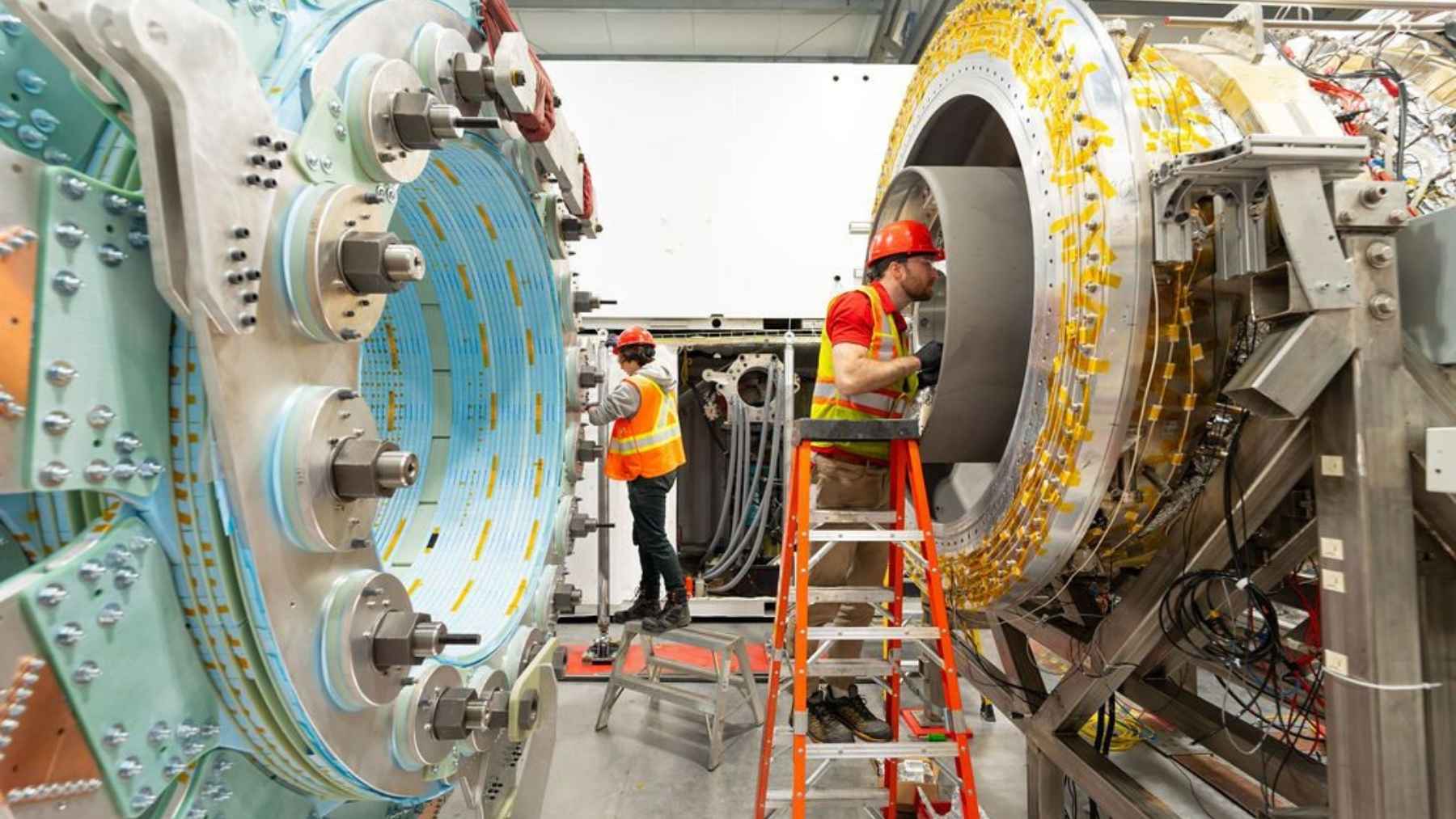
Wu, who is the chief scientific adviser to the institute and a member of the Chinese Academy of Sciences, described the unit to Science and Technology Daily, as reported by the South China Morning Post, as the world’s first 10-megawatt vehicle-mounted nuclear power unit, built as an integrated engineering-scale test prototype. That’s a specific claim with a specific scope, and it’s his team’s claim, not an independent verdict. The pitch is that the reactor ends battery anxiety for anything that needs steady power far from a wall socket: remote regions and islands, emergency backup in difficult environments, ship propulsion, space systems, and the one that gets the headlines, AI computing hubs and data centers.
According to Interesting Engineering, which carried Wu’s comments to the same outlet, he described the system as having “ultra-safety, ultra-small size, and ultra-long-lasting performance,” and framed it as a new generation of nuclear technology meant to be portable rather than poured into a billion-dollar concrete dome. The project is being developed by the FDS consortium, and the team has worked on it for several years before going public with the test unit. For now the reactor is in the testing phase while the group evaluates its performance and safety, which is a long way from a unit humming behind a server farm.
The numbers the developers are putting on it
This is the part where it pays to read carefully, because almost everything eye-catching about the reactor is a figure supplied by its developer rather than a result confirmed by an outside lab. Nuclear Engineering International reported the FDS specifications directly: a claimed design life of 30 to 60 years, and a single fuel load that the consortium says can keep the unit running for 10 to 30 years before it needs replacing. The 10-megawatt output, Interesting Engineering noted, is enough to power a medium-sized AI data center on its own. None of those numbers have been independently tested, and the developer is the only source for them, so they’re worth holding at arm’s length until something runs in a lab that isn’t FDS’s own.
Put the claims in context and they look enormous. A standard commercial reactor gets refueled every 18 to 24 months. A nuclear submarine can go a decade or two on a core, but you don’t park one of those next to a data center in the desert. FDS is essentially promising submarine-style longevity in a package small enough to ride a flatbed, which is exactly the kind of claim that deserves a healthy pause until the safety evaluation produces something public.
American data centers are the reason this is landing now
The reason a Chinese reactor prototype is getting picked up by US outlets has very little to do with nuclear physics and almost everything to do with the power bill behind artificial intelligence. AI workloads have gone from pilots to production, and they pull electricity in a way the grid wasn’t built for. A single AI task can draw up to a thousand times more electricity than a basic web search, which is why a handful of large AI facilities can lean on a regional grid harder than hundreds of ordinary data centers ever did.
The strain is already showing up in the planning numbers. PJM Interconnection, the largest US grid operator, which serves more than 65 million people across 13 states, has projected it will fall roughly 6 gigawatts short of its reliability requirements in 2027, according to figures reported by CNBC. Research firm Gartner has gone further, estimating that power shortages could restrict 40% of AI data centers by 2027. Operators have responded by trying to bring their own power, building generation right next to the servers instead of waiting in an interconnection queue that can run years long. That’s the same logic behind the largest off-grid energy builds going up elsewhere, like the million-panel renewable network an Australian mining company just broke ground on in the Pilbara: if the grid can’t get to you, you build the power where you stand.
A drive-anywhere reactor slots straight into that anxiety. It’s also not the only swing China has taken at the energy-storage problem lately. The same broader push produced the solid-state battery a Chinese lab built to store electricity and hydrogen in the same device, another early-stage piece of chemistry positioned for a market that doesn’t exist yet. The pattern is consistent state funding for technology that’s still years from a customer, which is its own kind of story underneath the headline numbers.
The US Army has its own truck-sized reactor, which makes a useful yardstick
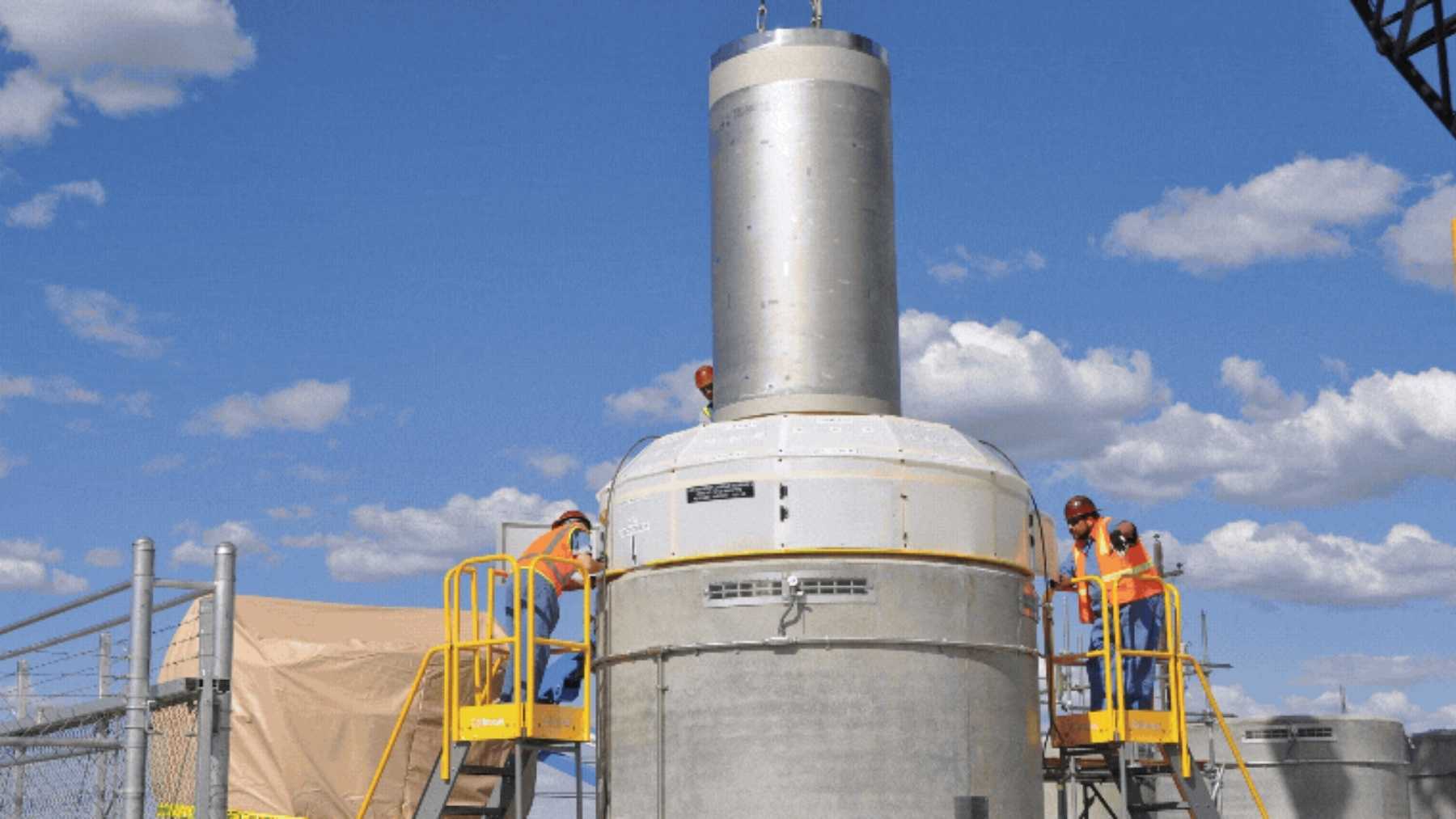
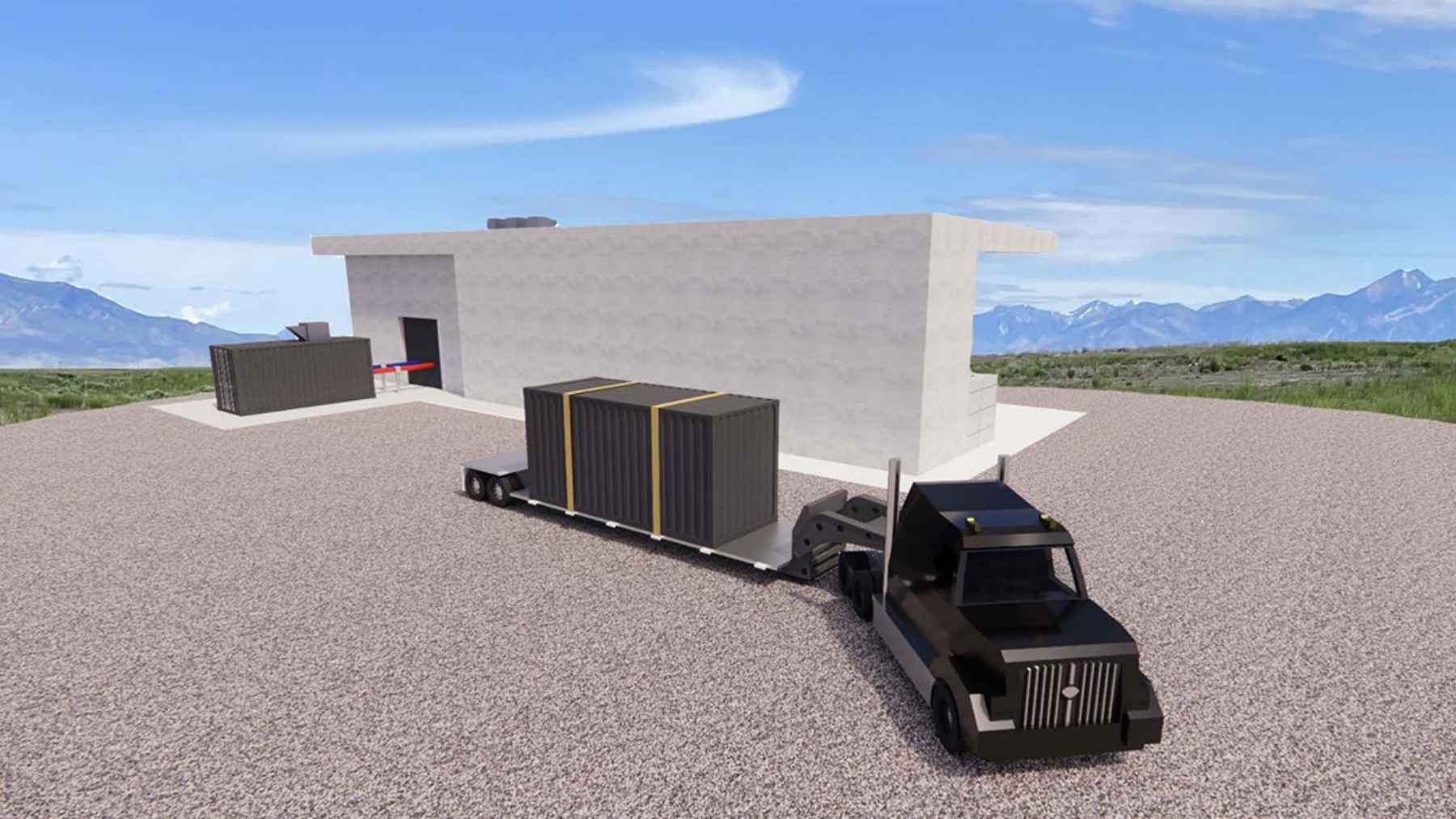
If a transportable nuclear reactor sounds like science fiction, it helps to know the US is already building one, because the comparison is the clearest way to size up what China is actually claiming. Project Pele is the Department of War’s transportable microreactor prototype, built by BWXT in Lynchburg, Virginia, and it has been moving along a public timeline for a couple of years. It’s a Generation IV high-temperature gas-cooled reactor designed to fit, with all its systems, into four 20-foot shipping containers so it can be flown or trucked to a base.
The numbers are where the two diverge. BWXT describes Pele as producing at least 1.5 megawatts, with the program targeting a 1 to 5 MWe range, and it’s designed to run for about three years without refueling. In November 2025 BWXT shipped 40,000 TRISO fuel compacts to Idaho National Laboratory, the first time microreactor fuel was delivered to its final destination, with formal system testing slated to begin as early as 2027. There’s a hard deadline behind it too: Executive Order 14299, signed in May 2025, directs the Department of War to have a reactor operating at a domestic military base no later than September 30, 2028, and a follow-on effort called the Janus Program aims to put a demonstration unit on a US installation by 2030.
So line them up. China says its unit makes 10 megawatts and runs 10 to 30 years on the same vehicle-mounted concept, but it’s a test prototype in safety evaluation with the developer as the only source for those figures. Pele makes a fraction of that power and runs about three years, but it has fuel sitting in a US national lab and a test date on the calendar. Both are racing the same idea, which is mobile nuclear power for places a grid and a diesel truck can’t reliably reach. That diesel problem is real, by the way: getting fuel to some remote US outposts can run hundreds of dollars a gallon, which is the gap a Houston startup is chasing with its own truck-sized hydrogen generator that pulls fuel straight from the air. Different molecule, same itch.
What still has to happen before any of this rolls anywhere
The distance between “we built a test prototype” and “there’s a reactor parked behind a data center” is enormous, and it’s filled with the unglamorous stuff. No outside body has verified China’s performance or longevity claims, the unit is still in a safety evaluation phase that hasn’t produced public results, and a mobile reactor carries regulatory and transport questions that even a stationary plant doesn’t. The US is finding that out in slow motion with Pele, which has spent years getting to a fuel delivery and still isn’t scheduled to switch on until 2027.
What’s genuinely new here isn’t the reactor so much as the pitch, and the pitch is the same one BWXT is making in Idaho: continuous power that drives to where the grid doesn’t reach, sized for the data centers eating the modern electricity supply. China has simply attached far bigger numbers to it and called it a power bank. Whether those numbers survive contact with an independent safety review is the whole ballgame, and right now nobody outside FDS has been allowed to check the math.