
Fusion power comes with a running joke attached to it: always thirty years away, and it has been thirty years away for about sixty years now. The joke has been earned. So the interesting thing about the American fusion project that actually has an electric utility signed on to it is that this month it did not announce a breakthrough at all.
On August 5, at a nuclear industry workshop in Knoxville, the Department of Energy’s Oak Ridge National Laboratory handed four patents to a company called Type One Energy. All four cover the plumbing that shoves frozen hydrogen pellets into a plasma, which is about as far from a movie moment as fusion gets.
The machine those patents are pointed at is the part worth your attention. It is going inside the turbine room of a Tennessee coal plant that made its last electricity on December 1, 2023.
Bull Run ran on coal for 56 years and then stopped
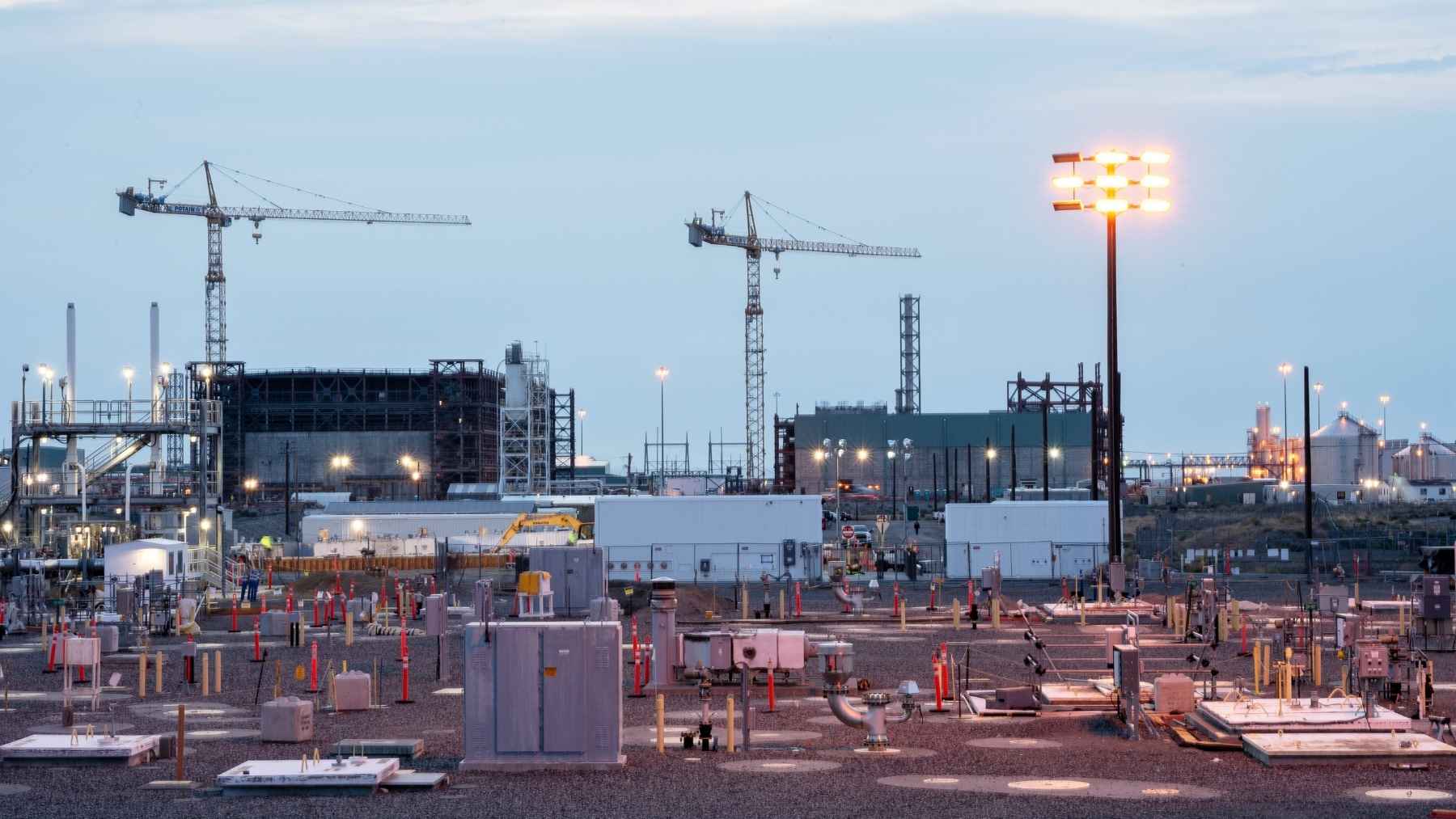
The site is TVA’s Bull Run plant, in the Claxton community of Anderson County, sitting on the north bank of Bull Run Creek directly across the Clinch River from Oak Ridge. TVA describes it as a single-generator coal-fired plant, decommissioned in December 2023 after 56 years in operation. World Nuclear News puts that single unit at 865 megawatts, in service since 1967.
One generator instead of four or six matters more than it sounds like it should. It means the building was laid out around one enormous turbine, so when the coal stops you are left with a single uninterrupted hall rather than a row of cluttered bays.
You also inherit everything that took years to permit in the first place. Transmission ties, cooling water off the Clinch, roads, a switchyard, and a workforce within driving distance that has spent careers around high-pressure steam.
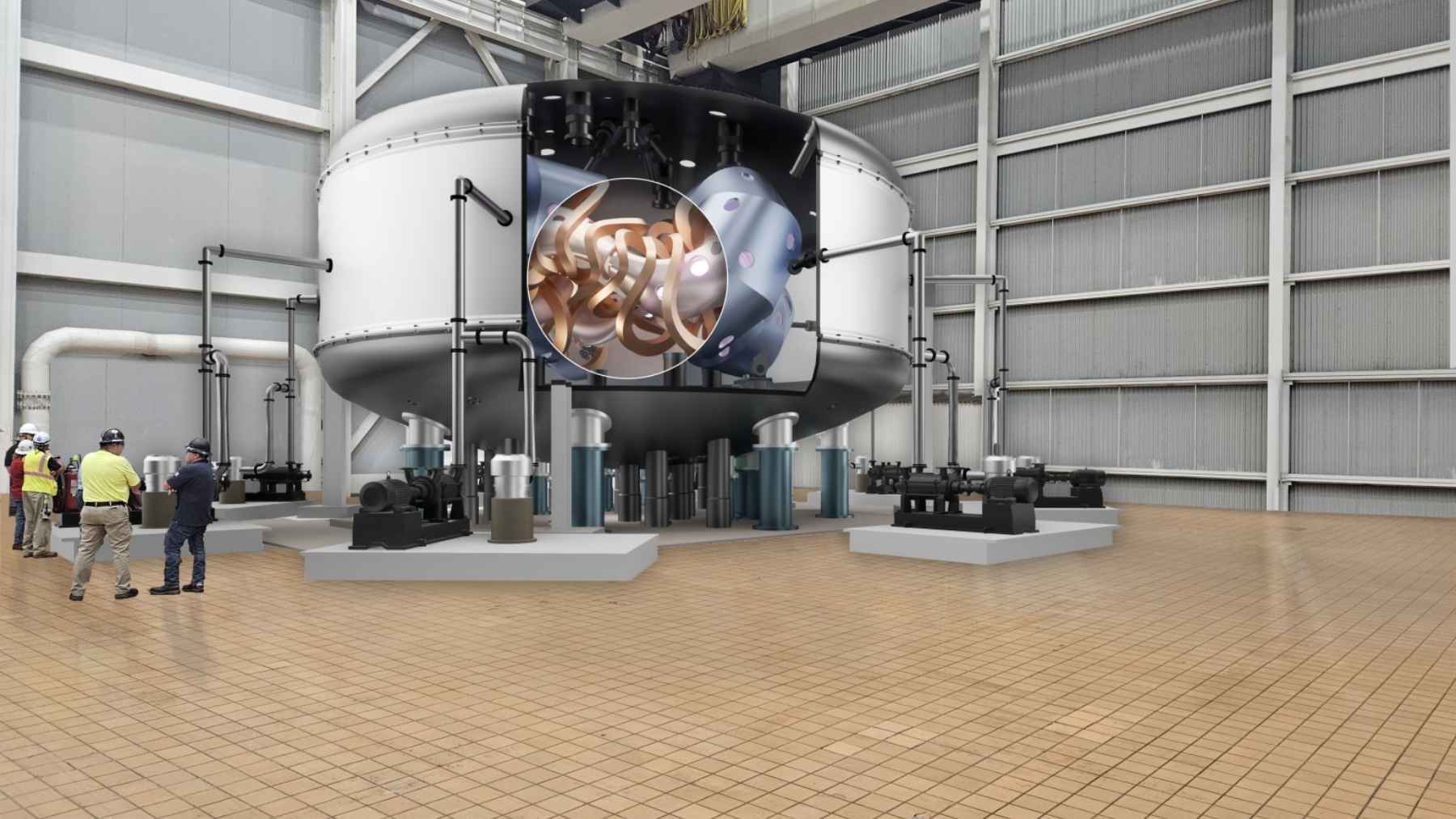
The 500-foot and 800-foot stacks were imploded in 2025 and the site is being cleared around the parts TVA wants to keep. The turbine building is one of the parts it wants to keep. TVA says a synchronous condenser is going in there to steady the regional grid, sharing the room with Infinity One, Type One’s prototype stellarator.
Which gives you a turbine hall containing one machine that spins without generating any power and another that will run without generating any power. Very different reasons, same address.
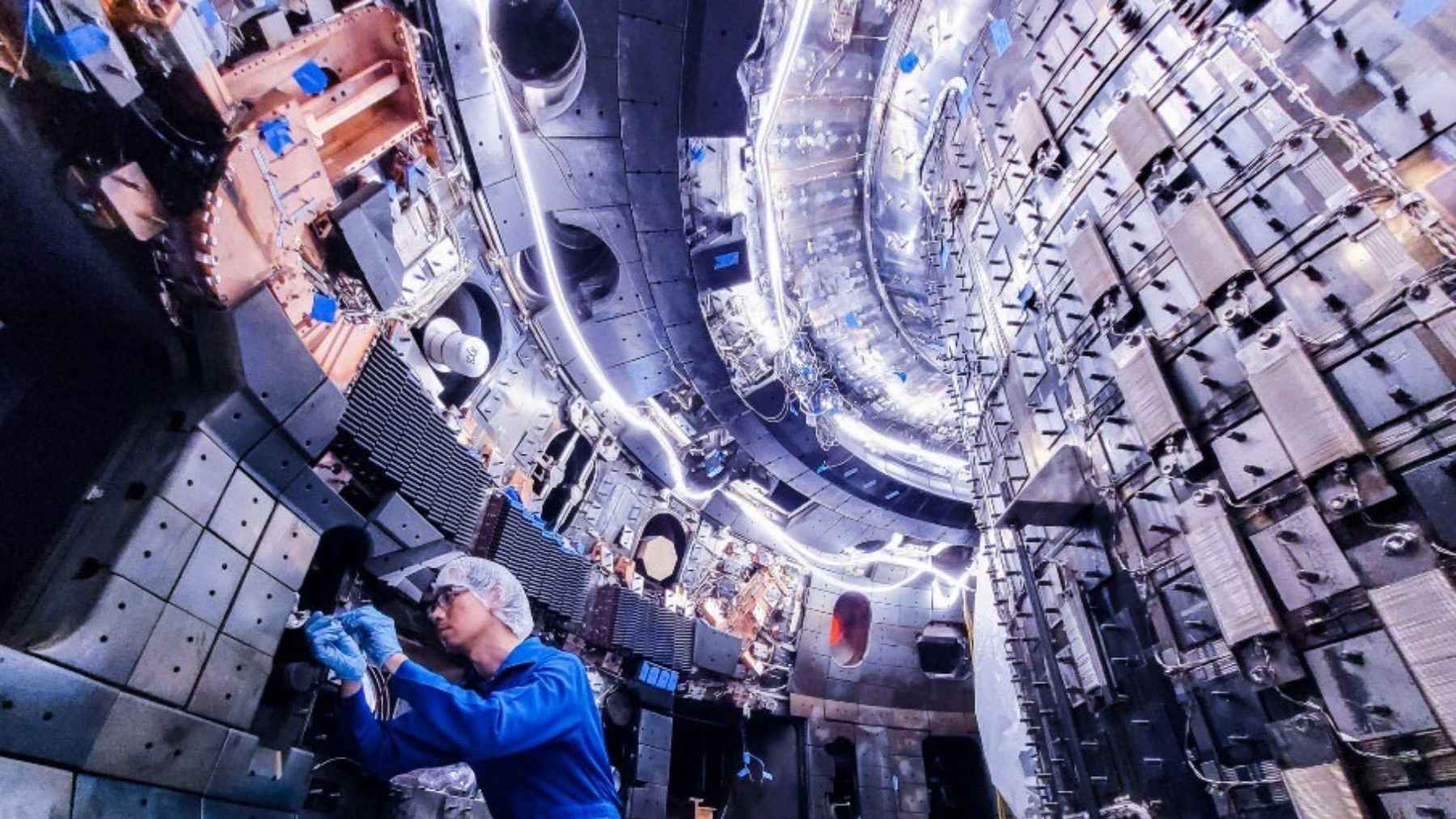
A stellarator is a tokamak that somebody twisted
Most fusion machines you have seen pictures of are tokamaks: a uniform donut that drives a big electrical current through the plasma itself to help hold it in place. It works, and it is the design behind the enormous ITER machine being lowered into a pit in southern France. The catch is that a plasma current is a temperamental thing to lean on, and tokamaks tend to run in pulses.
A stellarator throws the current away and asks the magnets to do all of it. To make that work, the ring gets twisted into a shape closer to a figure-8, and the coils have to be built in non-planar shapes that look like somebody sat on them.
That shape was considered nearly unbuildable for decades because nobody could model or machine it accurately enough. Supercomputing fixed the modeling half. High-temperature superconducting magnets are what Type One is betting on for the other half, using cable technology it sublicensed from Commonwealth Fusion Systems in 2025.
The payoff is that a stellarator can sit there and run continuously, which is the only mode a utility actually cares about. Type One is not shy about where the expertise came from either: the company says its co-founders built the first optimized stellarator at the University of Wisconsin-Madison in the 1990s, and that its chief technology officer spent 11 years as a director of Germany’s Wendelstein 7-X, the largest stellarator experiment in the world.
Feeding the thing is the part nobody puts on a poster
Which brings us back to those four patents. A stellarator burning deuterium and tritium has to be refuelled constantly, because ions get consumed in the reaction and others simply escape the magnetic fields holding them.
The best way to do it is to freeze hydrogen into solid pellets a few degrees above absolute zero and fire them into the core of the plasma at high speed. ORNL says this reaches the core far better than the alternative, which is essentially puffing gas at the edge and hoping.
Deuterium is abundant and behaves itself. Tritium is scarce, radioactive, and eats the equipment handling it, which is why three of the four licensed inventions are specifically built for tritium service: a gas gun, a screw extruder that keeps its seal while producing pellets continuously, and a reusable pressure relief valve rated below 20 kelvin.
The fourth is the one that tells you where this industry actually is. It recycles the leftover extrusion back into gas for more pellets, which cuts how much tritium you have to keep in inventory at any moment. ORNL’s own assessment of the state of the art is blunt: no pellet injector available today can produce them at the rate a working reactor would need.
“Fueling the fusion reaction with high repetition and high reliability is one of the most essential technologies,” said John Canik, chief science and engineering officer at Type One Energy, in ORNL’s announcement. He is describing a conveyor belt for ice. That is what stands between a physics result and a power plant.
Tennessee had to write the license before anyone could apply for it
There is a regulatory wrinkle here that gets skipped in most fusion coverage. Fusion machines in the United States are not licensed the way a fission reactor is. They fall under byproduct material rules, and in a state like Tennessee that means the state environmental agency, not the federal reactor regulator.
Tennessee did not have that framework, so it built one. On January 29, 2026, Type One, TVA and the Tennessee Department of Environment and Conservation announced the initial submission of a byproduct material licence application, which World Nuclear News reported as a first-of-a-kind filing for the state.
Compare that to the fission side of the same industry, where the queue of planned American reactors is bottlenecked less by concrete than by the handful of people qualified to sign the paperwork. Fusion is arriving with a smaller rulebook, largely because nothing has had to be written for it yet.
The rest of the timeline runs like this. TVA issued a letter of intent in September 2025 covering Infinity Two, with construction potentially starting as early as 2028. Infinity One is scheduled for commissioning and startup in 2029, and the same East Tennessee corridor is already getting the country’s first new nuclear fuel factory in roughly 50 years a short drive away.
What has not happened yet
Nothing at Bull Run has fused anything. Infinity One is a verification platform and, by Type One’s own description, a workforce training machine. It is there to prove that the magnets, the manufacturing and the fueling behave the way the design says, and it will not put a single watt on the grid when it starts.
The plant meant to do that, Infinity Two, currently exists as a design basis published across seven peer-reviewed papers, plus preliminary engineering by AECOM. Any final decision to build it needs TVA board approval, regulatory review, and a fit with the utility’s least-cost planning. That is three separate places the project can stall.
There is also a number worth watching. TVA’s fusion page and the January licensing announcement both put Infinity Two at 350 megawatts of electrical output. Type One’s own technology page, updated in July, now describes 800 megawatts of fusion power delivering 400 MWe to the grid. Fifty megawatts is not a rounding error, and nobody has explained the change.
What is not in doubt is the logic of the address. A coal plant that ran for 56 years leaves behind the expensive, slow, permit-heavy half of building a power station, already finished and already wired into the grid. Type One gets to skip all of it and argue about magnets instead. The magnets still have to work.
 ronsonntag DRIVER1 month ago