
Most of the water you will drink today has been around. It has been rain, river, cloud and tap water, evaporated and dropped back down and run through the cycle again, over and over, for as long as the planet has had weather to do it with. That churn almost never stops. But about two miles under a zinc and copper mine in northern Ontario, there is water that fell out of the cycle and stayed out, sealed inside the rock for close to two billion years.
That makes it older than every plant, every animal, and nearly everything we would recognize as complex life. The geochemist who tracked it down followed it by smell, sampled it, and at one point tasted it on purpose. And the strangest part is not the age or the taste. It is that something is still alive in it, down there in the dark, feeding on chemistry pulled straight from the rock instead of anything to do with the sun.
The deepest place on Earth you can actually stand
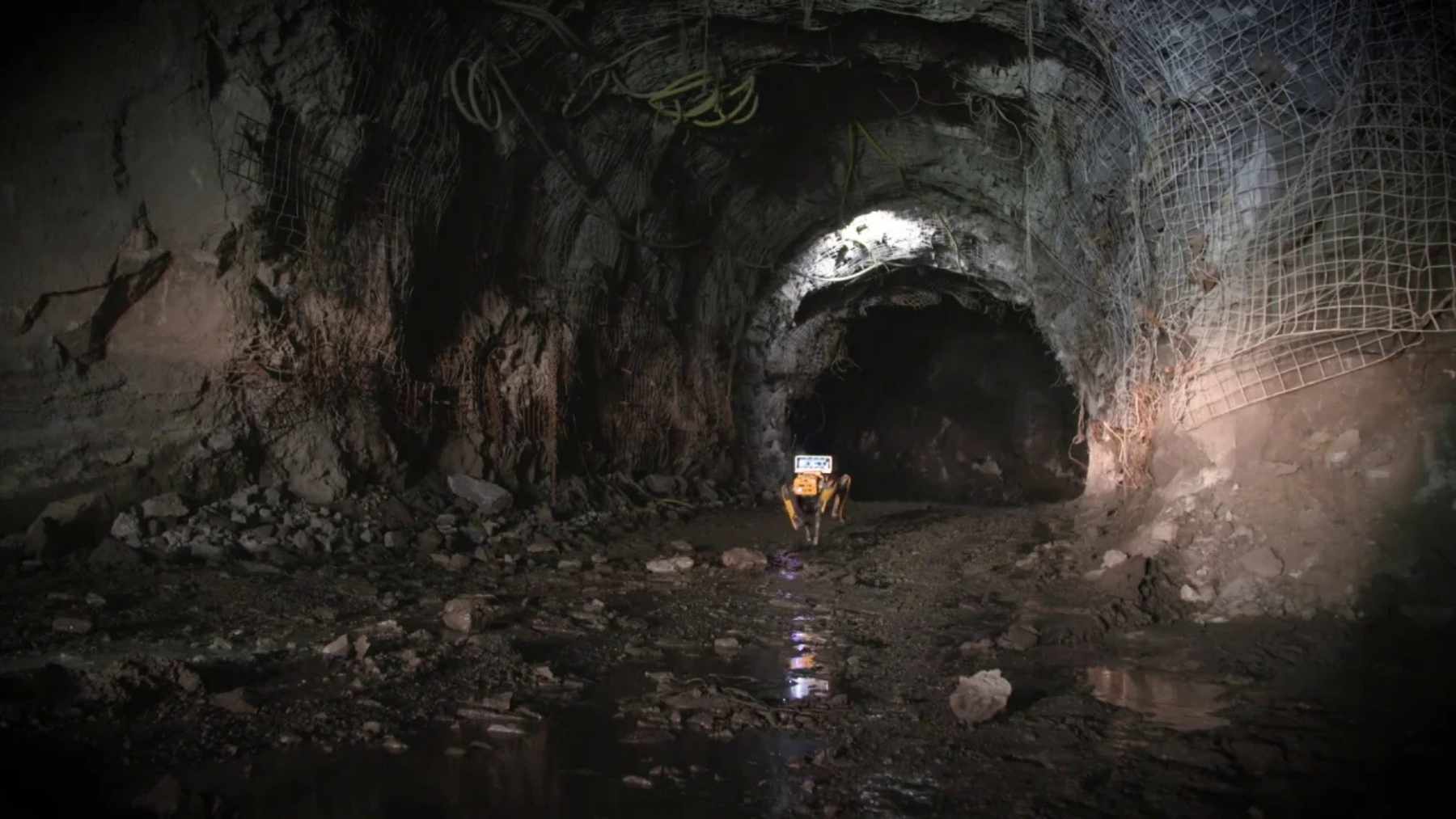
The mine is Kidd Creek, near Timmins, run by Glencore, and it holds a record that matters here: it is the deepest base metal mine on the planet, and the bottom of its No. 4 shaft is the deepest point on land a human can physically stand. That floor sits roughly 3,014 meters (about 9,889 feet) below the surface. The rock down there is ancient in its own right, volcanic stone that was ocean floor around 2.7 billion years ago, later tipped on its side by tectonics and then mostly left alone, never cooked by fresh volcanism, never badly deformed. That long stillness is exactly what let the water keep its secrets.
Because the mine never stopped chasing copper and zinc deeper, the science got to ride along. In 2013, a University of Toronto team pulled water from about 2.4 kilometers down and dated it to roughly 1.5 billion years, already a record by a wide margin. When the tunnels pushed deeper, the researchers went with them, and by 2016 they were sampling fractures near 3 kilometers and dating that water to about two billion years. Every level down moved the record further back.
The trapped gases work like a built-in clock
Putting a date on water this old has nothing to do with carbon dating or counting rings. The trick is noble gases. Helium, neon, argon, krypton and xenon are produced by radioactive decay in the surrounding rock, and once water gets sealed into a fracture and stops mixing with anything else, those gases trickle in and pile up at a known pace. Measure how much has accumulated and you can work backward to how long the water has been sitting still.
Barbara Sherwood Lollar, the University of Toronto geochemist who has led this work for decades, told Maclean’s that the noble gases accumulate in the trapped water “like passengers getting on a train.” The team’s peer reviewed dating puts the Kidd Creek water on a one to two billion year timescale, which is a careful way of saying it predates multicellular life having any real foothold on Earth.
Up to ten times saltier than the sea, and somebody drank it
You do not find this water with fancy sensors. You find it by following your nose. The brine gives off a musty, sulfurous smell, and the team traces it through the tunnels back to the exact crack where it is seeping out. When they get there, it is not some damp patch in the wall either. It flows, liters per minute, in volumes nobody expected from water supposedly locked in stone.
It is also deeply unpleasant stuff. The brine runs up to ten times saltier than seawater, thick and faintly syrupy, and Sherwood Lollar has tasted it herself to characterize it, reporting that it is about as terrible as that makes it sound. That salt is not a footnote. It is part of why the water stayed chemically frozen for so long, and part of what the life down there has had to survive.
Something is alive down there, and it runs on rock, not sunlight
Almost all life you have ever met runs, one way or another, on the sun. Plants photosynthesize, things eat plants, things eat those things, and the whole chain traces back to sunlight. The microbes in the Kidd Creek water never had that option. They are chemolithotrophs, which is a mouthful that means organisms living off rock chemistry, and they get by on hydrogen and sulfate produced when the water reacts with the stone around it.
The hydrogen half of that diet has a strange origin. It comes from radiolysis, where radiation thrown off by naturally decaying uranium, thorium and potassium in the rock splits water molecules apart and frees hydrogen, the same general physics that warms the granite under Cornwall from the inside. The reactions never stop, so the microbes never run out. Those same Timmins boreholes vent that hydrogen in quantities large enough to matter as a fuel in their own right, which is a story we got into separately. Down in the fractures, though, it is simply lunch.
The sulfate half is the giveaway that something is eating it. That chemistry looks a lot like the mineral rich hydrothermal vents on the ocean floor, the sort of sunless setting many researchers think life may have started in. When the discovery was first presented in 2016, the team had the chemical fingerprint but not the cells. By 2019 they had published evidence of an actual, persistent microbial population living in the fluid, and a 2024 paper in Nature Communications measured how fast one of the microbes’ food molecules cycles through the Kidd Creek fractures and found a turnover rate that could, in principle, keep a colony fed. Whatever is down there is not a fossil. It is hanging on.
Canada was not a one-off
The obvious question is whether Ontario got lucky, or whether this kind of ancient, sealed-off water is hiding all over the place. In 2022 the same team got their answer. They found a second reservoir of billion-year-old water, this one about 2.9 kilometers down in a South African gold and uranium mine and dated to 1.2 billion years. Different continent, different rock, the same impossibly old water carrying the same kind of chemistry that can feed life. As Sherwood Lollar put it, “the extreme outposts of the world’s water cycle are more widespread than once thought.”
The scale behind that sentence is the unsettling part. The Precambrian basement rock these waters sit in makes up roughly 72% of all the continental crust, and by the researchers’ own estimate it may hold up to 30% of the groundwater on the entire planet. Almost none of it has ever been sampled, for the simple reason that nearly nothing digs deep enough to reach it. A working mine is one of the only doors in.
All of which is why people who study other planets keep finding their way to a mine outside Timmins. If life can run for a billion years on nothing but rock chemistry and trapped water, sealed off from the sun, then the subsurface of somewhere like Mars, dead and dry on the surface, starts to look a lot less hopeless, and NASA researchers have gone underground at Kidd Creek to study the closest analog we have. We have mapped the surface of Mars in finer detail than we have mapped two miles beneath our own feet. The water down there is still flowing, the microbes are still feeding, and most of that ancient ocean of groundwater is still sitting in the dark, completely unsampled, waiting on the next mine to dig deep enough to reach it.