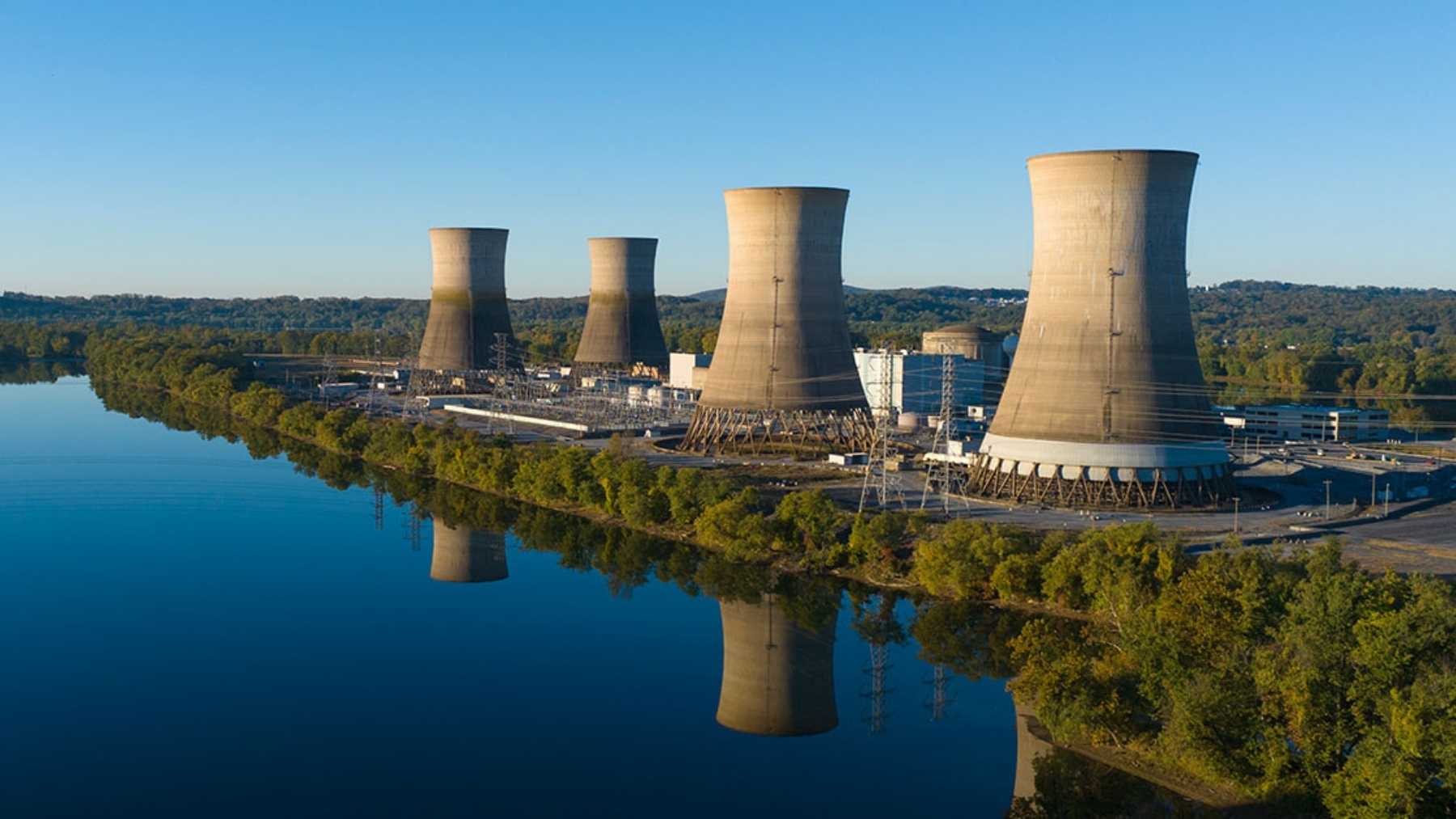

Say the words Three Mile Island and most people picture the same thing: 1979, a partial meltdown, and the worst commercial nuclear accident in American history.
That reactor is not the one coming back.
The one next to it is. Three Mile Island Unit 1 sat right beside the reactor that failed in 1979, never had an accident of its own, and ran without much fuss until 2019. Now its owner wants to switch it back on.
And every watt it makes already has a buyer. Microsoft is taking all of it for the next twenty years to feed the artificial intelligence humming inside its data centers.
The plant has a new name too. Constellation Energy is restarting the reactor as the Christopher M. Crane Clean Energy Center, a $1.6 billion project that would put 835 megawatts of carbon-free power back onto the Pennsylvania grid. And this summer, it took one of its last big steps toward actually happening.
The reactor that melted down isn’t the one coming back
Three Mile Island always had two reactors, and the difference between them matters here.
Unit 2 is the one that failed. On March 28, 1979, it suffered a partial meltdown, the accident that helped bring new nuclear construction in the United States to a near halt for a generation. It never ran again.
A different company owns Unit 2, and it is still being decommissioned to this day.
Unit 1 is the reactor Constellation is restarting. It sat next door through all of it, kept operating for another four decades, and was shut down in 2019 for a much duller reason than 1979: cheap natural gas had made it unprofitable to run.
So the plant coming back online is not the one that scared a generation of Americans off nuclear power. It is the healthy reactor beside it.
The new name marks the reset. Unit 1 is returning as the Christopher M. Crane Clean Energy Center, named after former Exelon chief executive Chris Crane, who spent his career in the nuclear business and died in 2024.
Microsoft is buying every watt for the next twenty years
The reason Unit 1 is worth reviving at all comes down to who signed the check.
In September 2024, Constellation and Microsoft agreed to a 20-year power purchase agreement covering the entire output of the restarted plant. Not part of it. All of it.
Microsoft gets every one of those 835 megawatts, which Constellation says is roughly the electricity used by 800,000 homes.
That power is earmarked for Microsoft’s data centers across the regional grid run by PJM Interconnection, which reaches from the Mid-Atlantic into the Midwest and serves Pennsylvania and a dozen other states.
The appeal to a software company is simple. AI data centers run around the clock and pull enormous, steady loads. Wind and solar are cheap, but they stop when the weather does. A reactor does not. It runs flat out, day and night, which is exactly the kind of firm, carbon-free power the tech industry has decided it needs to feed the AI boom.
Microsoft is not alone in this math. Amazon, Google and Meta have all signed their own nuclear deals over the past two years. China is chasing the same idea from the other direction, even pitching a reactor small enough to sit on the back of a truck straight at the data centers eating the grid.
Most of the American deals ride on small modular reactors that do not commercially exist in the U.S. yet. Constellation’s pitch is simpler: you don’t have to build a new reactor if you can restart one that already works.
Constellation ordered three new transformers and moved early
Switching a mothballed reactor back on is not a matter of flipping a breaker. It is a monster hardware job.
Constellation has run thousands of inspections and equipment checks across the plant’s steam generator, main generator, rotor, turbines and condensers.
It has awarded a contract for three brand-new main power transformers, one of the largest single equipment purchases the restart requires, and put an extra $35 million toward getting them delivered to the site in 2026, according to World Nuclear News.
It has also begun training and licensing the reactor operators who will eventually sit in the control room, restored the main office building, and worked through upgrades to the control room simulator. The company says the restart is bringing more than 600 jobs back to Dauphin County.
The federal government has a stake in this too. In November 2025, the Department of Energy closed a $1 billion loan for the project, which Constellation says lets it borrow more cheaply and put the savings back into plant upgrades.
All of it has moved fast enough that Constellation now expects to restart the reactor in the second half of 2027, a year ahead of the 2028 date it first floated. Chief executive Joe Dominguez has said the plant can be “returned to service better than ever.”
The grid nearly couldn’t handle all its power
Then came a problem that had nothing to do with the reactor itself: the wires.
The plant can be ready to generate by 2027. But PJM Interconnection, which runs the regional grid, determined that the transmission network needed major upgrades before it could safely carry all 835 megawatts out to customers.
Those upgrades, including new 765- and 500-kilovolt lines, aren’t expected to be finished until December 2030, and could slip further.
That is a real headache for a nuclear plant. Run a reactor well below its rated output for long stretches and the equipment starts to suffer from vibration and wear, which becomes its own reliability problem.
Constellation’s fix was to go around it. On June 1, 2026, the Federal Energy Regulatory Commission approved a waiver from PJM’s rules that lets the company shift 760 megawatts of grid-connection rights from its Eddystone power plant near Philadelphia over to Crane, as Utility Dive reported. FERC signed off over the objection of PJM’s own independent market monitor.
The upshot is that Crane can now deliver its full output on the 2027 timeline, instead of idling at reduced power while it waits on transmission lines that are years away.
The last big approval is open for public comment until July 8
The final say belongs to the Nuclear Regulatory Commission, and that review is happening right now.
In June, NRC staff released a draft environmental assessment along with a draft “finding of no significant impact,” their preliminary conclusion that restarting the reactor would not significantly harm the surrounding environment.
The public has until July 8, 2026, to weigh in before the agency makes its final call, and the filings are posted through the Nuclear Regulatory Commission.
If the NRC gives final sign-off, Constellation has said it is in position to start generating electricity at Crane by late 2027.
This has not been a quiet, done-deal affair. The NRC has held public meetings near Middletown, drawing crowds that voiced a mix of concern and support, much of it turning on jobs, safety and the plant’s history.
It has plenty of backing at the federal level. Energy Secretary Christopher Wright toured the station in December 2025 and, as the Pennsylvania Capital-Star reported, framed the project as “delivering on two of our large promises,” meaning cheaper electricity and winning the race in AI.
Environmental groups and some residents remain wary of restarting a decades-old reactor. But the political and regulatory momentum is clearly running one direction.
Crane won’t be the first reactor to make this trip. In Michigan, the Palisades plant on the shore of Lake Michigan has already become the first U.S. reactor pulled out of decommissioning and cleared to run again, and a shuttered plant in Iowa is trying to follow. Reviving dead reactors has quietly turned into a strategy.
But none of them carry the weight of the name on this one. The site most Americans link to nuclear power’s worst day is now lined up to be part of its comeback, powering the servers behind a technology that barely existed the last time Three Mile Island was in the headlines.
Whether that reads as redemption or as pushing your luck probably depends on how you felt about nuclear power in the first place. Either way, the healthy reactor beside the famous one is coming back, public comment period and all, with Microsoft’s data centers waiting on the other end of the line.