
Antarctic research stations have run on diesel generators for decades, and for good reason. The stuff is energy-dense, easy to ship in by icebreaker, and works whether it’s pitch black for three months or the wind is trying to peel the roof off your hut. There’s no grid cable running to the bottom of the planet, so a diesel tank has always been the safe bet. Which is why, when somebody announces they want to swap that diesel for green hydrogen down there, your first instinct is to wait for the reality check.
Hyundai is going to try anyway. The Korean automaker, better known stateside for the Ioniq 5 and the Nexo fuel-cell SUV, signed a deal this month to build a green hydrogen grid at South Korea’s Antarctic research stations, putting solar panels, electrolyzers, storage tanks and fuel cells where the diesel currently lives. If it works in a place where a broken part takes weeks to replace and the sun disappears for months at a stretch, it’s going to work pretty much anywhere else.
The deal, the partners and what actually gets built
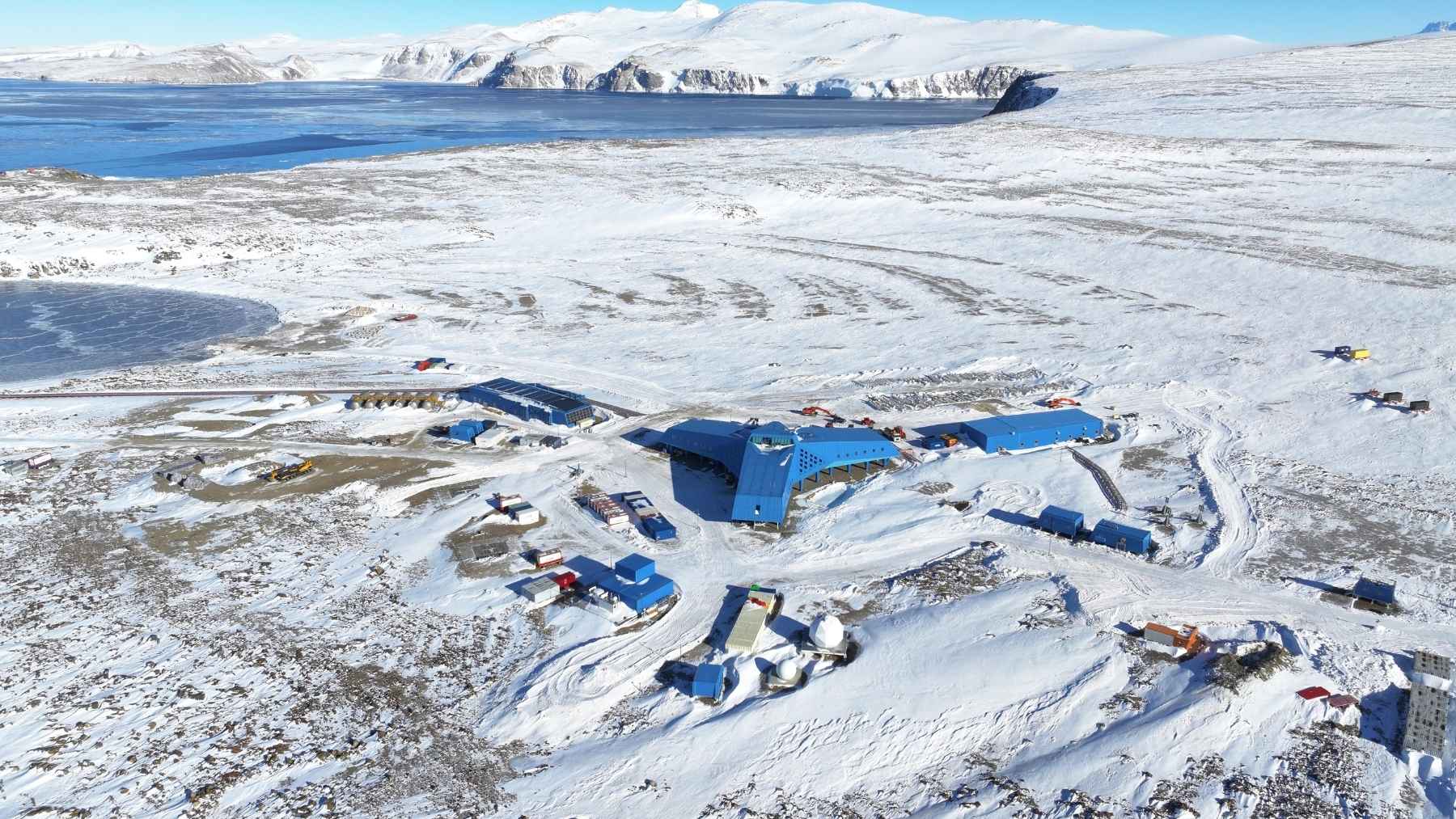
This isn’t a press-release vision board. It’s a memorandum of understanding signed with South Korea’s Ministry of Oceans and Fisheries and the Korea Polar Research Institute (KOPRI), aimed at weaning the stations off diesel-generated power. KOPRI is the agency that runs both of Korea’s Antarctic bases, King Sejong and Jang Bogo, along with the Dasan station up in the Arctic and the research icebreaker Araon. Hyundai brings the hardware; Korea brings the science and the brutal job of getting anything onto the ice in one piece.
The hardware list is more interesting than the average corporate sustainability slide. Hyundai plans to install water electrolysis equipment, hydrogen compression and storage systems, and hydrogen fuel-cell generators at the research stations. When the Antarctic summer sun is producing more solar power than the base needs, the surplus electricity gets dumped into an electrolyzer that splits water into hydrogen and oxygen. The hydrogen is compressed, stored, and held until the sun goes away, at which point the fuel cells reverse the reaction and push electricity back into the base. It’s a hybrid setup, not a diesel exorcism: the system grows the share of clean energy over time while keeping the lights reliably on.
Why Antarctica is the worst possible place to do this, and that’s the point
If you set out to design a torture test for a hydrogen energy system, you’d more or less end up with Antarctica. Storms, blowing snow, and a sun that either never sets or never rises depending on the season make solar output almost impossible to plan around. King Sejong sits on King George Island, near the tip of the Antarctic Peninsula; Jang Bogo is on the other side of the continent, in Terra Nova Bay on the Ross Sea coast. Both run into the same wall: no transmission line, no pipeline, and no cheap way to ship a replacement anything.
That’s the validation question Hyundai actually cares about. The company has spent the last couple of years pitching its HTWO hydrogen brand as a full ecosystem play, not just a fuel-cell drivetrain for cars. The idea behind HTWO Grid is to tie together the whole value chain from production to use, which on the ground means electrolyzers, storage, distribution and fuel cells sold as one package. Antarctica is the marketing video that writes itself. The catch is that it only works if the thing keeps the lights on through a polar winter without anyone flying down to reboot it.
Hyundai builds its own electrolyzer, and that’s the real story
Here’s the part that makes this more than a stunt. Hyundai isn’t buying somebody else’s electrolyzer to bolt onto the ice. It builds its own. The company completed a 1-megawatt containerized PEM electrolyzer last year (it has been running in demonstration, producing more than 300 kilograms of high-purity hydrogen a day) and has a 5-megawatt system in development on Jeju Island. Its new plant in Ulsan, a 930 billion won ($660 million) site set to open in 2027, will mass-produce both hydrogen fuel cells and PEM electrolyzers, the first electrolyzers of their kind built at scale in Korea. Hyundai says it has already localized roughly 90 percent of the electrolyzer’s components.
That last detail is where the economics get interesting. PEM electrolyzers and PEM fuel cells share a lot of the same hardware (membranes, catalysts, bipolar plates), and Hyundai has been mass-producing PEM fuel cells for the Nexo since 2018. If the same factory tooling can spit out the stack that makes the hydrogen and the stack that burns it, the math starts to look very different from a one-off science project. PEM gear currently runs about 1.5 times the price of older alkaline electrolyzers, but Hyundai reckons sharing fuel-cell components can drag that cost below alkaline. The price of PEM electrolysis has been coming down on the catalyst side too, as researchers chip away at how much precious metal each stack actually needs. An Antarctic base is a small grid that needs every piece of that puzzle (production, storage, power) in one box. Prove the package at Jang Bogo, and you can sell the same box to a mining camp in Chile, a Pacific island microgrid, or a military outpost that would rather not run a fuel convoy.
The quote, and what the timing actually means
The official line comes from Hyundai Motor president Sung Kim, who called the project “a major first step toward the station’s transition to clean energy.” The operative words are “first step.” Nobody at Hyundai is pretending the diesel generators get yanked next winter; this is staged. The timing isn’t random, either. King Sejong turns 40 in 2028, which hands Hyundai and KOPRI a natural deadline to show hardware instead of slides. King Sejong opened in February 1988. Jang Bogo, the newer mainland base, was built by Hyundai Engineering and Construction and opened in February 2014, housing 23 people in winter and 62 in summer in a 4,000-square-meter building with three wings. So Hyundai already has fingerprints on the concrete down there. Wiring its hydrogen kit into a base its own construction arm physically built is a far shorter trust fall than starting cold.
Hyundai isn’t the only one trying this
Hyundai isn’t even the only group pointing an electrolyzer at the Antarctic ice this year. The Chilean Antarctic Institute (INACH), working with Germany’s GIZ agency under an EU-backed program called Team Europe Renewable Hydrogen Development, has been validating a hybrid solar, wind and hydrogen system at its Profesor Julio Escudero base. That base sits on the same King George Island as King Sejong, so by polar standards the two projects are practically neighbors. The Chilean pilot is still in the design-and-feasibility stage, with installation pencilled in for 2026 and 2027, but the conclusion both teams keep reaching is the same one.
That convergence is the real story. Two independent programs landing on the same answer at the same time means hydrogen-plus-renewables microgrids have moved past the PowerPoint phase for off-grid science, even while the technology still struggles to pencil out on normal grids where natural gas is cheap. Antarctica sidesteps that natural-gas comparison entirely. Diesel down there costs whatever it costs to ship a tanker through pack ice, and the carbon footprint of that supply chain is the line nobody likes to print on the brochure.
The real customers are nowhere near the ice
For Hyundai, the Antarctic base is a demo. The real customers are everywhere else. A system that can keep a research station lit through Antarctic storms and months of darkness is, by definition, a system you can sell to an island microgrid, a remote mining site, a disaster-response zone, or a military outpost that doesn’t want to babysit a fuel convoy. That’s a genuine market, and right now diesel is the only thing that reliably serves it. It also slots neatly into Korea’s national hydrogen push, one of the most aggressive state-backed hydrogen programs anywhere.
So watch what gets installed, not what gets announced. If a Hyundai-built electrolyzer keeps a Korean base running through a polar winter without a service call, the HTWO sales pitch gets a lot easier on every continent that isn’t covered in ice. If it doesn’t, the diesel generators are still sitting right there as backup, and Hyundai goes home with a slightly less exciting case study. Either way, it’s a cleaner test than any subsidized European pilot, because in Antarctica there’s no grid to fall back on.
 @georgekafantari ROOKIE4 months ago