
Building a nuclear reactor is about the least subtle thing you can do with heavy machinery. It needs some of the largest cranes ever built, it involves lowering pieces of steel that weigh several hundred tons, and for a while it leaves a deliberate hole in the roof of the building you are trying to seal. Turkey has been running exactly that playbook on its Mediterranean coast for the better part of a decade, and the country has never had a working reactor before in its history.
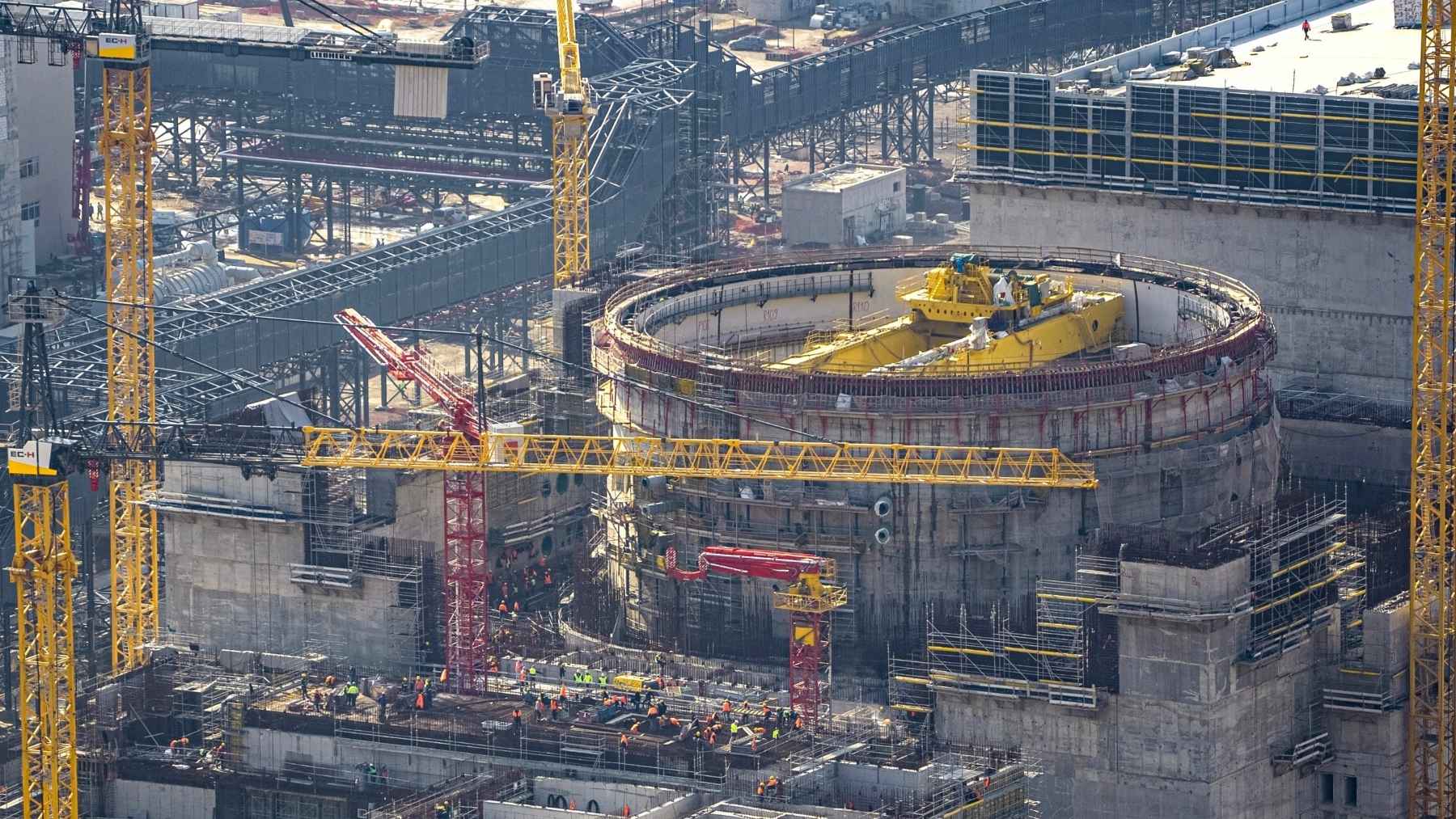
As of this week, that is about to change. Rosatom, the Russian state nuclear company building the plant, says construction on the first unit is finished and the reactor has gone into cold testing, the last big checkpoint before it starts making power. The site is Akkuyu, near Mersin in southern Turkey, and it is being built as four reactors at once. When all of them are running, the plant is meant to cover roughly a tenth of Turkey’s electricity. It is also, by Rosatom’s own account, the first nuclear plant anywhere built under a build-own-operate model, which is a financing arrangement before it is anything else.
Lowering 350 tons of steel through an open roof
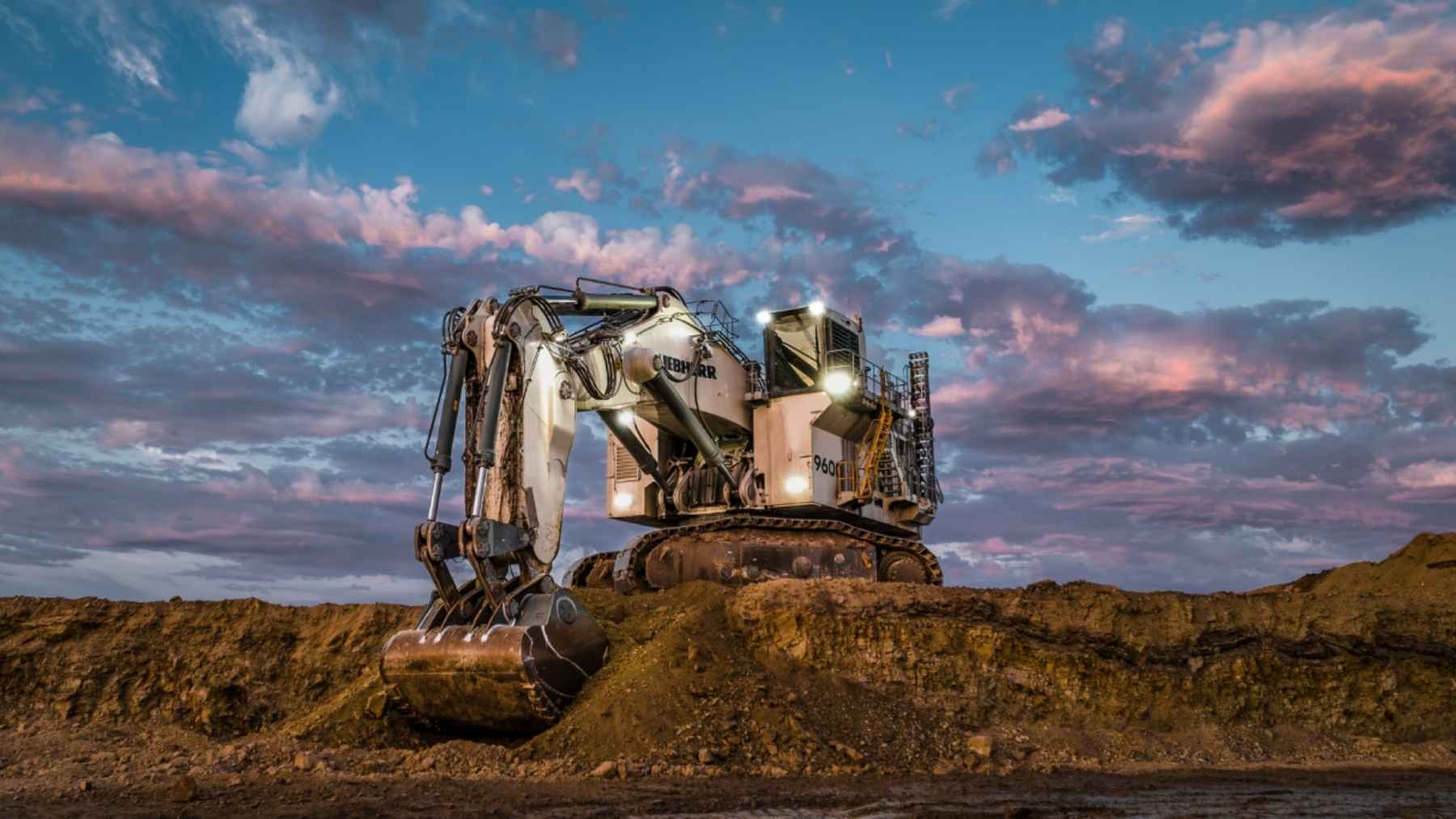
The single most important piece of any reactor is the pressure vessel, the thick steel can that holds the nuclear fuel and the water around it. At Akkuyu, those vessels did not get walled in. They got lowered into the reactor building from above, through the open top, before the dome went on. The crane doing it is a Liebherr LR 13000, which Liebherr bills as the most powerful conventional crawler crane in the world, rated to lift up to 3,000 tons. There are two of them parked on the site, the first delivered back in 2019.
The vessels themselves run somewhere between roughly 330 and 350 tons depending on the unit. The one for unit 3, the most precisely documented of them, weighed 350 tons and measures about 11.5 meters (38 feet) long, and it was slid into place using the open-top method at the end of 2024.
They are built at the Atommash plant in Russia and shipped to Turkey by sea. Leaving the roof off sounds backwards for a building whose entire job is to contain things, but it lets crews install the big primary-circuit equipment before they close the containment, which saves a lot of calendar. The same trick has been used on reactors in China, Japan, Bulgaria and Russia.
If lowering a reactor through a hole in the roof sounds like an oddly specific Russian specialty, it is the same playbook behind Rosatom’s floating nuclear plant up in the Arctic, just bolted to a coastline instead of a barge.
The 500-ton crane that runs in a circle under the dome
The freshest of these maneuvers happened in March 2026 on unit 2, and it is a good illustration of the scale involved. Crews installed the main part of the polar crane, a 282-ton steel bridge, setting it 38.5 meters (about 126 feet) up inside the reactor building using a heavy-duty crawler crane. According to World Nuclear News, the full polar crane comes to about 500 tons once the trolleys and lifting gear are assembled.
What makes a polar crane worth the trouble is the shape. It is a circular overhead crane: the bridge rotates on a rail that runs in a ring above the reactor, and the trolley slides along the bridge, so the hook can reach any point inside the building. It is the machine that handles the heavy lifting for the entire 60-year life of the plant, moving equipment, doing maintenance and swapping fuel.
On unit 1, the same kind of crane went up in about four hours. Before the unit 2 bridge could be set, crews had to pour the fifth tier of the inner containment first, which meant 240 cubic meters of self-compacting concrete placed in one continuous six-hour pour.
Unit 1 is basically built, and it just went into cold testing
All of that is the backstory. The headline is unit 1, and unit 1 is essentially done. Rosatom says construction on the first reactor is complete, and this week the reactor went into cold hydraulic testing, a pressure-and-leak check expected to wrap in a few weeks, with commissioning operations to follow. Rosatom chief executive Alexey Likhachev, in remarks carried by Russia’s TASS news agency, described the stage as “like the final 100 metres of a 42-kilometre marathon.”
Earlier this month, crews ran a full dress rehearsal for the part that actually makes it a reactor. On June 2 they loaded 163 dummy fuel assemblies into the pressure vessel, a five-day round-the-clock operation supervised by Turkey’s nuclear regulator. The dummies match real fuel in size, weight and shape but contain no nuclear material at all.
The whole point is to prove that the handling equipment and the procedures work before any actual uranium goes near the core. Once the cold and hot functional tests are finished, the reactor can be fueled for real and started up. Turkey’s energy minister, Alparslan Bayraktar, has told reporters the target is first electricity by the end of the year, in a statement from the energy ministry after the fuel-loading test. The date has moved before, though. Unit 1 was once aimed at 2023.
Sanctions turned the last stretch into a scavenger hunt
The reason the schedule kept slipping is not really about cranes. After 2022, the supply chain came apart. Rosatom says Siemens, which had been contracted for some of the equipment, did not deliver hardware that had already been paid for. The company re-contracted the gas-insulated switchgear from China in 2024, and says the relevant section for unit 1 has since been installed, tested and energized from the Turkish grid.
The money got complicated too. Roughly $2 billion of project funds were frozen abroad, and Russia put up about $9 billion in fresh financing late last year for a project valued near $20 billion. The build-own-operate structure is the reason any of this kept moving: Rosatom owns the plant, carries the financial risk, and will run it for decades, selling the power to Turkey under a fixed-price arrangement. That is also why Akkuyu survived when Turkey’s other planned nuclear project, at Sinop, collapsed under its costs. Only the partner that owned the asset stuck around.
Four reactors, a tenth of the grid, and a 60-year bet
The end product is four VVER-1200 reactors, a Generation III+ pressurized-water design, each rated at 1,200 MW, for 4,800 MW total. That is the chunk meant to cover about 10% of Turkey’s electricity, roughly 35 billion kWh a year, from a single site. Each reactor runs on one fuel load of 163 assemblies of uranium enriched to 5%, and the plant is designed for a 60-year life that can be stretched to 80. All four units are under construction at the same time, with first concrete poured between 2018 for unit 1 and 2022 for unit 4, and the back three targeted out toward 2028.
Turkey is not planning to stop at one plant. It has more reactors penciled in for Sinop on the Black Sea coast and for the Thrace region, with talks reported with South Korea’s KEPCO and Canada’s AtkinsRéalis, and it is aiming for 7.2 GW of nuclear capacity by 2035 and 20 GW by 2050. It is a different bet from the small, portable reactors getting attention elsewhere, like China’s truck-mounted reactor aimed at data centers, or the modular units Canada is building by lowering a 953-ton basemat into a shaft in Ontario. Akkuyu is the old-school version: four big reactors, one coast, decades of baseload.
The schedule has slipped before. Turkey first wanted unit 1 running in 2023, then late 2025, and now the end of 2026, and given how many of those dates have come and gone, another slip would not be a shock. But the steel is in, the dummy fuel went in and came back out, and the reactor is sitting in cold testing on a coast that has never produced a watt of nuclear power. That is not a slide in a presentation anymore. Whether it switches on in December or drifts into next year, Turkey has gotten closer to its first reactor than it ever has, and the cranes that put it there are already moving on to units 2, 3 and 4.