
Corn is about as sun-hungry as crops get. Ask any farmer, or anyone who’s tried squeezing a few stalks into a shady backyard, and you’ll hear the same rule: full sun or don’t bother. So when a French solar company reported last week that the corn under one of its panel canopies outyielded the corn in the open field beside it, I figured there’d be a catch.
There’s a catch, sort of, and it’s the weather. France spent this spring and summer in exceptional drought and heat, and in a year like that a cornfield has more sunlight than it can use and less water than it needs.
The corn had a brutal season
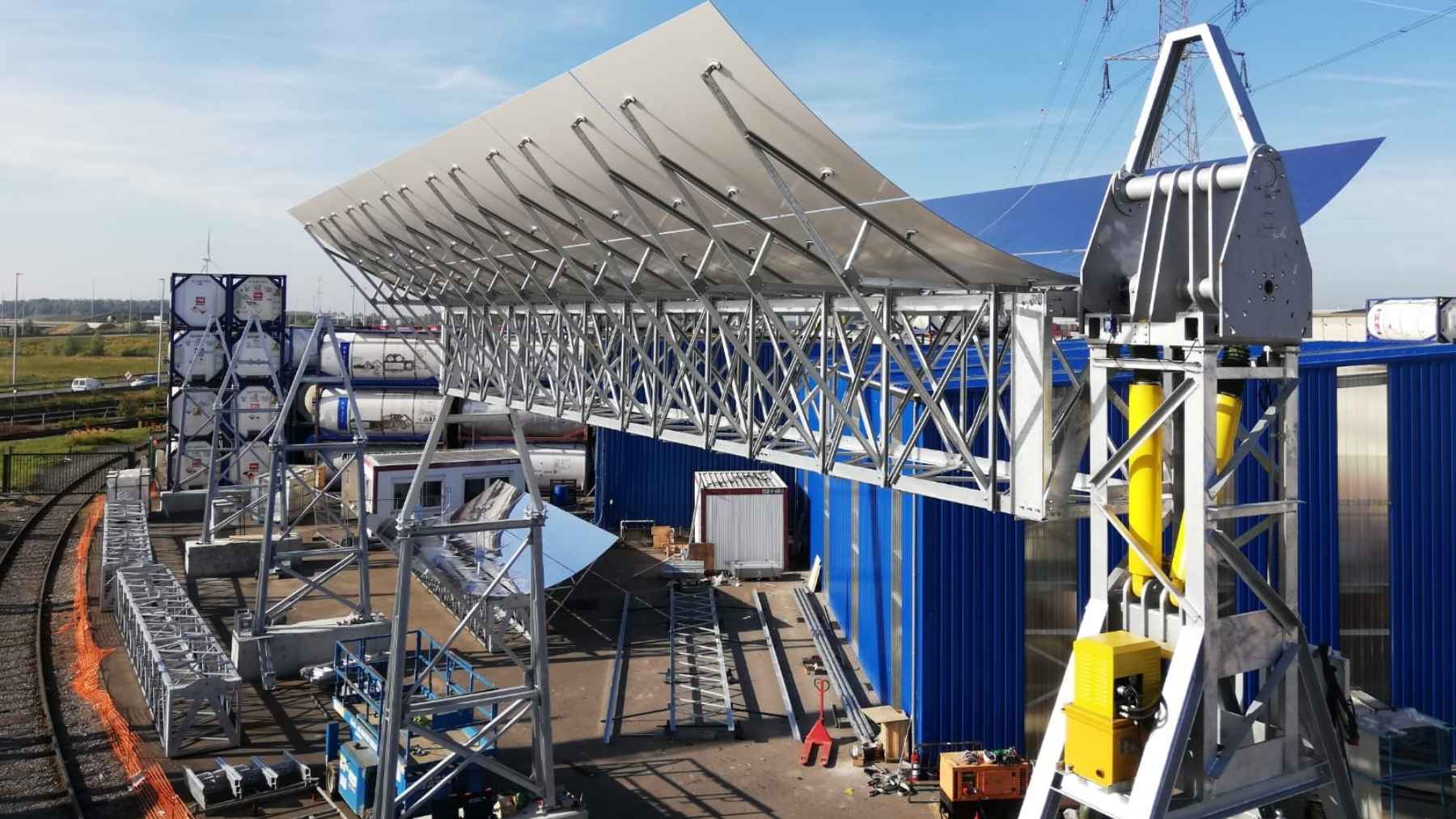
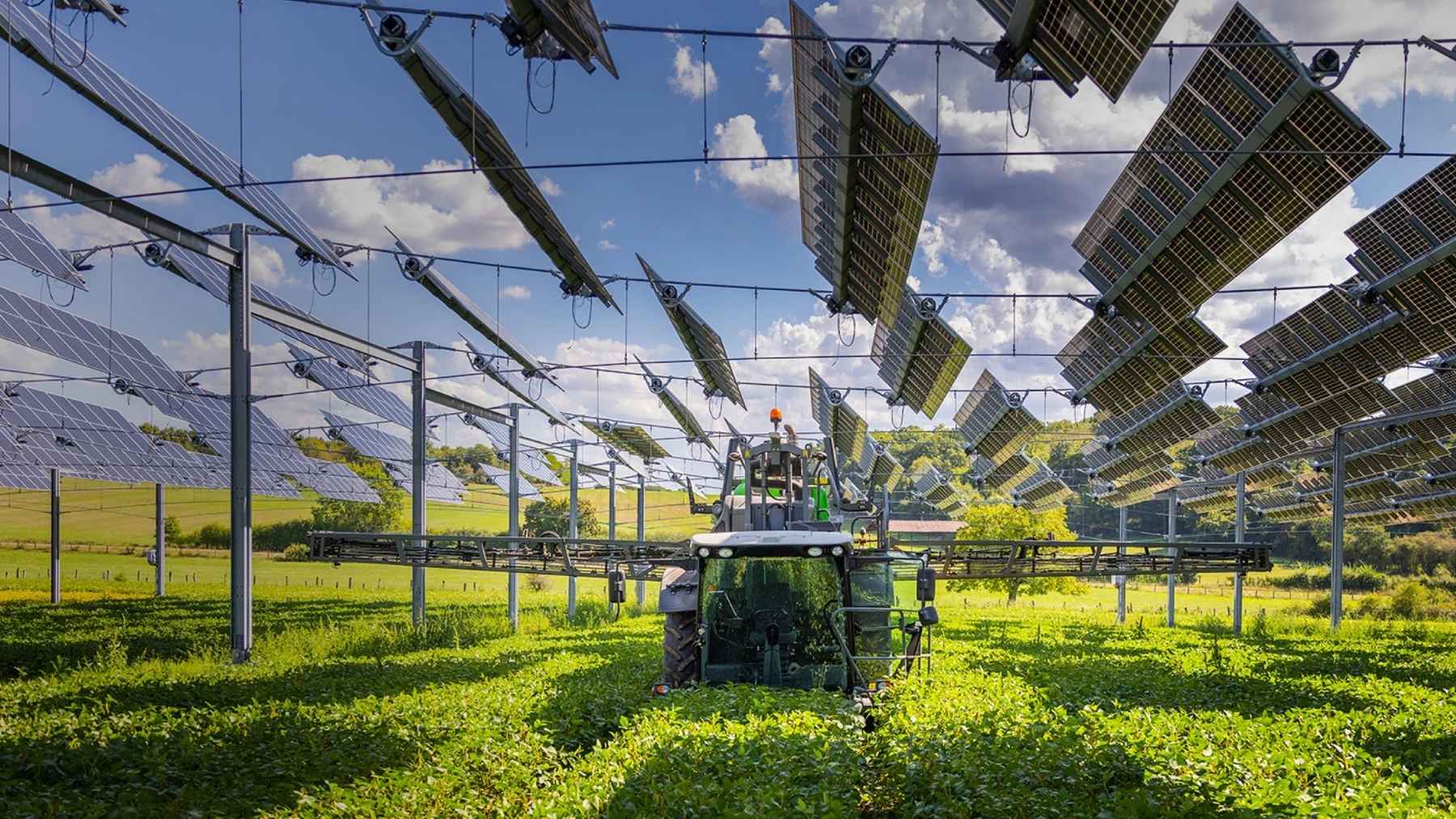
The field sits in Amance, in eastern France, under an agrivoltaic demonstrator built by TSE, a French solar developer. The canopy holds 5,500 rotating solar panels 16.4 feet (5 meters) over working farmland, high enough that “all our equipment passes under the structure,” as Sylvain Raison, the farmer who runs the land, puts it on TSE’s project page. Per that same page, the trial splits the land into roughly 7.4 acres (3 hectares) under panels and a 4.9-acre control strip in the open.
Silage corn went into the ground on April 25. If you’re not familiar, silage corn isn’t the sweet corn you’d grill in August. The whole plant gets chopped up, stalk and all, and fed to cattle. So the harvest gets measured in total plant matter rather than pretty ears. We’ve covered sweet corn growing under solar panels before, and that’s a different game.
Then the season did its worst. April passed without rain right as the corn was emerging, and the heat landed during stem elongation and flowering, the stretch where corn handles stress worst. Out in the open control plot, temperatures topped 95°F (35°C).
By harvest, pv magazine reports, the corn under the panels had put on 19.6 percent more dry matter than the corn in the open, and the plants averaged 79 inches tall against 63 inches in the control rows. Ear sterility showed up on both sides, though it hit the open plot hardest. TSE’s own read was that “the canopy provided the expected protective effect,” which is corporate-speak for the shade doing its job.
That height gap is the number that gets me, frankly. A 16-inch difference in average plant height isn’t something you’d need a lab to detect. You could see it from the road.
So how does shading corn make more corn?
The short answer is water. A canopy that blocks part of the midday sun also cuts how much water the field sweats out under it, and this year that’s the trade that paid off.
The measured version of that comes from TSE’s other instrumented site, in Chadeleuf in central France, where 392 solar panels stand over winter barley and the ground carries 14 weather stations, 18 radiation sensors and 14 soil probes. Over the growing season, evapotranspiration under that canopy ran 20 percent below the open field. During heat spikes, the air at crop height stayed 7.4°F (4.1°C) cooler at the hottest point of the day, and the field held on to about 0.08 inches (2.15 mm) more water per day. On the coldest nights, the canopy kept the air up to 5.4°F (3°C) warmer.
Evapotranspiration, if the word’s new to you, is basically the water a field loses to the sky. Some evaporates off the soil, and the rest gets breathed out by the plants themselves. Cut it by a fifth and the soil stays moist longer between rains, which is a rounding error in a wet year and pretty much the whole ballgame in a drought.
The barley had to pass a legal test
There’s a second reason the Chadeleuf barley matters. French law caps the yield loss an agrivoltaic installation is allowed to cause at 10 percent, and the canopy gets measured against that cap every season.
TSE runs the rotating panels under different steering programs, which are basically different answers to how much light goes to the crop and how much goes to the panels. Under one program the barley came in at 96 percent of the open plot’s yield, and under the other it came in at 90 percent, so they’re both inside the legal line. The grain’s specific weight, a standard quality measure, ran 3 percent higher under the canopy. The barley came off the field in late June.
Now, these are TSE’s own demonstrators, and you’d expect a solar company to lead with its most flattering numbers. Credit where it’s due, though. The harvest was run by Antédis, an agronomic research firm, and the monitoring was validated by the Puy-de-Dôme Chamber of Agriculture and a local technical institute, per TSE and pv magazine. That’s still a long way from peer-reviewed science, but it’s a step up from a company grading its own homework.
TSE hasn’t published absolute tonnage for either field, so I can’t tell you what the plots produced per acre, only how they compared. The company also says the crop-quality analysis on the corn arrived recently and hasn’t been fully worked through, so whether all that extra plant matter makes equally good cattle feed is still an open question.
Could this work over American corn?
Corn’s pretty much the crop in the United States, so the obvious question is whether anyone will build canopies like this over the Midwest.
I wouldn’t hold my breath.
A 16-foot structure a combine can drive under is serious infrastructure, and stateside agrivoltaics has so far mostly meant sheep grazing under utility arrays and smaller specialty plots, like the Colorado berry farm that went under 3,276 panels after drought cut off its irrigation water. Still, the water math travels. Drought isn’t exactly a foreign concept in the corn belt, and as far as I can tell, this French campaign is the strongest set of row-crop results that’s been put on paper for agrivoltaics anywhere, with yield, plant height, water use and temperature all measured, and all favoring the canopy in the same brutal season.
TSE published the campaign results on September 18, and says it’s now working through the crop-quality analysis from the Amance harvest. Until the quality numbers land, the corn’s 19.6 percent stands, measured in a season of exceptional drought and heat.